
Category: USMLE Step 1
-
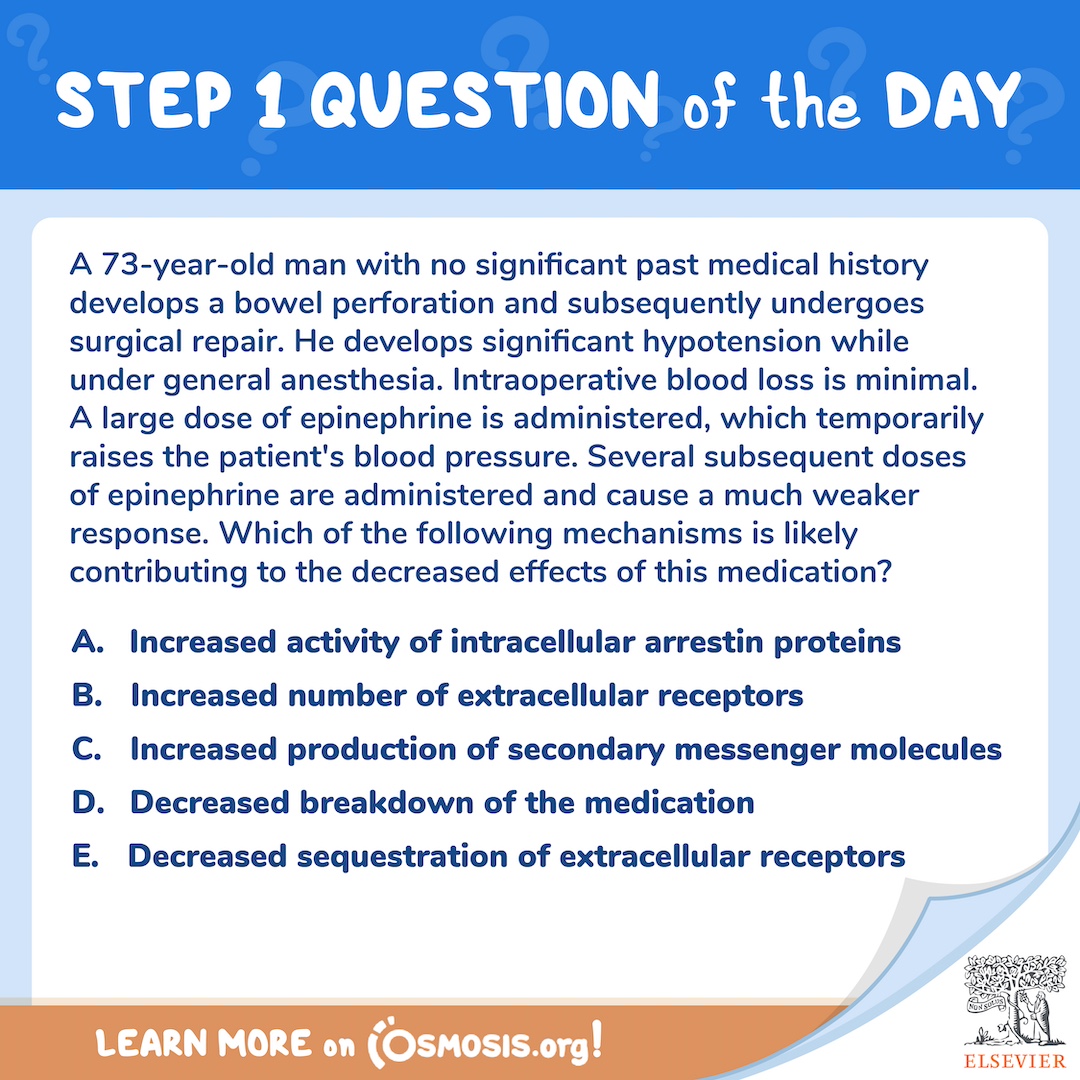
USMLE® Step 1 Question of the Day: Epinephrine response
— Updated:
Examine a clinical case of a 73-year-old man with hypotension during surgery and learn about the pharmacological mechanisms, including desensitization, affecting his response to epinephrine. Enhance your understanding of managing intraoperative hypotension effectively.
-
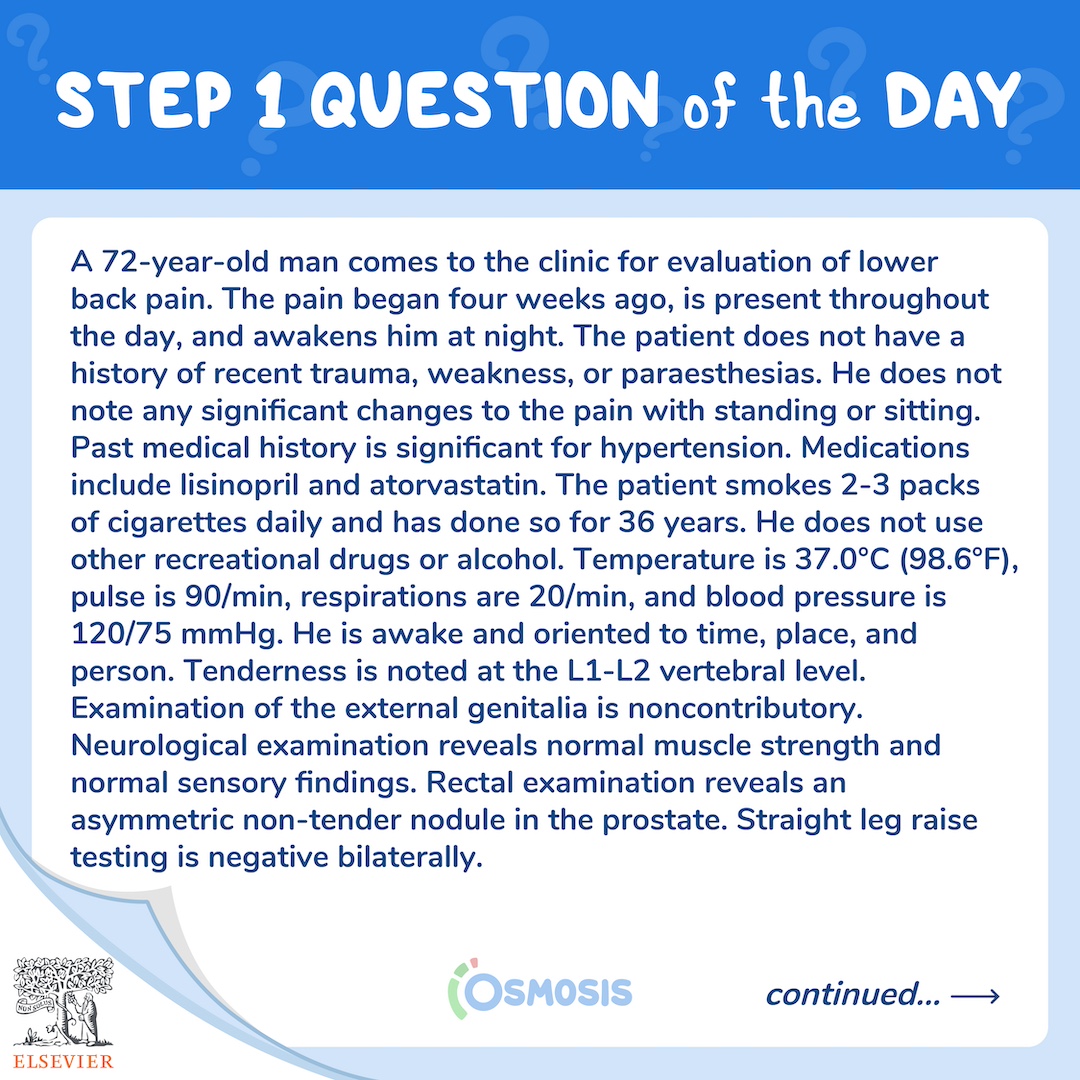
USMLE® Step 1 Question of the Day: Prostate nodule
— Updated:
Delve into today’s USMLE® Step 1 question on prostate cancer metastasis and understand the anatomical pathways and clinical implications involved.
-
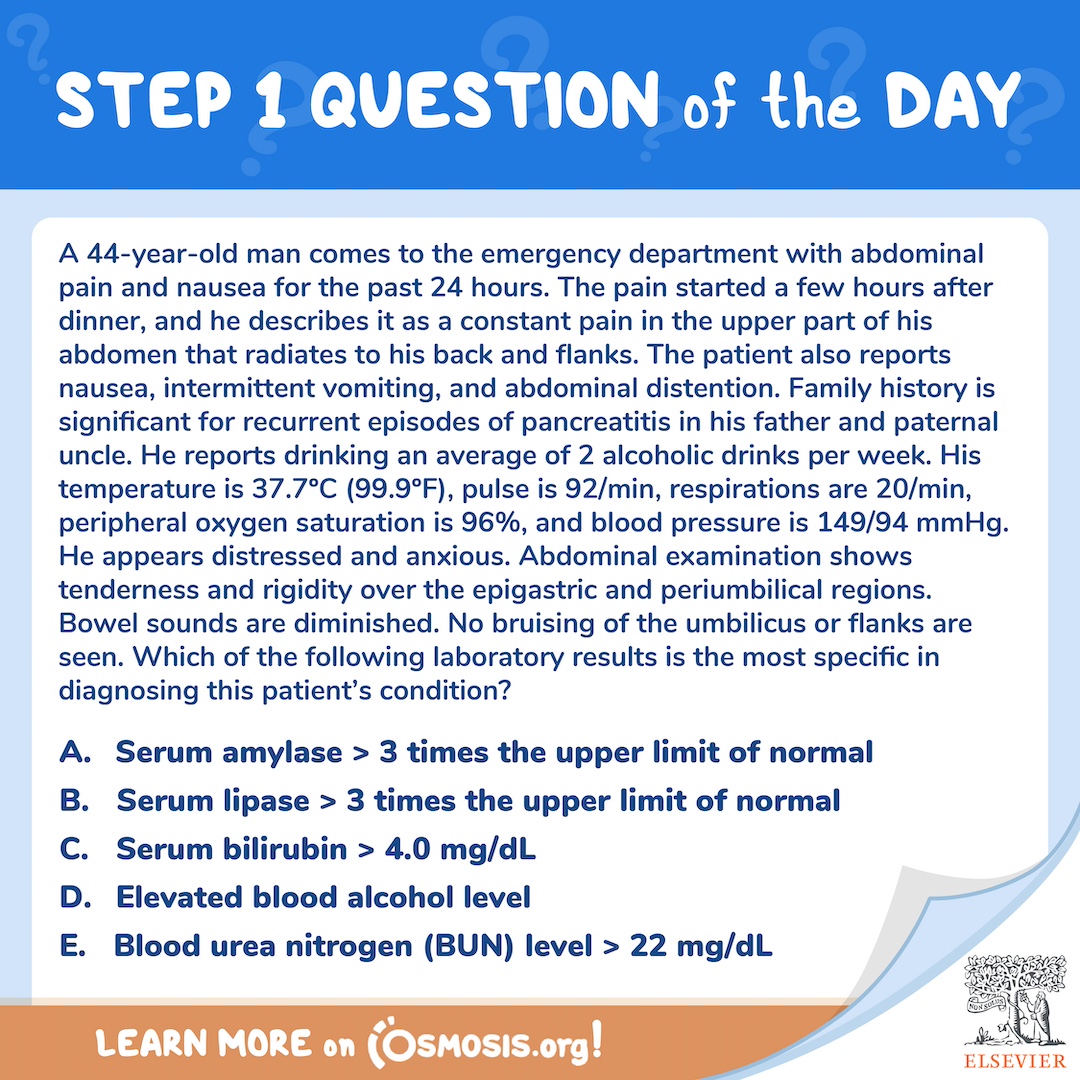
USMLE® Step 1 Question of the Day: Pancreatitis
— Updated:
Today, let’s focus on USMLE Step 1, with a question on acute pancreatitis. Can you recommend the appropriate diagnostic investigations, interpret the findings to establish a diagnosis, and describe the essential treatment options? Are you able to recall and recognize the clinical features and complications associated with this condition? Sharpen…
-
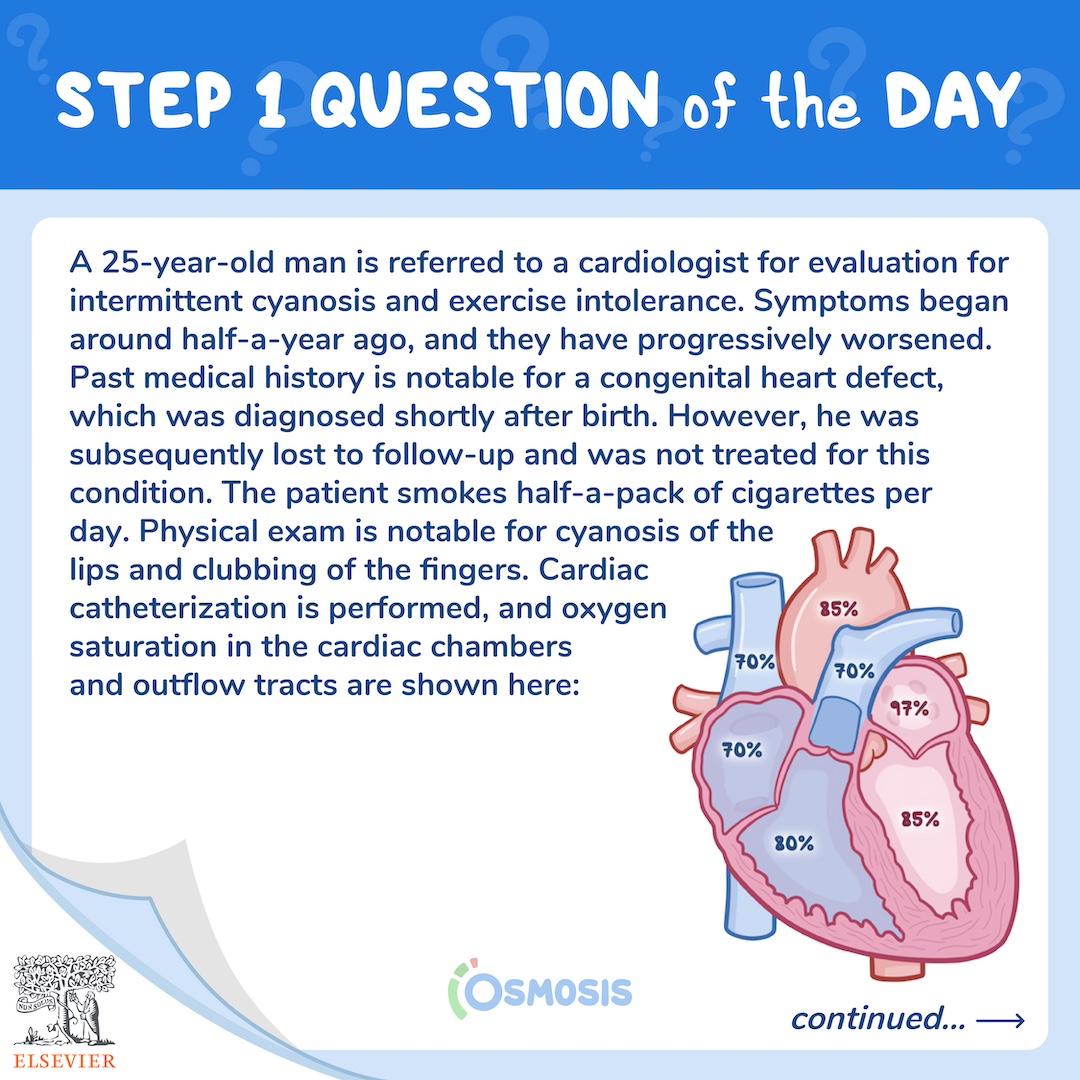
USMLE® Step 1 Question of the Day: Cardiac catheterization
— Updated:
Prepare for your USMLE Step 1 with a question focusing on Eisenmenger syndrome. Can you summarize the pathophysiology of this condition and recognize its key clinical features? Sharpen your understanding of this critical cardiovascular topic! A 25-year-old man is referred to a cardiologist for evaluation for intermittent cyanosis and exercise…
-
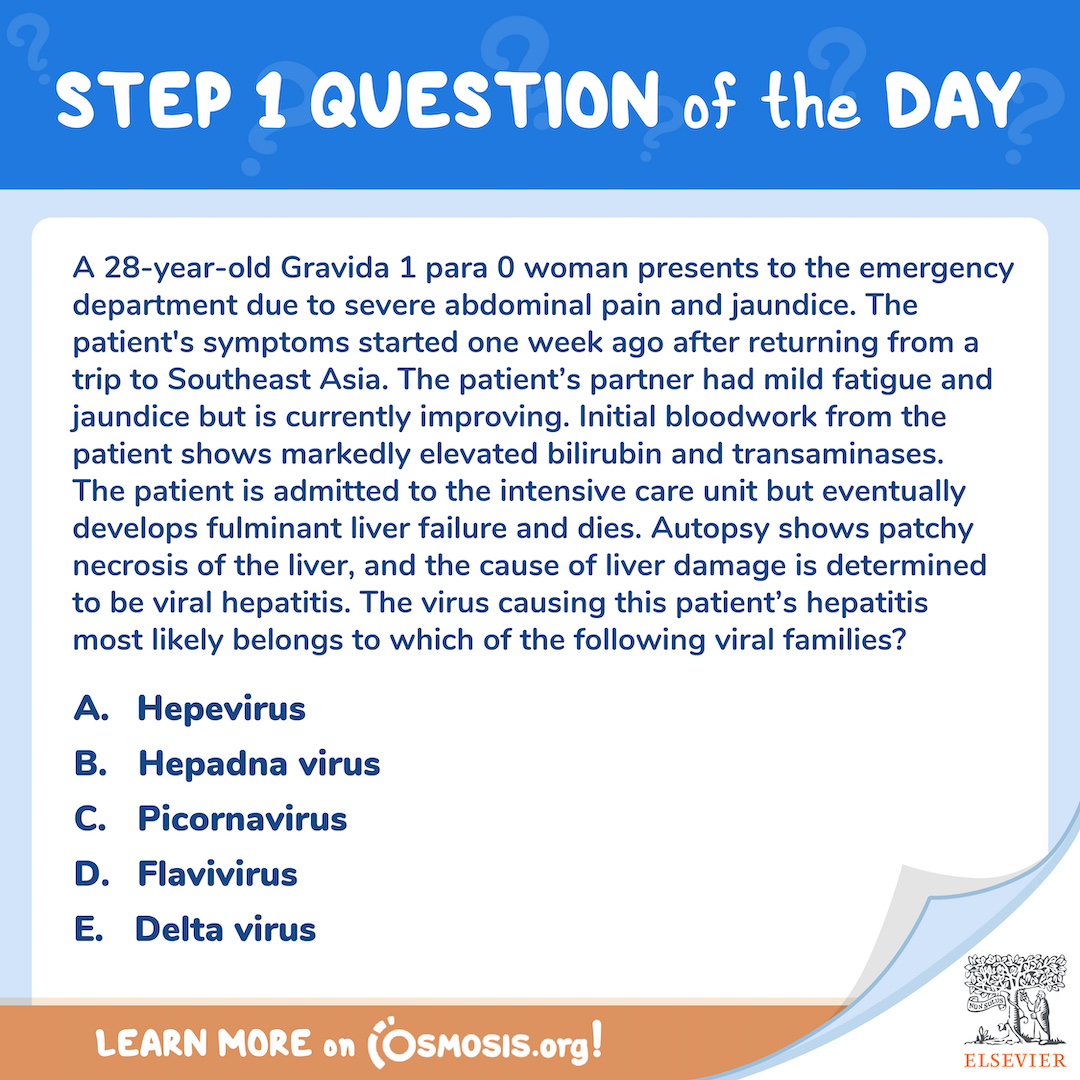
USMLE® Step 1 Question of the Day: Viral hepatitis
— Updated:
Prepare for the USMLE Step 1 exam with this detailed question about a 28-year-old woman experiencing severe abdominal pain and jaundice after returning from a trip to Southeast Asia. What family of viruses causes patchy necrosis of the liver? Test your knowledge and deepen your understanding of viral infections. A…
-

USMLE® Step 1 Question of the Day: Histologic analysis
— Updated:
Prepare for the USMLE Step 1 exam with this detailed question about a 57-year-old woman with malaise and intermittent fevers over the past several weeks. Can you correctly identify which of the following findings is most likely to be demonstrated on histologic analysis? A 57-year-old woman presents to her primary care…
-
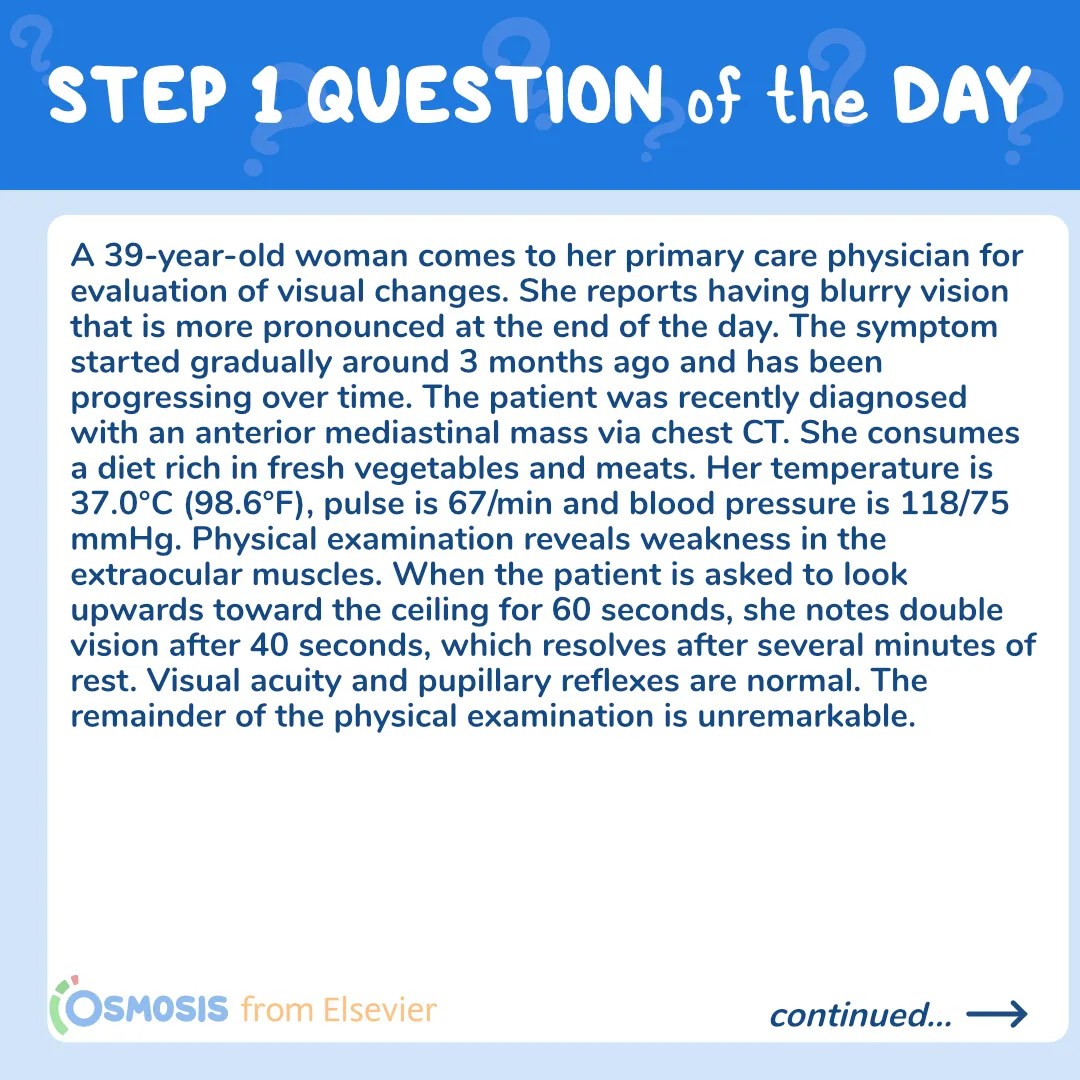
USMLE® Step 1 Question of the Day: Blurry vision
— Updated:
Test your knowledge with a USMLE Step 1 question on a patient with progressive blurred vision and muscle weakness linked to a mediastinal mass. Which neuromuscular structure is affected?
-
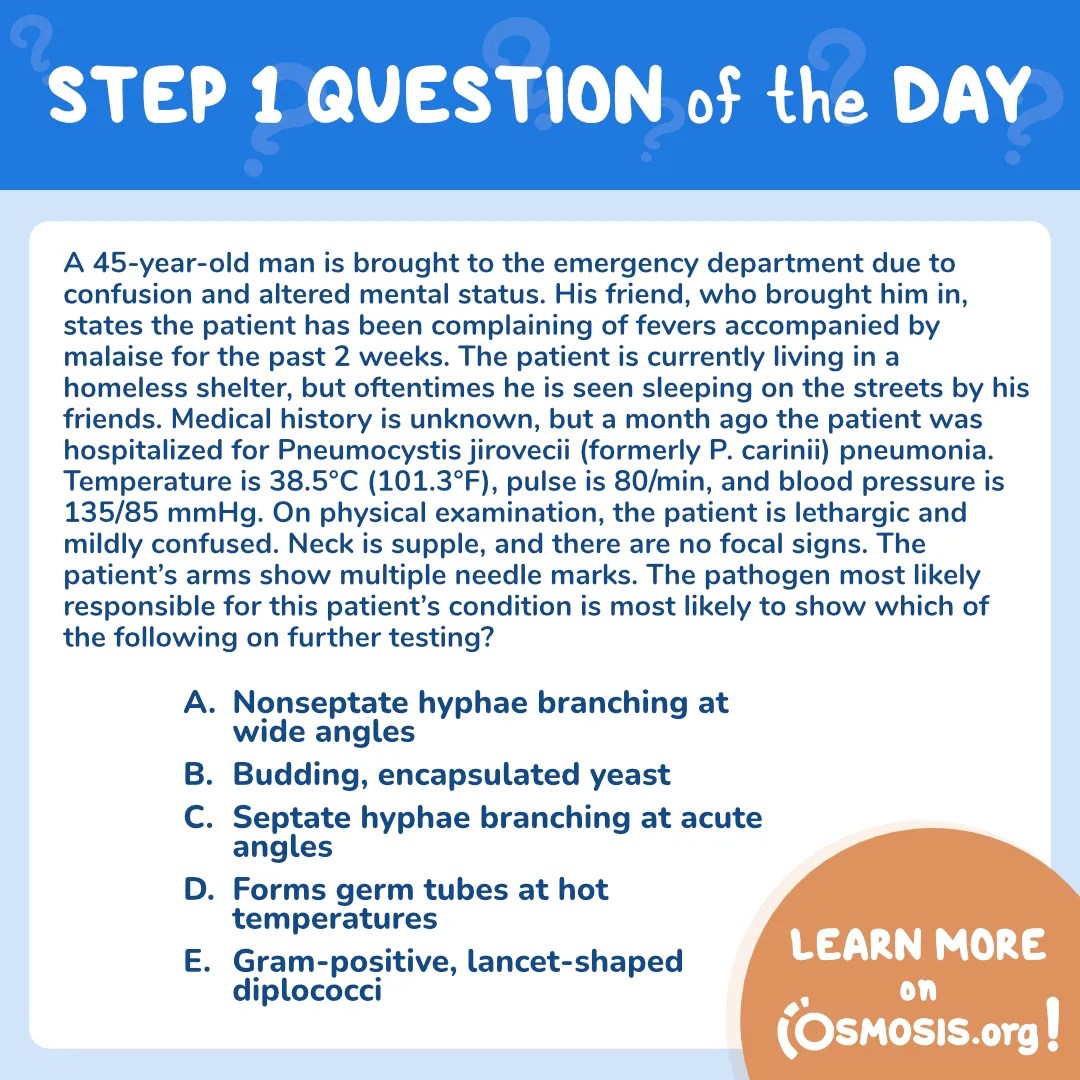
USMLE® Step 1 Question of the Day: Pathogen test
— Updated:
Prepare for your USMLE Step 1 exam with this question focused on identifying pathogens in immunocompromised patients. Understand the presentation and diagnostic features of Cryptococcus neoformans and other pathogens in similar settings. A 45-year-old man is brought to the emergency department due to confusion and altered mental status. His friend,…
-
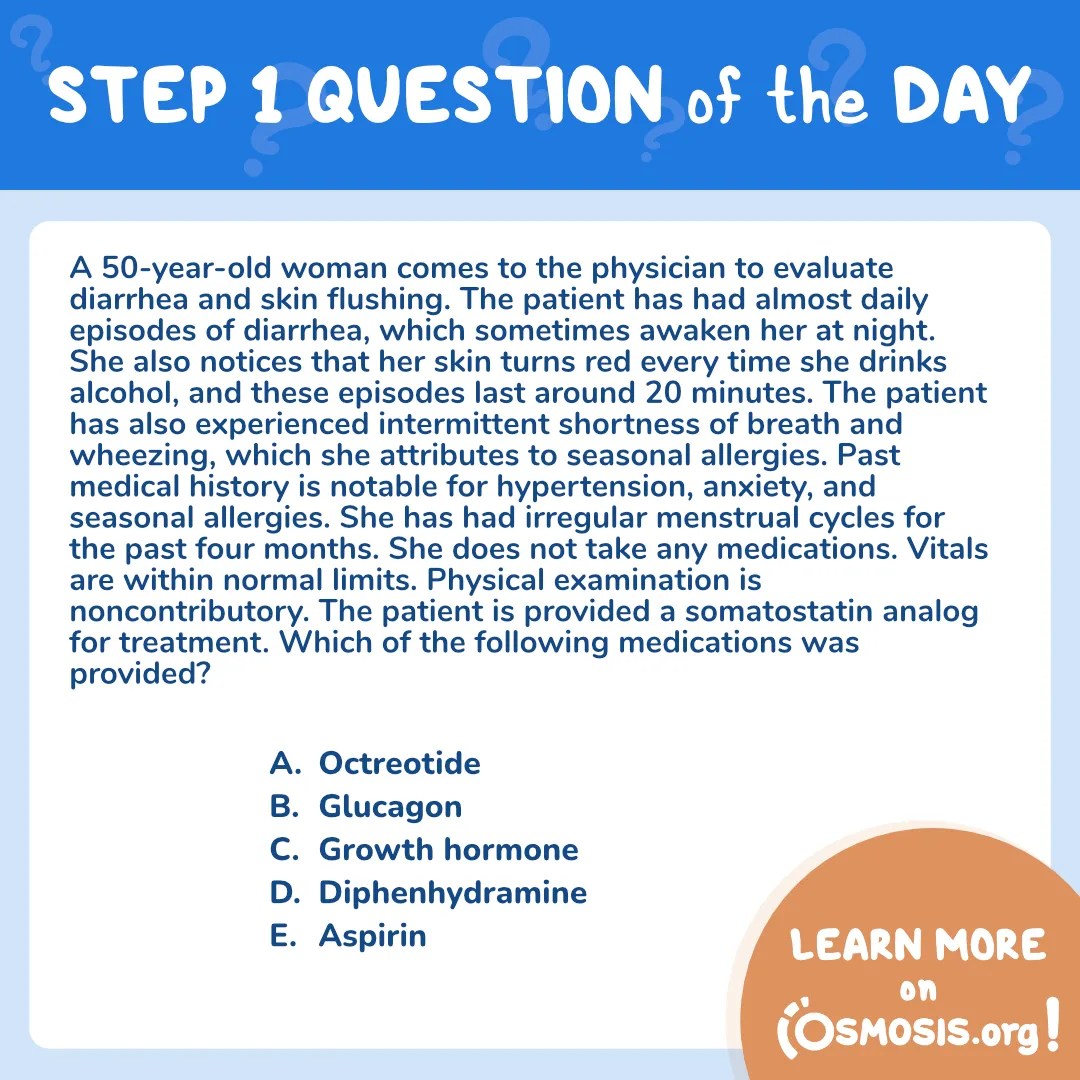
USMLE® Step 1 Question of the Day: Somatostatin analog
— Updated:
Test your knowledge with this USMLE Step 1 Question of the Day! A 50-year-old woman presents with daily diarrhea, skin flushing, and shortness of breath. She is treated with a somatostatin analog. Which medication was provided? A 50-year-old woman comes to the physician to evaluate diarrhea and skin flushing. The…
-
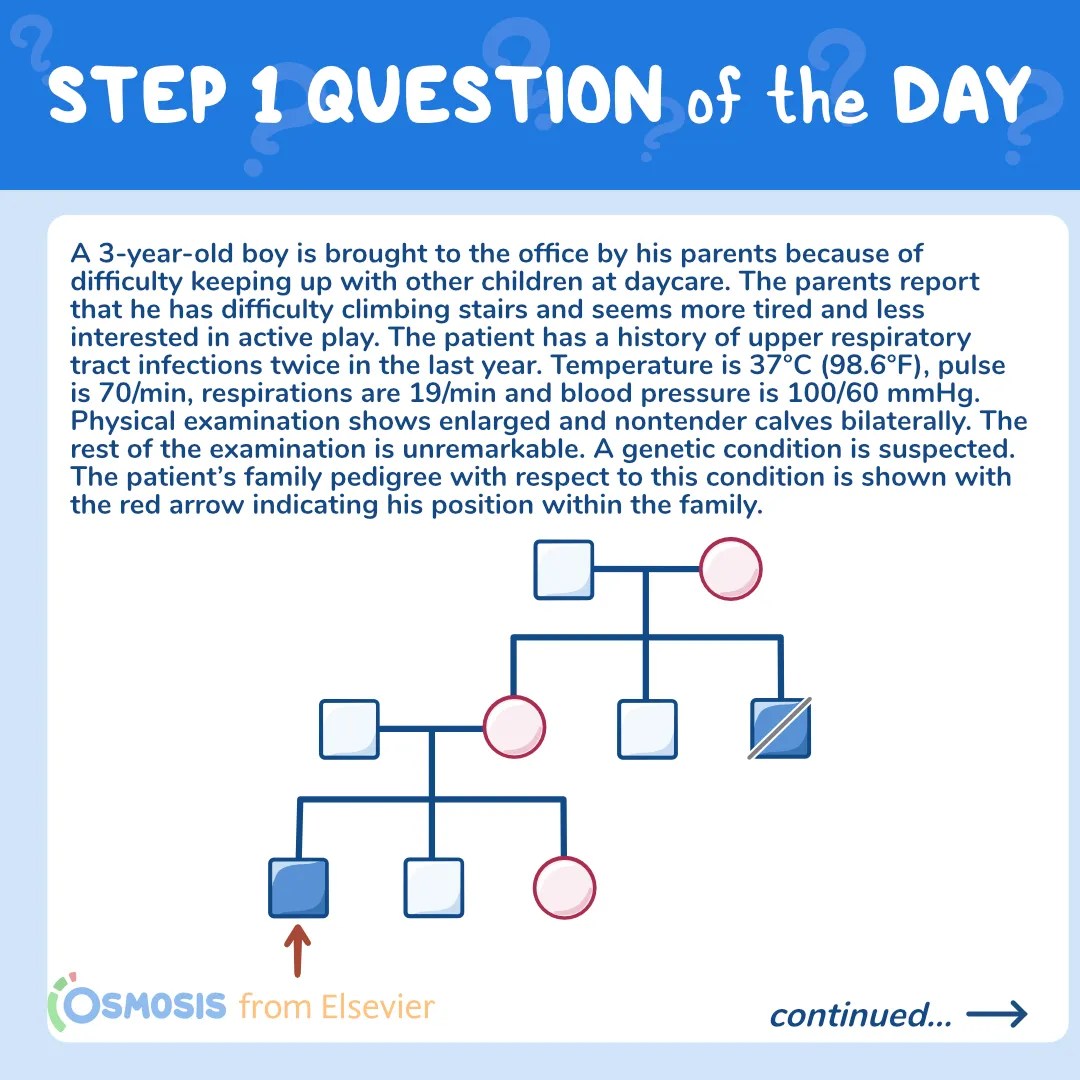
USMLE® Step 1 Question of the Day: Inheritance patterns
— Updated:
Test your knowledge with this USMLE Step 1 Question of the Day. A 3-year-old boy is brought to the office due to difficulty keeping up with other children at daycare. The physical examination reveals enlarged calves, and a genetic condition is suspected. Review the patient’s family pedigree and determine the…
-
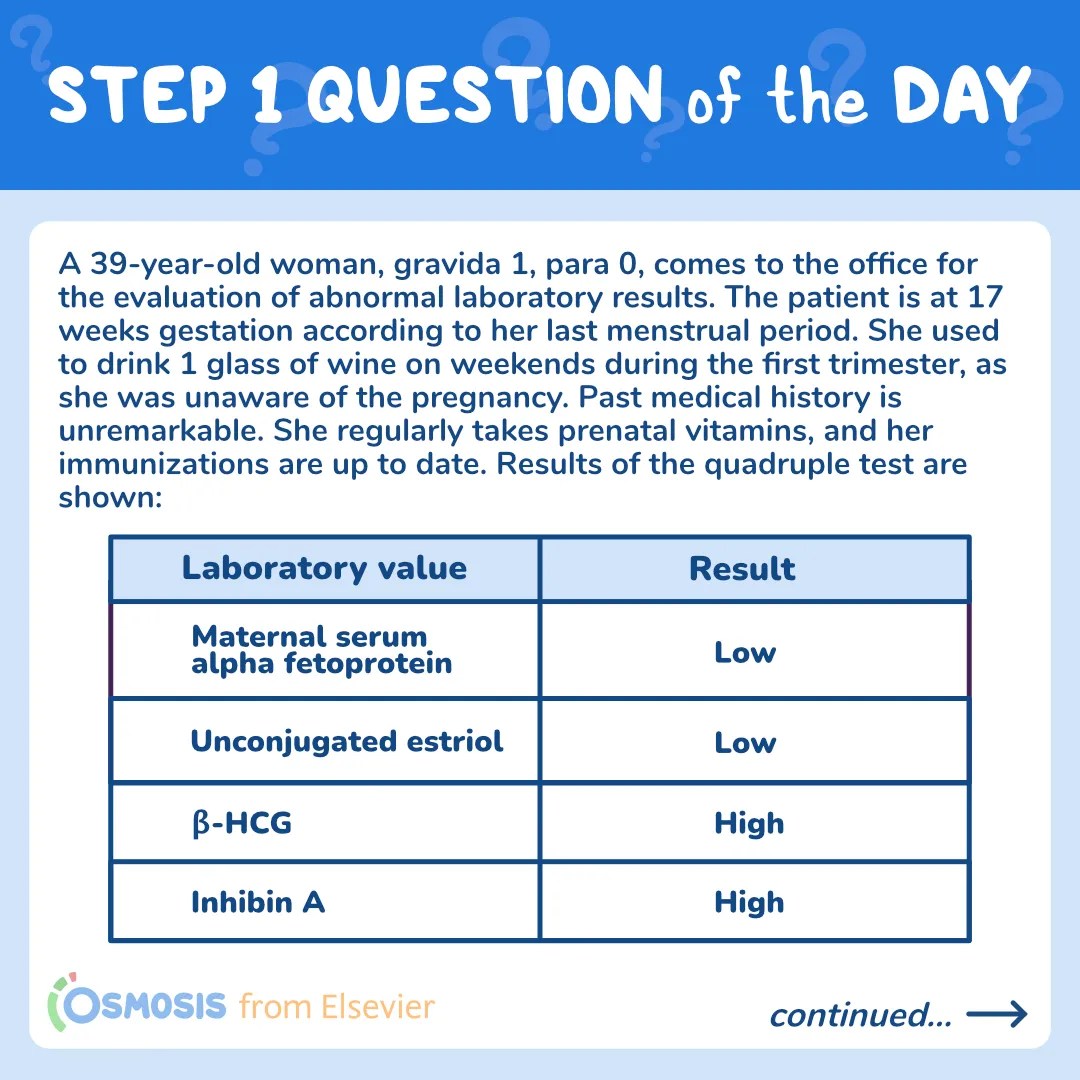
USMLE® Step 1 Question of the Day: Quadruple test
— Updated:
A pregnant patient’s quadruple test shows abnormal markers. Which fetal condition is most likely associated with these results?
-
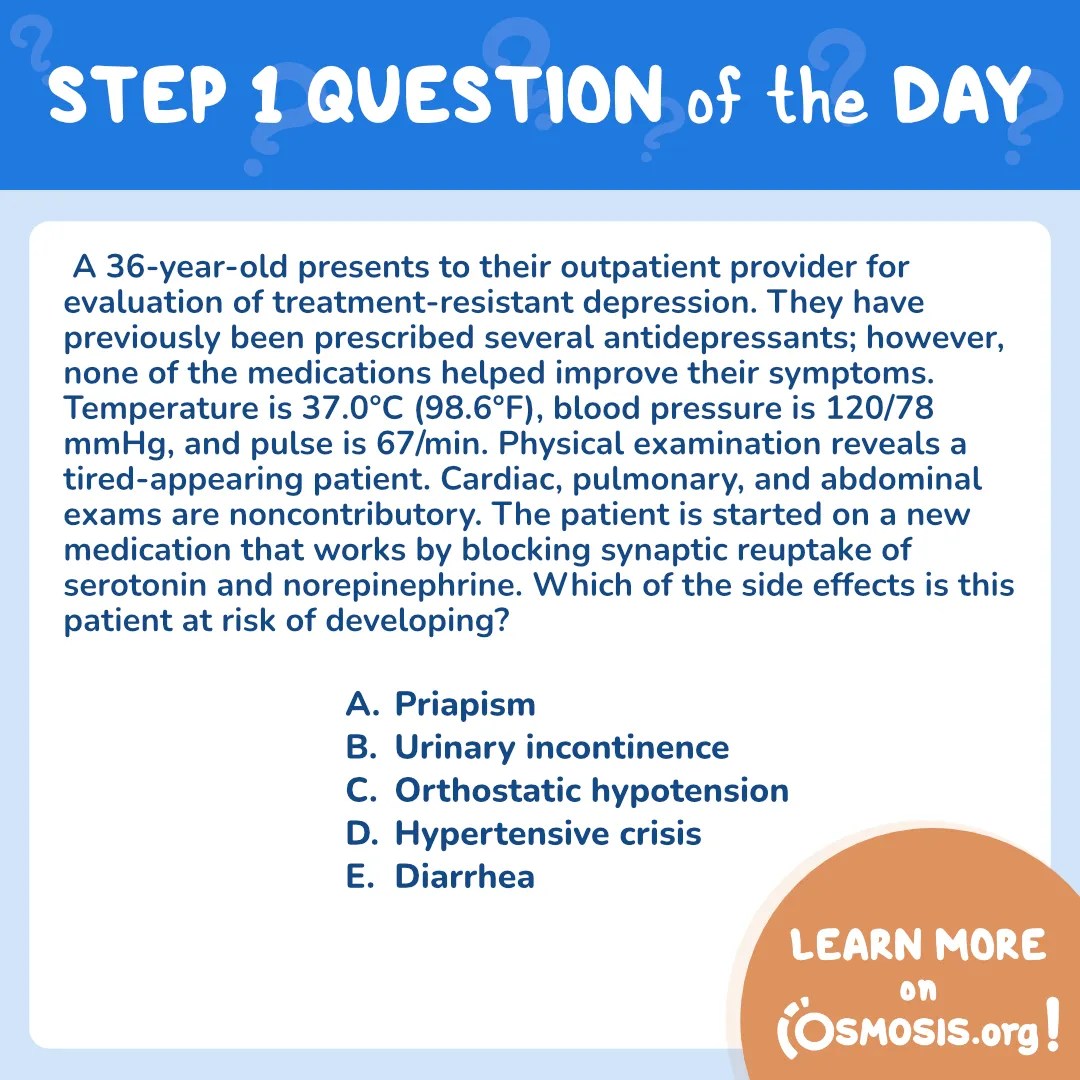
USMLE® Step 1 Question of the Day: Antidepressants
— Updated:
This USMLE Step 1 Question of the Day involves a 36-year-old patient for evaluation of treatment-resistant depression. Based on the findings, identify the most likely diagnosis. A 36-year-old presents to their outpatient provider for evaluation of treatment-resistant depression. They have previously been prescribed several antidepressants; however, none of the medications…
-
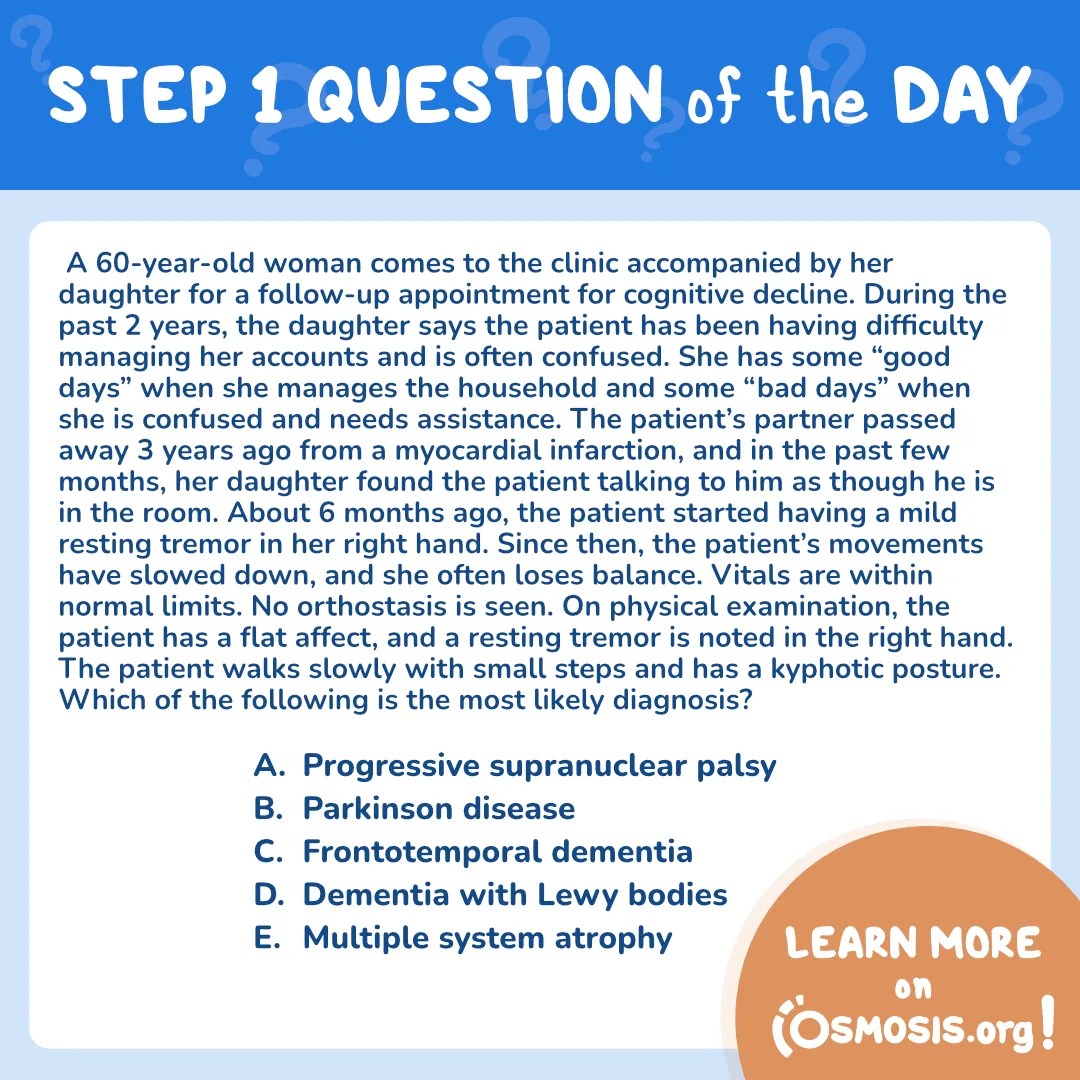
USMLE® Step 1 Question of the Day: Cognitive decline
— Updated:
An older woman presents with fluctuating cognition, visual hallucinations, and parkinsonism. What diagnosis best explains her symptoms?
-
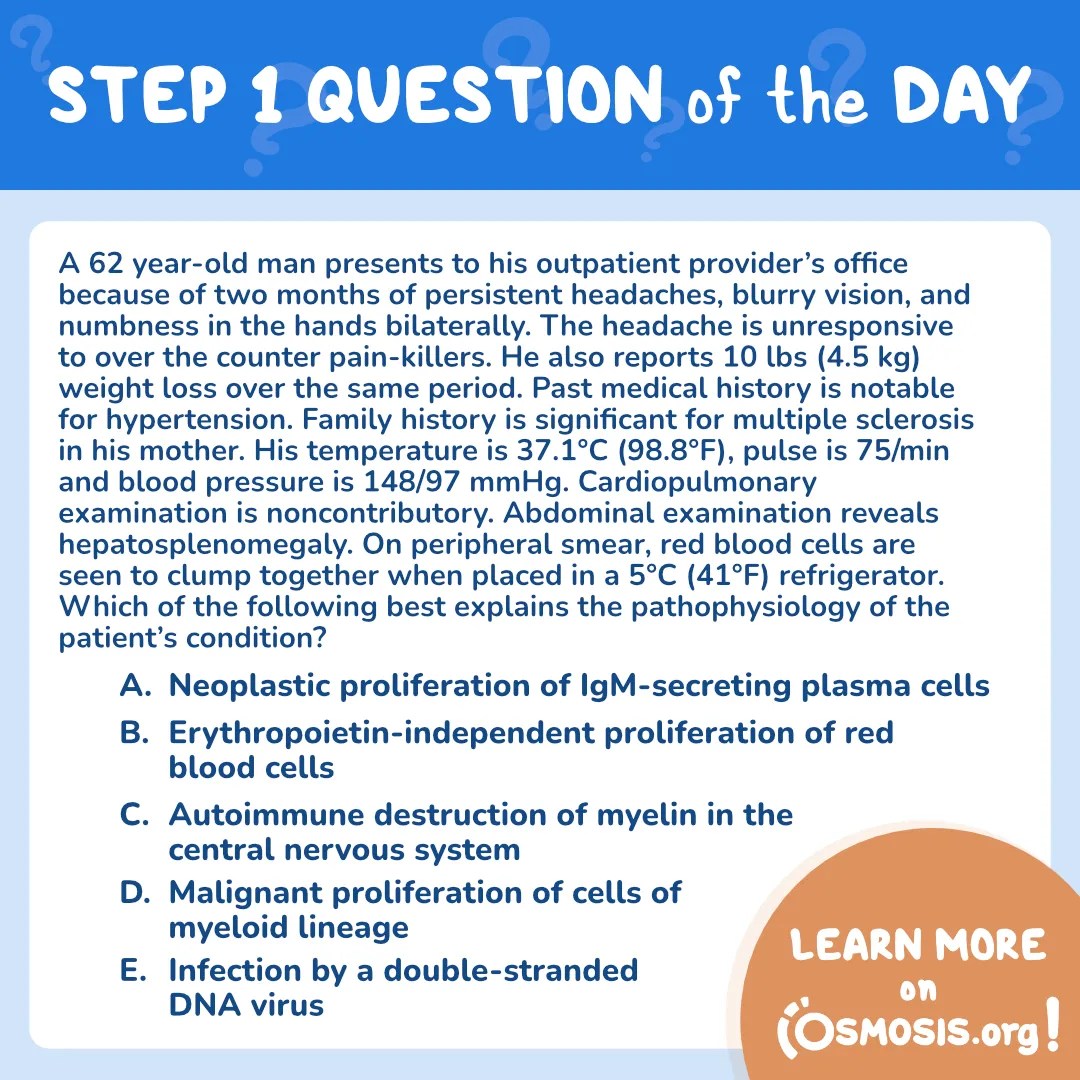
USMLE® Step 1 Question of the Day: Hepatosplenomegaly
— Updated:
Prepare for USMLE Step 1 with this case! Learn about a USMLE Step 1 question involving a 62-year-old man with headaches, blurry vision, and numbness in his hands. Learn the significance of elevated IgM levels, blood viscosity, and the importance of cold agglutination in this hematologic malignancy. A 62 year-old…
-
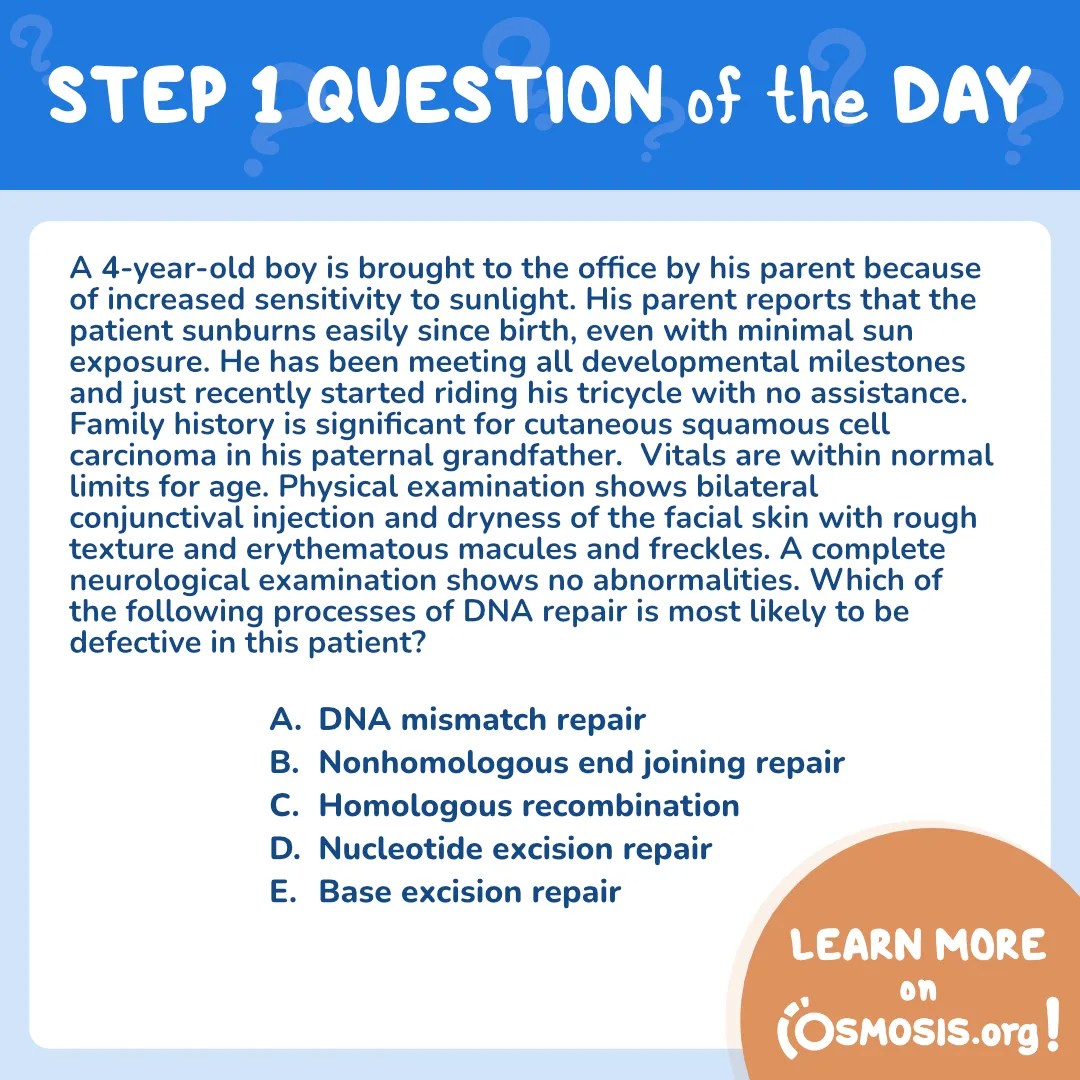
USMLE® Step 1 Question of the Day: Sunlight sensitivity
— Updated:
Prepare for USMLE Step 1 with this case! A 4-year-old boy with increased sensitivity to sunlight and facial skin changes since birth is brought in for evaluation. What’s the most likely diagnosis? A 4-year-old boy is brought to the office by his parent because of increased sensitivity to sunlight. His…
-
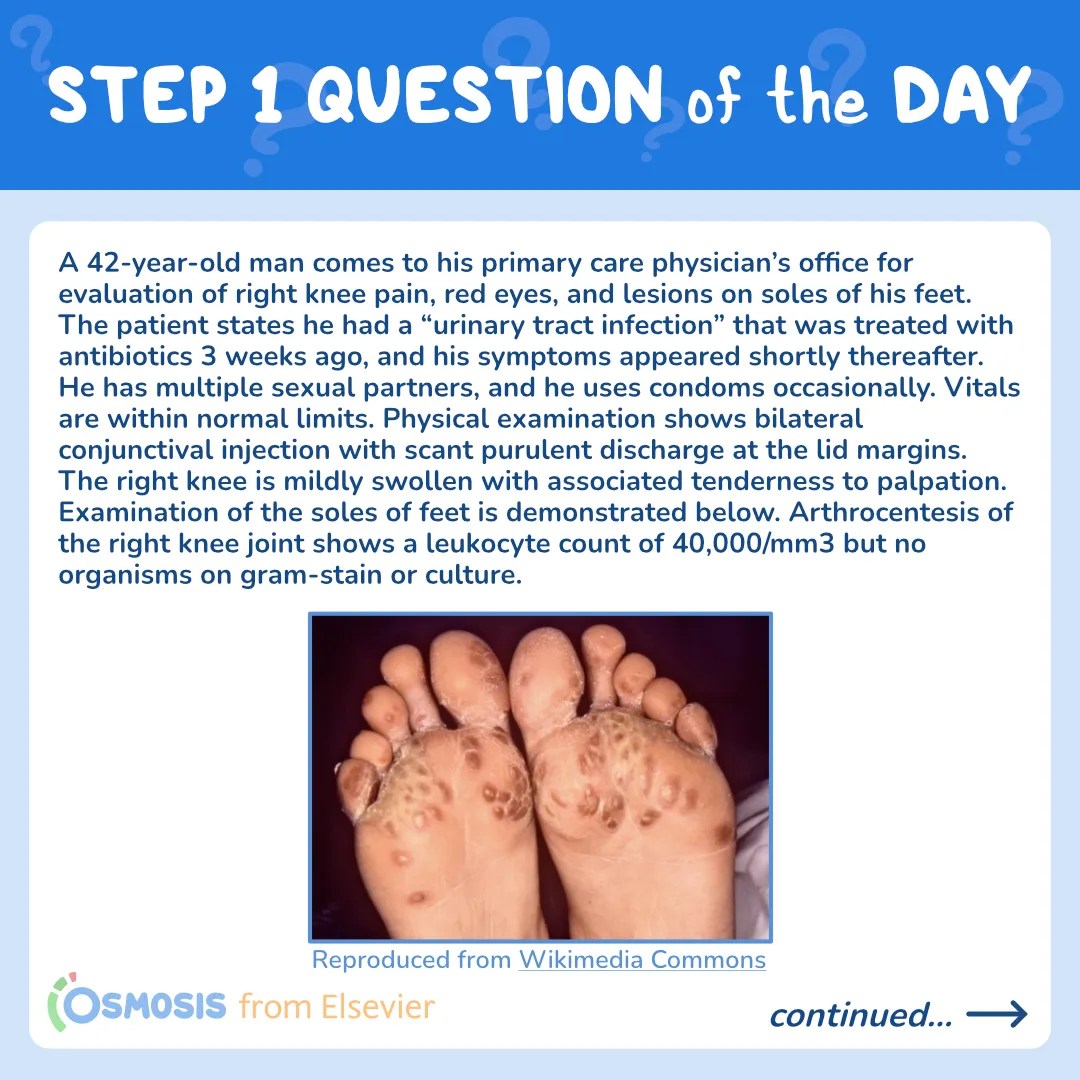
USMLE® Step 1 Question of the Day: Knee pain
— Updated:
Discover the case of a 42-year-old man with knee pain, red eyes, and foot lesions post-UTI treatment. Could it be reactive arthritis? A 42-year-old man comes to his primary care physician’s office for evaluation of right knee pain, red eyes, and lesions on soles of his feet. The patient states…
-
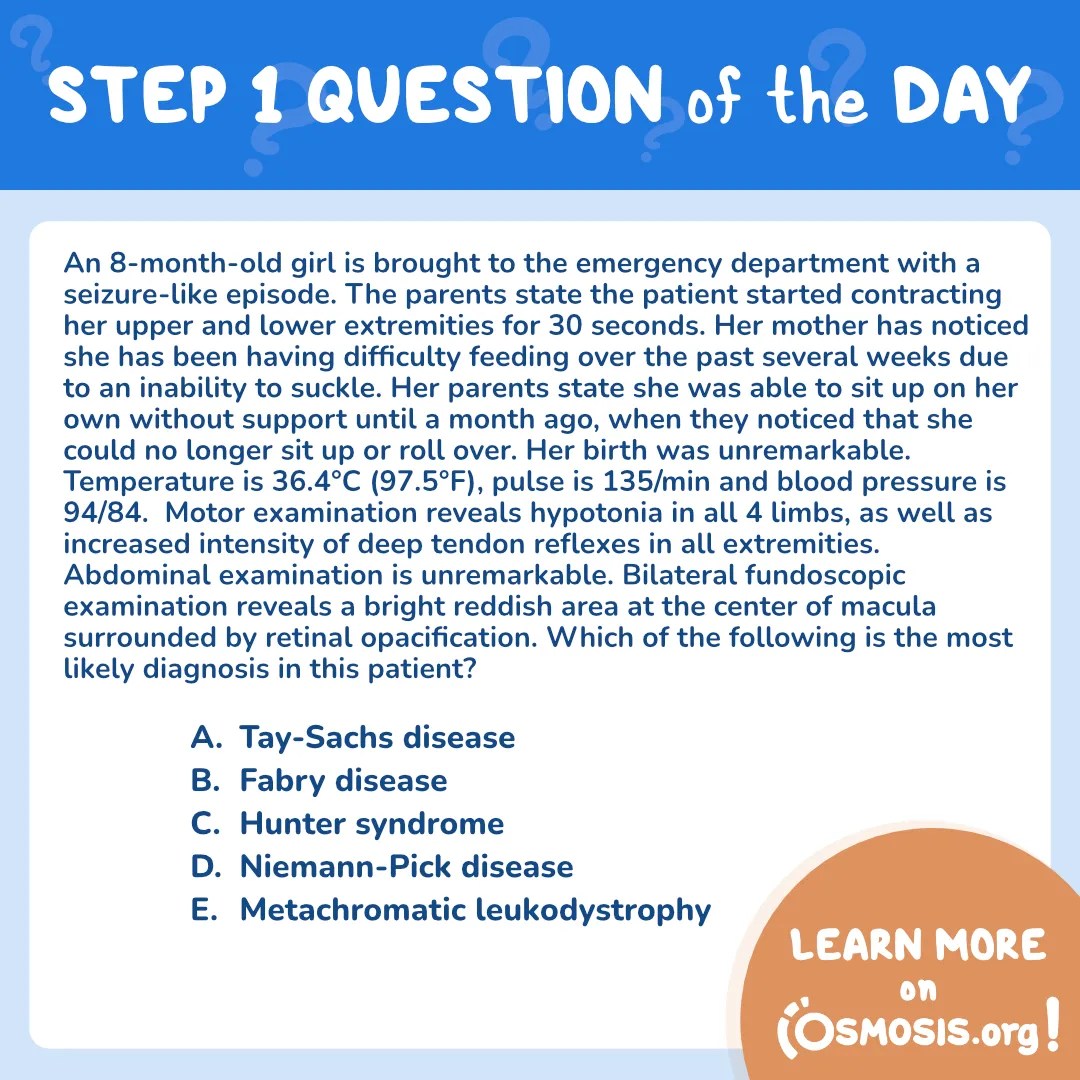
USMLE® Step 1 Question of the Day: Hypotonia
— Updated:
Learn about Tay-Sachs disease, an autosomal recessive neurodegenerative disorder characterized by regression of motor milestones, seizures, and a distinctive cherry-red macula. An 8-month-old girl is brought to the emergency department with a seizure-like episode. The parents state the patient started contracting her upper and lower extremities for 30 seconds. Her…
-
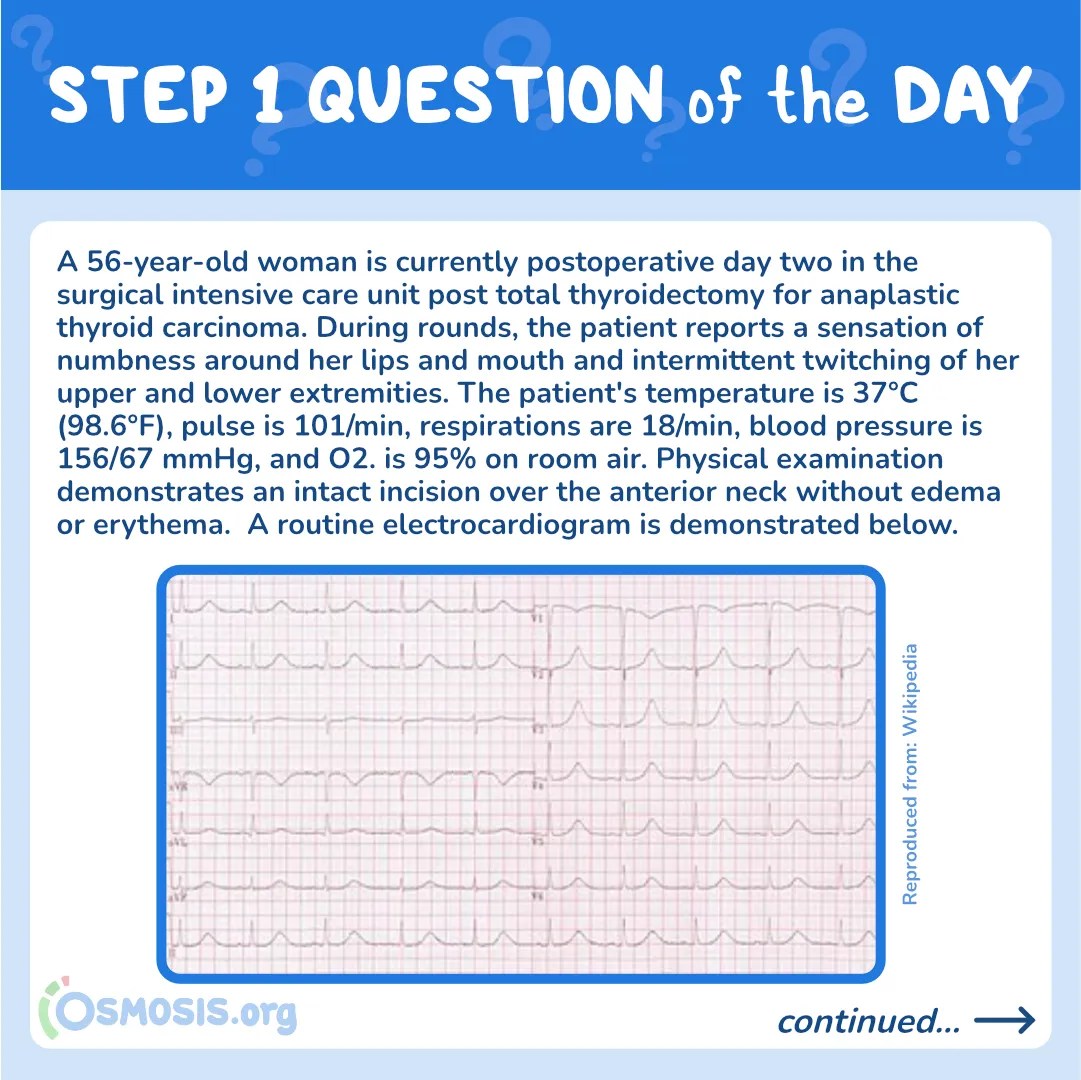
USMLE® Step 1 Question of the Day: Thyroidectomy
— Updated:
This week, we are sharing another USMLE® Step 1-style practice question to test your knowledge of medical topics. Today’s case focuses on a 56-year-old woman who reported a sensation of numbness on her mouth and intermittent twitching of her extremities. Physical examination demonstrates an intact incision over the anterior neck without…
-
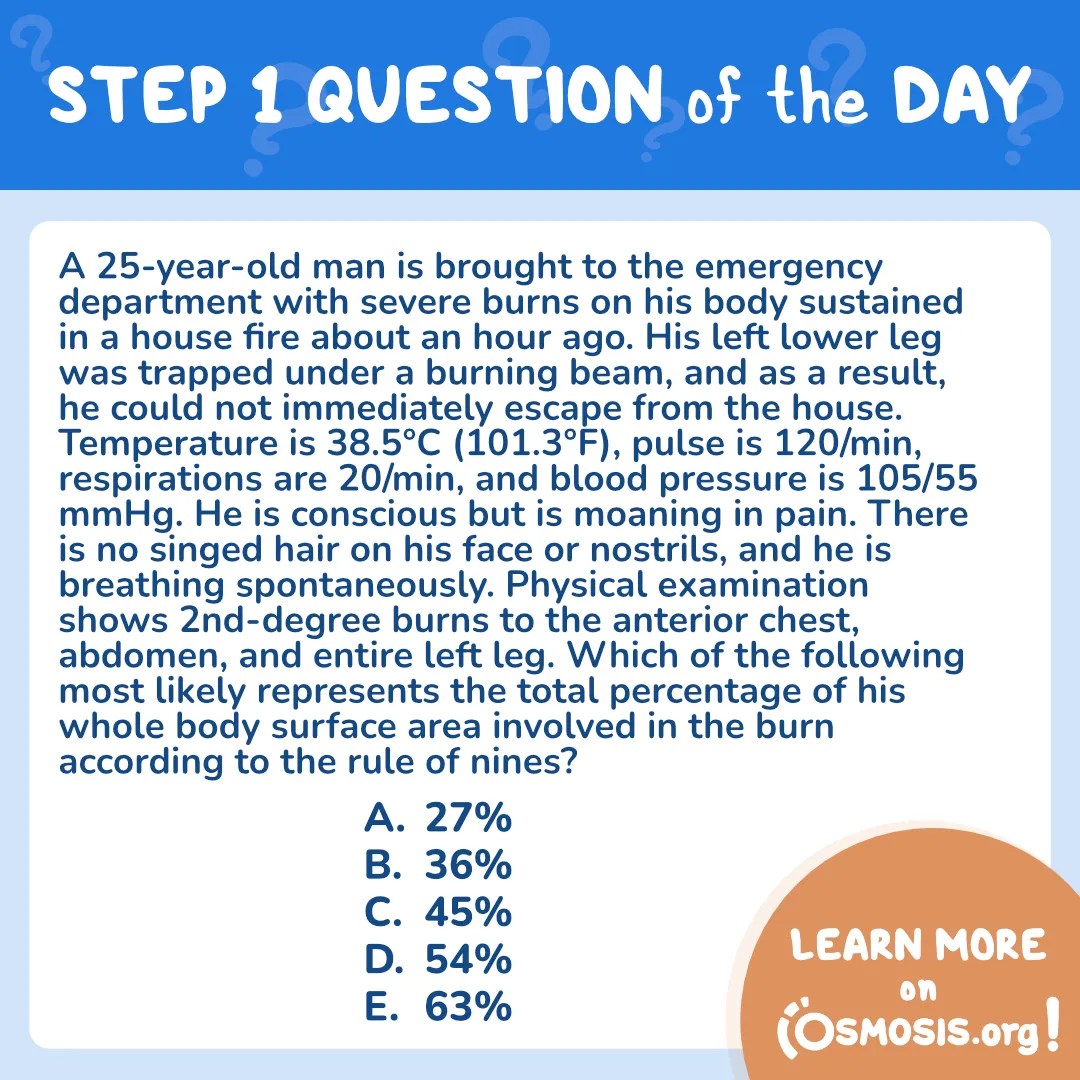
USMLE® Step 1 Question of the Day: Rule of nines
— Updated:
The Rule of Nines is a method used in emergency departments to quickly estimate the extent of burns on a patient’s body. This USMLE® Step 1 Question of the Day will test your knowledge on this topic. A 25-year-old man is brought to the emergency department with severe burns on…
-
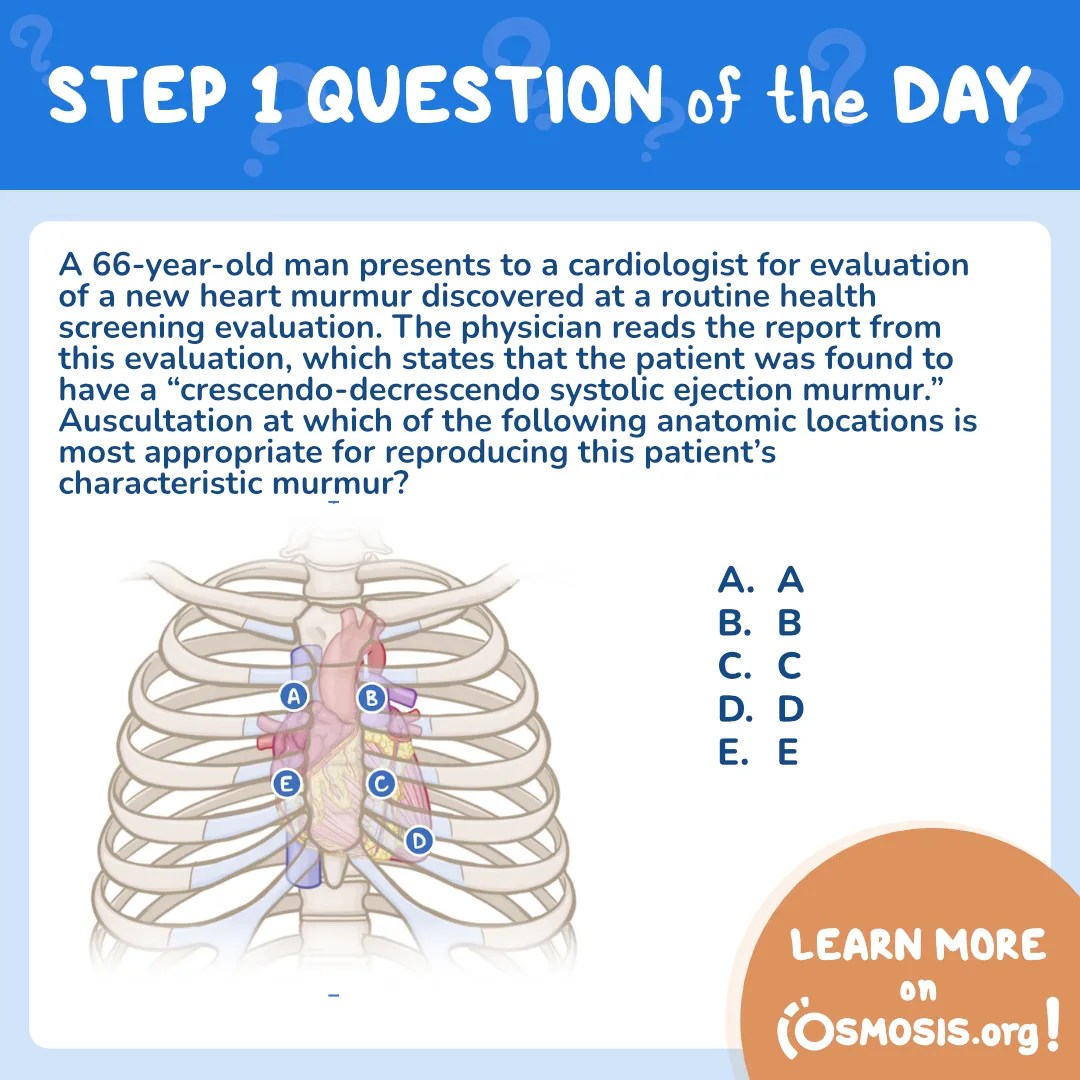
USMLE® Step 1 Question of the Day: Systolic ejection murmur
— Updated:
Aortic stenosis produces a classic crescendo-decrescendo systolic ejection murmur best heard at the right second intercostal space. Learn key auscultation sites for cardiac murmurs.
-
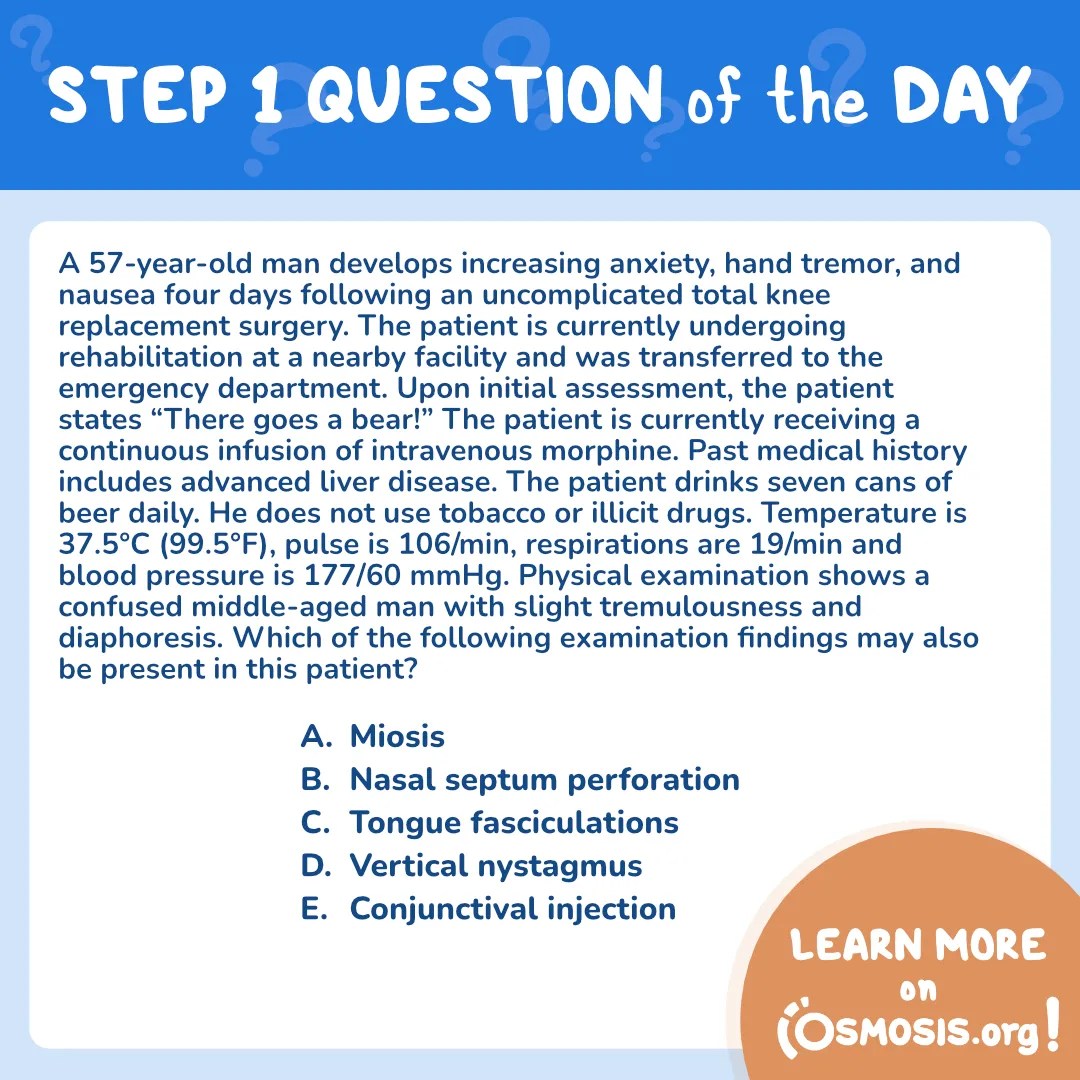
USMLE® Step 1 Question of the Day: Rehabilitation
— Updated:
Explore a USMLE® Step 1 question on alcohol withdrawal symptoms, including tongue fasciculations, anxiety, and tremors in a postoperative patient with chronic alcohol use.
-
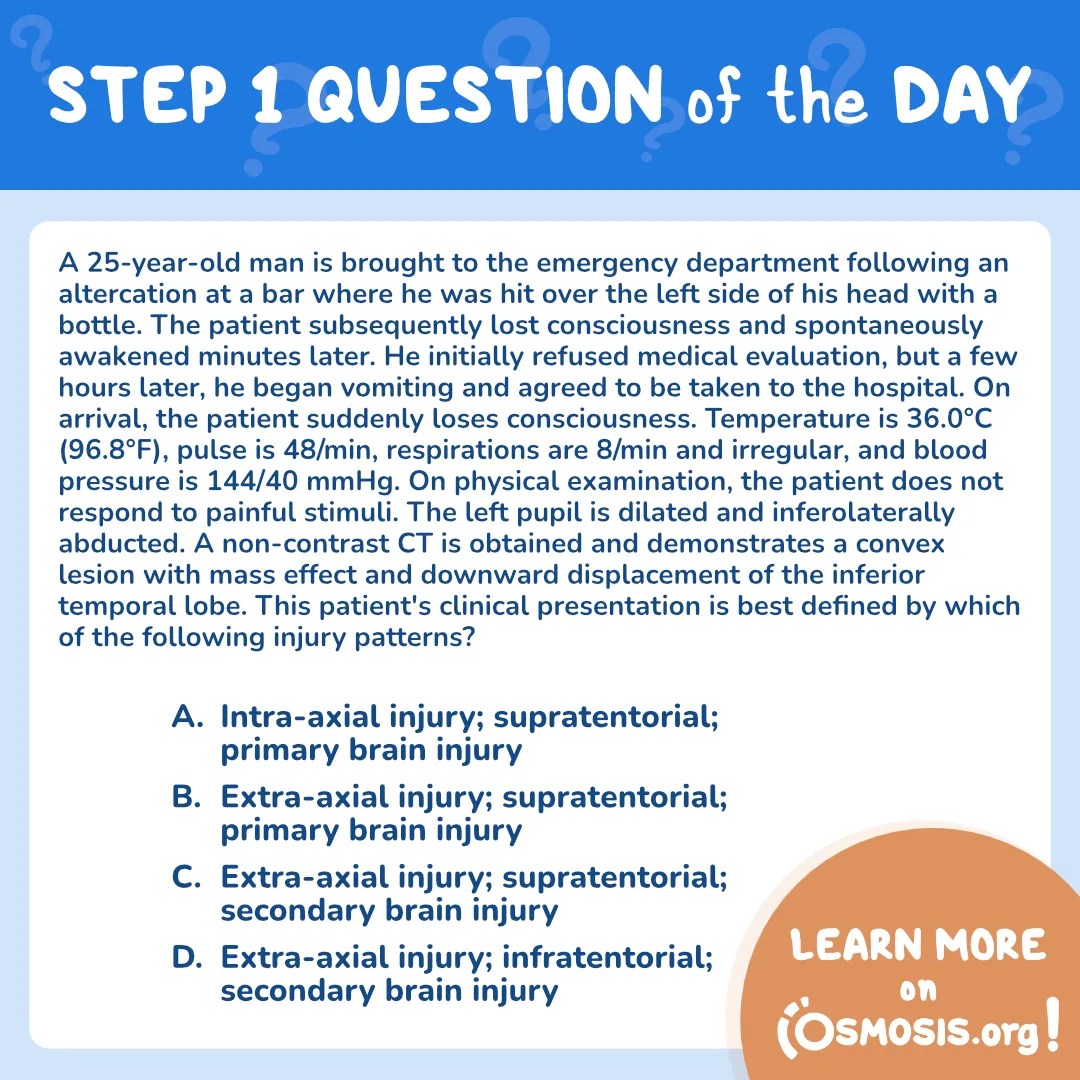
USMLE® Step 1 Question of the Day: Convex lesion
— Updated:
This week, we are sharing another USMLE® Step 1-style practice question to test your knowledge of medical topics. Today’s case focuses on a 25-year-old man who suffered head trauma in a bar altercation, resulting in loss of consciousness. Despite initial refusal for medical evaluation, he later exhibits alarming symptoms, including…
-
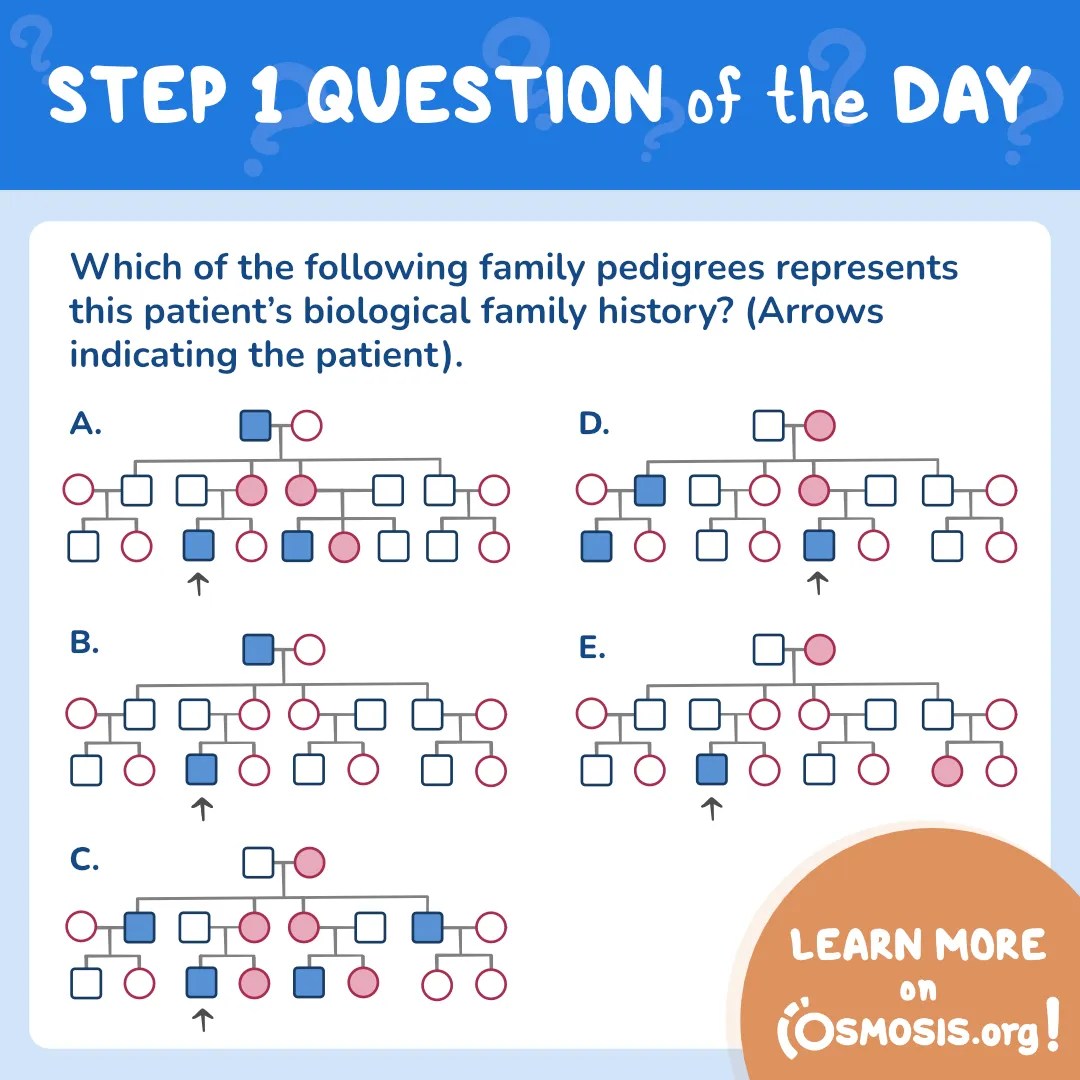
USMLE® Step 1 Question of the Day: Fragile X syndrome
— Updated:
This week, we are sharing another USMLE® Step 1-style practice question to test your knowledge of medical topics. Today’s case focuses on a 6-year-old adopted boy diagnosed with autism spectrum disorder and Fragile X syndrome. Delve into the discussion with the physician, exploring the family pedigrees that unravel the genetic…
-
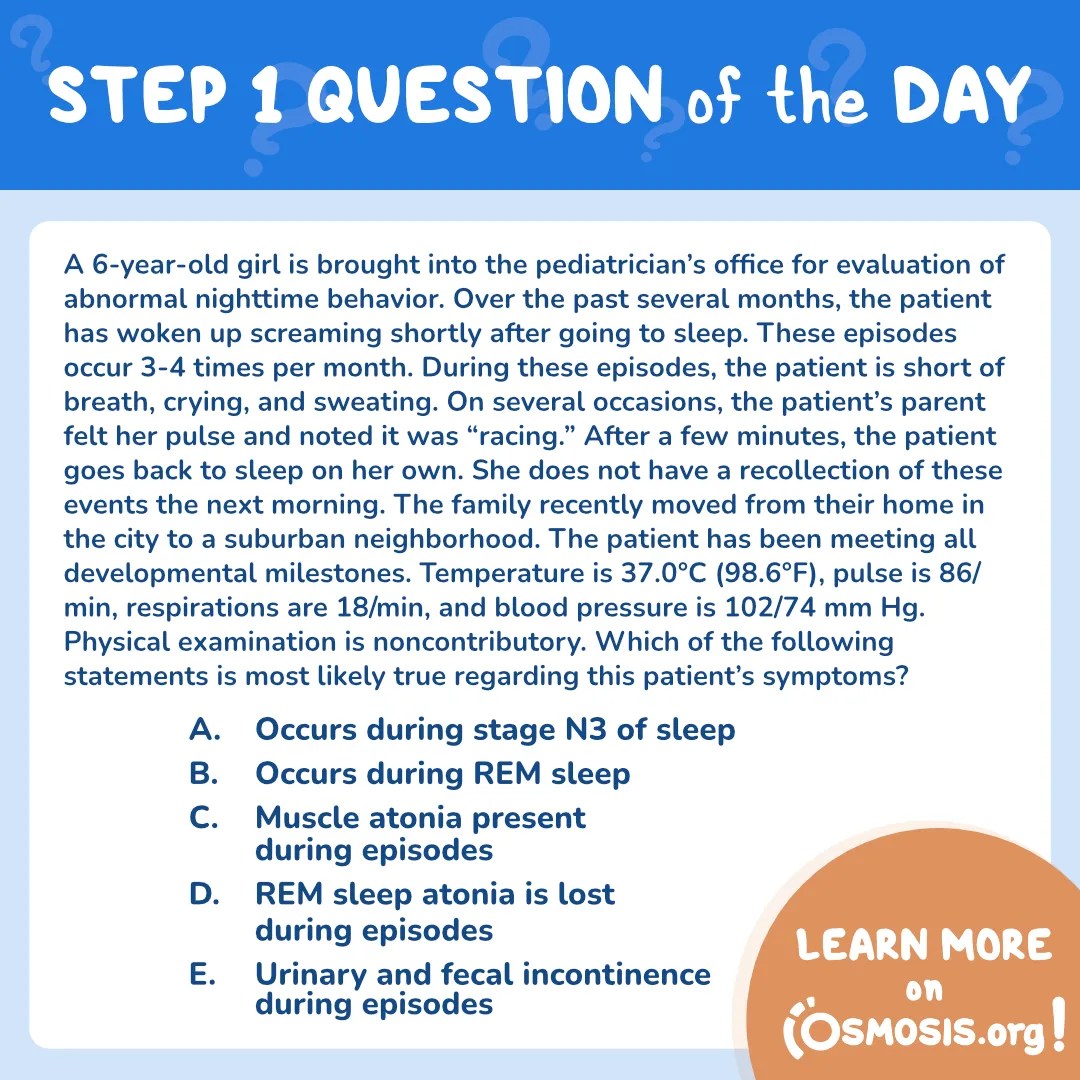
USMLE® Step 1 Question of the Day: Sleep episodes
— Updated:
This week, we are sharing another USMLE® Step 1-style practice question to test your knowledge of medical topics. Today’s case focuses on a 6-month-old infant facing poor weight gain, weak cry, and muscle hypotonia. With genetic work-up pointing to a PDHA1 gene mutation and elevated serum lactate levels, can you…
-
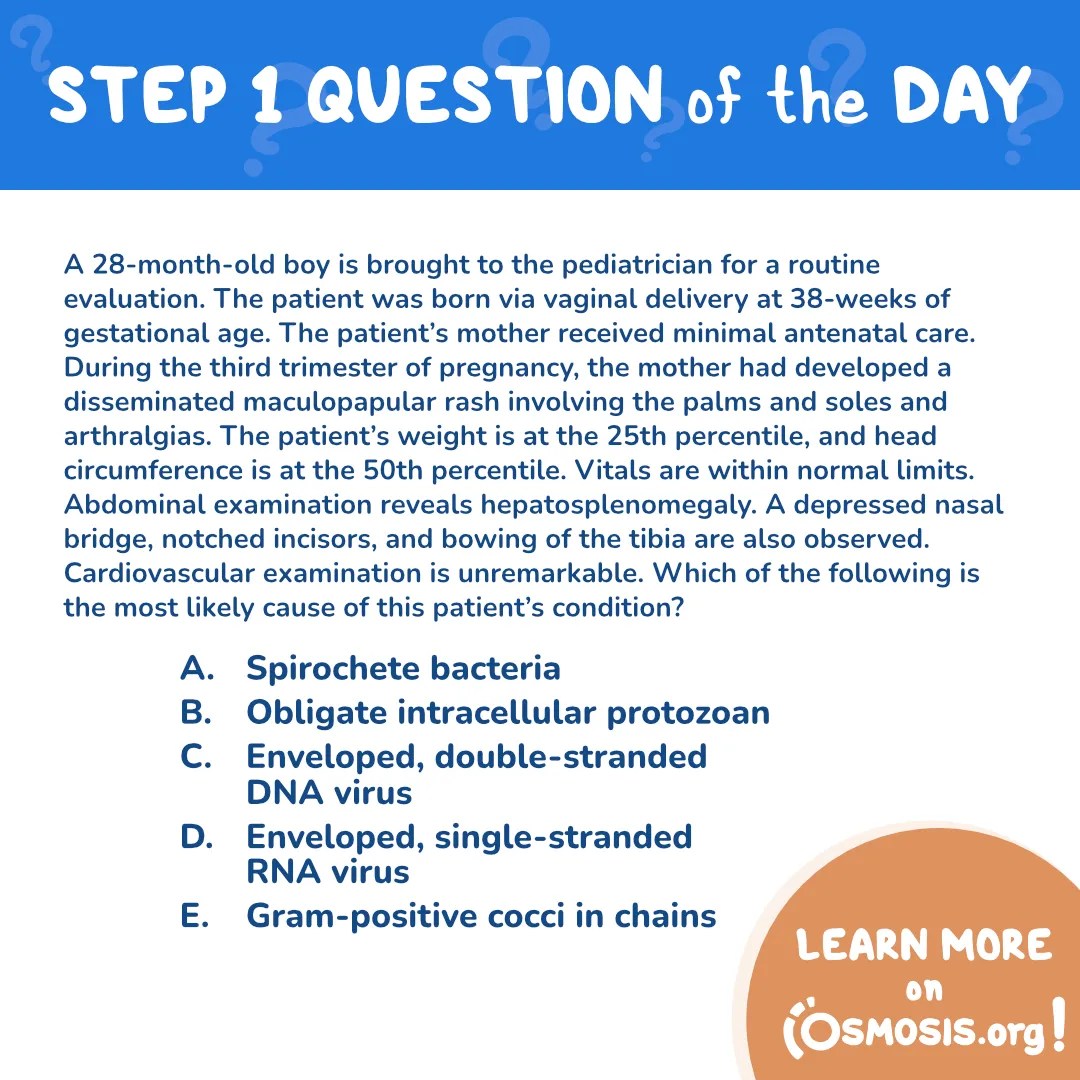
USMLE® Step 1 Question of the Day: Maternal infection
— Updated:
This week, we are sharing another USMLE® Step 1-style practice question to test your knowledge of medical topics. Today’s case focuses on a 28-month-old with unusual clinical features. Can you identify the most likely cause behind the disseminated rash, hepatosplenomegaly, and distinctive facial and skeletal abnormalities?Test your diagnostic skills with…
-
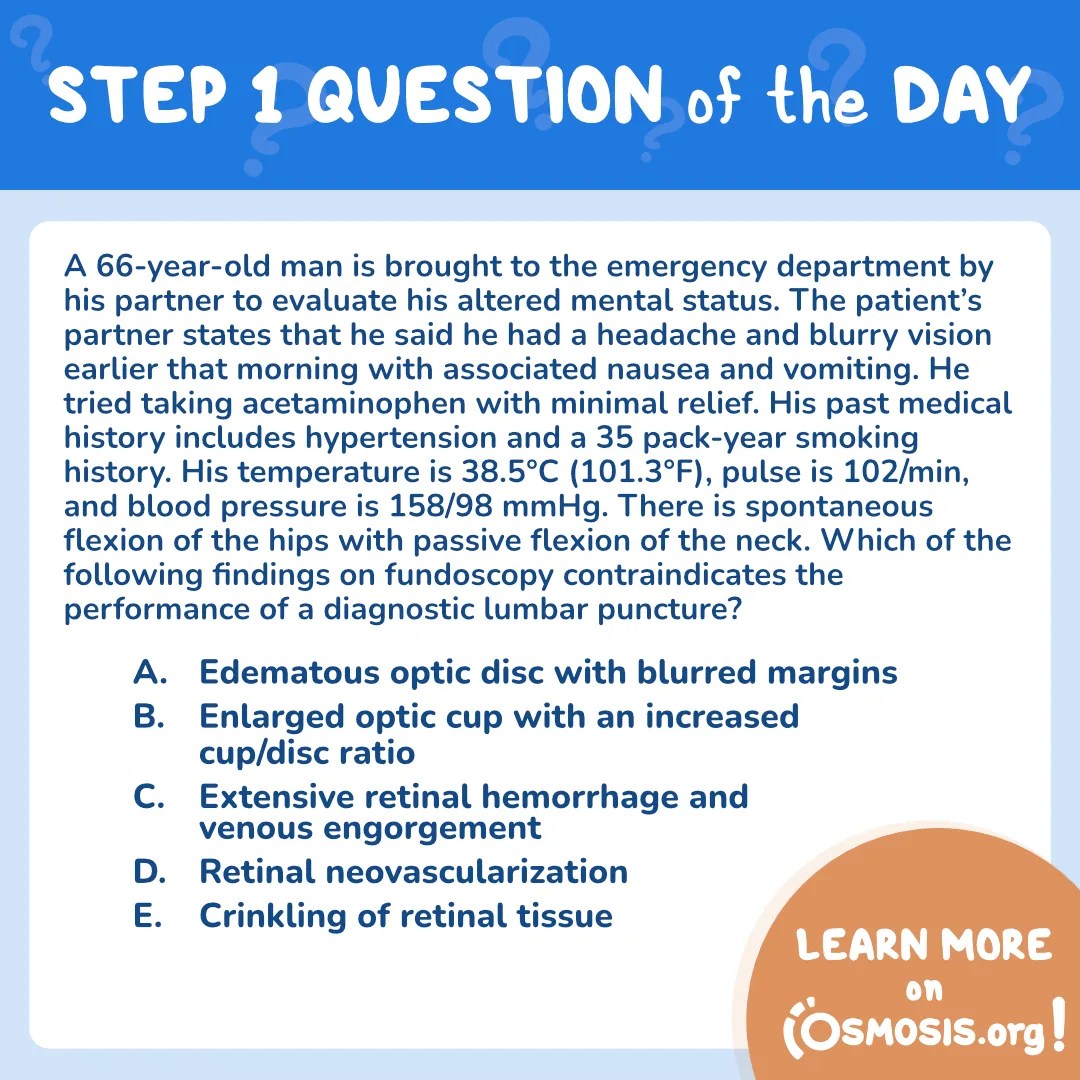
USMLE® Step 1 Question of the Day: Fundoscopy findings
— Updated:
This week, we are sharing another USMLE® Step 1-style practice question to test your knowledge of medical topics. Today’s case focuses on a 66-year-old man with altered mental status, headache, and more. Can you identify the fundoscopy finding that affects a diagnostic lumbar puncture? Test your diagnostic skills with this USMLE Step 1…
-
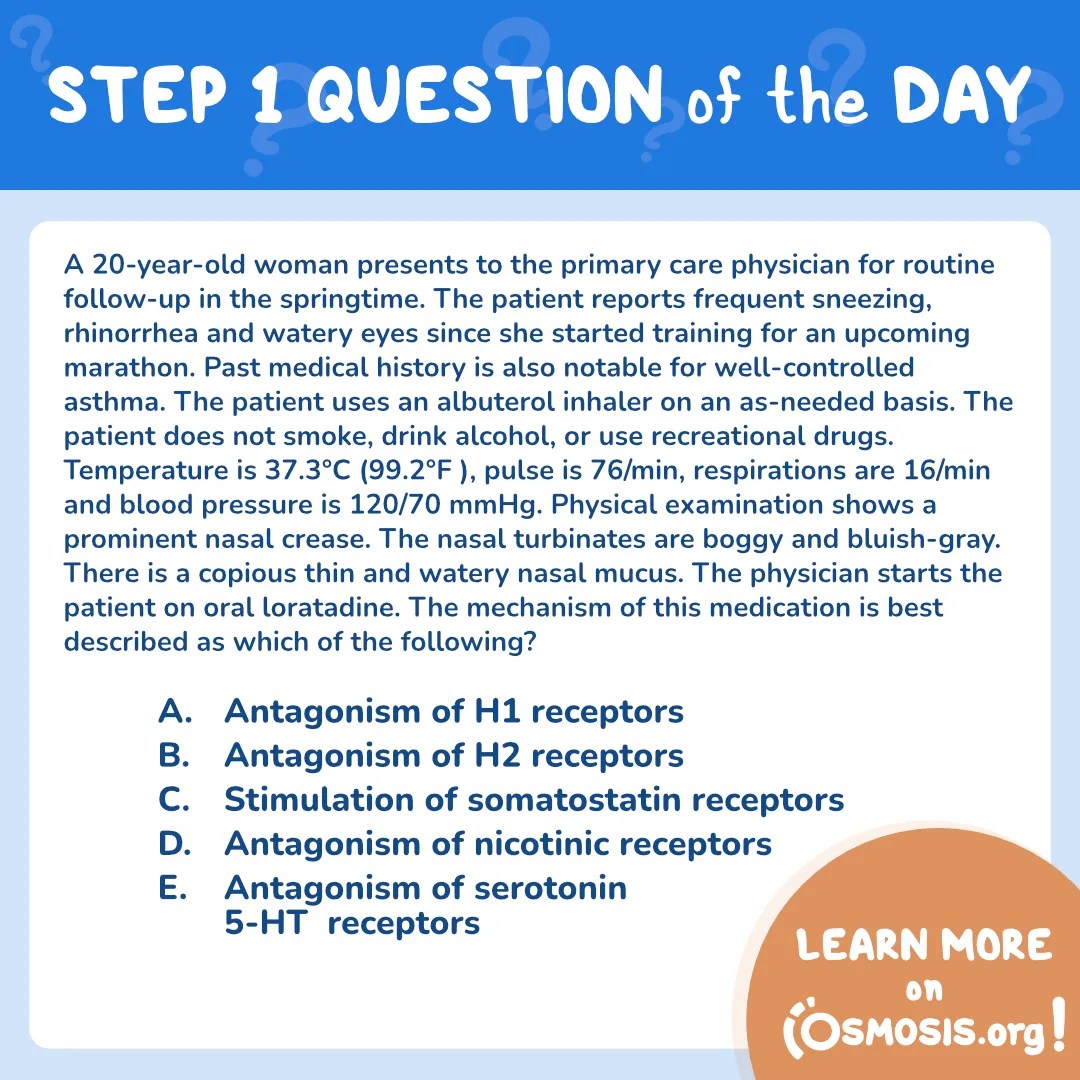
USMLE® Step 1 Question of the Day: Oral loratadine
— Updated:
This week, we are sharing another USMLE® Step 1-style practice question to test your knowledge of medical topics. Today’s case focuses on a 20-year-old woman with a history of well-controlled asthma presents with springtime allergies while training for a marathon. She experiences sneezing, rhinorrhea, and watery eyes. The physician prescribes loratadine. What is…
-
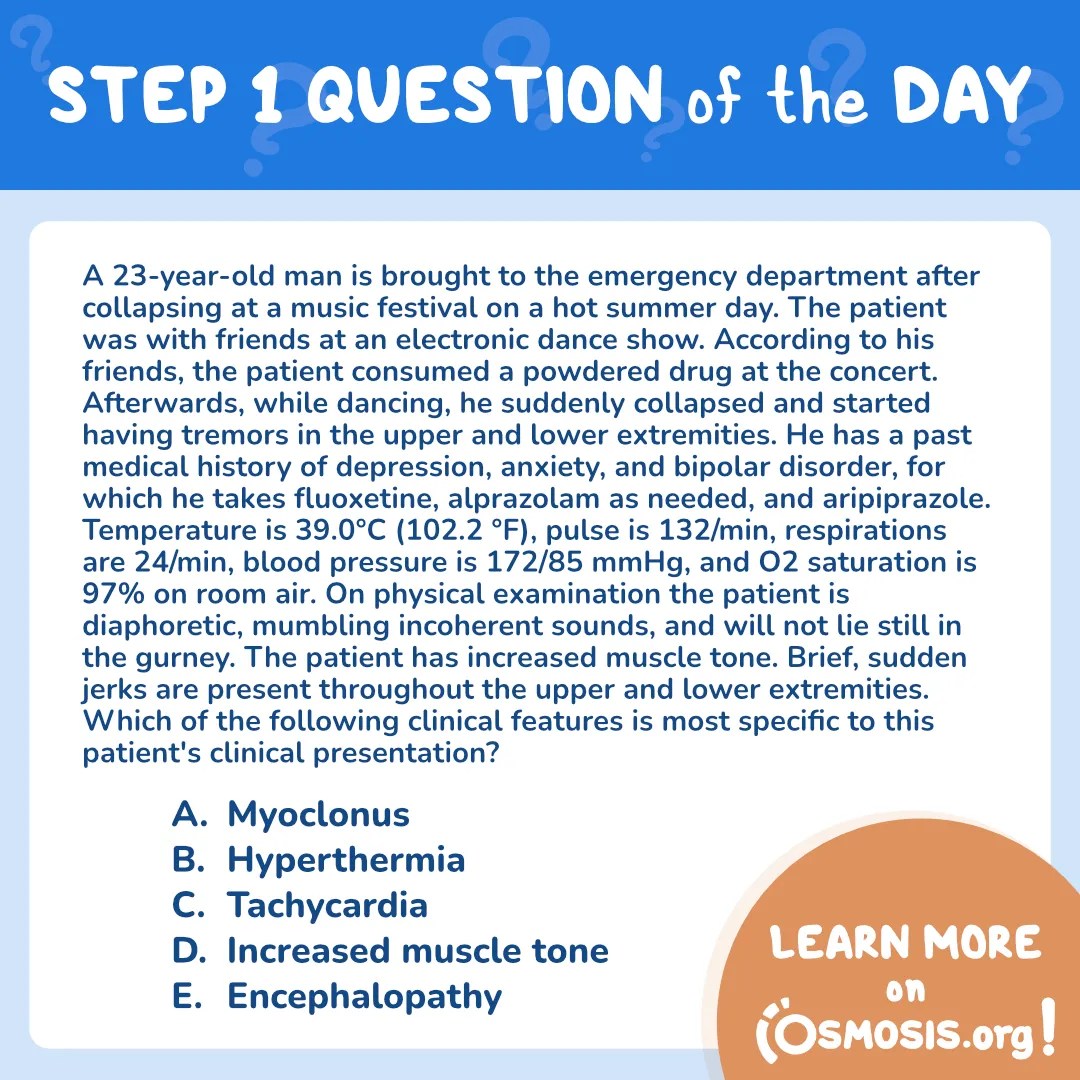
USMLE® Step 1 Question of the Day: Neuroleptic Malignant Syndrome
— Updated:
Explore a USMLE® Step 1 clinical case on serotonin syndrome and discover why myoclonus distinguishes it from similar conditions like neuroleptic malignant syndrome.
-
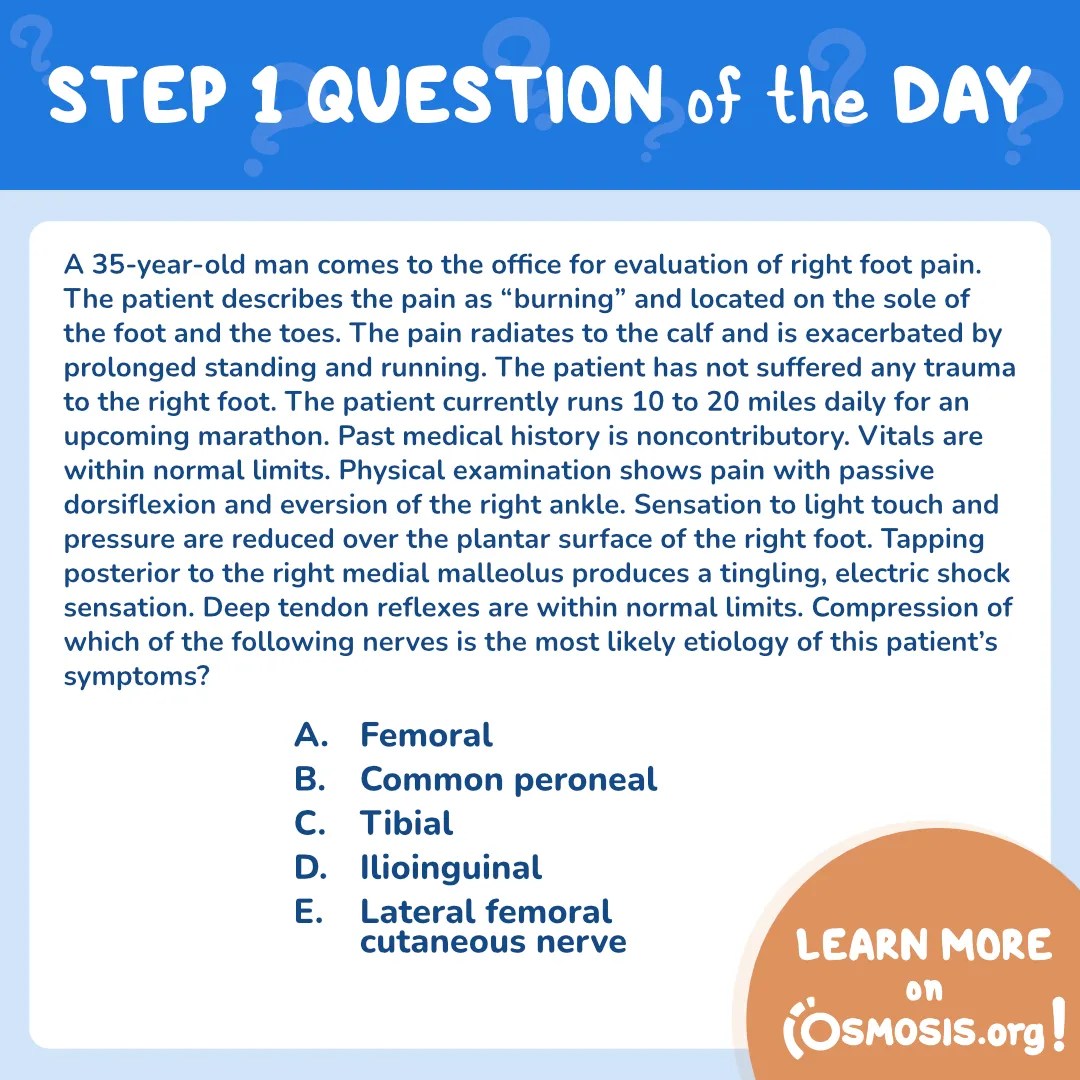
USMLE® Step 1 Question of the Day: Compressed nerve
— Updated:
This week, we are sharing another USMLE® Step 1-style practice question to test your knowledge of medical topics. Today’s case focuses on a 35-year-old marathon runner with burning foot pain. Learn how to identify the underlying nerve compression causing his symptoms. Test your diagnostic skills with this USMLE Step 1 question. A 35-year-old…
-
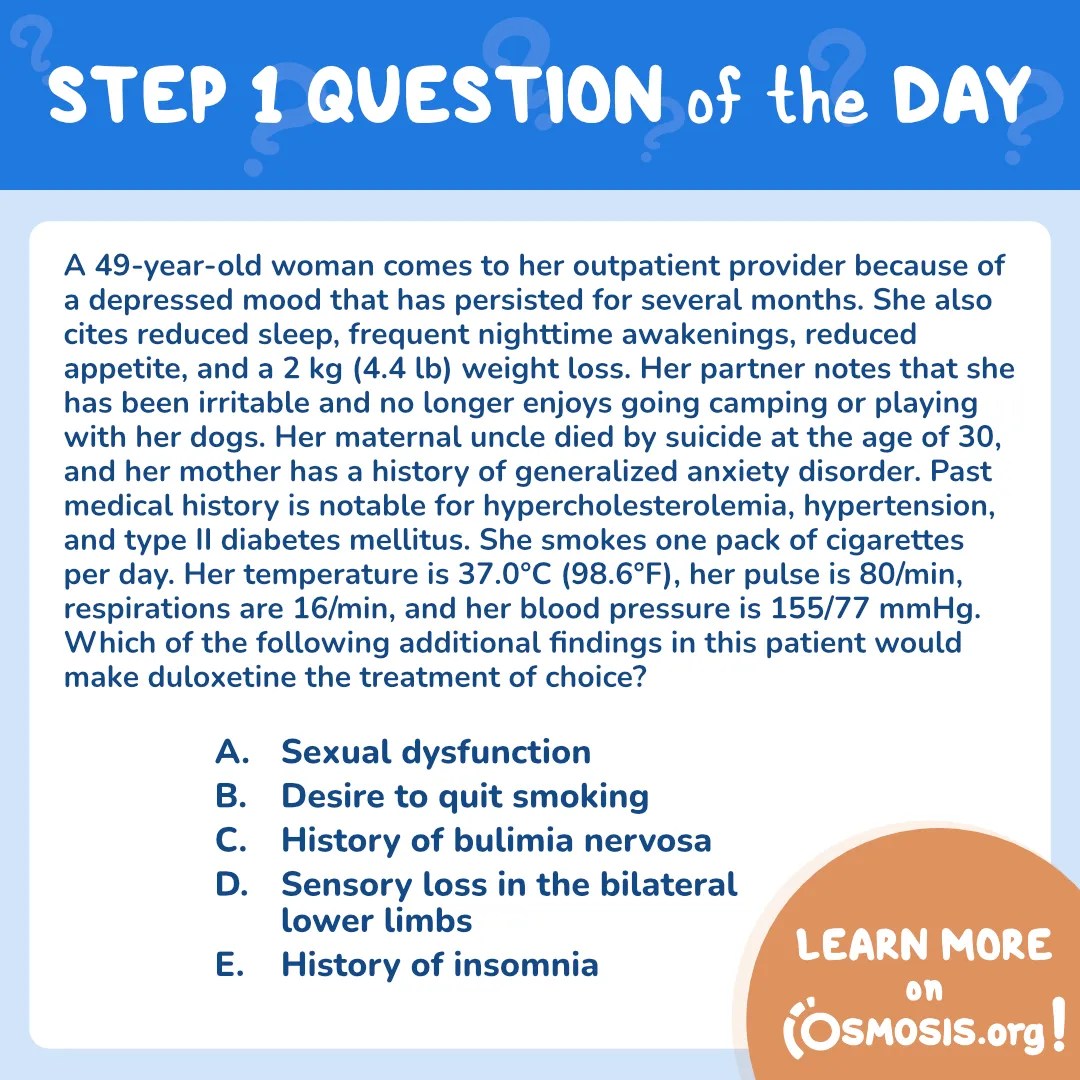
USMLE® Step 1 Question of the Day: Duloxetine
— Updated:
This week, we are sharing another USMLE® Step 1-style practice question to test your knowledge of medical topics. Today’s case focuses on a 49-year-old woman battling depression with a family history of mental health issues. Discover the critical factors that may make duloxetine the preferred treatment option for her condition. Get insights into…