
Category: USMLE® Step 1
-

The Ultimate Guide to USMLE® Step 1 : What Every Med Student Needs to Know
— Updated:
Preparing for USMLE Step 1 can feel overwhelming. This updated Osmosis guide breaks down the testing experience, offers high-yield study strategies, test-day logistics, and tools to help you build a focused study plan so you can ace the exam.
-
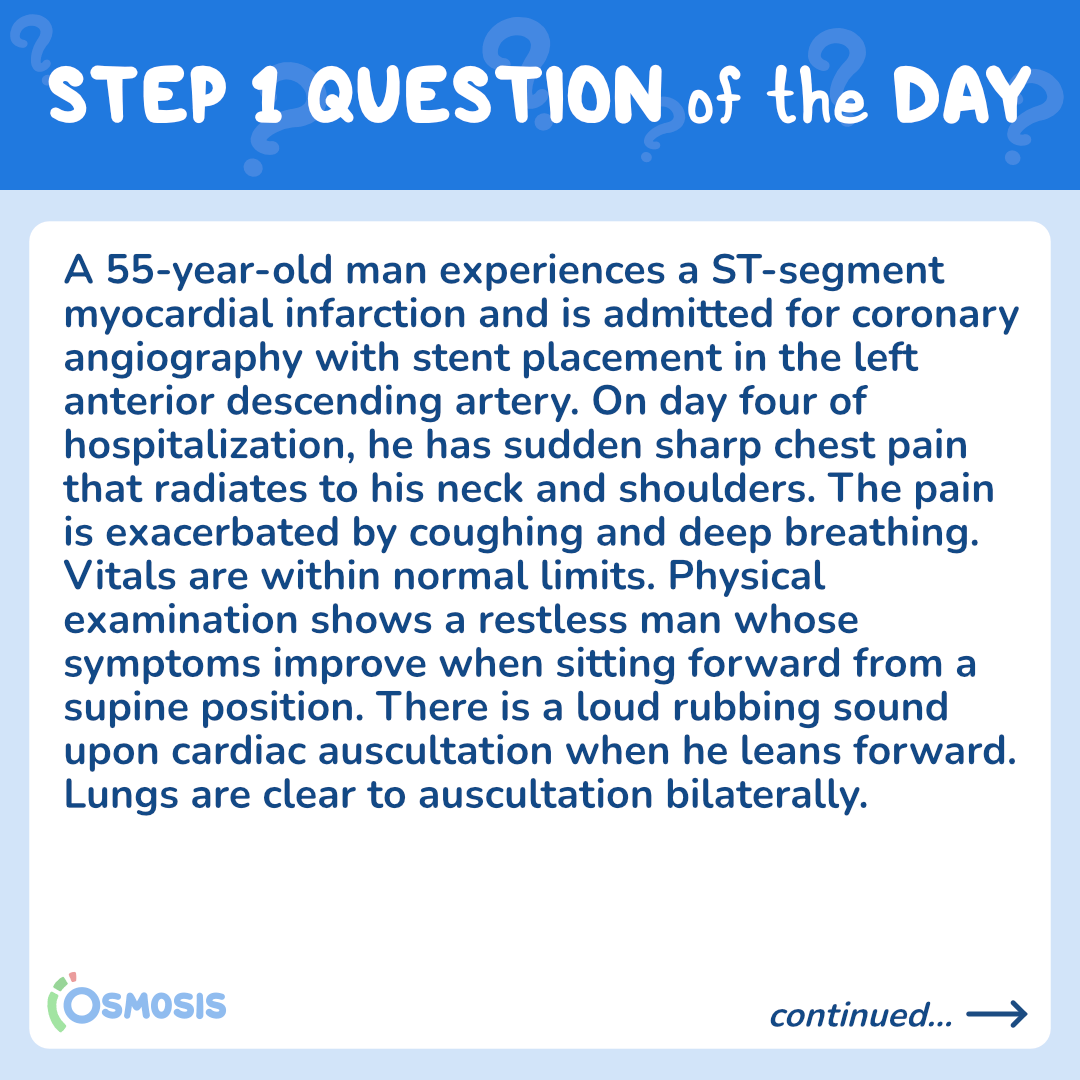
USMLE® Step 1 Question of the Day: Coronary angiography
— Updated:
Delve into today’s USMLE® Step 1 question on a post-MI patient with chest pain and uncover the common adverse effects of antiplatelet therapy.
-
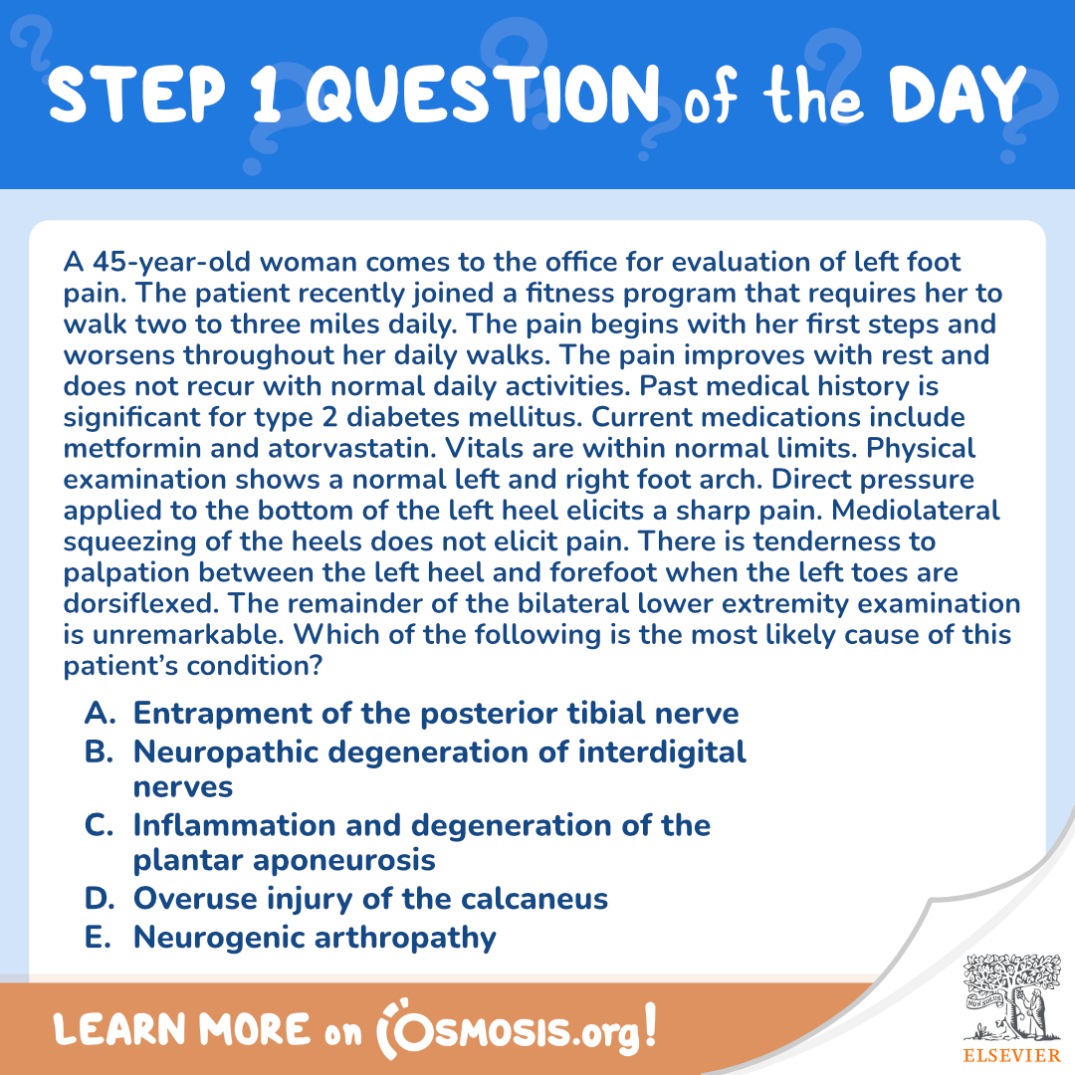
USMLE® Step 1 Question of the Day: Left heel pain
— Updated:
Explore today’s USMLE® Step 1 question focusing on left heel pain to enhance your diagnostic skills!
-
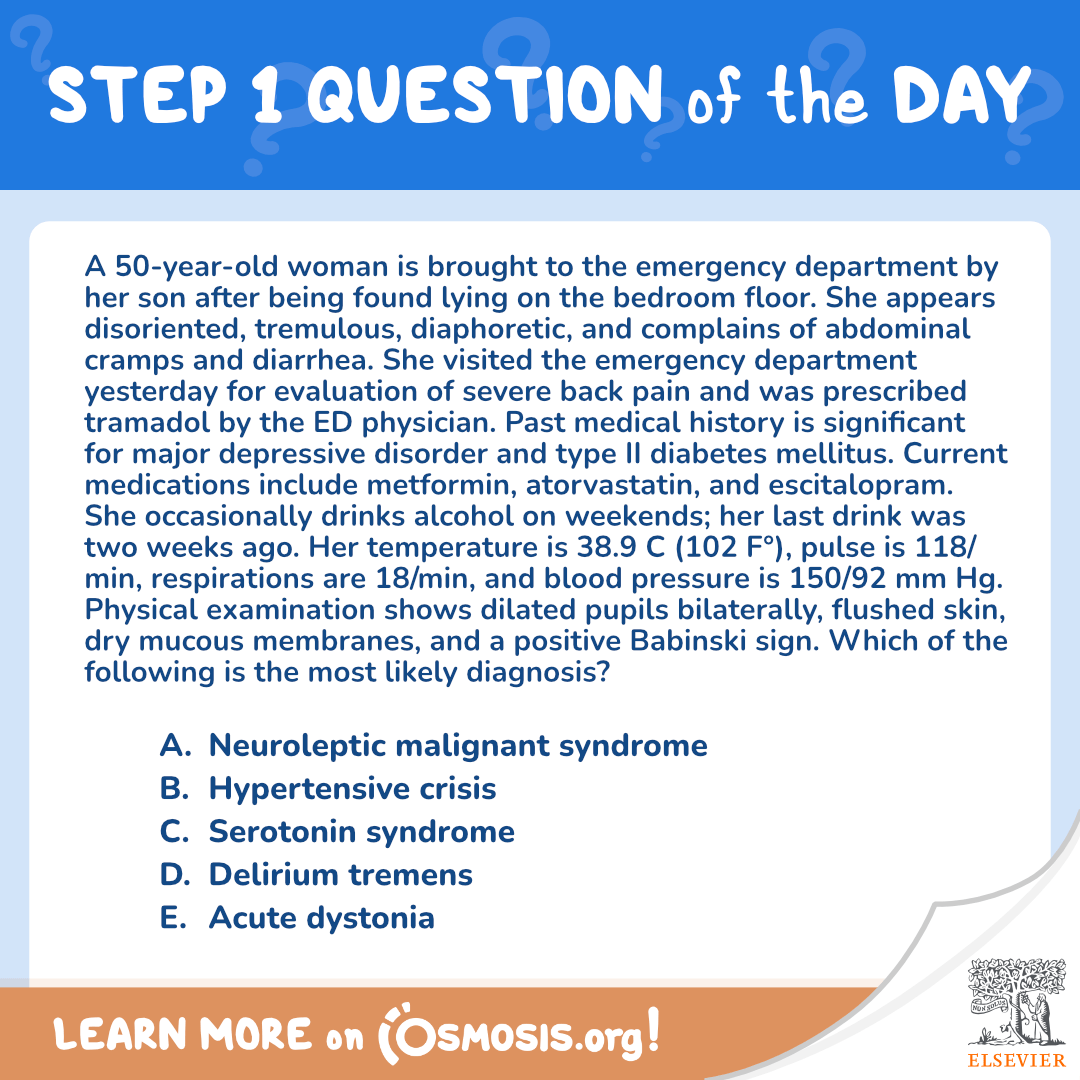
USMLE® Step 1 Question of the Day: Tramadol
— Updated:
Enhance your USMLE® Step 2 CK exam preparation with today’s case study of a 50-year-old woman experiencing symptoms of serotonin syndrome after tramadol use. Learn to recognize the clinical signs and understand the critical role of medication interactions in diagnosing this potentially life-threatening condition.
-
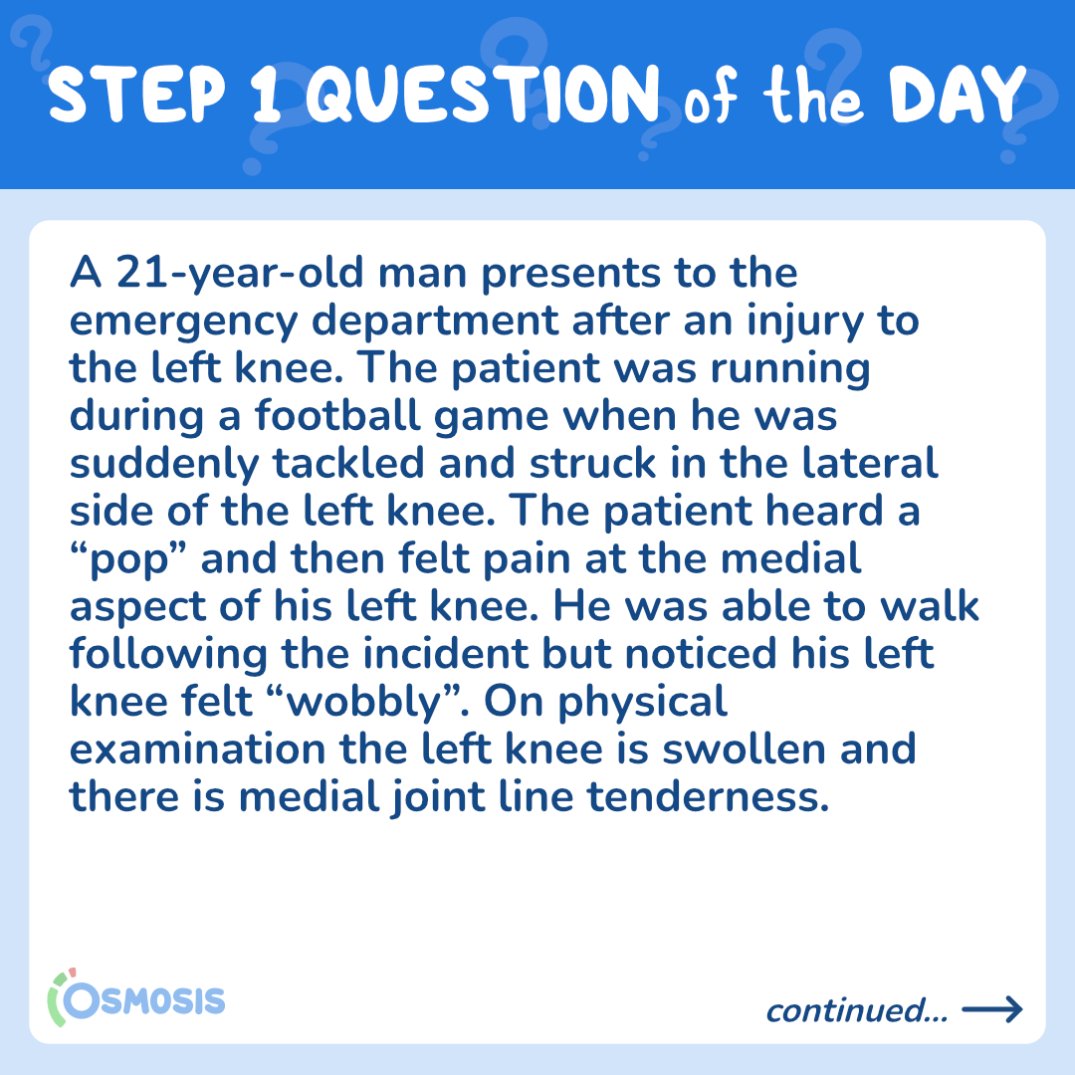
USMLE® Step 1 Question of the Day: Left knee injury
— Updated:
Prep for the USMLE® Step 1 exam by exploring a clinical case involving a 21-year-old man with a left knee injury. Learn to identify the most appropriate physical examination maneuver. Strengthen your clinical assessment skills!
-
USMLE® Step 1 Question of the Day: Left-sided weakness
— Updated:
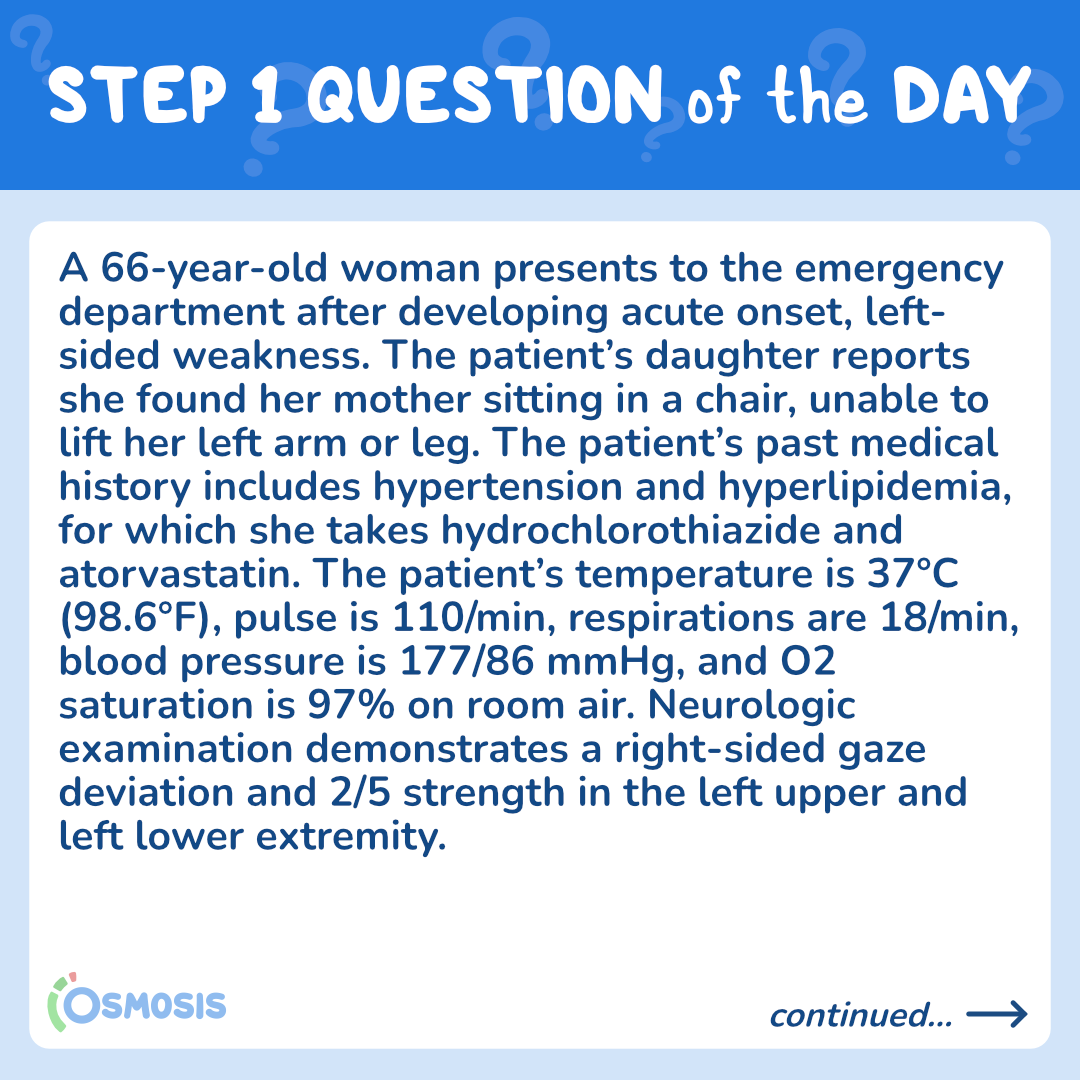
Ace the USMLE® Step 1 exam by studying with us! Let’s explore a clinical case involving a 66-year-old woman with left-sided weakness. Learn to identify the most common origin of thrombus in patients experiencing ischemic strokes, particularly in the context of atrial fibrillation. Test your clinical knowledge and improve your…
-
USMLE® Step 1 Question of the Day: Skin blistering
— Updated:
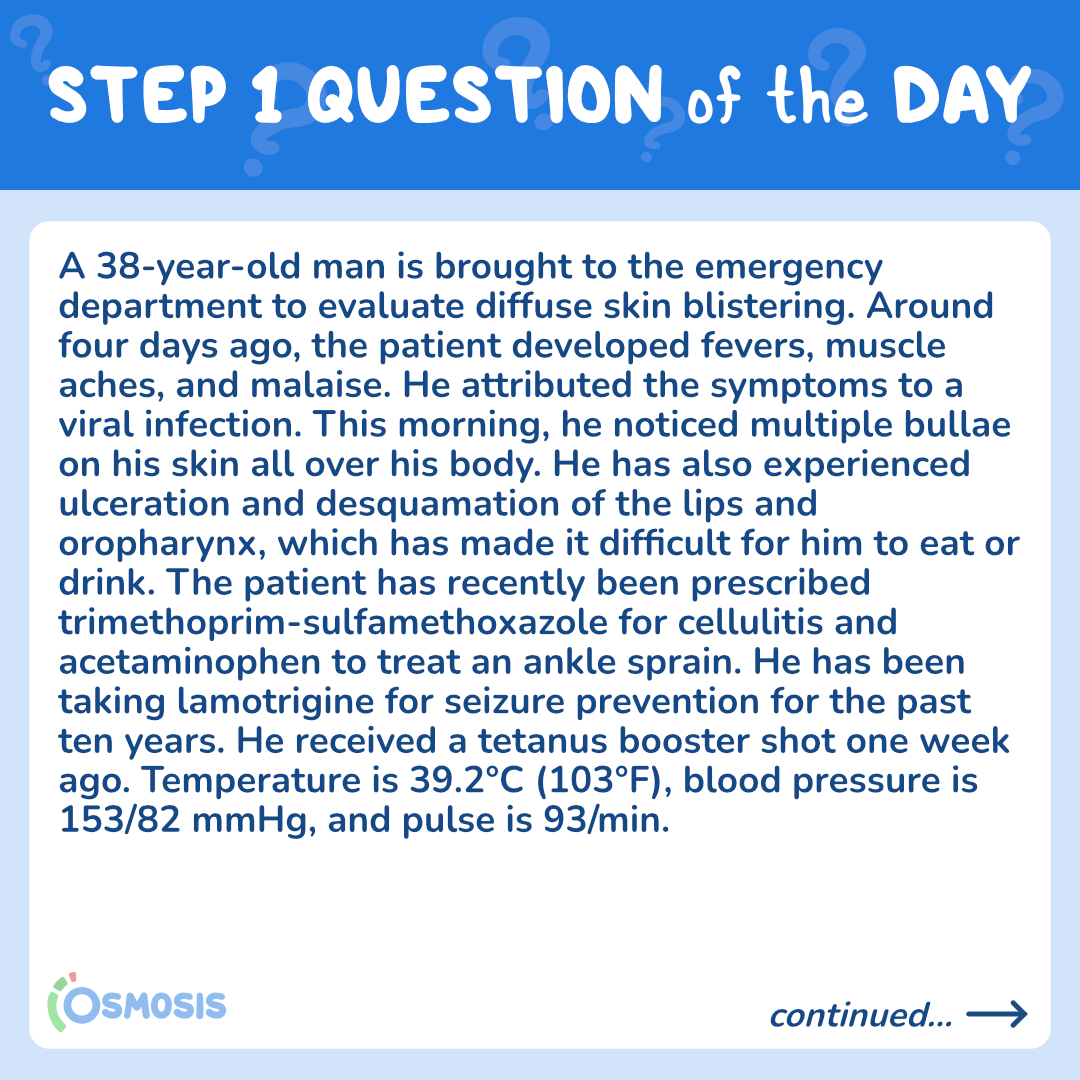
Get ready for the USMLE® Step 1 exam with a case study on skin blistering and Stevens-Johnson syndrome. Learn to identify common triggers, including medications like trimethoprim-sulfamethoxazole, and understand the importance of recognizing and addressing this serious condition. Test your clinical knowledge and prepare effectively for Step 1!
-
How to Use the Osmosis Qbank to Prep for USMLE® Step 1
— Updated:
Prepare for the USMLE Step 1 exam using Osmosis quizzes! Learn how to integrate practice questions into your study routine, use active recall and spaced repetition, and track your progress for your optimal exam performance. Discover the benefits of engaging with practice questions and take your preparation to the next…
-
The Top 10 Helpful Medical Mnemonics from Osmosis
— Updated:
Dive into the whirlwind of medical school with these top 10 mnemonics designed to enhance your learning and retention. From assessing melanoma to mastering heart sounds, these clever memory aids will help you navigate your studies and prepare for clinical practice. Keep them close to achieve success in your medical…
-
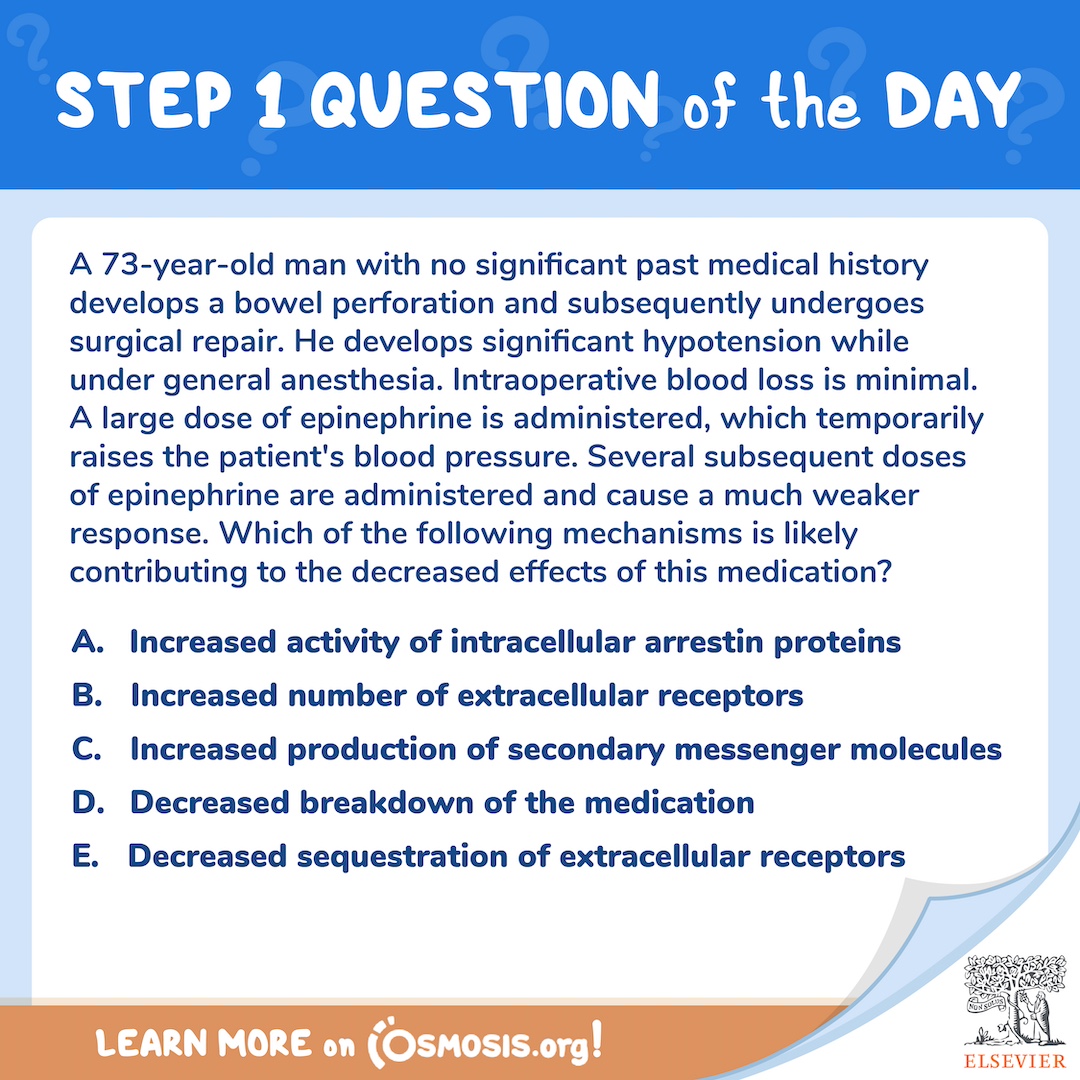
USMLE® Step 1 Question of the Day: Epinephrine response
— Updated:
Examine a clinical case of a 73-year-old man with hypotension during surgery and learn about the pharmacological mechanisms, including desensitization, affecting his response to epinephrine. Enhance your understanding of managing intraoperative hypotension effectively.
-
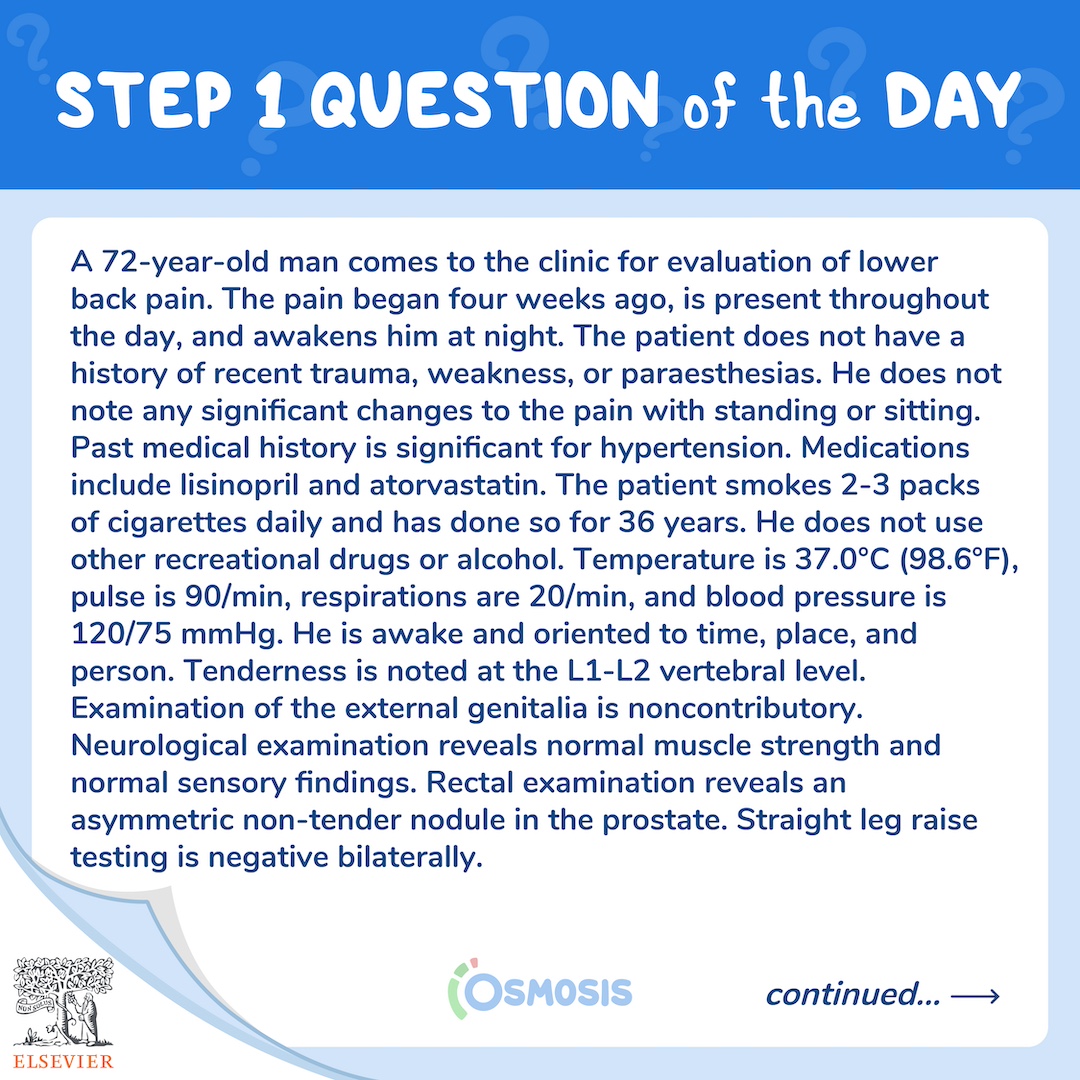
USMLE® Step 1 Question of the Day: Prostate nodule
— Updated:
Delve into today’s USMLE® Step 1 question on prostate cancer metastasis and understand the anatomical pathways and clinical implications involved.
-
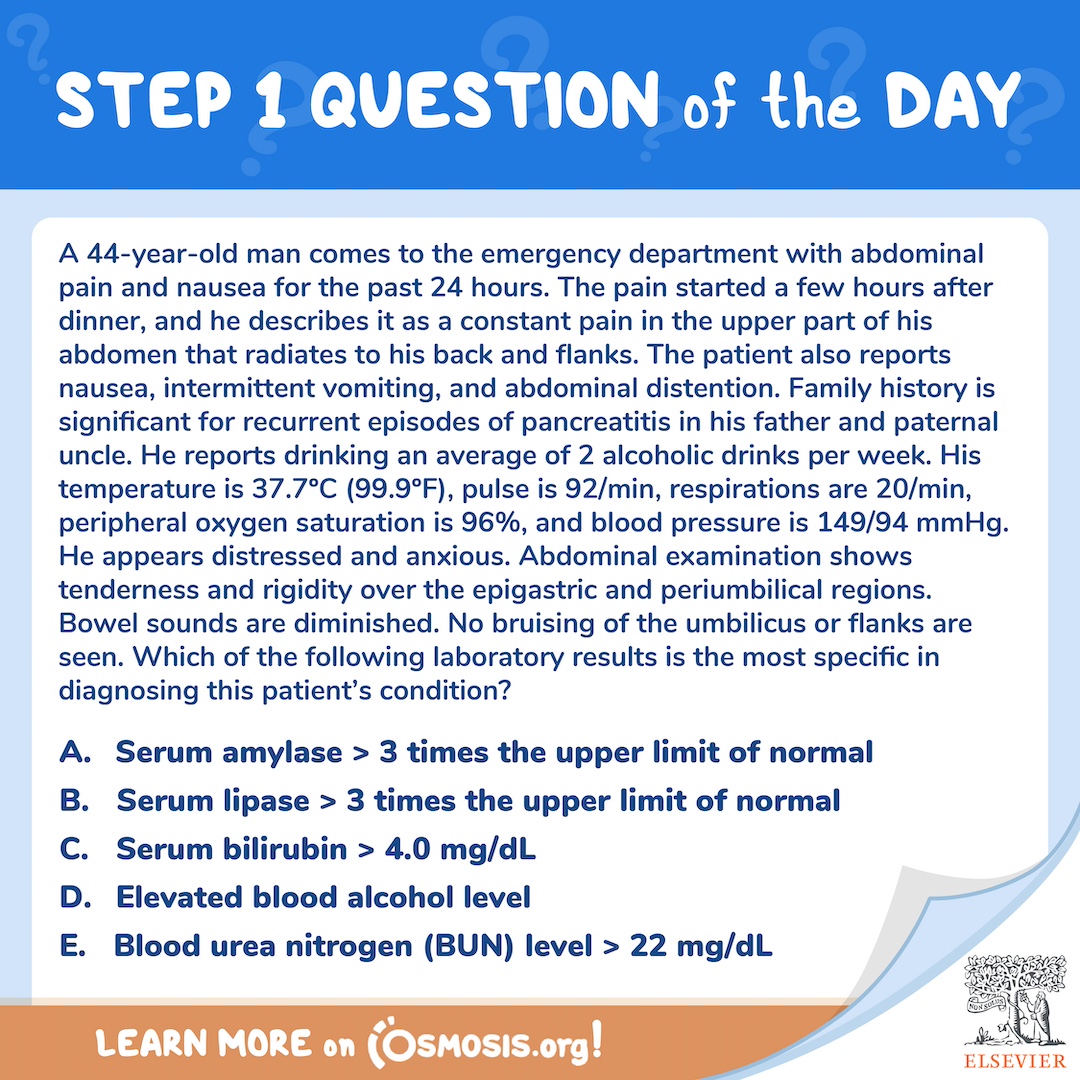
USMLE® Step 1 Question of the Day: Pancreatitis
— Updated:
Today, let’s focus on USMLE Step 1, with a question on acute pancreatitis. Can you recommend the appropriate diagnostic investigations, interpret the findings to establish a diagnosis, and describe the essential treatment options? Are you able to recall and recognize the clinical features and complications associated with this condition? Sharpen…
-
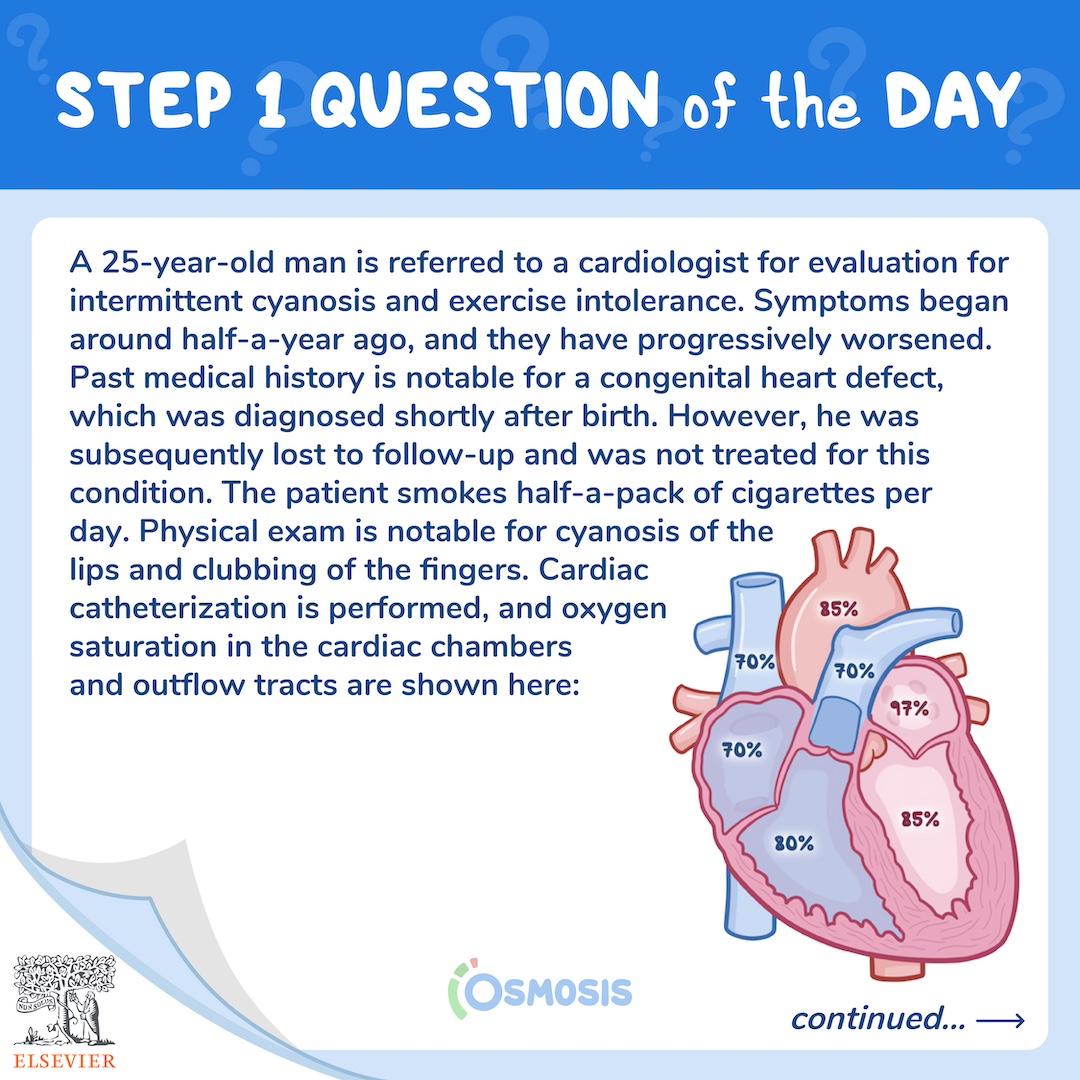
USMLE® Step 1 Question of the Day: Cardiac catheterization
— Updated:
Prepare for your USMLE Step 1 with a question focusing on Eisenmenger syndrome. Can you summarize the pathophysiology of this condition and recognize its key clinical features? Sharpen your understanding of this critical cardiovascular topic! A 25-year-old man is referred to a cardiologist for evaluation for intermittent cyanosis and exercise…
-
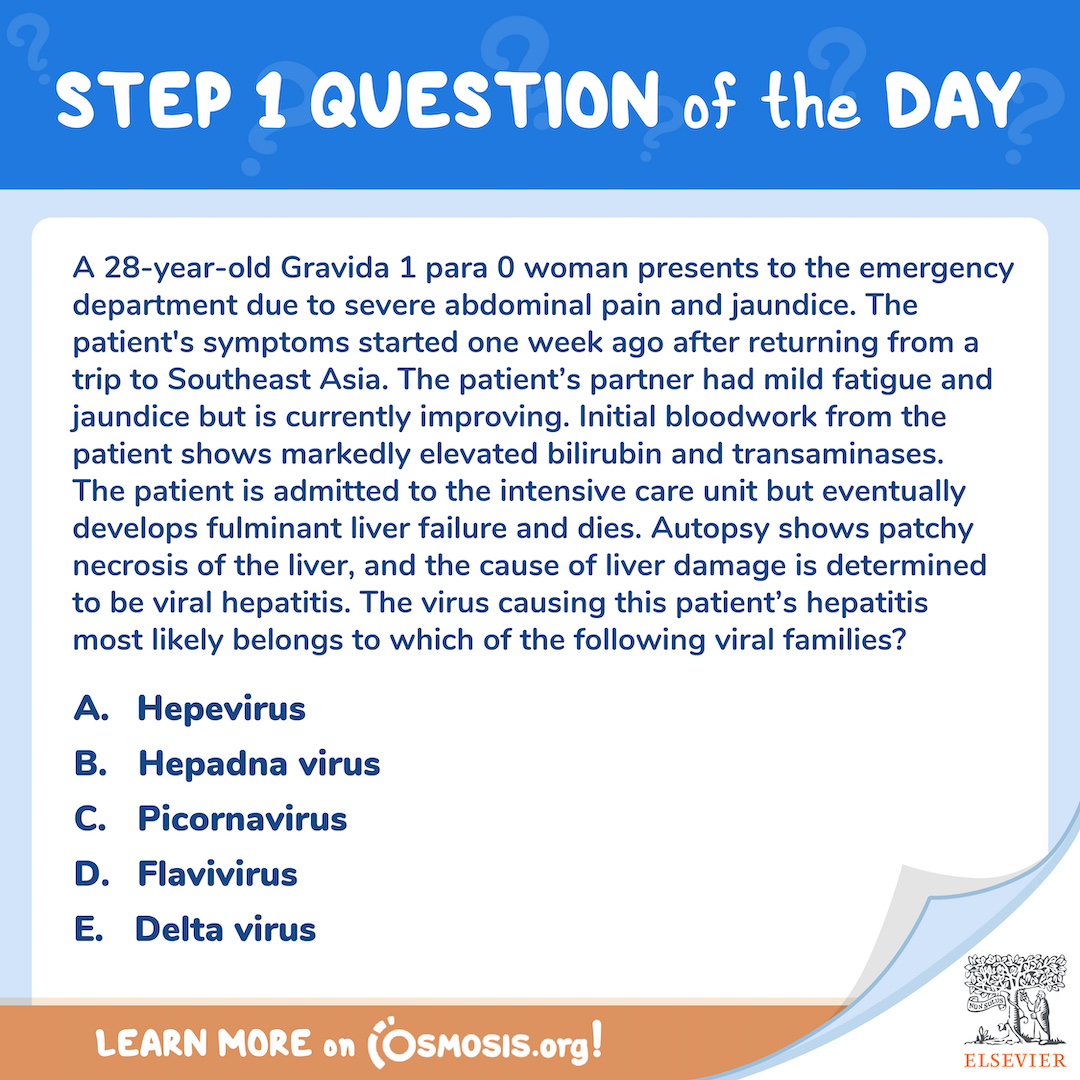
USMLE® Step 1 Question of the Day: Viral hepatitis
— Updated:
Prepare for the USMLE Step 1 exam with this detailed question about a 28-year-old woman experiencing severe abdominal pain and jaundice after returning from a trip to Southeast Asia. What family of viruses causes patchy necrosis of the liver? Test your knowledge and deepen your understanding of viral infections. A…
-

USMLE® Step 1 Question of the Day: Histologic analysis
— Updated:
Prepare for the USMLE Step 1 exam with this detailed question about a 57-year-old woman with malaise and intermittent fevers over the past several weeks. Can you correctly identify which of the following findings is most likely to be demonstrated on histologic analysis? A 57-year-old woman presents to her primary care…
-

How to Study Anatomy: Effectively Proven Strategies for Faster Learning
— Updated:
Unlock effective anatomy study strategies with tips on identifying your learning style, using mnemonics and visuals, managing study sessions, and boosting retention through group work.
-
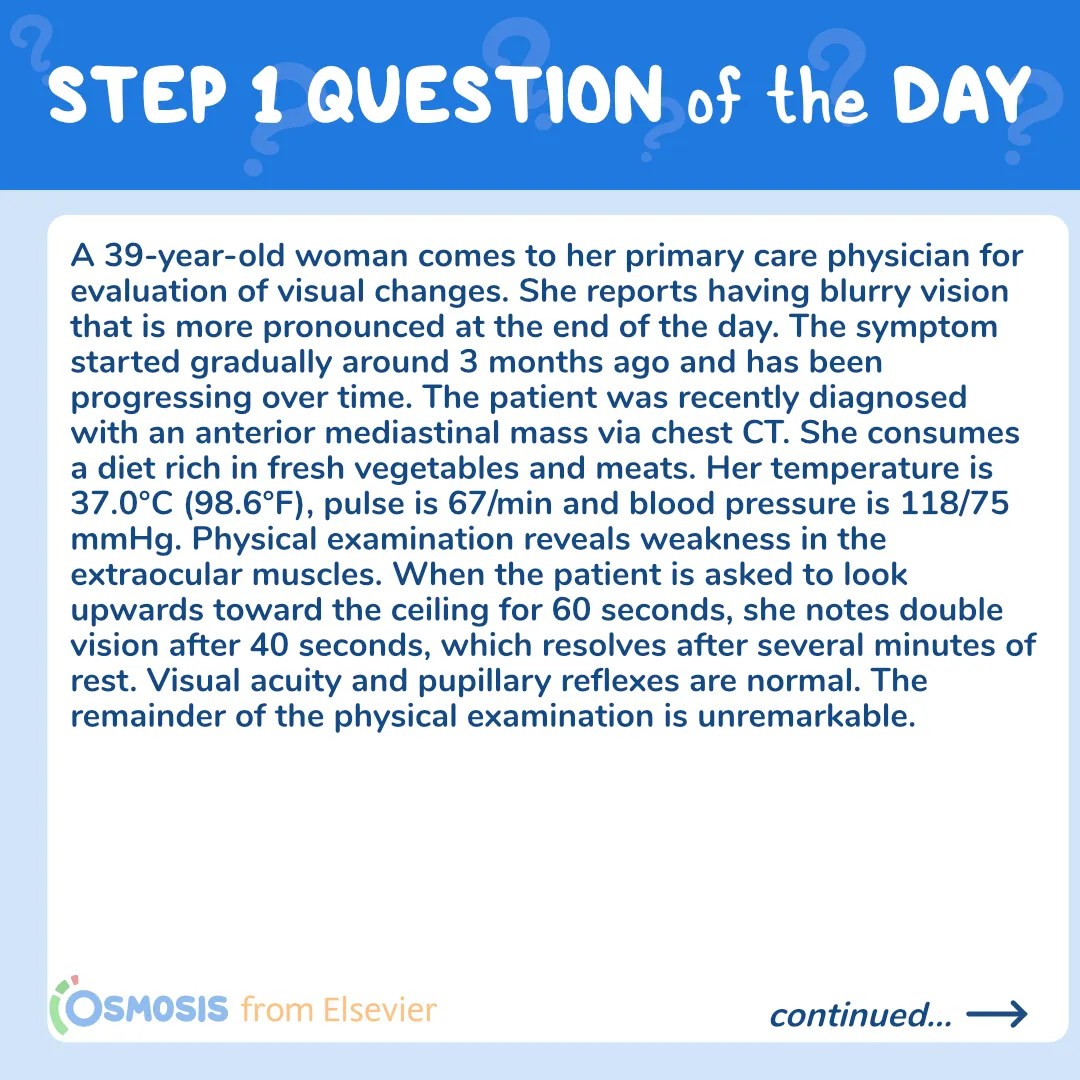
USMLE® Step 1 Question of the Day: Blurry vision
— Updated:
Test your knowledge with a USMLE Step 1 question on a patient with progressive blurred vision and muscle weakness linked to a mediastinal mass. Which neuromuscular structure is affected?
-
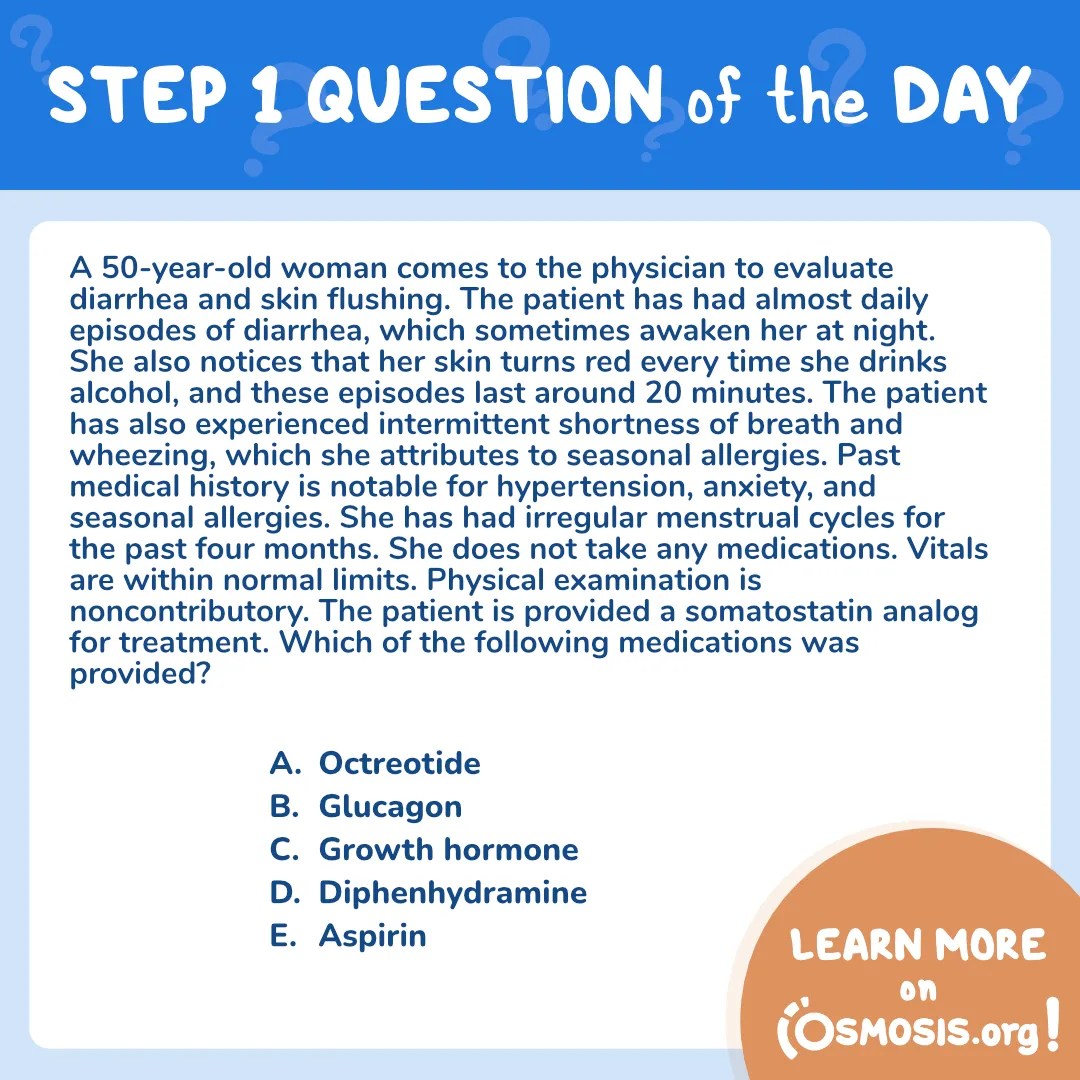
USMLE® Step 1 Question of the Day: Somatostatin analog
— Updated:
Test your knowledge with this USMLE Step 1 Question of the Day! A 50-year-old woman presents with daily diarrhea, skin flushing, and shortness of breath. She is treated with a somatostatin analog. Which medication was provided? A 50-year-old woman comes to the physician to evaluate diarrhea and skin flushing. The…
-
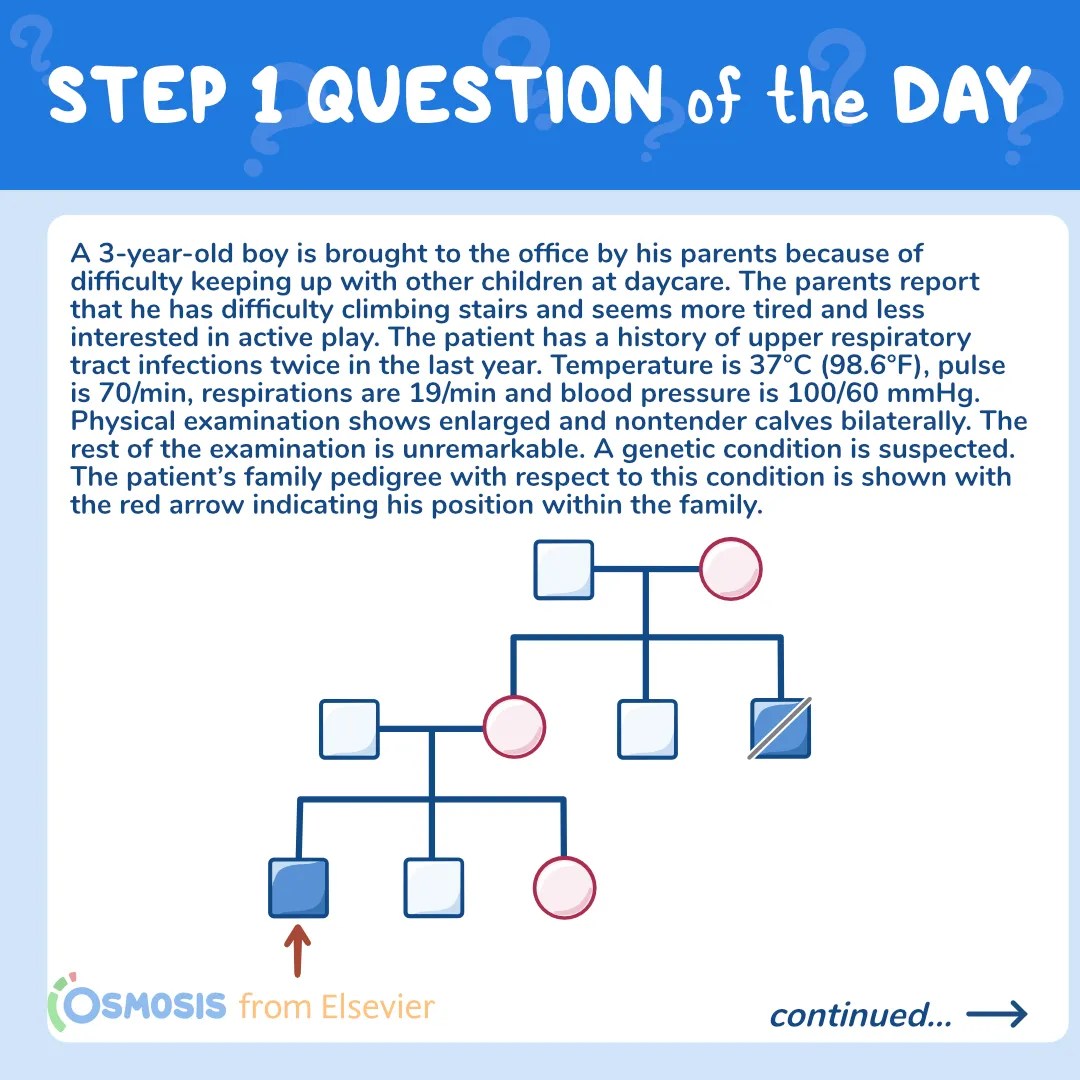
USMLE® Step 1 Question of the Day: Inheritance patterns
— Updated:
Test your knowledge with this USMLE Step 1 Question of the Day. A 3-year-old boy is brought to the office due to difficulty keeping up with other children at daycare. The physical examination reveals enlarged calves, and a genetic condition is suspected. Review the patient’s family pedigree and determine the…
-
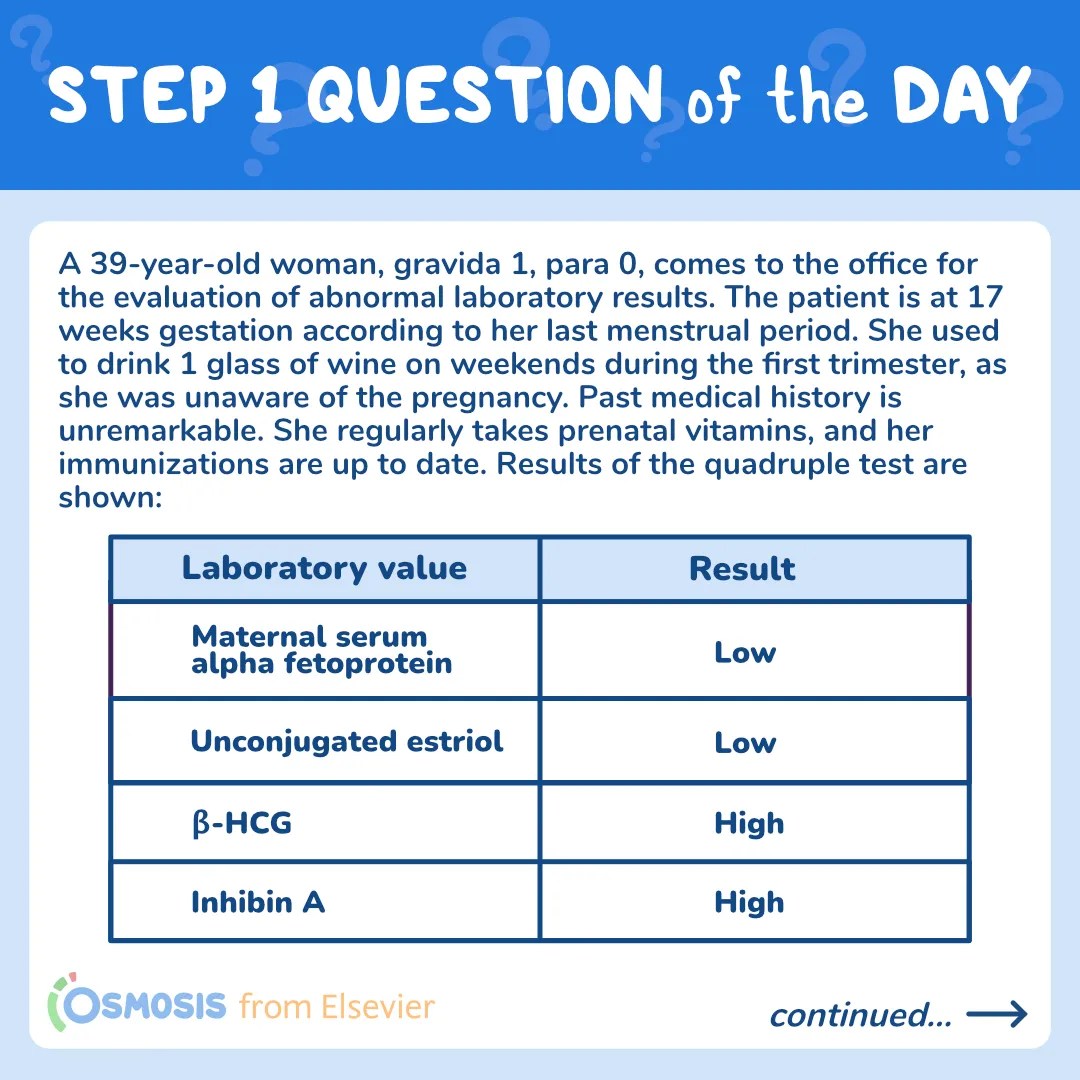
USMLE® Step 1 Question of the Day: Quadruple test
— Updated:
A pregnant patient’s quadruple test shows abnormal markers. Which fetal condition is most likely associated with these results?
-
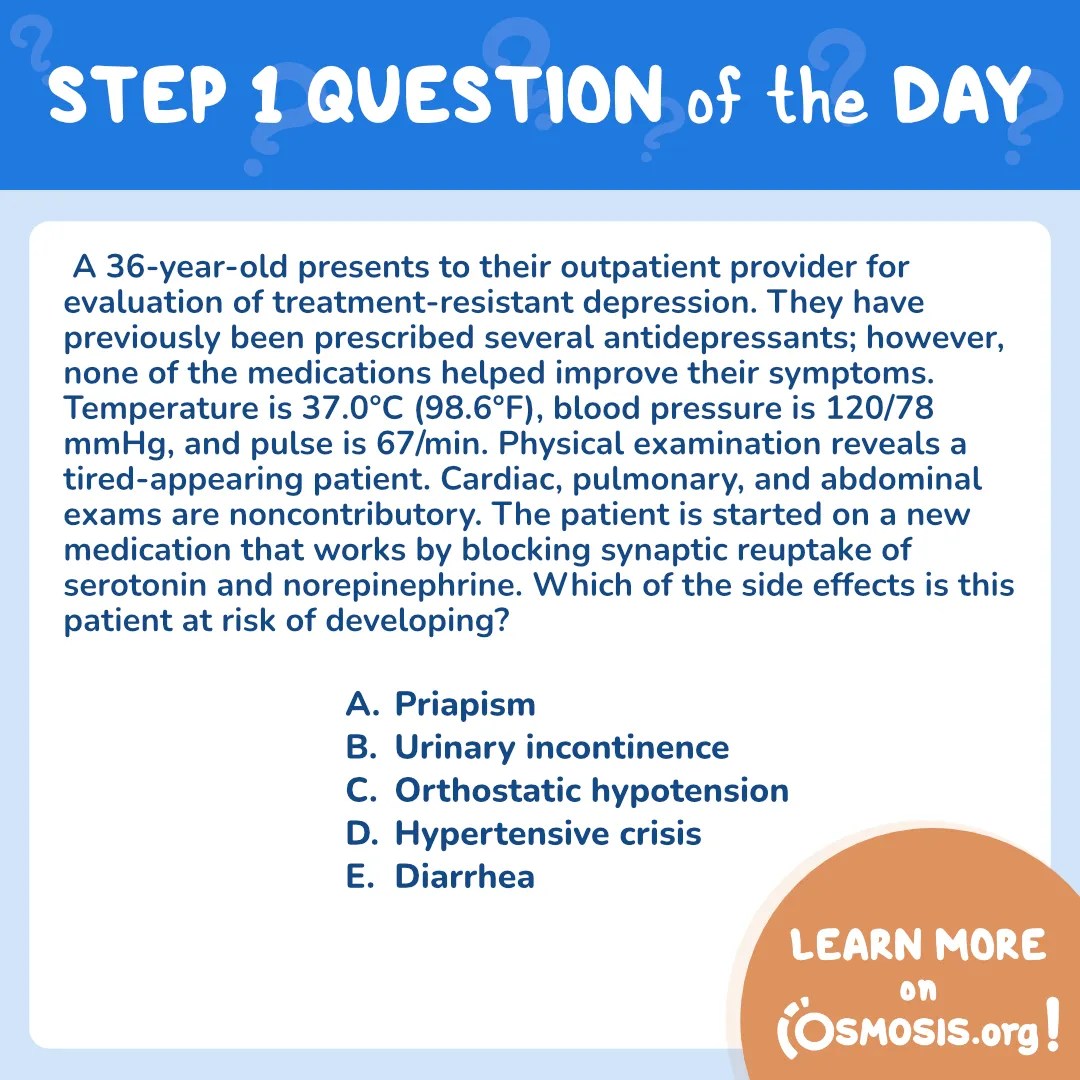
USMLE® Step 1 Question of the Day: Antidepressants
— Updated:
This USMLE Step 1 Question of the Day involves a 36-year-old patient for evaluation of treatment-resistant depression. Based on the findings, identify the most likely diagnosis. A 36-year-old presents to their outpatient provider for evaluation of treatment-resistant depression. They have previously been prescribed several antidepressants; however, none of the medications…
-
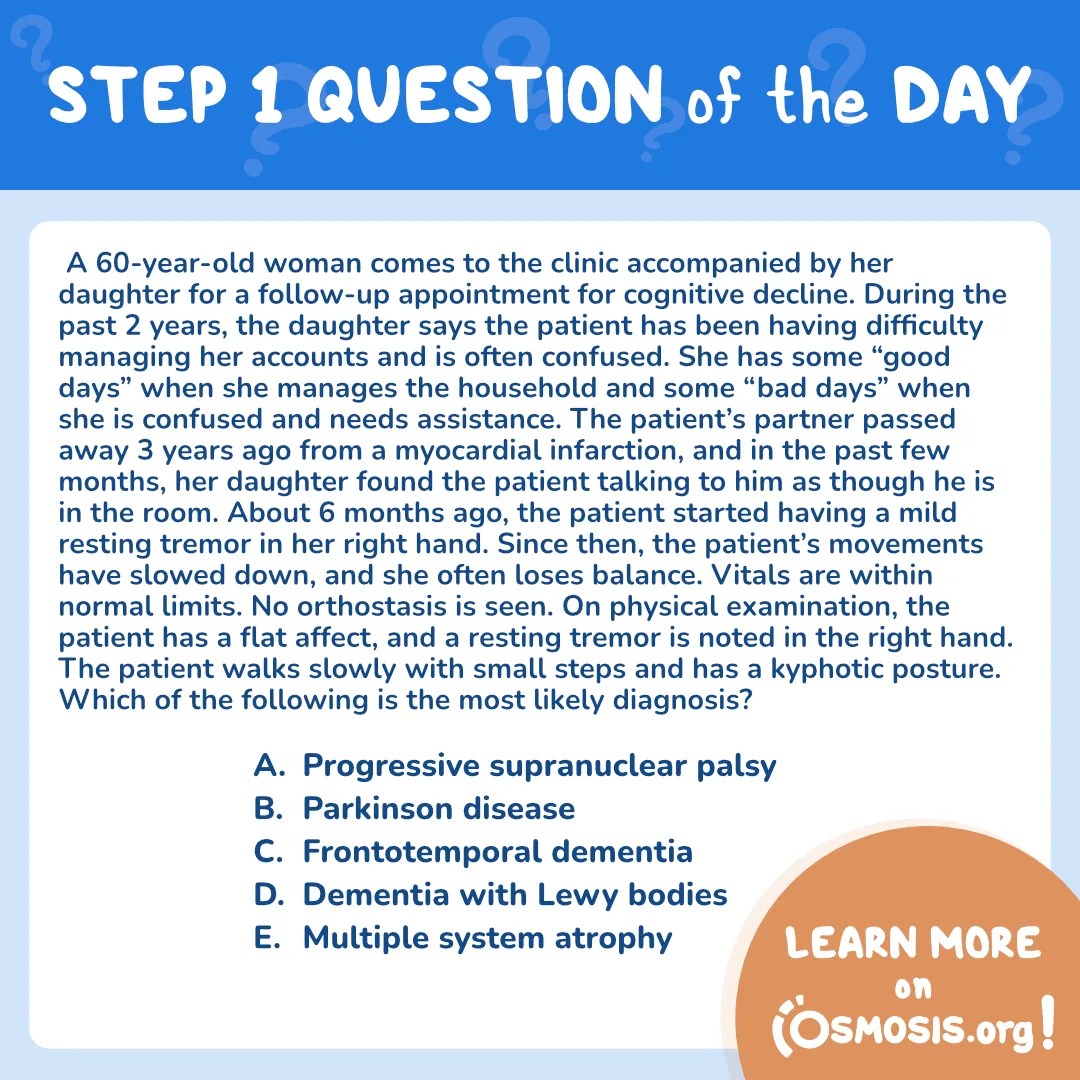
USMLE® Step 1 Question of the Day: Cognitive decline
— Updated:
An older woman presents with fluctuating cognition, visual hallucinations, and parkinsonism. What diagnosis best explains her symptoms?
-
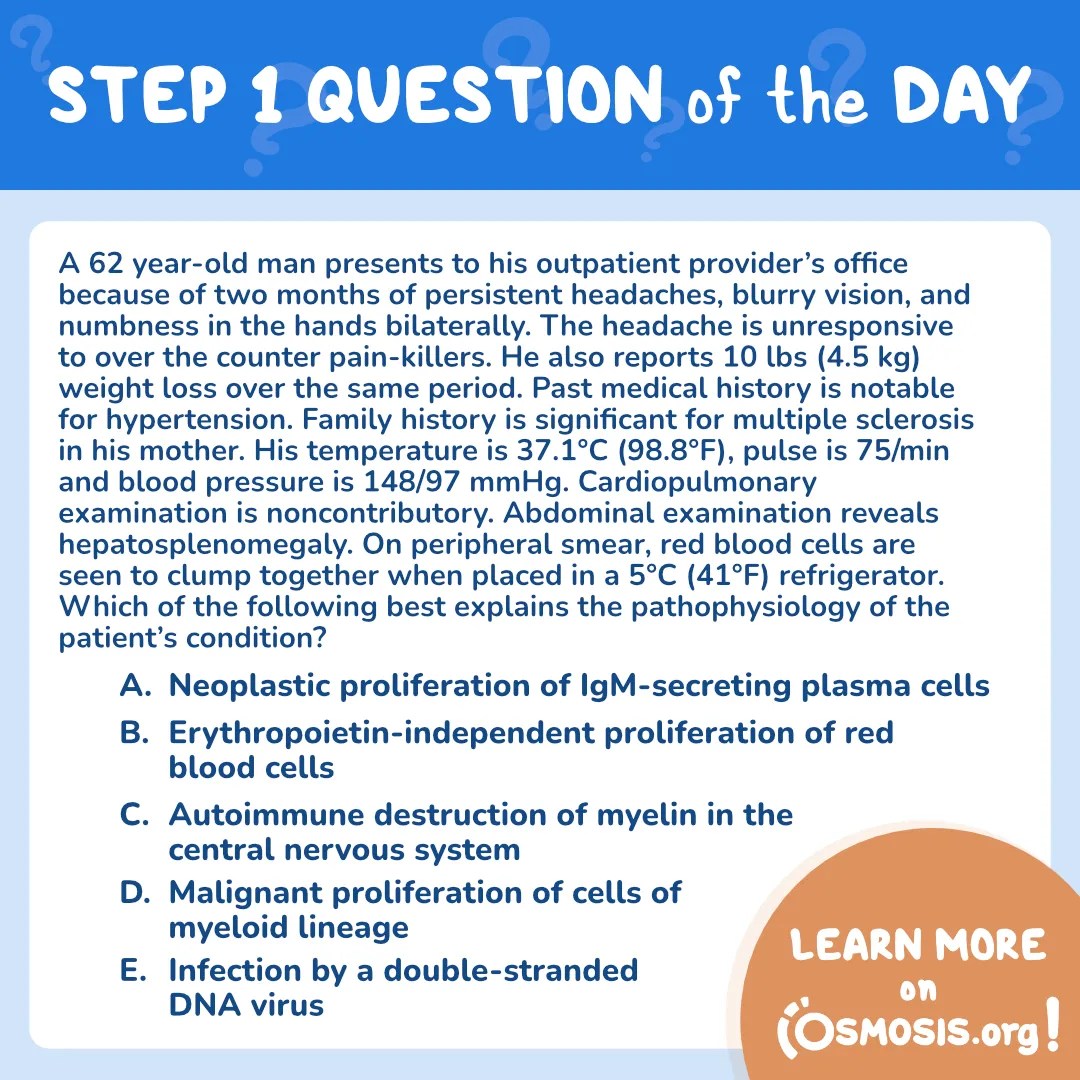
USMLE® Step 1 Question of the Day: Hepatosplenomegaly
— Updated:
Prepare for USMLE Step 1 with this case! Learn about a USMLE Step 1 question involving a 62-year-old man with headaches, blurry vision, and numbness in his hands. Learn the significance of elevated IgM levels, blood viscosity, and the importance of cold agglutination in this hematologic malignancy. A 62 year-old…
-
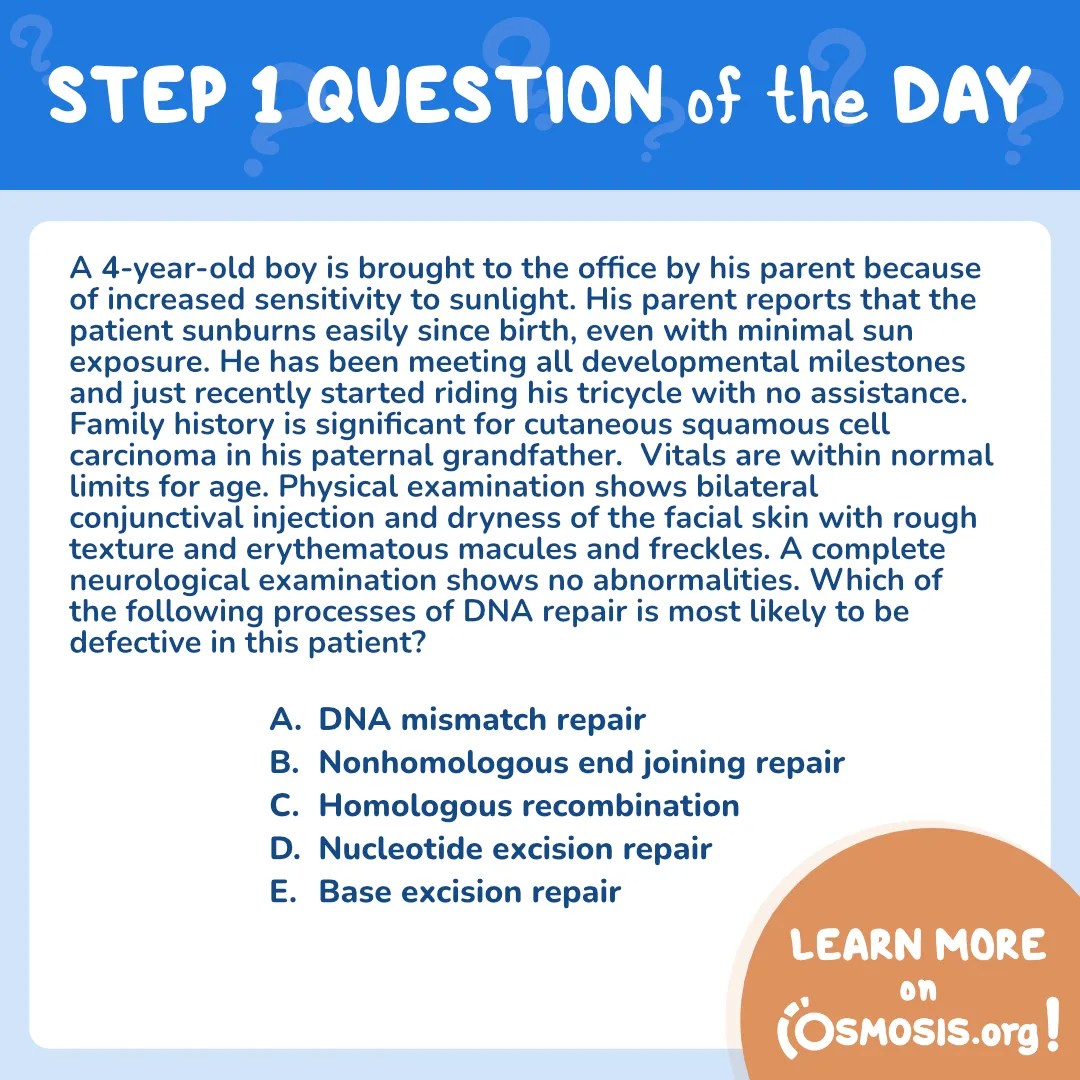
USMLE® Step 1 Question of the Day: Sunlight sensitivity
— Updated:
Prepare for USMLE Step 1 with this case! A 4-year-old boy with increased sensitivity to sunlight and facial skin changes since birth is brought in for evaluation. What’s the most likely diagnosis? A 4-year-old boy is brought to the office by his parent because of increased sensitivity to sunlight. His…
-
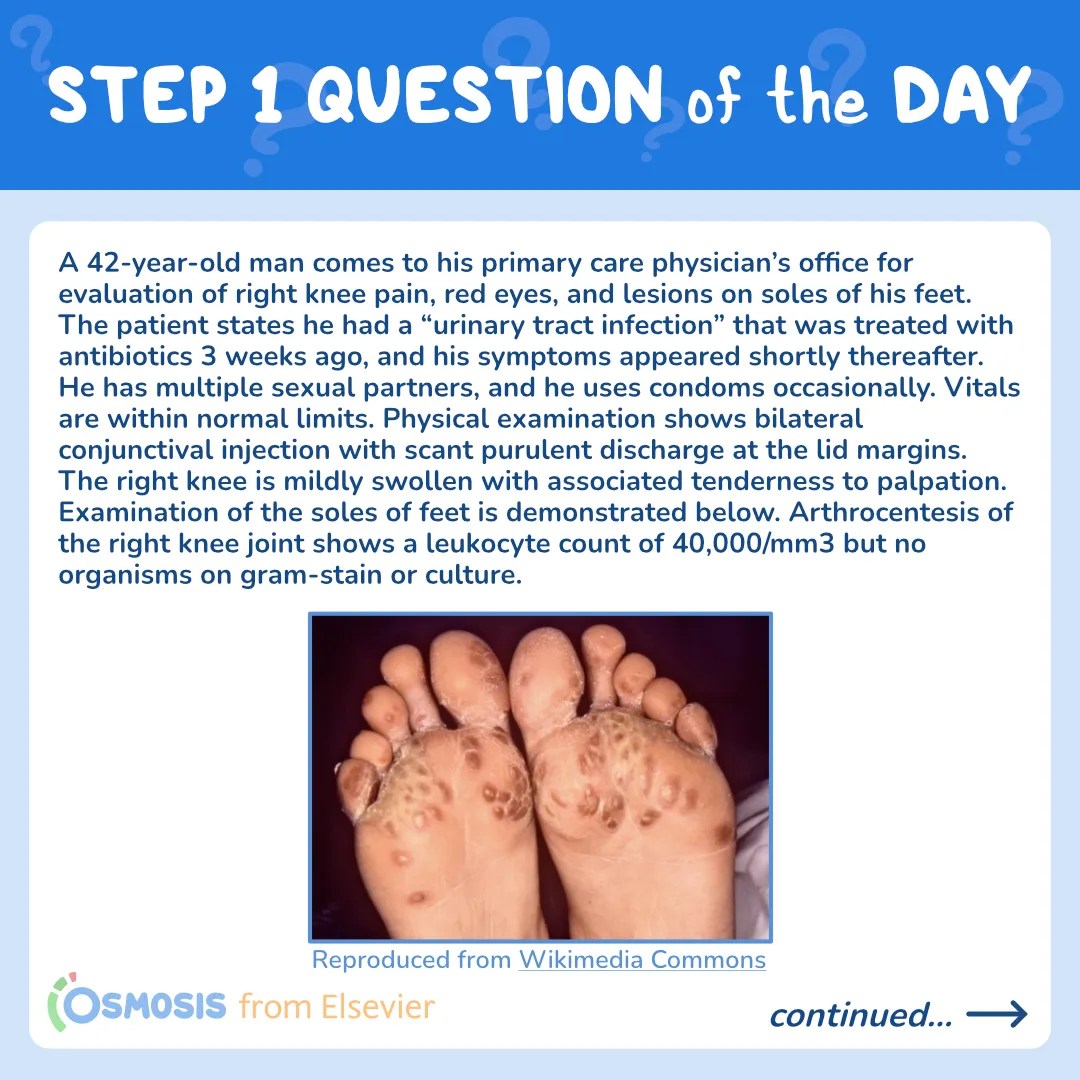
USMLE® Step 1 Question of the Day: Knee pain
— Updated:
Discover the case of a 42-year-old man with knee pain, red eyes, and foot lesions post-UTI treatment. Could it be reactive arthritis? A 42-year-old man comes to his primary care physician’s office for evaluation of right knee pain, red eyes, and lesions on soles of his feet. The patient states…
-
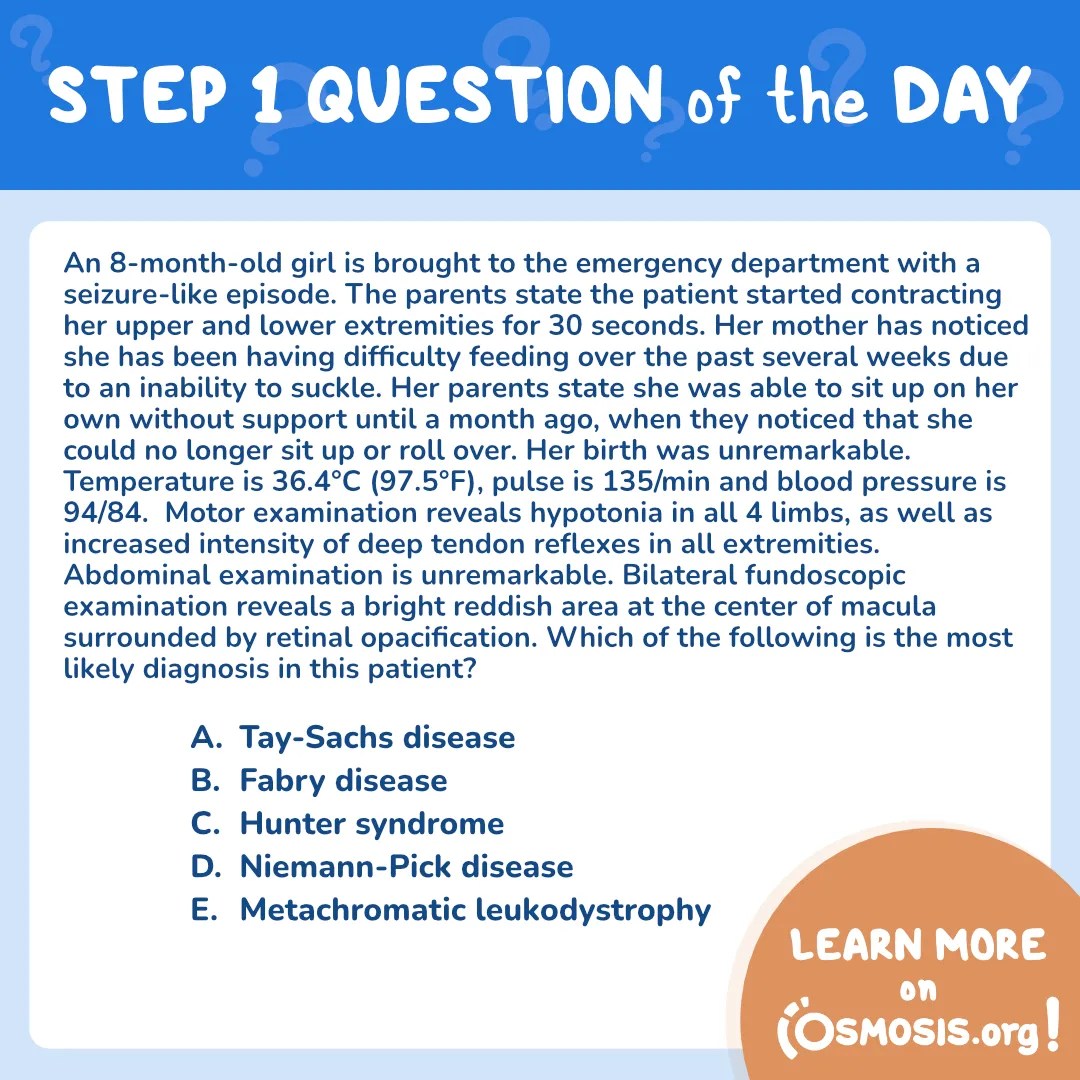
USMLE® Step 1 Question of the Day: Hypotonia
— Updated:
Learn about Tay-Sachs disease, an autosomal recessive neurodegenerative disorder characterized by regression of motor milestones, seizures, and a distinctive cherry-red macula. An 8-month-old girl is brought to the emergency department with a seizure-like episode. The parents state the patient started contracting her upper and lower extremities for 30 seconds. Her…
-
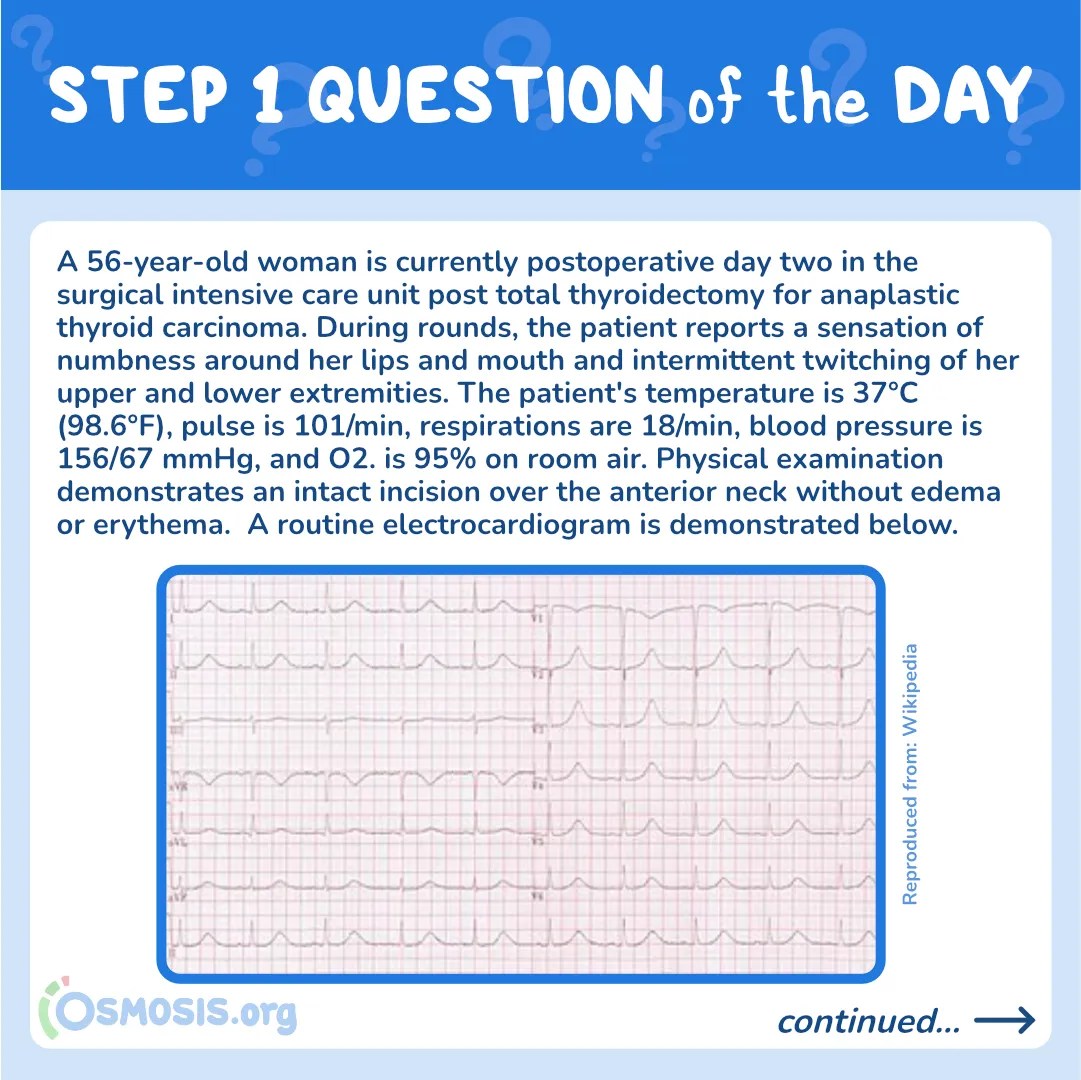
USMLE® Step 1 Question of the Day: Thyroidectomy
— Updated:
This week, we are sharing another USMLE® Step 1-style practice question to test your knowledge of medical topics. Today’s case focuses on a 56-year-old woman who reported a sensation of numbness on her mouth and intermittent twitching of her extremities. Physical examination demonstrates an intact incision over the anterior neck without…
-
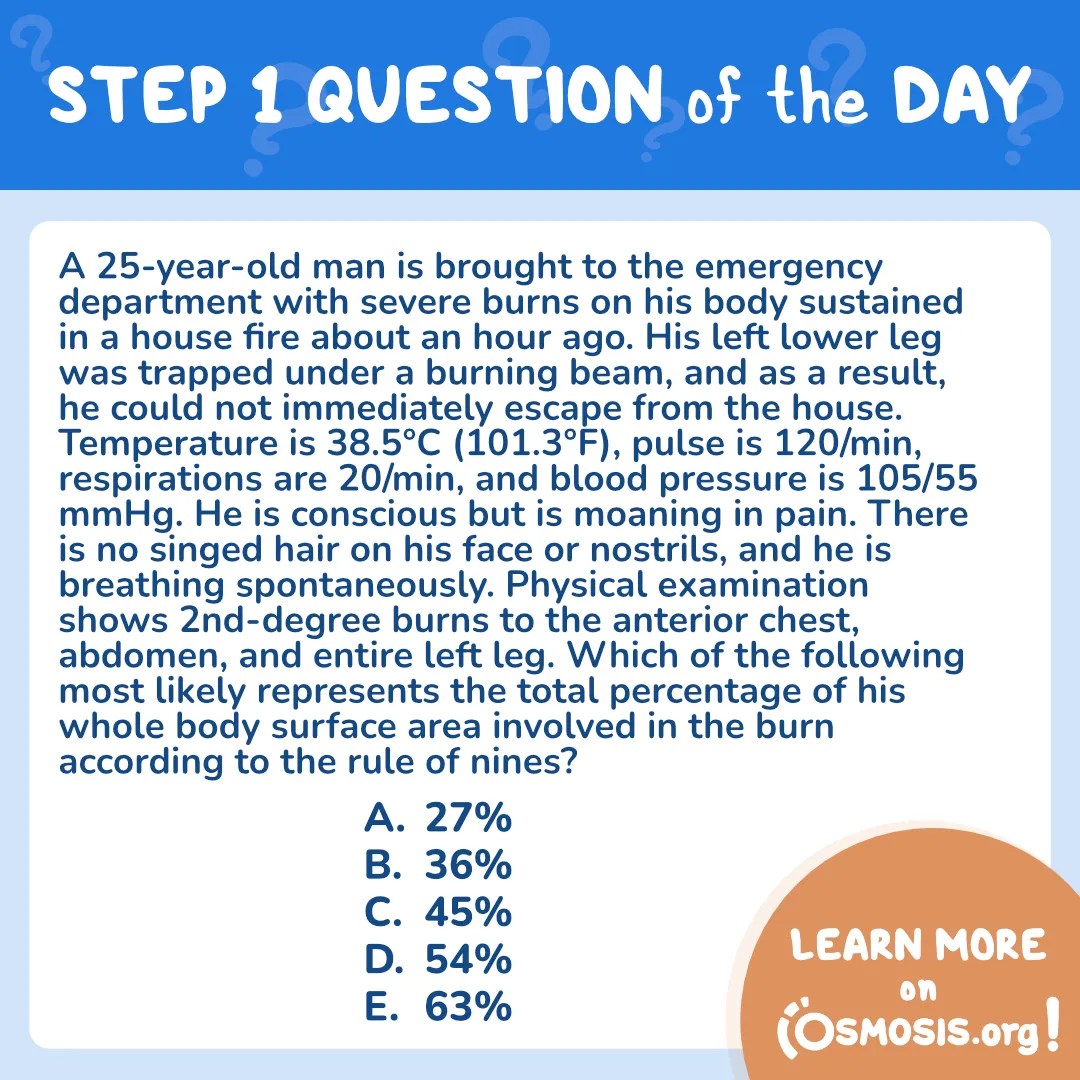
USMLE® Step 1 Question of the Day: Rule of nines
— Updated:
The Rule of Nines is a method used in emergency departments to quickly estimate the extent of burns on a patient’s body. This USMLE® Step 1 Question of the Day will test your knowledge on this topic. A 25-year-old man is brought to the emergency department with severe burns on…
-
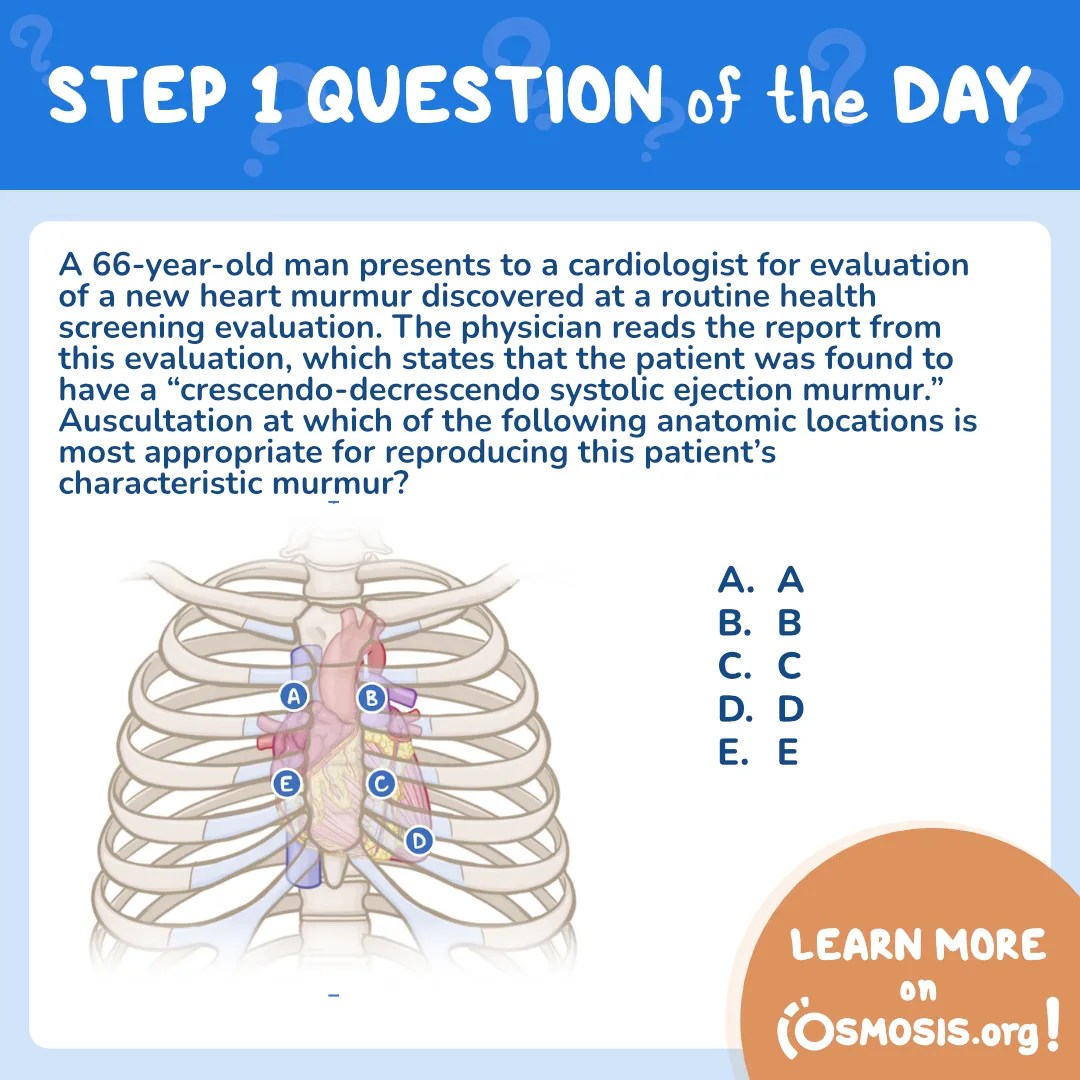
USMLE® Step 1 Question of the Day: Systolic ejection murmur
— Updated:
Aortic stenosis produces a classic crescendo-decrescendo systolic ejection murmur best heard at the right second intercostal space. Learn key auscultation sites for cardiac murmurs.
-
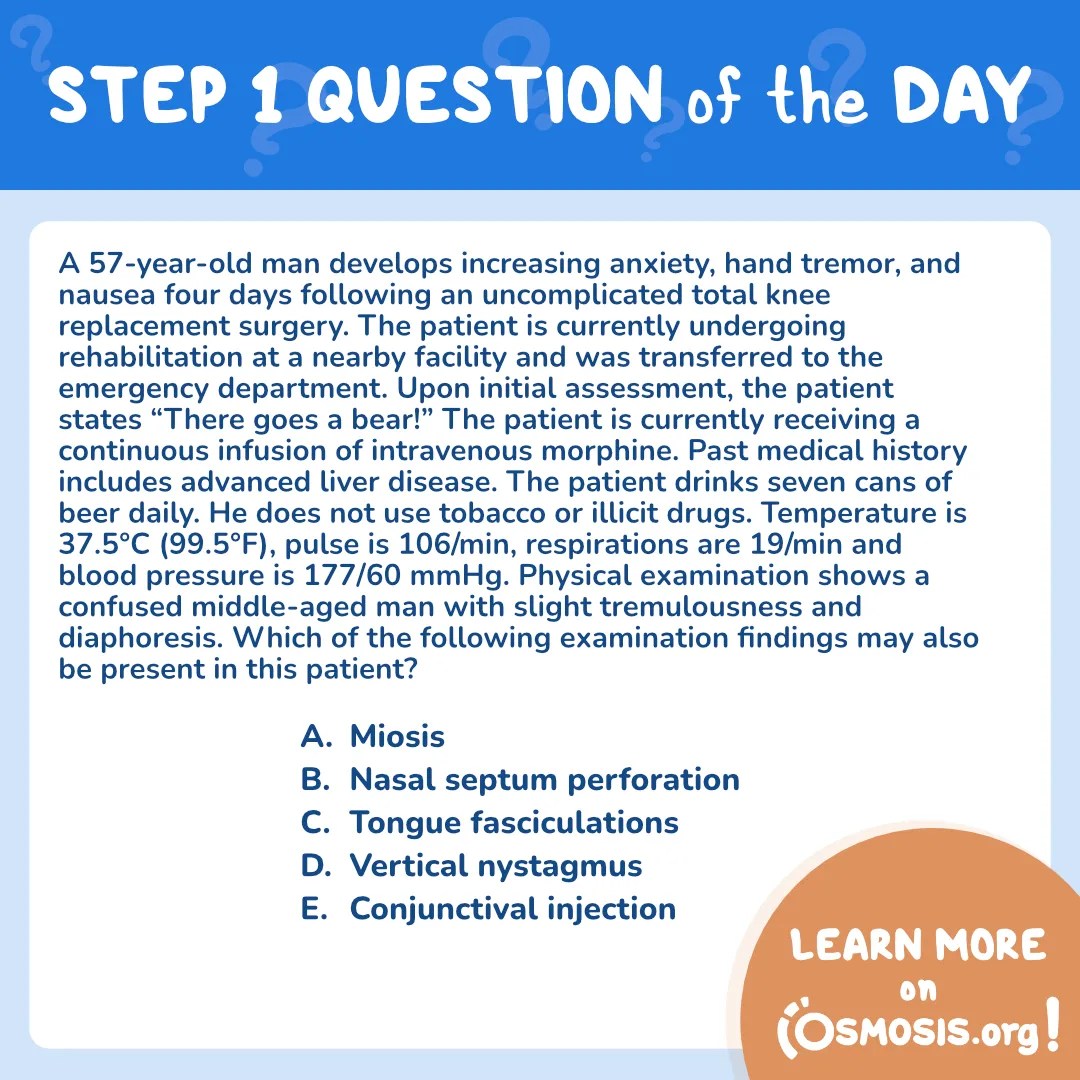
USMLE® Step 1 Question of the Day: Rehabilitation
— Updated:
Explore a USMLE® Step 1 question on alcohol withdrawal symptoms, including tongue fasciculations, anxiety, and tremors in a postoperative patient with chronic alcohol use.