
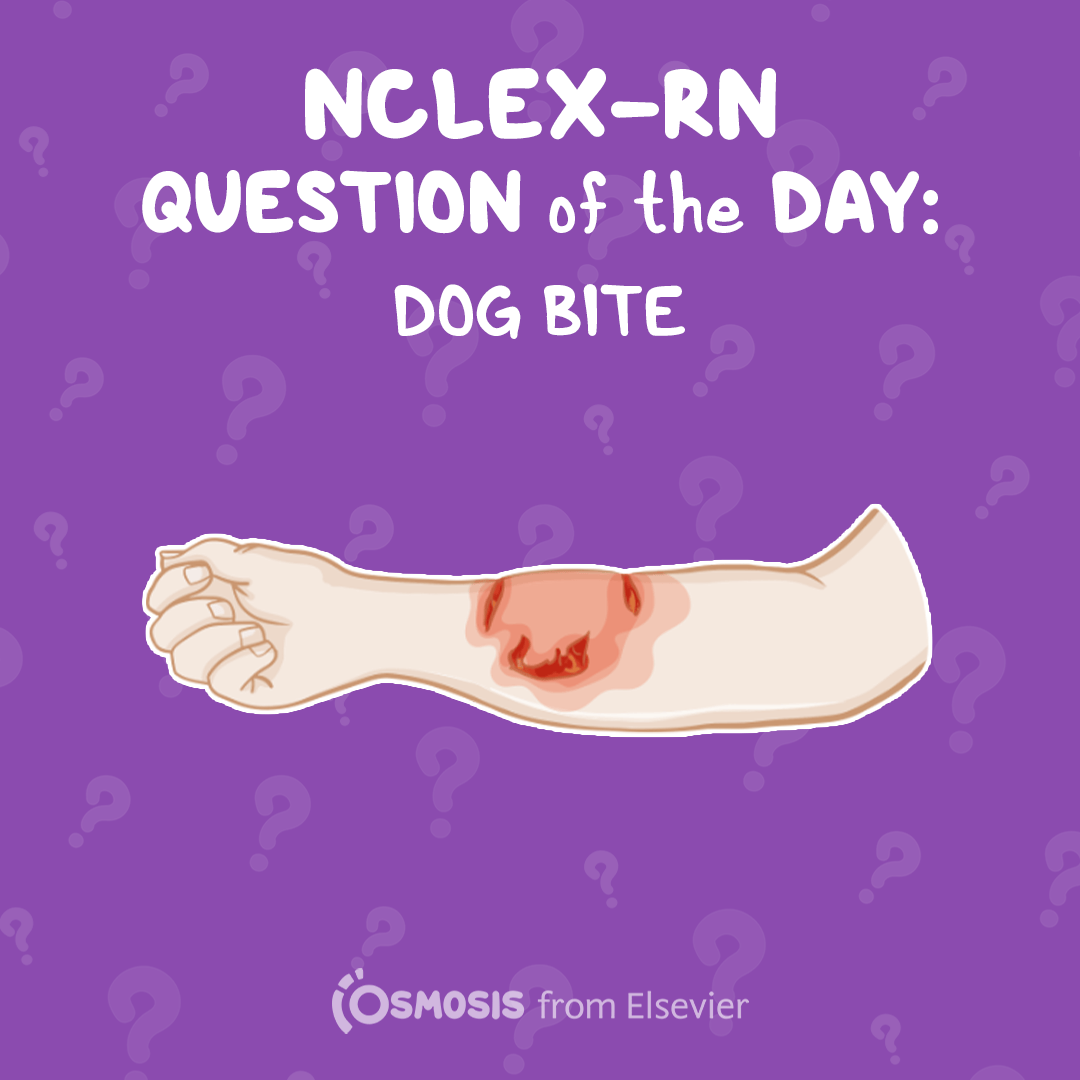
Today’s NCLEX-RN® question of the day focuses on learning about the body’s reaction to an animal bite. Do you know the answer? Let’s find out!
A nurse assesses a patient shortly after a dog bite and notes localized erythema and edema at the wound site. Which type of signaling molecule helps coordinate this local inflammatory response?
A. Cytokines
B. Keratin
C. Antibodies
D. Collagen
The correct answer to today’s NCLEX® Question is…
A. Cytokines
Rationale: Cytokines are signaling proteins that coordinate and amplify inflammation by activating immune and endothelial cells and promoting leukocyte recruitment. Some proinflammatory cytokines can also increase vascular permeability. Histamine and other vasoactive mediators cause vasodilation and increased vascular permeability associated with erythema and edema.
Main Takeaway
The skin is made of the epidermis, which is an outer layer that acts as a protective barrier against the environment; the dermis, which primarily contains blood vessels and nerve endings; and the hypodermis, which is a layer of connective tissue that provides structural support to the skin. The skin also contains several immune cells that are responsible for phagocytizing invading pathogens, such as those that may have broken through the epidermis via a cut, scrape, or bite wound. When activated, immune cells release inflammatory molecules, like cytokines and histamine, which attract more immune cells to the site of injury. These inflammatory mediators promote vasodilation and increased capillary permeability, allowing plasma proteins and fluid to move into the surrounding tissues. The resulting immune response contributes to the classic signs of inflammation: heat, pain, redness, and swelling.
Incorrect Answer Explanations
B. Keratin
Rationale: Keratin is a structural protein found in epidermal keratinocytes and contributes to the skin’s protective barrier. It does not function as an inflammatory signaling molecule.
C. Antibodies
Rationale: Antibodies are proteins produced in response to the recognition of a pathogen by the immune system. They are not responsible for the signs of inflammation, such as redness and swelling.
D. Collagen
Rationale: Collagen is a structural protein found throughout the dermal extracellular matrix. It provides strength and structural support to the skin but does not function as an inflammatory signaling molecule.
Want to learn more about this topic?
Watch the Osmosis video: Animal and snake bites: Nursing

Get your free trial now to find out why future clinicians and caregivers love learning by Osmosis!
Leave a Reply