
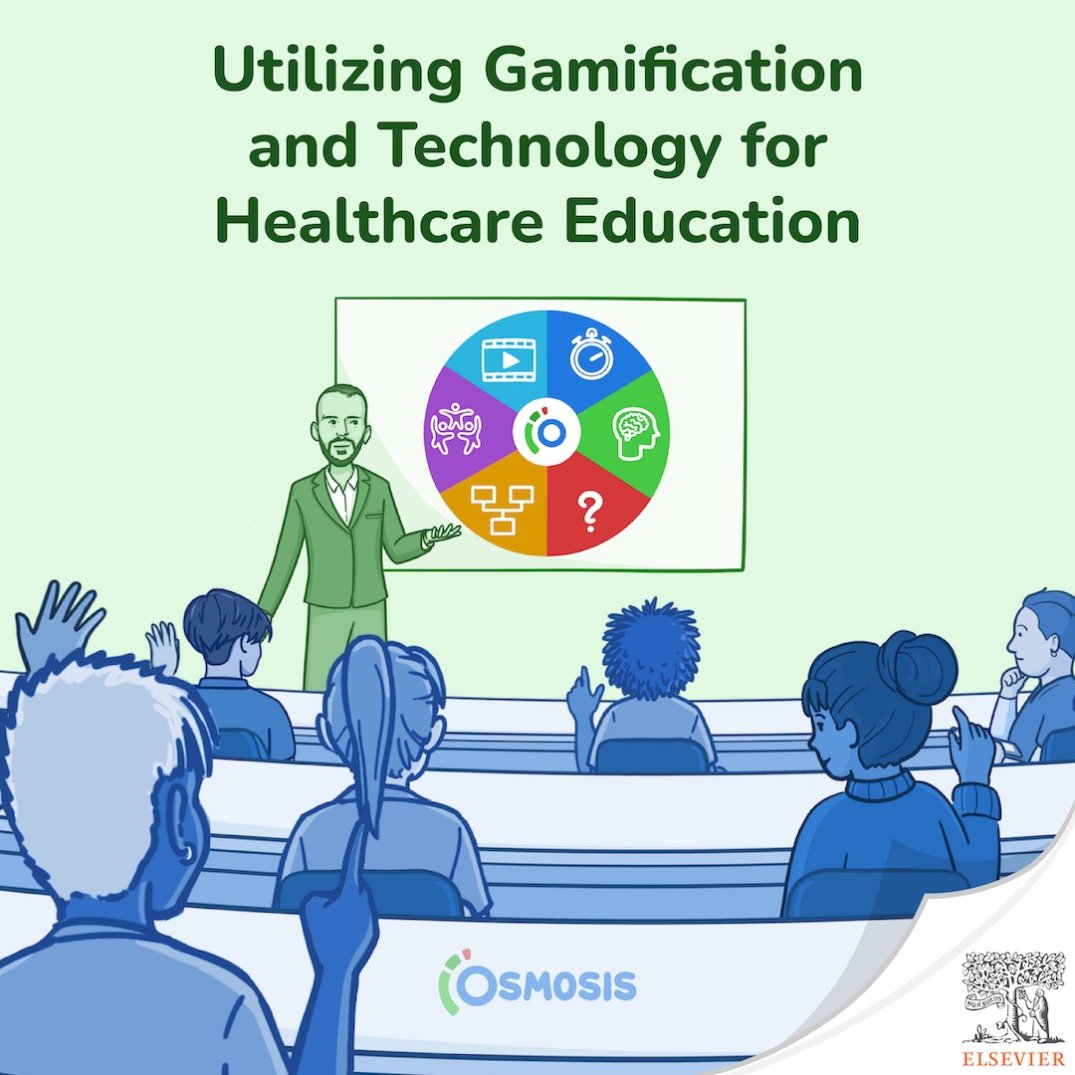
Gamification is a dynamic approach to enhance learning outcomes in healthcare education. Educators foster greater student engagement, improve knowledge retention, and create an enjoyable learning environment by integrating game-like elements into a curriculum.
Healthcare education platforms like Osmosis lead the charge in harnessing gamification for healthcare education. From badges that reward achievement to interactive quizzes that challenge students, Osmosis offers interactive tools to make learning effective and fun. Let’s explore the potential of gamification, its best practices, and considerations for integrating it into healthcare education.
Understanding Gamification in Healthcare Education
Gamification is the application of game design elements—such as points, levels, challenges, and rewards—in non-game contexts like education. In healthcare education, gamification transforms traditional learning experiences into engaging activities that motivate students to actively participate.
Rather than simply attending lectures or reading textbooks, students are encouraged to solve problems, complete challenges, and achieve milestones within their learning objectives.
The Benefits of Gamification
Research into gamification in education is new, but early findings highlight the following benefits:
- Improved Grades and Scores: Gamification incentivizes learning by breaking complex material into manageable challenges. Studies have shown that gamified activities can enhance students’ understanding and performance.
- Increased Engagement: Gamified elements, such as competitions, leaderboards, and rewards, capture students’ attention and sustain their interest in learning.
- Higher Satisfaction: Students report greater enjoyment and satisfaction when learning activities incorporate gamified elements, leading to a more positive educational experience.
By tapping into students’ intrinsic and extrinsic motivations, gamification transforms learning into an active and rewarding process.
Examples of Gamification
Gamification can take many forms, from simple strategies to elaborate systems:
- Timed Quizzes: Encouraging students to answer questions within a set time fosters quick thinking and recall.
- Learning-Based Escape Rooms: Teams solve puzzles related to medical topics to “escape” within a time limit, promoting collaboration and critical thinking.
- Digital Badges: Platforms like Osmosis reward students with badges for completing quizzes, achieving milestones, or mastering topics. These badges provide a sense of accomplishment and encourage continued learning.
- Board Games: Custom-designed board games on topics like anatomy or pharmacology make learning interactive and fun.
- Avatars and Progression Systems: More advanced gamification systems allow students to create avatars and progress through levels as they master content.
When gamification approaches are used, educators cater to different learning styles and make even the most challenging topics engaging.
Best Practices for Implementing Gamification
While gamification has the potential to revolutionize health professions education, its success depends on thoughtful implementation. Follow these best practices to ensure that gamified learning activities are impactful and aligned with educational goals:
1. Set Clear Objectives
Gamification should always support the underlying learning objectives. Before designing a game or activity, define what students should achieve by the end of the session. For example:
- If the goal is to teach diagnostic reasoning, use a case-based game that challenges students to identify conditions based on symptoms.
- To reinforce pharmacology knowledge, create a quiz with progressively challenging questions about drug mechanisms.
2. Design Engaging Activities
Engagement is key to successful gamification. Activities should be challenging but achievable, with elements that spark curiosity and excitement. Consider the following tips:
- Include a variety of tasks, such as multiple-choice questions, scenario-based puzzles, and interactive simulations.
- Add narrative elements to games, such as creating a storyline where students function as “medical detectives” solving cases.
- Use appealing visuals and intuitive interfaces to enhance the overall experience.
3. Encourage Collaboration and Competition
Gamification thrives on the social dynamics of learning. Activities that encourage teamwork and healthy competition amplify their impact:
- Use group challenges or team-based quizzes to foster collaboration.
- Introduce leaderboards to motivate students through friendly competition, recognizing individual and group achievements.
- Celebrate winners, but also acknowledge effort and improvement to ensure inclusivity.
4. Incorporate Feedback Loops
Timely and constructive feedback is essential for gamified learning. Feedback not only helps students understand their progress but also reinforces learning:
- Provide immediate feedback on quiz answers, explaining why a particular response is correct or incorrect.
- Use progress bars or dashboards to show students how far they’ve come and what they still need to achieve.
- Offer rewards to acknowledge milestones and motivate continued effort.
Educators create a dynamic and rewarding learning environment that drives motivation and mastery by aligning gamified activities with clear objectives, engagement, and collaboration.

Challenges and Considerations
While gamification brings innovation to education, it’s essential to recognize and address potential challenges to ensure an inclusive and valuable learning experience for all students.
Potential Drawbacks of Gamification
While gamification offers clear benefits, it’s not without challenges:
- Overemphasis on Rewards: Focusing too much on rewards may lead to superficial engagement, where students participate only for prizes rather than genuine learning.
- Technology Accessibility: Not all students may have access to the technology needed for gamified activities, creating potential disparities in learning opportunities.
- Fatigue: Overusing gamification reduces its novelty and usefulness over time.
- Preparation time: Designing and preparing to implement successful gamified learning is often time-consuming for the educator.
Balancing Gamification with Learning Goals
The goal of gamification is to enhance education, not overshadow it. Educators should:
- Ensure that games align with course objectives and complement, rather than replace, traditional teaching methods.
- Avoid overly complicated games that detract from the subject matter or consume excessive classroom time.
Cultural and Language Considerations
Cultural differences influence how students perceive and engage with gamified activities. Consider the following:
- Cultural Relevance: Games like Jeopardy may need explanations for students unfamiliar with its format.
- Language Barriers: Non-native speakers may struggle with games that rely on rapid reading or response times.
Educators ensure gamification benefits all learners when they design activities with cultural and linguistic inclusivity in mind.
Learning Preferences
Not all students prefer gamification as a learning method. Some students may find it distracting or ineffective compared to traditional approaches. To accommodate diverse preferences:
- Combine gamified activities with lectures, discussions, and hands-on practice.
- Offer students choices in how they engage with material, whether through games, videos, or readings.
Addressing these challenges maximizes the benefits of gamification, setting the stage for a well-rounded approach to modern teaching.
Bringing Gamification to Life in Your Classroom
Gamification, when thoughtfully implemented, has the power to transform healthcare education. By combining game design principles with innovative technology platforms like Osmosis, educators can more easily create engaging, impactful learning experiences.
Resources
- https://bera-journals.onlinelibrary.wiley.com/doi/10.1111/bjet.13471?af=R#:~:text=The%20sample%20comprised%2022%20experimental,0.782%2C%20p%20%3C%200.05).
- https://journals.sagepub.com/doi/10.1177/1046878114563662
- https://pmc.ncbi.nlm.nih.gov/articles/PMC11025539/
Interested in learning how Osmosis can help you gamify your healthcare curriculum? Schedule a call today.
Leave a Reply