
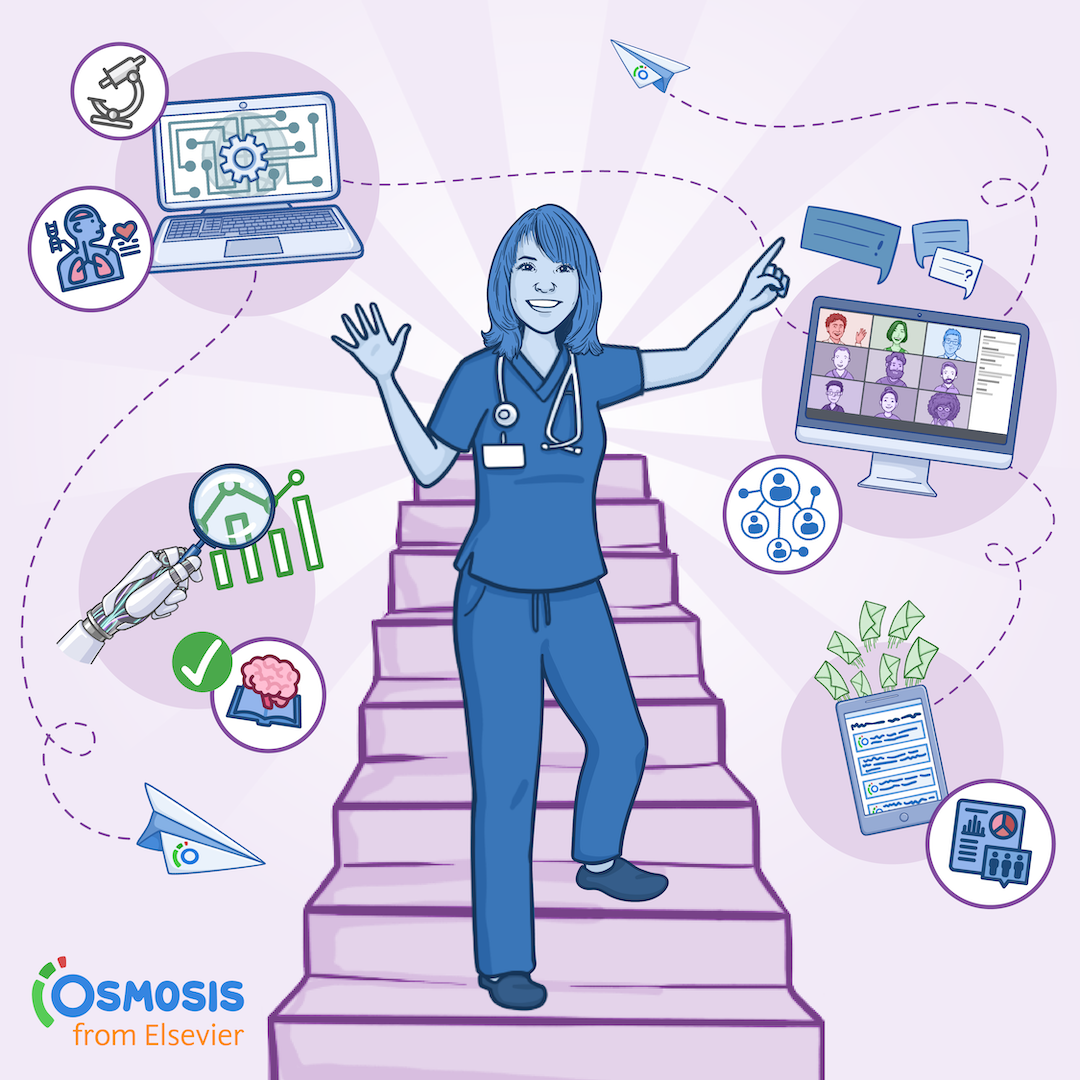
In today’s rapidly evolving healthcare landscape, the role of the nurse educator is expanding—and so are the tools we use to prepare for the next generation of nurses. Technology is no longer a supplement to nursing education; it’s a cornerstone. From artificial intelligence (AI)-powered simulations to mobile-first learning platforms, digital tools are reshaping how we teach, learn, and connect.
But with innovation comes the responsibility to ensure that these tools are not only effective but also inclusive, accessible, and grounded in sound pedagogy. In this article, I’ll share how faculty embraced technology at Saint Joseph’s University to enhance engagement, improve outcomes, and prepare both nurse practitioners and registered nurses for the realities of modern healthcare. From AI microcredentials to simulated EMRs, I’ll walk through the strategies we’ve implemented to make digital learning meaningful, equitable, and practice-ready.
Designing Education for Engagement and Equity
As a Director of Nursing Education, I’ve witnessed firsthand how technology can enhance engagement, improve outcomes, and foster deeper clinical reasoning. Yet, I’ve also seen how it can overwhelm faculty, widen equity gaps, or fall flat without thoughtful integration.
The nurse practitioner (NP) program at Saint Joseph’s University is fully online for didactic coursework, with clinicals held on site. This hybrid structure requires intentional instructional design to make asynchronous learning just as engaging and rigorous as in-person instruction.
To guide course development, faculty used the Quality Matters Course Design Rubric and embedded multimedia content in each weekly module. A typical week includes:
- A short Osmosis video reinforcing pathophysiology or pharmacology concepts
- A narrated PowerPoint
- A self-check quiz or interactive case scenario
- Links to readings and evidence-based guidelines
- Optional discussion prompts or journal reflections
This combination of resources supports multimedia learning, which engages multiple cognitive channels and improves long-term retention. Faculty found that applying Universal Design for Learning (UDL) Guideline principles—offering multiple means of engagement, representation, and expression—makes the learning experience more inclusive and impactful for all students.
Simulating Clinical Practice in a Digital World
One of the challenges in an online program is incorporating simulation. We addressed this by building a telehealth simulation assignment. Students conduct a virtual visit using real telehealth software, assess and diagnose a simulated patient, and document their findings in a Subjective, Objective, Assessment and Plan (SOAP) note format.
The activity is scaffolded with American Medical Association modules and aligned with real-world practice expectations, reinforcing communication, documentation, and clinical decision-making in remote care settings.
Building AI Fluency with the AI CARES Model
Faculty introduced a dedicated AI microcredential focused on the ethical and effective use of generative AI in clinical practice. Students complete a scaffolded assignment using the AI CARES Model, where they are guided to:
- Clarify the clinical question
- Ask AI with structured prompts
- Review the output critically
- Evaluate using evidence and bias checks
- Synthesize with human reasoning
The assignment includes a practical clinical case scenario in which students must use AI as a thought partner to formulate a differential diagnosis, evaluate treatment options, and justify their final care plan using peer-reviewed evidence.
This model empowers students to use AI as a tool—not a crutch—while developing digital literacy and clinical judgment.

Feedback That Fuels Growth
To simulate clinical experiences and provide meaningful feedback, faculty integrated AI-powered tools that analyze student-generated SOAP notes and clinical case responses. These tools assess clinical reasoning, communication style, and decision-making logic, offering personalized feedback that highlights strengths and areas for improvement. This approach has proven especially beneficial for learners who struggle with self-assessment, while allowing faculty to focus on coaching rather than basic corrections.
Microcredentials That Matter
Faculty embedded microcredentials throughout the curriculum to recognize emerging competencies. Examples include:
- Opioid and substance use education
- Telehealth essentials
- AI in clinical reasoning
These microcredentials give students meaningful milestones that can be shared on resumes or LinkedIn and demonstrate competency in high-demand areas of healthcare.
Meeting Real-World Requirements: MATE Act & DEA Readiness
To ensure our students are prepared for licensure and practice, Saint Joseph’s University aligned its NP curriculum with emerging regulatory requirements. For example, NPs must now complete training under the Medication Access and Training Expansion (MATE) Act to obtain or renew their DEA registration. Faculty embedded this training into their curriculum through the AMA EdHub, ensuring students meet this requirement before graduation. This not only supports compliance but also reinforces our commitment to preparing practice-ready clinicians who are equipped to address the opioid crisis with compassion and evidence-based care.
Teaching RNs with Technology
While our program focuses on advanced practice, many of our tools and strategies are equally impactful for registered nurses (RNs)—whether in pre-licensure, RN-to-BSN, or continuing education pathways.
Here are a few examples of how we integrate technology into RN education:
- Simulated Electronic Health Records (EHR) Faculty have used platforms like Practice Fusion and Elsevier’s SimChart® to help students practice documentation, medication reconciliation, and care planning in a realistic digital environment. These tools mirror the workflows of clinical settings and build confidence in EHR navigation.
- Gamified Learning: Inspired by the work of Liz Lucas, EdD, RN, CNE, faculty explored gamification strategies such as digital badges, escape rooms, and case-based quizzes to increase engagement and retention. For more, see the Osmosis blog on Utilizing Gamification and Technology for Healthcare Education.
- Virtual Reality (VR) Simulation: Elsevier’s Simulation Learning System with VR offers immersive patient care scenarios that develop clinical judgment and communication skills, especially valuable for students with limited access to in-person clinicals.
- Remediation with Osmosis Playlists: For RNs preparing for HESI or NCLEX, we use analytics to identify areas for improvement and assign targeted Osmosis videos. This supports personalized learning and boosts exam readiness.
Conclusion: Leading with Purpose and Equity
Technology has incredible potential to enhance nursing education—but only when used with purpose and equity. Whether embedding Osmosis videos, guiding AI-driven SOAP notes, or integrating real-world telehealth simulations, we must always ask: Are we building experiences that reflect the future of healthcare while supporting the unique needs of each learner?
The future of nursing education isn’t just digital; it’s inclusive, ethical, and deeply human. Let’s lead the way.
Key Takeaways
- Technology integration boosts nursing engagement and clinical reasoning skills.
- Inclusive design ensures equitable access to digital learning tools.
- AI tools enhance personalized feedback and clinical decision-making.
- Simulated telehealth and EHRs prepare students for modern healthcare.
- Microcredentials recognize key competencies and support career growth.
About the Author
Maria Pfrommer, DNP, Ph.D., FNP-BC, RN, is a Clinical Professor at Saint Joseph’s University and Director of Nursing Education at Osmosis from Elsevier. With a dual background in advanced practice and academic leadership, she is passionate about integrating technology, equity, and innovation into nursing education. Her work focuses on preparing future clinicians through inclusive instructional design, AI literacy, and immersive digital learning experiences.
References
- https://udlguidelines.cast.org
- https://sirc.nln.org
- https://www.qualitymatters.org/qa-resources/rubric-standards/higher-ed-rubric
- Osmosis Video Library
- Osmosis Nursing Platform Overview
- Osmosis Faculty Onboarding Kit
- https://edhub.ama-assn.org
- From Black Box to Bedside: Development and Application of the AI CARES Model
- Utilizing Gamification and Technology for Healthcare Education
Interested in learning how Osmosis from Elsevier can help students effectively embrace technology in your large classroom? Schedule a call today.
Leave a Reply