

Today’s NCLEX-RN® question of the day focuses on providing a teaching plan for the parent of a child with pertussis. Do you know the answer? Let’s find out!
A 5-year-old patient is brought to the emergency department by their mother for a persistent cough. The child is diagnosed with pertussis. Which instruction(s) should the nurse include in their teaching plan? Select all that apply.
A. Humidified air can help relieve cough symptoms
B. The child may continue to cough despite treatment
C. Infection can recur if the child does not get vaccinated
D. Spread of infection can be prevented through handwashing
E. Difficulty breathing is expected and does not require emergency treatment
Scroll down for the correct answer!
The correct answers to today’s NCLEX-PN® Question is…
A. Humidified air can help relieve cough symptoms
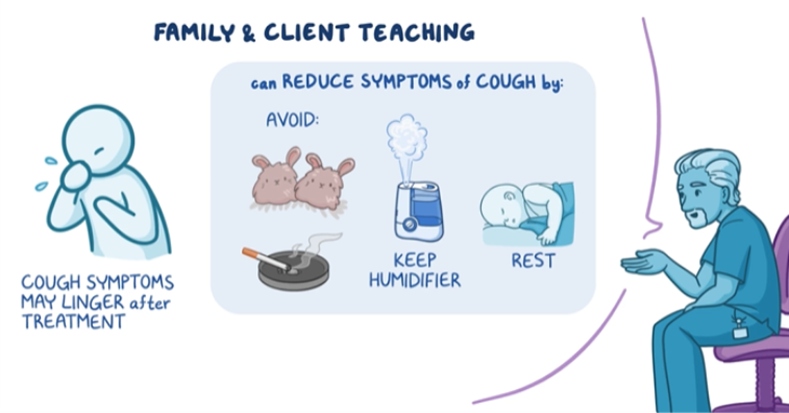
Rationale: A supportive treatment for clients with pertussis is humidified air, which can help relieve symptoms like cough and shortness of breath.
B. The child may continue to cough despite treatment
Rationale: Clients with pertussis may have a lingering cough that persists despite treatment. This is an expected finding.
C. Infection can recur if the child does not get vaccinated
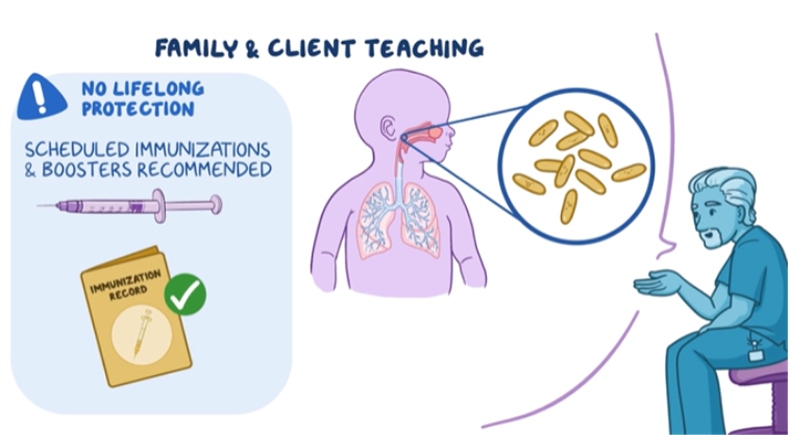
Rationale: This infection can be prevented through vaccination. The nurse should inform the client’s mother that vaccination and boosters may be required to reduce the risk of infection recurrence.
D. Spread of infection can be prevented through handwashing
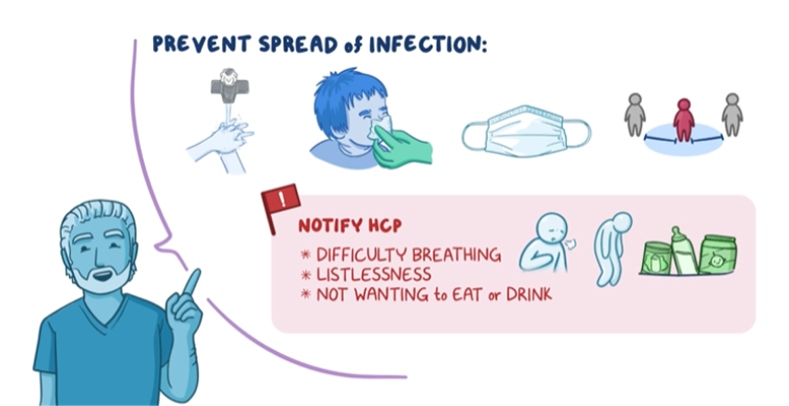
Rationale: Handwashing and other infection control techniques, like covering coughs and sneezes, can help prevent the spread of infection.
Main Takeaway
Pertussis is a bacterial upper respiratory infection that doesn’t affect the lungs. It is treated with antibiotics and supportive care. Family education should teach them that infection with pertussis does not provide lifelong protection from future illness and that scheduled immunizations and boosters are still recommended. Also, the nurse should encourage them to verify or update their immunization status. One of the best ways to prevent whooping cough in the newborn is to ensure pregnant women are vaccinated before delivery to spread passive immunity to the fetus since n newborns cannot receive their first vaccination against pertussis until two months old and are vulnerable to the disease.
Next, the nurse should let them know that their child’s cough symptoms may linger after treatment and that they can reduce cough symptoms by avoiding environmental triggers like dust and smoke by keeping a humidifier in the room and encouraging the child to rest.
The nurse should be sure to remind them of the importance of preventing the spread of infection by practicing frequent hand washing, covering their mouth when coughing or sneezing, wearing a mask, and socially distancing.
Lastly, the nurse should instruct them to notify the healthcare provider if their child has difficulty breathing or if there’s a change in their child’s behavior, such as listlessness or not wanting to eat or drink.
Incorrect Answer Explanations
E. Difficulty breathing is expected and does not require emergency treatment
Rationale: Difficulty breathing is a reason to seek emergency treatment. Although the child may continue to have symptoms once treatment is initiated, difficulty breathing is not an expected finding and should not be considered normal. This requires emergent intervention.
Want to learn more about this topic?
Watch the Osmosis video: Pertussis: Nursing

Try Osmosis from Elsevier today! Access your free trial and find out why millions of current and future clinicians and caregivers love learning by Osmosis.
Leave a Reply