Case study - Pediatric eczema: Nursing
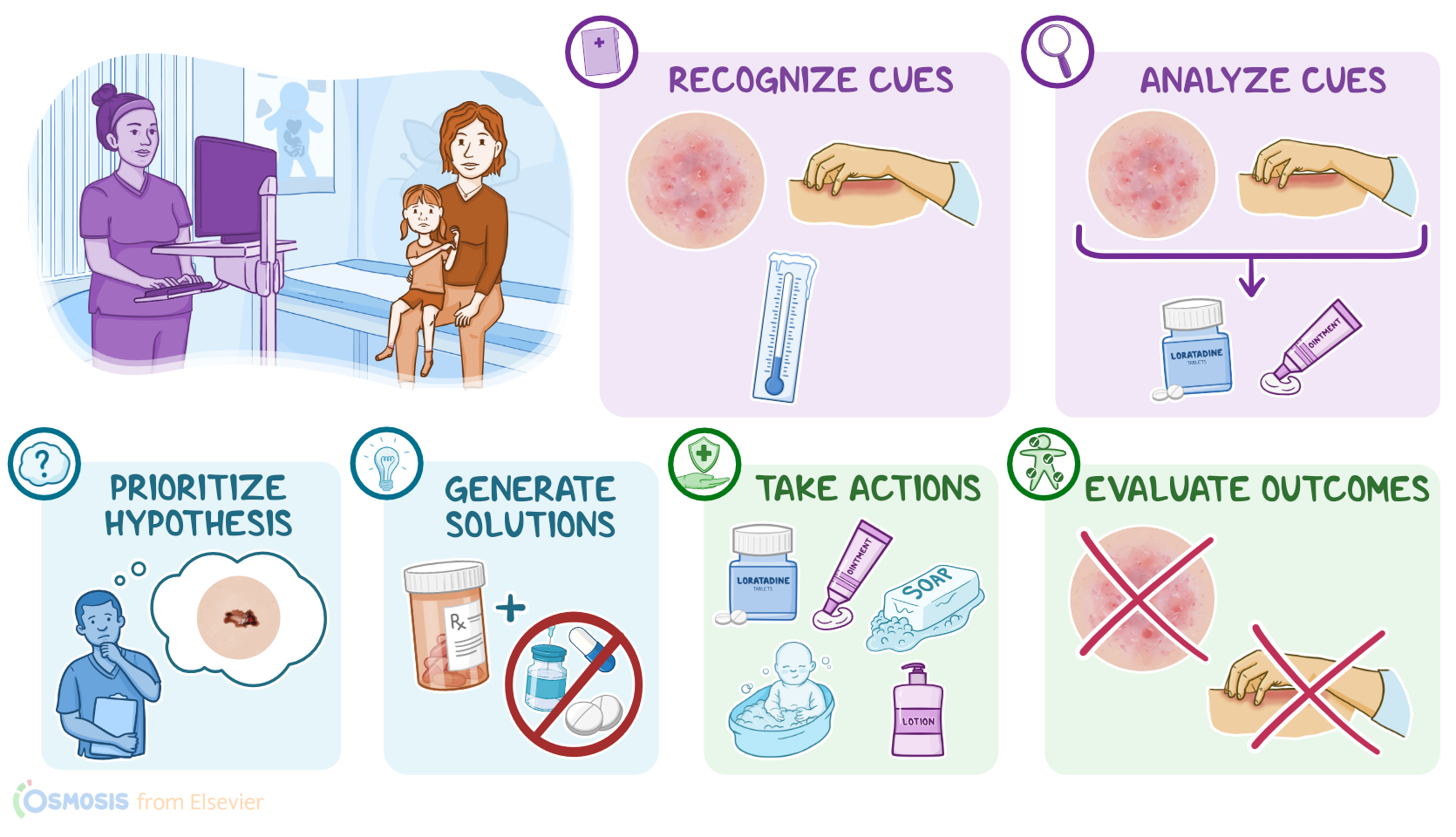
Nurse Lisa works in a primary care clinic and is caring for Jamie, a 2-and-a-half-year-old who was brought in for a rash, by her mother Claire. After settling Jamie in her room, Nurse Lisa goes through the steps of the Clinical Judgment Measurement Model to make clinical decisions about Jamie’s care by recognizing and analyzing cues, prioritizing hypotheses, generating solutions, taking action, and evaluating outcomes.
First, Nurse Lisa recognizes important cues, including Jamie’s skin assessment, which reveals several clusters of dry, red patches to her wrists and ankles. She also notes that Jamie is scratching her left wrist, which is eroded and excoriated.
Nurse Lisa asks Claire about Jamie’s skin irritation.
Nurse Lisa: I see that Jamie has some dry and reddened skin. When did these symptoms start?
Claire: A few weeks ago, when the weather got colder.
Nurse Lisa: Have you tried any treatments or therapies to help relieve the itching?
Claire: Sometimes I put her in a hot bubble bath, but it doesn’t seem to help. I also put lotion on her every day, which helps a little.
Next, Nurse Lisa analyzes these cues. Nurse Lisa understands that Jamie has an itchy inflammatory rash, and that Jamie’s scratching is causing excoriation. She also knows the breakdown of Jamie’s skin increases the risk for infection. Nurse Lisa recognizes that Jamie needs effective management of her rash.
She reports her assessment findings to the health care provider, who diagnoses Jamie with eczema, or atopic dermatitis, and prescribes oral loratadine and a topical corticosteroid to reduce pruritis and inflammation.
Now, using the information she’s gathered, Nurse Lisa develops a priority hypothesis of impaired skin integrity.
| CASE STUDY - PEDIATRIC ECZEMA | ||
| KEY POINTS | NOTES | |
| INTRODUCTION |
| |
| RECOGNIZING AND ANALYZING CUES |
| |
| PRIORITIZING HYPOTHESES, GENERATING SOLUTIONS, AND TAKING ACTIONS |
| |
| EVALUATING OUTCOMES |
| |
- "Wong’s essentials of pediatrics. (11th ed.)" Elsevier (2022)
- "Wong’s nursing care for infants and children. (11th ed.)" Elsevier (2019)
No notes for this video yet
Try adding a note below