Cerebral palsy: Nursing
Introduction0:00–0:17
Cerebral palsy refers to a group of non-specific disorders that are typically related to movement, coordination, and posture, caused by abnormal brain development and function.
Physiology0:17–1:28
First, let’s review some anatomy and physiology of the nervous system, which is divided into the central nervous system, including the brain and spinal cord, and the peripheral nervous system, which includes all the nerves that connect the central nervous system to the muscles and organs.
So, when the brain wants a muscle to contract, like dorsiflexing the foot, the motor cortex sends a signal through the upper motor neurons which carries the information down the spinal cord and then through a lower motor neuron in the peripheral nervous system to the muscles fibers in the foot, causing it to move.
Between the lower motor neuron and the muscle fiber is a space called the neuromuscular junction. The lower motor neurons have voltage-gated calcium channels in their membranes.
Whenever they receive an electrical impulse from the brain, these channels open up and let calcium inside. The increased intracellular calcium concentration triggers the release of the neurotransmitter acetylcholine into the neuromuscular junction.
Acetylcholine goes from the neuron over to receptors on muscle cell membranes, causing voluntary muscle contraction. Now, there isn’t a single cause of cerebral palsy, but rather it’s a multifactorial disease, meaning that there’s a combination of factors that can be either antenatal or postnatal, based on whether they occur before or after birth.
Causes & risk factors1:28–2:31
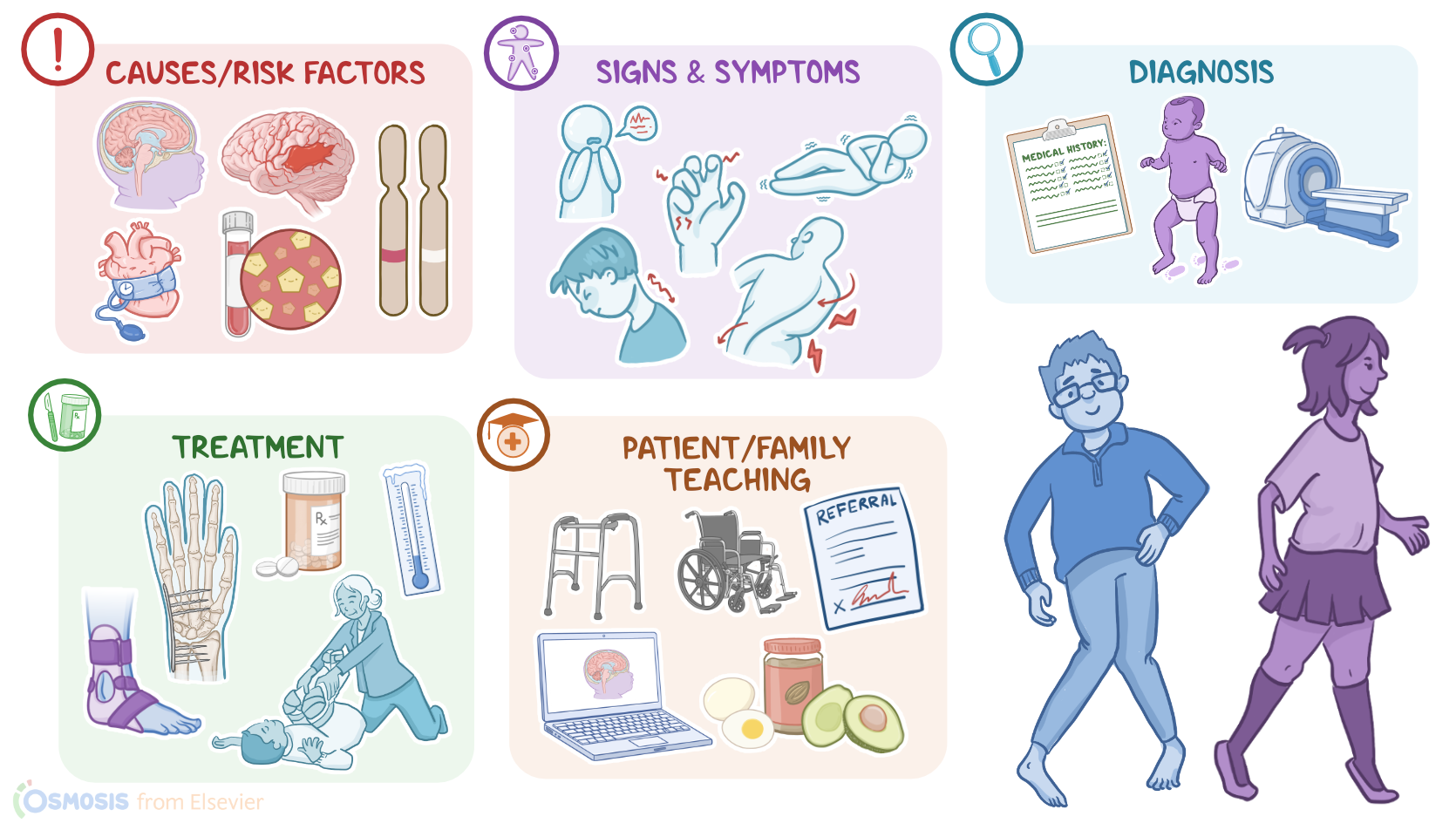
During these periods of early development, the brain is highly susceptible to damage. Typically, the most common factors that increase the risk of cerebral palsy during the antenatal period include congenital brain malformations; intrauterine infection; chromosomal abnormalities; intrauterine growth restriction; multiple gestation; preeclampsia, or new onset hypertension and proteinuria during pregnancy; as well as placental abruption,which is a condition where the placenta separates from the uterine wall before birth; and fetal hypoxia.
On the other hand, postnatal factors include preterm delivery; low birth weight; low Apgar scores; kernicterus, which is a very high bilirubin level that can damage the brain; birth trauma, or cerebral hemorrhage.Now, the pathology of cerebral palsy starts with abnormal development or damage to the regions of the brain controlling movement.
Pathology2:31–3:24
Since the damage occurs during development, it’s often permanent, but typically does not progress. Based on the area of the brain that’s damaged, cerebral palsy can cause different motor deficits, and that’s the way it’s classified.
There are 4 main types. Spastic cerebral palsy accounts for about 70% of cases, and this is characterized by stiff or tight muscles.
Then there’s dyskinetic cerebral palsy, which is characterized by an inability to prevent involuntary muscle contractions.
Third, with ataxic cerebral palsy, coordination and fine or precise movements are affected. Finally, there’s mixed cerebral palsy, where brain injury results in characteristics of more than one of the other types.Clinical manifestations of cerebral palsy typically appear months to several years after birth.
Clinical manifestations3:24–4:58
Often, the first symptoms are developmental delays and missed milestones like rolling over, sitting up without support,
Diagnosis4:58–5:19
Treatment5:19–7:04
Management and care7:04–9:18
General client and family teaching9:18–10:58
Review10:58–3:38
| CEREBRAL PALSY | ||
| KEY POINTS | NOTES | |
| DEFINITION |
| |
| PHYSIOLOGY |
| |
| CAUSES AND RISK FACTORS |
| |
| PATHOPHYSIOLOGY |
| |
| SIGNS AND SYMPTOMS |
| |
| DIAGNOSIS |
| |
| TREATMENT |
| |
| MANAGEMENT OF CARE |
| |
| PATIENT AND FAMILY TEACHING |
| |
No notes for this video yet
Try adding a note below