Circumcision: Nursing

Last updated: November 10, 2022

Circumcision: Nursing

Watch later

Watch later

Infection prevention and control - Precautions and personal protective equipment (PPE): Nursing skills
Urinary tract infections (UTIs): Nursing process (ADPIE)
Modes of infectious disease transmission
Epstein-Barr virus (Infectious mononucleosis)
Pneumonia
Wound healing
Palliative and hospice care: Nursing
Postoperative care: Nursing
Biology of cancer: Nursing
Biliary atresia: Nursing
Cholecystitis: Nursing
Cholelithiasis: Nursing
Colorectal cancer: Nursing
Diarrhea: Nursing
Diverticular disease: Nursing
Esophageal cancer: Nursing
Gastric cancer: Nursing
Hepatitis: Nursing
Inflammatory bowel disease - Crohn disease and ulcerative colitis: Nursing
Intestinal obstruction: Nursing
Irritable bowel syndrome (IBS): Nursing
Jaundice: Nursing
Laryngeal cancer: Nursing
Liver cancer: Nursing
Pancreatic cancer: Nursing
Esophageal atresia and tracheoesophageal fistula: Nursing
Geriatric considerations - Gastrointestinal: Nursing
Hirschsprung disease: Nursing
Hyperemesis gravidarum: Nursing
Necrotizing enterocolitis: Nursing
Omphalocele and gastroschisis: Nursing
Appendicitis: Nursing process (ADPIE)
Celiac disease: Nursing process (ADPIE)
Cirrhosis: Nursing process (ADPIE)
Gastroesophageal reflux disease (GERD): Nursing process (ADPIE)
Hiatal hernia: Nursing process (ADPIE)
Pancreatitis: Nursing process (ADPIE)
Peptic ulcer disease (PUD): Nursing process (ADPIE)
Antacids: Nursing pharmacology
Antidiarrheals: Nursing pharmacology
Antiemetics: Nursing pharmacology
Antispasmodics (GI): Nursing pharmacology
Gallstone-dissolving agents: Nursing pharmacology
Gastric mucosal protective agents: Nursing pharmacology
Histamine H2 antagonists: Nursing pharmacology
Laxatives: Nursing pharmacology
Medications for hepatic encephalopathy: Nursing pharmacology
Pancreatic enzyme replacements: Nursing pharmacology
Proton pump inhibitors (PPIs): Nursing pharmacology
Treatment for Helicobacter pylori: Nursing pharmacology
Weight loss medications: Nursing pharmacology
Bladder tumors: Nursing
Chronic kidney disease (CKD): Nursing
Dialysis care: Nursing
Epididymitis: Nursing
Glomerulonephritis: Nursing
Nephrotic syndrome: Nursing
Polycystic kidney disease (PKD): Nursing
Prostate cancer: Nursing
Pyelonephritis: Nursing
Renal and urinary calculi: Nursing
Renal cancer: Nursing
Testicular cancer: Nursing
Urinary retention: Nursing
Bladder exstrophy: Nursing
Circumcision: Nursing
Cryptorchidism: Nursing
Enuresis: Nursing
Geriatric considerations - Urinary: Nursing
Hypospadias and epispadias: Nursing
Acute kidney injury (AKI): Nursing process (ADPIE)
Benign prostatic hyperplasia (BPH): Nursing process (ADPIE)
Urinary incontinence - Stress: Nursing process (ADPIE)
Antispasmodics (GU): Nursing pharmacology
Cholinergic therapy (GU): Nursing pharmacology
Diuretics - Osmotic and carbonic anhydrase inhibitors: Nursing pharmacology
Diuretics - Thiazide, thiazide-like, loop, and potassium-sparing diuretics: Nursing pharmacology
Anemia - Aplastic: Nursing
Anemia - Iron-deficiency: Nursing
Anemia - Macrocytic: Nursing
Arterial blood gas (ABG) - Overview: Nursing
Arterial blood gas (ABG) - Metabolic acidosis: Nursing
Arterial blood gas (ABG) - Metabolic alkalosis: Nursing
Arterial blood gas (ABG) - Respiratory acidosis: Nursing
Arterial blood gas (ABG) - Respiratory alkalosis: Nursing
Blood cultures: Nursing
Cardiac biomarkers - Creatine kinase (CK): Nursing
Cardiac biomarkers - Troponin: Nursing
Coagulation studies - Partial thromboplastin time (PTT): Nursing
Complete blood count (CBC) - Hemoglobin and hematocrit: Nursing
Complete blood count (CBC) - Platelets: Nursing
Complete blood count (CBC) - Red blood cells (RBC): Nursing
Complete blood count (CBC) - White blood cells (WBC) and differential: Nursing
Complete metabolic panel (CMP) - Blood urea nitrogen (BUN) and creatinine (Cr): Nursing
Complete metabolic panel (CMP) - Chloride: Nursing
Complete metabolic panel (CMP) - Estimated glomerular filtration rate (eGFR): Nursing
Complete metabolic panel (CMP) - Glucose: Nursing
Complete metabolic panel (CMP) - Liver function tests (LFT): Nursing
Complete metabolic panel (CMP) - Potassium: Nursing
Complete metabolic panel (CMP) - Sodium: Nursing
Complete metabolic panel (CMP) - Total protein: Nursing
Disseminated intravascular coagulation (DIC): Nursing
Multiple myeloma: Nursing
Neutropenia: Nursing
Polycythemia: Nursing
Thalassemia: Nursing
Thrombocytopenia: Nursing
Leukemia: Nursing process (ADPIE)
Anticoagulants - Direct thrombin and factor Xa inhibitors: Nursing pharmacology
Anticoagulants - Heparin: Nursing pharmacology
Anticoagulants - Warfarin: Nursing pharmacology
Antihyperlipidemics - Bile acid sequestrants and cholesterol absorption inhibitors: Nursing pharmacology
Antihyperlipidemics - Fibrates: Nursing pharmacology
Antihyperlipidemics - Miscellaneous: Nursing pharmacology
Antihyperlipidemics - Statins: Nursing pharmacology
Antiplatelet agents: Nursing pharmacology
Blood products: Nursing pharmacology
Hematopoietic growth factors: Nursing pharmacology
Hemostatics: Nursing pharmacology
Iron preparations: Nursing pharmacology
Thrombolytics: Nursing pharmacology
Autoimmunity: Nursing
Human immunodeficiency virus (HIV) and acquired immunodeficiency syndrome (AIDS): Nursing
Hypersensitivity reactions - Type I: Nursing
Hypersensitivity reactions - Type II: Nursing
Hypersensitivity reactions - Type III: Nursing
Hypersensitivity reactions - Type IV: Nursing
Immune response - Adaptive: Nursing
Immune response - Innate: Nursing
Immunodeficiency disorders - Primary: Nursing
Immunodeficiency disorders - Secondary: Nursing
Inflammatory process: Nursing
Scleroderma: Nursing
Shock - Anaphylactic: Nursing
Sjögren syndrome: Nursing
Systemic lupus erythematosus (SLE): Nursing
Toxic shock syndrome (TSS): Nursing
Erythema infectiosum (Fifth disease): Nursing
Fever: Nursing
Infectious mononucleosis: Nursing
Mumps (Parotitis): Nursing
Neonatal sepsis: Nursing
Pertussis: Nursing
Poliomyelitis: Nursing
Postpartum infections: Nursing
Roseola (Exanthem subitum): Nursing
Rubella (German measles): Nursing
Rubeola (Measles): Nursing
Smallpox: Nursing
Zika virus: Nursing
Anaphylaxis: Nursing process (ADPIE)
Lyme disease: Nursing process (ADPIE)
Rheumatoid arthritis (RA): Nursing process (ADPIE)
Antirejection immunosuppressants: Nursing pharmacology
Biologic agents: Nursing pharmacology
Disease-modifying therapy for multiple sclerosis: Nursing pharmacology
Immunoglobulins: Nursing pharmacology
Immunomodulators: Nursing pharmacology
Immunosuppressants for autoimmune diseases: Nursing pharmacology
Non-biologic disease-modifying antirheumatic drug (DMARD) therapy: Nursing pharmacology
Vaccines: Nursing pharmacology
Acne: Nursing
Animal and snake bites: Nursing
Burn injury: Nursing
Cutaneous fungal infections: Nursing
Erysipelas and cellulitis: Nursing
Folliculitis, carbuncles, and furuncles: Nursing
Herpes simplex virus (HSV): Nursing
Herpes zoster: Nursing
Impetigo: Nursing
Insect stings and bites: Nursing
Pediculosis and scabies: Nursing
Psoriasis: Nursing
Rocky Mountain spotted fever (RMSF): Nursing
Skin cancer - Basal cell carcinoma, squamous cell carcinoma, and melanoma: Nursing
Urticaria: Nursing
Geriatric considerations - Integumentary: Nursing
Atopic dermatitis: Nursing process (ADPIE)
Frostbite: Nursing process (ADPIE)
Methicillin-resistant Staphylococcus aureus (MRSA): Nursing process (ADPIE)
Pressure injury: Nursing process (ADPIE)
Antibiotics - Topical: Nursing pharmacology
Antifungals - Topical: Nursing pharmacology
Corticosteroids - Topical: Nursing pharmacology
Debridement agents: Nursing pharmacology
Keratolytics: Nursing pharmacology
Medications for acne vulgaris: Nursing pharmacology
Osteoarthritis: Nursing
Osteomyelitis: Nursing
Osteoporosis: Nursing
Hip fractures: Nursing
Developmental dysplasia of the hip: Nursing
Acute compartment syndrome: Nursing process (ADPIE)
Fractures: Nursing process (ADPIE)
Gout: Nursing process (ADPIE)
Musculoskeletal injuries: Nursing process (ADPIE)
Buerger disease: Nursing
Raynaud phenomenon: Nursing
Peripheral arterial disease (PAD): Nursing process (ADPIE)
Peripheral venous disease (PVD): Nursing process (ADPIE)
Atelectasis: Nursing
Geriatric considerations - Respiratory: Nursing
Venous thromboembolism (VTE): Nursing process (ADPIE)
Asthma: Nursing process (ADPIE)
Bacterial pneumonia: Nursing process (ADPIE)
Bronchiolitis and respiratory syncytial virus (RSV): Nursing process (ADPIE)
Carbon monoxide poisoning: Nursing process (ADPIE)
Chronic obstructive pulmonary disease (COPD): Nursing process (ADPIE)
Epiglottitis: Nursing process (ADPIE)
Foreign body aspiration and upper airway obstruction: Nursing process (ADPIE)
Laryngotracheobronchitis (LTB) and croup: Nursing process (ADPIE)
Smoke inhalation injury: Nursing process (ADPIE)
Papulosquamous and inflammatory skin disorders: Pathology review

Notes

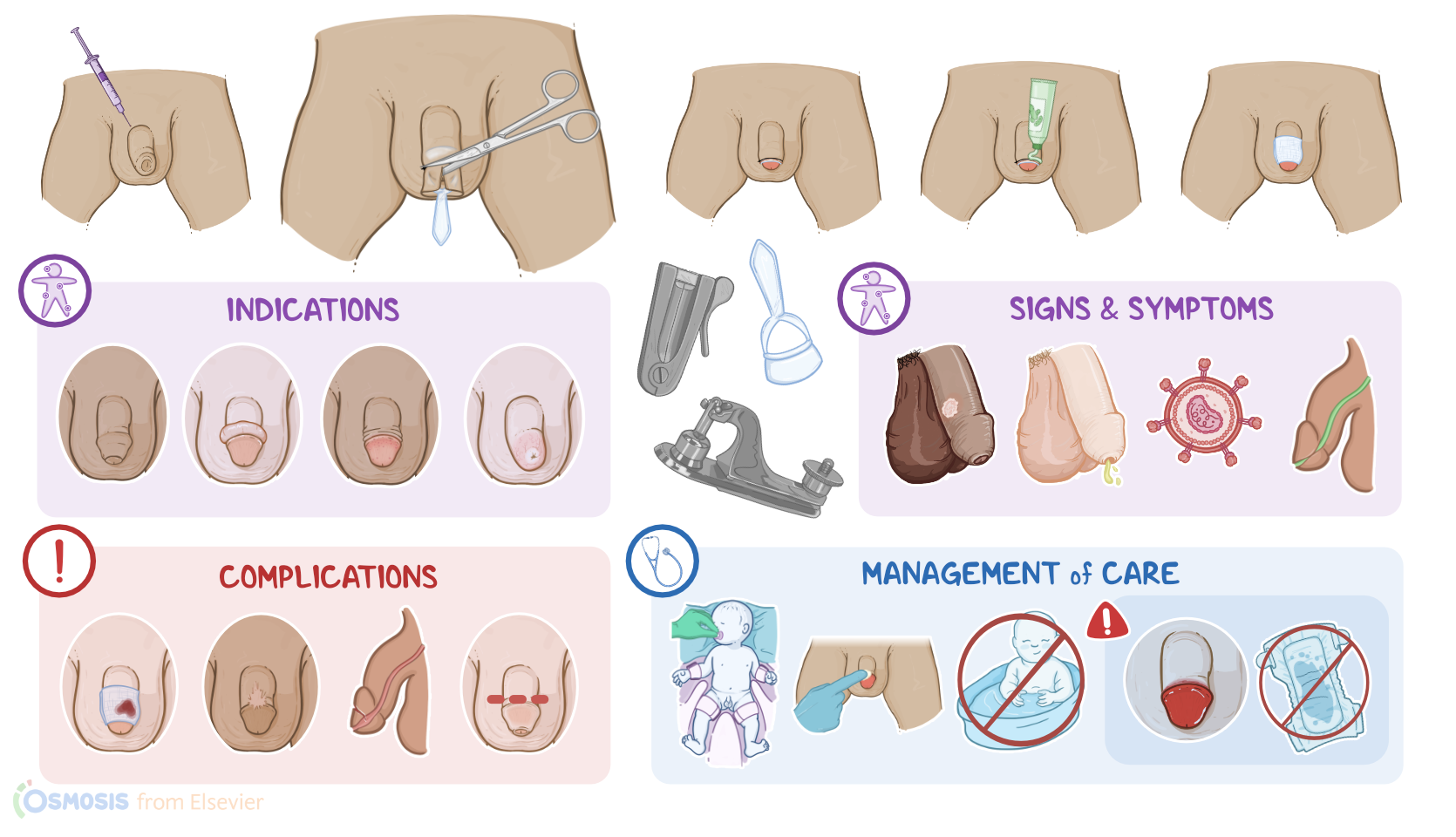
CIRCUMCISION

KEY POINTS
NOTES
DEFINITION
  • Surgical removal of foreskin

ANATOMY
  • Male external genitalia
    • Scrotum
      • Skin and muscle pouch
      • Contains testes
    • Penis
      • Body
      • Glans
        • Foreskin
      • Urethral orifice 

INDICATIONS
  • Religious
  • Cultural
  • Social
  • Personal
  • Trauma
  • Deformities
  • Prevention of conditions

PROCEDURE
  • Sterile
  • Anesthesia
  • Plastibell, Mogen, or Gomco clamp applied
  • Antibiotic or petroleum jelly apply
  • Wrapped with gauze

COMPLICATIONS
  • Bleeding
  • Penile adhesions
  • Damage to urethral meatus
  • Removing too much or too little foreskin

MANAGEMENT OF CARE
  • Goals of care
    • Assist with procedure
    • Provide post-procedural care
  • Confirm informed consent obtained and infant stable
  • Ensure vitamin K administered 
  • Restrict feeding as ordered
  • Gather needed supplies
  • Ensure bulb syringe and resuscitation equipment readily available
  • Use heat lamp or radiant warmer
  • Perform timeout
  • Assist as needed
  • Comfort infant during procedure
  • Apply jelly to site as ordered
  • Attach diaper loosely
  • Swaddle infant
  • Encourage breastfeeding or holding for comfort
  • Monitor for pain
  • Rinse site gently if contaminated with stool
  • Notify HCP
    • Signs or symptoms of infection
    • Bleeding
    • No urination within 6-8 hours
  • Monitor site frequently and urine output

PATIENT AND FAMILY TEACHING
  • Explain condition, plan of care, and how to safely self-administer medications
  • Explain tip of penis will appear red and shiny with a white or yellow crust forming
  • Instruct parents to not remove crust
  • Teach how to apply jelly to head of penis as indicated
  • Notify HCP
    • Plastibell does not fall off in 10-14 days
    • Plastibell falls off too early
    • Plastibell moves up shaft of penis
    • Signs or symptoms of infection
    • Bleeding
    • Lack of wet diapers
  • Teach circumcision site care
    • Avoid submerging in bath
    • Rinse with warm water and pat dry

Transcript

Watch video only

Circumcision is the surgical removal of the foreskin that covers the tip of the penis. It's a common procedure for infants with a penis.

Let’s first review the anatomy of the male external genitalia, which consists of the scrotum and the penis. The scrotum is a skin and muscle pouch that hangs outside the body and contains the testes. The penis is composed of the body, or shaft, which ends with an enlarged tip, the glans penis, that has an opening called the external urethral orifice at its very tip, where semen or urine are released outside the body. Around the glans penis, a cuff of loose skin makes up the foreskin or prepuce.

Now, there are various indications for circumcision, which can be religious, social, cultural, and personal. In fact, in some cultures, circumcision is a ceremony that is done outside the clinical setting, especially for those of the Jewish faith. On the other hand, other cultures have strong beliefs to keep the foreskin intact.

Other indications for circumcision include penile trauma and various deformities, such as phimosis, which is when the foreskin is too tight on the glans penis so that it can’t be pulled backward. A similar condition is paraphimosis, which is when the foreskin cannot be returned to its original position after retraction. Circumcision might also be indicated in clients with recurrent balanitis, which is inflammation of the glans penis, in addition to balanitis xerotica obliterans, which is a progressive inflammatory dermatosis of the foreskin and glans penis.

Finally, circumcision can also be done to prevent certain conditions, such as penile cancer, sexually transmitted diseases, including human immunodeficiency virus, or HIV, as well as to prevent urinary tract infections in infants with a type of congenital uropathy, where the flow of urine is obstructed..

The circumcision procedure starts under sterile conditions with the baby positioned on their back with arms and legs restrained. An anesthetic agent is then injected into the base of the penis, or it’s applied to the penis as a cream. Then, a device such as a Plastibell, or either a Mogen or Gomco clamp is used to remove the foreskin. After the procedure, an antibiotic or petroleum jelly ointment is applied onto the penis, which is then wrapped loosely with gauze.

When it comes to complications of circumcision, these include bleeding, penile adhesions, which is when the skin of the penile shaft sticks to the glans penis, damage to the urethral meatus, as well as removing too much or too little foreskin.

Okay, your priority goals of nursing care, when caring for a client undergoing circumcision, are to assist with the procedure and provide postprocedural care.

Prepare for the procedure by confirming that informed consent has been obtained and that the infant is in stable condition. Also ensure that vitamin K has been administered to prevent excess bleeding. If ordered, restrict feeding of the infant for 2 to 4 hours before the procedure to prevent aspiration.

Then, gather the needed supplies and set up the table. Ensure a bulb syringe is within reach and resuscitation equipment is readily available. Also, turn on a heat lamp or radiant warmer to prevent cold stress. Just before the procedure begins, perform a timeout with the healthcare provider to ensure you have the correct infant for the correct procedure. Then, during the procedure, assist as needed and comfort the infant with a pacifier dipped in sucrose.

Now, after the procedure, if a Gomco or Mogen clamp was used, apply petroleum jelly on the circumcision site to prevent the diaper from sticking. If a Plastibell was used, remember not to apply petroleum jelly, since it can cause the ring to be displaced.

Attach the diaper loosely to prevent irritation and pressure on the circumcision, swaddle the infant, return them to the mother, and encourage breastfeeding or holding to provide comfort. Continue to monitor for pain using your facility approved pain scale.