Complications of cancer: Nursing
Introduction0:00–0:24
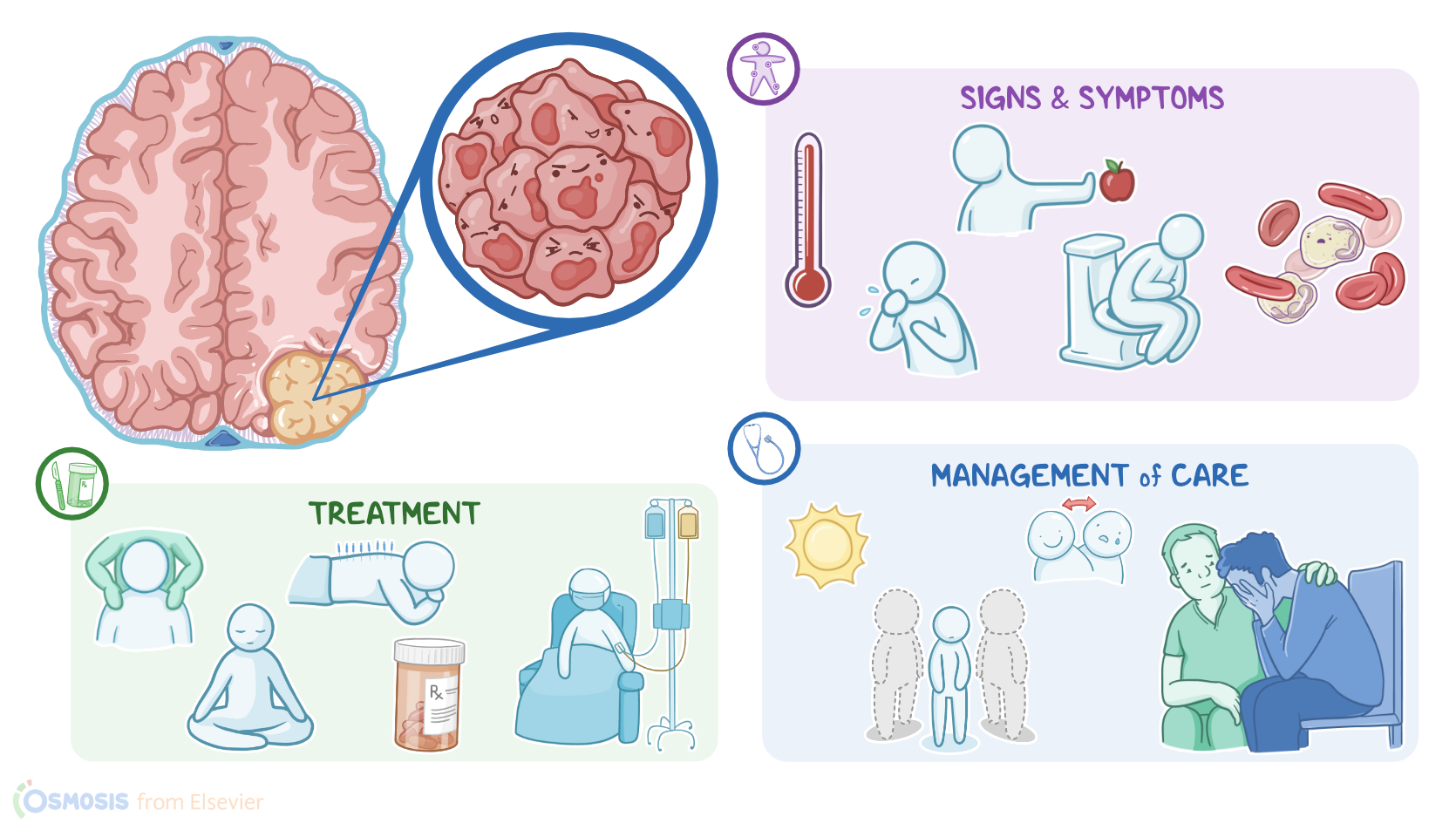
Cancer, or malignancy, refers to a group of diseases characterized by abnormal cell growth and differentiation, which changes cellular appearance and function.
These changes are harmful to normal cells and can cause several complications, which can be directly related to cancerous tissue, a side effect of treatment, or a combination of both.
Complications: Pain0:24–1:23
Let’s look at some of the complications of cancer, starting with pain. Patients with cancer are at risk for acute and chronic pain, which can decrease quality of life.
When caring for your patient with cancer, perform a comprehensive pain assessment on an ongoing basis. Discuss their pain management goals, and the use of pharmacologic interventions, including nonsteroidal antiinflammatory drugs, or NSAIDs; opioids; and adjuvant medications like corticosteroids; and nonpharmacologic interventions, such as guided imagery, relaxation breathing, distraction, massage, and acupuncture.
Then, coordinate care with the interdisciplinary team to provide other interventions, such as radioactive medications for bone pain, nerve blocks, and epidural or intrathecal analgesia as indicated.
You may also refer your patient to a pain management or palliative care specialist to help control their pain and improve quality of life.
Alright, next let’s explore infection as a complication of cancer. Several factors can lead to an infection in your patient with cancer, including tissue damage from ulceration; necrosis caused by cancerous tissue; tumors compressing organs; and decreased immunity due to cancer or treatment-induced neutropenia, which is a low number of neutrophils, or the infection-fighting white blood cells.
Complications: Infection1:23–2:45
When providing care, be sure to monitor your patient for signs or symptoms of infection, such as a temperature of 100.4 F or 38 C or higher, cough, or diarrhea.
However, keep in mind neutropenia can diminish signs of infection, so your patient may have an infection and be asymptomatic.
Now, to help prevent infection, administer hematopoietic myeloid growth factors as prescribed. Then, teach your patient about infection prevention strategies, including strict hand washing; meticulous hygiene and skin care; avoiding crowds and people with infections; wearing a mask in public; as well as safe food practices, such as eating food cooked to the proper temperature and washing fruits and vegetables.
Teach them to monitor their temperature daily and stress the importance of immediately notifying their health care provider if they notice signs or symptoms of infection.
Complications: Nutrition2:45–3:59
Okay, cancer can also cause altered nutrition. This can be caused by tumors in the GI tract; treatment-related nausea, anorexia, or decreased nutrient absorption; or from cancer-related increases in metabolism, which can result in additional nutrient requirements.
These effects can lead to deficient intake, malnutrition, or cachexia, which is a complex syndrome characterized by extreme tissue wasting and atrophy.
When caring for your patient with cancer, be sure to weigh them regularly, monitor laboratory results such as albumin and prealbumin levels, and administer enteral or parenteral nutrition.
Teach them to eat soft, nonirritating, high calorie and high protein foods like casseroles, milkshakes, and peanut butter; and to add nutrition supplements to foods, like eggs or mashed potatoes.
Advise them to avoid tobacco, alcohol, and other irritants, such as spicy foods; and remind them to take antiemetics and appetite stimulants as prescribed.
If altered taste is contributing to appetite loss, encourage them to experiment with adding a variety of herbs and other seasonings, and refer them to a registered dietitian as needed.
Now, psychosocial complications may occur anytime throughout your patient’s cancer journey and can include anxiety, fear, loss of control, relationship stress, and financial burdens.
Complications: Psychosocial3:59–4:53
Assess your patient's emotional responses, coping strategies, and other psychosocial needs, like those related to their spiritual beliefs.
Be sure to display a caring attitude, maintain hope, and build an open, honest relationship with your patient. Also, offer active listening, reassurance, and provide them with accurate information about their cancer and treatment.
Teach your patient ways to maintain their lifestyle and improve quality of life, such as symptom self-management and stress reduction.
Lastly, refer them to counseling, social work, and community resources like support groups, as needed. Alright, as a quick recap… Cancer is a group of diseases caused by abnormal cell growth and differentiation which changes cellular appearance and function.
Review4:53–5:27
Complications of cancer are related to the cancerous tissue itself, treatment side effects, or a combination of both. Types of complications include pain, infection, altered nutrition, and psychosocial issues.
Nursing care for patients experiencing cancer complications involves assessment and management of complications alongside the interdisciplinary team and providing patient education.
| COMPLICATIONS OF CANCER | ||
| KEY POINTS | NOTES | |
| DEFINITION |
| |
| PAIN |
| |
| INFECTION |
| |
| NUTRITION |
| |
| PSYCHOSOCIAL |
| |
- "Lewis's medical-surgical nursing: Assessment and management of clinical problems (12th ed.)" Elsevier (2022)
- "Medical-surgical nursing: Concepts for interprofessional and collaborative care (10th ed.)" Elsevier (2021)
- "Lewis’s medical-surgical nursing in Canada: Assessment and management of clinical problems (5th ed.)" Elsevier (2023)
No notes for this video yet
Try adding a note below