Delirium: Nursing
Delirium is a sudden, waxing and waning decline in various mental functions, including memory, thinking, language, behavior, mood, and personality.
Let’s start by looking at the anatomy and physiology of the brain, which has three main parts, called the cerebrum, which consists of the two cerebral hemispheres, the cerebellum, which sits down at the base of the skull, and the brainstem, which is located right in front of the cerebellum.
Zooming in, the cells that make up our brain are called neurons. Neurons are composed of a cell body, which contains all the cell’s organelles, and nerve fibers that extend out from the neuron cell body. These nerve fibers are either dendrites that receive signals from other neurons or axons that send signals along to other neurons.
Neurons communicate with each other through neurotransmitters, such as acetylcholine, dopamine, norepinephrine, and glutamate.
Now, the brain is responsible for various mental functions, including memory, language, personality, visuospatial function, concentration, executive function, and praxis, which is the ability to carry out complex motor activities.
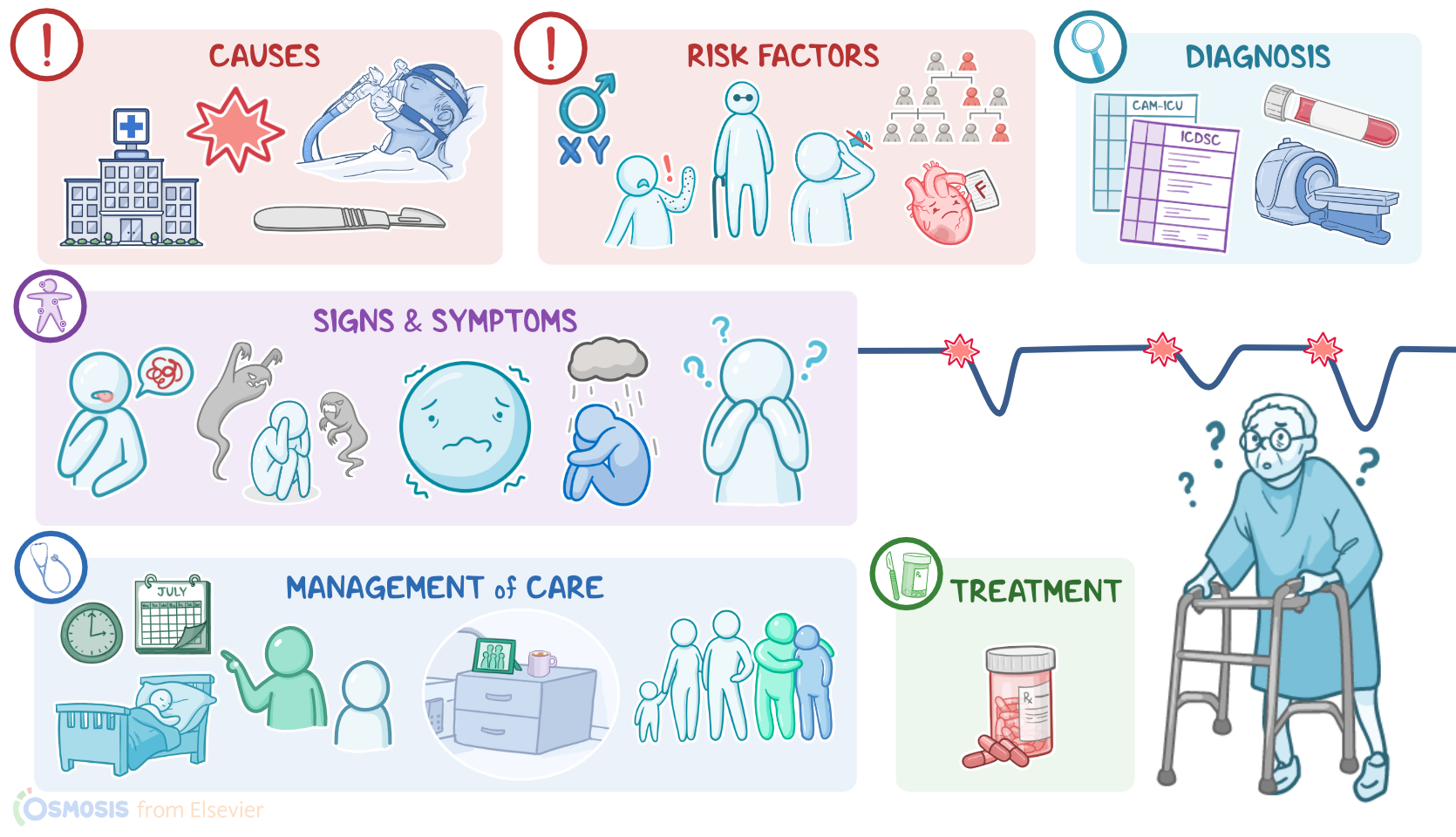
Okay, now, delirium usually occurs as a consequence of an underlying condition, which can include infections, medication toxicity, particularly with the use of sleep medications or aminoglycosides, and electrolyte imbalances.
Other causes include severe stress, pain, sleep deprivation, dehydration, or malnutrition. Delirium can also occur after a recent hospitalization, surgery, or use of mechanical ventilation, as well as after trauma.
Now, risk factors for developing delirium include advanced age; being assigned male at birth, and personal or family history of delirium. Clients with dementia or psychiatric disorders, such as depression and schizophrenia, are also more likely to develop delirium. Finally, delirium is more common in clients with underlying medical conditions, such as heart failure, cancer, and diabetes, as well as in those with visual or hearing impairment.
| DELIRIUM | ||
| KEY POINTS | NOTES | |
| DEFINITION |
| |
| PHYSIOLOGY |
| |
| CAUSES AND RISK FACTORS |
| |
| PATHOPHYSIOLOGY |
| |
| SIGNS AND SYMPTOMS |
| |
| DIAGNOSIS |
| |
| TREATMENT |
| |
| MANAGEMENT OF CARE |
| |
| PATIENT AND FAMILY TEACHING |
| |
No notes for this video yet
Try adding a note below