Hygiene - Bathing: Nursing skills
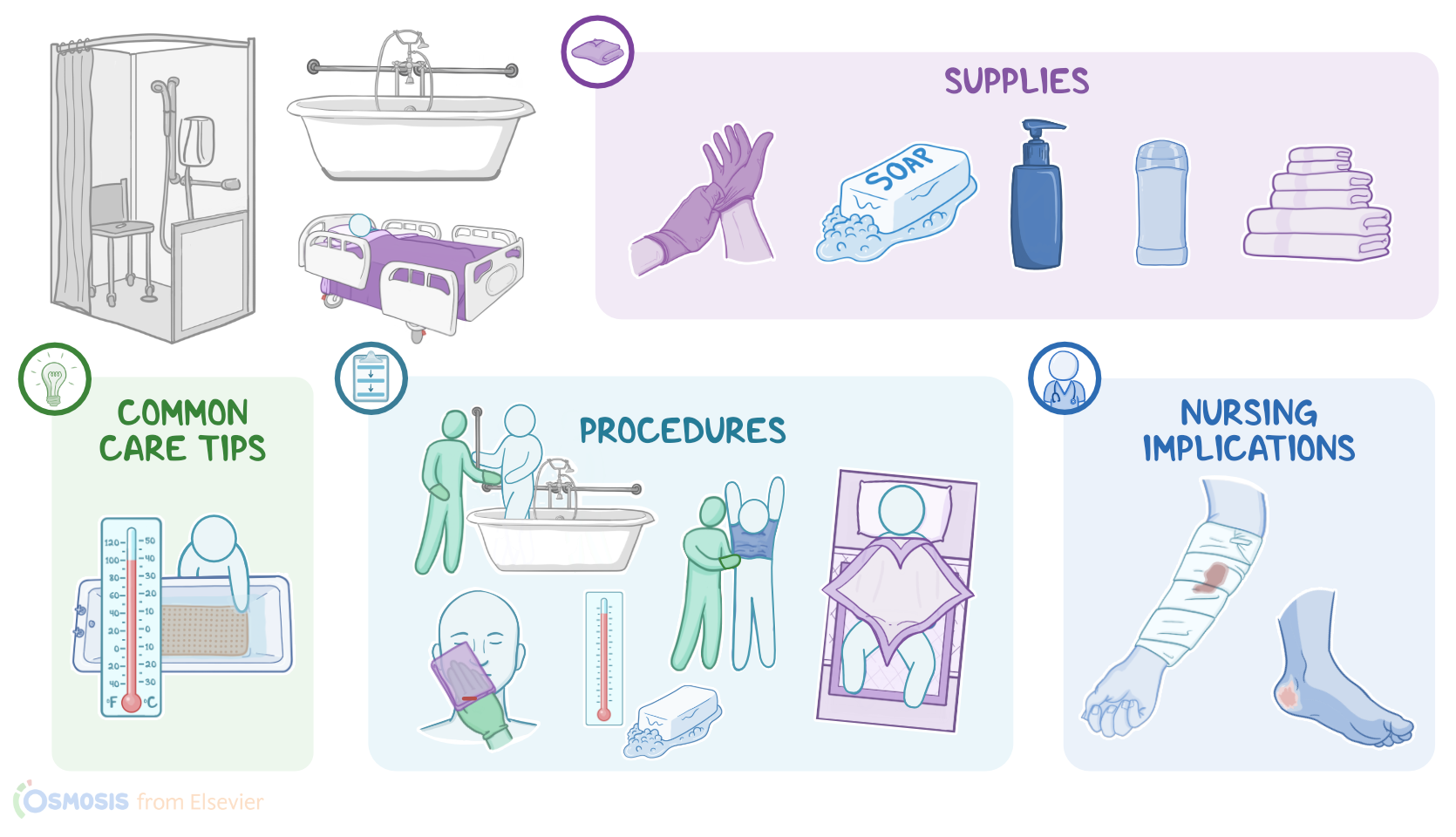
As a nurse, personal care, including assisting with bathing, is one of the most important, and sometimes challenging, tasks you will need to perform during your daily shifts. Now, before we talk about how to assist with bathing, here are some general considerations. Before beginning the procedure, explain to your client how you will assist them and why bathing is important. This can be especially helpful for confused clients or those with memory impairment. Be sure to answer any questions your client might have about the procedure. Then, start by closing the room’s door, all window covers, and ensuring the client is properly covered at all times to respect their privacy and modesty. Then, ask the client if they have special preferences for certain skin care products. Because bathing tends to trigger urination, remember to ask them if they need to use the bathroom, a bedpan, or urinal beforehand. Prepare the shower, tub room, or the bed if they’re doing a bed bath and make sure it’s clean. Watch out for a slippery bathtub or bathroom floor, place a non-slip mat and secure it to prevent a fall. Now, always check the water to make sure the temperature is safe and comfortable for the client. A water thermometer can be helpful to assess the temperature of the water before they enter. Before entering, ask your client to confirm the temperature is comfortable for them by dipping their finger in the water. Also, make sure that the ambient temperature is comfortable for them when they’re undressed. When bathing the client, encourage them to participate as much as possible. When providing a back massage, make sure to avoid reddened skin regions, sores, or bony parts because massaging these areas can damage the skin even more. Okay, so, when assisting a client with a shower, tub, or whirlpool bath, first gather the supplies you’ll need including gloves, soap, powder, lotion or cream, deodorant or antiperspirant, a bath blanket, washcloths, towels, and clean clothing. Inform them about the procedure before beginning and answer any questions related to the procedure.
In the case of a bath or a whirlpool tub, start by filling the tub halfway. If the client is taking a shower, check if they need a shower chair and place it in the shower. In both cases, make sure that there’s a towel-covered chair in the room where the client can sit after bathing to dry off. Next, assist the client to the room, help them undress, and then assist them into the shower or tub. Encourage the use of handrails to prevent falls. Now, if the client is able to bathe themselves, make sure that the bathing supplies are easy to reach. Depending on the facility’s policy, you may need to remain in the room. If you’re allowed to leave, tell them how to signal you when they need help or when they finish bathing. Stay close by and check in on them every 5 minutes for a maximum of 20 minutes. Before returning, don’t forget to knock.
If the client is unable to bathe on their own and you need to assist, start by wearing your gloves and wrap a washcloth around your dominant hand and soak it with water. With smooth but firm strokes, wash from the cleanest to the dirtiest areas, starting with the eyes, face, neck, and ears; moving to the arms, armpits, chest, and abdomen; followed by the lower limbs, back, and buttocks; and finishing with the perineal area. Remember to rinse the skin meticulously so that all soap is removed.
Drain the bathtub when the bath is finished. Take off your gloves, apply new ones, and help the client get out of the shower or tub and into a towel-covered chair. Cover them with a bath blanket or towel and use another one to gently dry the skin; avoid excessive rubbing. Pay special attention to the skin folds areas, particularly those beneath the breasts, between the toes, and buttocks. If they wish, assist them with applying lotion, cream, powder, deodorant, or antiperspirant. Finally, help them get dressed, make sure they’re wearing non-slip footwear, and accompany them to their room. Now, for those unable to take a shower or tub bath, a bed bath is recommended. When assisting with a bed bath, first gather your supplies. In addition to the ones you usually need for a shower or tub bath, now you’ll also need paper towels, bed protectors, a washbasin, clean linens, and a laundry hamper or bag. Inform your client about the procedure before beginning and answer any questions related to the procedure. For a bag bath, bring the bag containing the pre-prepared washcloths.
If the bag bath is not available, add warm water to the wash basin, cover the over-bed table with paper towels, and place the basin on it along with the toiletries. Start by making sure that the wheels on the bed are locked and raise the bed to a comfortable working height. Lower the side railings on the side you’re working on; take the blanket off the bed; and place it on a clean surface, like the bedside chair, along with clean clothing and linens. Cover the client with the bath blanket, and if they can, ask them to hold it in place. Otherwise, fold the corners under their shoulders. Remove the top sheet under the blanket and help them undress.
If they have an IV line and wear a gown, start removing the gown from the free arm and then from the arm with the IV line. Many gowns have snaps on the shoulders for easy removal with IV tubing. If the gown does not have snaps, remove the IV bag from the pole keeping it above the IV site, slide it through the arm of the client’s gown, and rehang it on the pole. To protect the IV line from getting wet during the bedbath, you can cover it with a towel and avoid contact with the IV site. At all times, remember to keep the IV bag above the level of the client’s arm where the IV site is located.
| HYGIENE - BATHING | ||
| KEY POINTS | NOTES | |
| DEFINITION |
| |
| COMMON CARE TIPS |
| |
| SHOWER, TUB, AND WHIRLPOOL BATH |
| |
| BED BATH AND BAG BATH |
| |
| BACK MASSAGE |
| |
| FINISHING THE BED BATH |
| |
| NURSING IMPLICATIONS |
| |
No notes for this video yet
Try adding a note below