Immunodeficiency disorders - Secondary: Nursing

Last updated: February 25, 2022

Immunodeficiency disorders - Secondary: Nursing

223 Content

223 Content

Hypersensitivity reactions - Overview: Nursing pathophysiology
Community health case study - Rural healthcare: Nursing
Critical care case study - Septic shock: Nursing
Critical care case study - Cardiogenic shock: Nursing
Critical care case study - ST elevation myocardial infarction (STEMI): Nursing
Critical care case study - Disseminated intravascular coagulation (DIC): Nursing
Critical care - Burns: Nursing
Critical care - Multiple organ dysfunction syndrome (MODS): Nursing
Critical care case study - Intracranial hypertension: Nursing
Acute and chronic: Clinical decision making
Airway, breathing, circulation: Clinical decision making
Clinical judgment: Clinical decision making
Maslow's hierarchy of needs: Clinical decision making
Nursing process: Clinical decision making
Overview: Clinical decision making
Restrictive and invasive: Clinical decision making
Safety: Clinical decision making
Aortic aneurysm: Nursing process (ADPIE)
Cardiac biomarkers - Creatine kinase (CK): Nursing
Cardiac biomarkers - Troponin: Nursing
Cardiomyopathy: Nursing
Case study - Hypovolemic shock: Nursing
Myocardial infarction (MI): Nursing process (ADPIE)
Myocarditis: Nursing
Pericardial effusion and cardiac tamponade: Nursing process (ADPIE)
Pericarditis: Nursing
Shock - Anaphylactic: Nursing
Shock - Cardiogenic: Nursing
Shock - Hypovolemic: Nursing
Shock - Neurogenic: Nursing
Shock - Obstructive: Nursing
Shock - Septic: Nursing
Valvular heart disease: Nursing
Testicular cancer: Nursing
Case study - Leukemia: Nursing
Disseminated intravascular coagulation (DIC): Nursing
Leukemia: Nursing process (ADPIE)
Multiple myeloma: Nursing
Neutropenia: Nursing
Immunodeficiency disorders - Secondary: Nursing
Burn injury: Nursing
Case study - Burn injury: Nursing
Frostbite: Nursing process (ADPIE)
Skin cancer - Basal cell carcinoma, squamous cell carcinoma, and melanoma: Nursing
Lymphoma - Hodgkin and non-Hodgkin: Nursing
Biology of cancer: Nursing
Care of a client in the emergency department: Nursing
Complications of cancer: Nursing
Tumor lysis syndrome (TLS): Nursing Process (ADPIE)
Case study - Stroke: Nursing
Encephalitis: Nursing
Hemorrhagic stroke - Intracranial hemorrhage (ICH) and subarachnoid hemorrhage (SAH): Nursing
Increased intracranial pressure (ICP): Nursing
Meningitis: Nursing process (ADPIE)
Stroke: Nursing process (ADPIE)
Breast cancer: Nursing process (ADPIE)
Case study - Breast cancer: Nursing
Lung cancer: Nursing
Leukemia: Nursing pathophysiology
Burns: Nursing pathophysiology
Skin cancer: Nursing pathophysiology
Multiple organ dysfunction syndrome (MODS): Nursing pathophysiology
Stroke: Nursing pathophysiology
Breast cancer: Nursing pathophysiology
Types of leadership: Nursing
Quality and safety: Nursing
Legal issues: Nursing
Health promotion and illness prevention: Nursing
Health literacy: Nursing
Ethics: Nursing
Disaster management: Nursing
Delegation and supervision: Nursing
Decision-making: Nursing
Environmental emergencies: Nursing
Social determinants of health (SDOH): Nursing
Case study - Accidental ingestion: Nursing
Poisoning: Nursing process (ADPIE)
Smoke inhalation injury: Nursing process (ADPIE)
Insect stings and bites: Nursing
Atrophy, aplasia, and hypoplasia
Hyperplasia and hypertrophy
Metaplasia and dysplasia
Oncogenes and tumor suppressor genes
Aneurysms
Aortic valve disease
Mitral valve disease
Chronic kidney disease (CKD): Nursing
Dialysis care: Nursing
Polycystic kidney disease (PKD): Nursing
Acute kidney injury (AKI): Nursing process (ADPIE)
Critical care case study - Acute kidney injury: Nursing
Kidney disease: Nursing pathophysiology

Notes

IMMUNODEFICIENCY DISORDERS -SECONDARY

KEY POINTS
NOTES
DEFINITION
  • Acquired disorders occurring as result of extrinsic factor affecting immune system

PHYSIOLOGY
  • Immune system
    • White blood cells (WBCs)
      • Protection from pathogens and foreign substances
    • Innate
      • Non-specific
    • Adaptive
      • Specific
      • T and B cells
      • Antibodies
        • IgA
        • IgG
        • IgM
        • IgE
        • IgD

CAUSES AND RISK FACTORS
  • Causes
    • Malnutrition
    • Adverse environmental conditions
    • Surgery
    • Trauma
    • Certain medications
    • Cancer
    • Metabolic disorders
    • Genetic conditions
    • Infectious diseases
  • Risk factor
    • High-risk sexual behaviors
    • Chemotherapy
    • Immunosuppressive treatment
    • Critically ill 
    • Long-term hospitalization
    • Extremes of age

PATHOLOGY
  • Increased vulnerability to infections
  • Opportunistic infections
  • Unable to eliminate mutated or defective cells

CLINICAL MANIFESTATIONS
  • Variable
  • Increased susceptibility to infection
  • Signs and symptoms depend on site of infection

DIAGNOSIS
  • History
  • Physical assessment
  • Laboratory tests
  • Imaging studies
  • Bone marrow biopsy
  • Genetic testing

TREATMENT
  • Address underlying cause
  • Vaccination
  • Antimicrobials
  • IV immunoglobulin (IG)

Transcript

Watch video only

Secondary immunodeficiencies are acquired disorders that occur as a result of some extrinsic factor affecting the immune system.

Let’s start with some immune system physiology. The immune system consists of white blood cells that protect us from pathogens, like viruses, bacteria, and fungi; but, also, foreign substances, such as toxins and chemicals, and destroy abnormal cells, such as those that might develop into cancer.

Now, the immune system consists of two main branches: innate immunity and adaptive immunity. The innate immune response involves non-specific defense mechanisms, meaning they don’t differentiate one pathogen from another. These include complement proteins and cells like phagocytes and natural killers; as well as dendritic cells, which activate the adaptive immune response. The adaptive immune response is highly specific, meaning that it recognizes different pathogens and is mediated by cells called lymphocytes, which include T and B cells.

T cells can be further divided into CD4+ and CD8+ T cells. CD4+ T cells are also known as T helper cells, because they interact with dendritic cells, and in turn help activate the rest of the lymphocytes. On the other hand, CD8+ T cells, also known as cytotoxic T cells, are in charge of cell-mediated immunity, where they attack abnormal cells. Finally, B cells mediate a specific adaptive response, called humoral immunity, by secreting antibodies that bind to and destroy extracellular antigens. These antibodies can be classified into several classes, including IgA, IgG, IgM, and IgE.

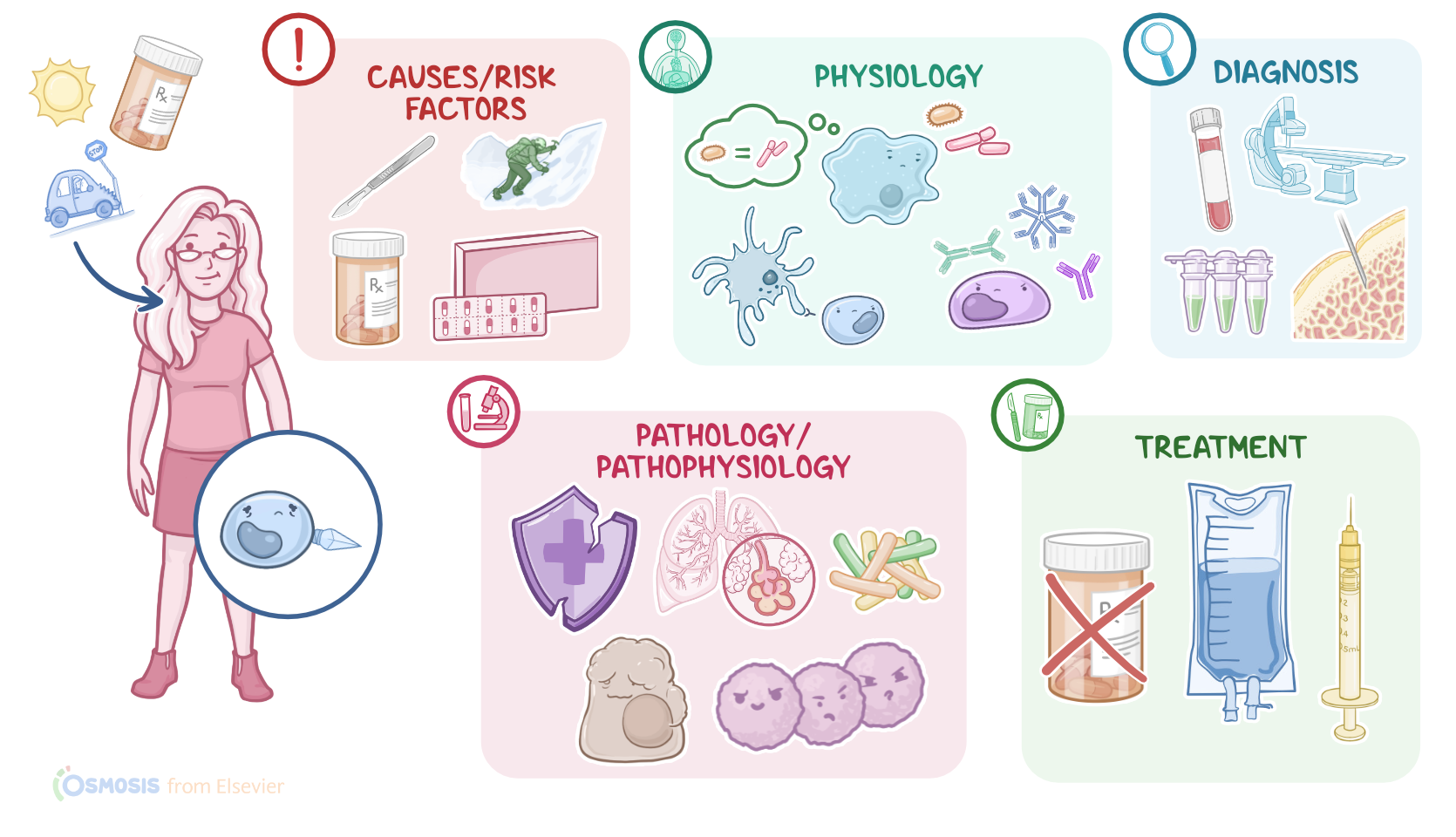
Now, there are several causes of secondary immunodeficiency, including calorie and protein malnutrition; adverse environmental conditions, like UV light, extreme cold, or high altitude; surgery and trauma; and medications, such as glucocorticoids, chemotherapy, and immunosuppressive agents used to treat autoimmune disorders or to prevent organ transplant rejection.

Additionally, secondary immunodeficiency can be also caused by several medical conditions, including various types of cancer, specifically hematological malignancies, like leukemia, lymphoma, and multiple myeloma; metabolic disorders, like diabetes mellitus or chronic kidney disease; and genetic conditions, such as Down syndrome or trisomy 21. Finally, other causes include trauma, surgery, as well as infectious diseases, the most common of which is acquired immunodeficiency syndrome, or AIDS, resulting from HIV infection.

On the other hand, risk factors for secondary immunodeficiencies include engaging in high-risk sexual behaviors, since that can increase the risk of contracting an HIV infection; undergoing chemotherapy or immunosuppresive treament; as well as being critically ill or hospitalized for a long period of time. Additionally, newborns and elderly clients are especially susceptible to immunodeficiency, since they naturally have a decreased immune response to pathogens.

Secondary immunodeficiencies affect the immune system in different ways, but what they all have in common is that they leave clients more vulnerable to developing frequent infections, as well as unusual complications from infections that a healthy immune system would typically be able to fend off. Conditions that lead to weakened mucosal barriers, such as malnutrition and burns, can increase the risk of diarrhea and skin or respiratory tract infections. In contrast, those that affect cellular immunity, such as HIV, and genetic and metabolic diseases reduce the overall effectiveness of the immune response, thereby increasing the risk of all sorts of infections. Finally, trauma and some surgical procedures, like a splenectomy, can affect organs involved in the immune system, thereby increasing the risk of infection with encapsulated bacteria like Streptococcus pneumoniae and Haemophilus influenzae.

Now, there are also certain infections that occur more frequently or have more severe symptoms in people who are immunocompromised, and these are called opportunistic infections. For example, most people infected with toxoplasma, a type of parasite, don’t have symptoms; but in people with immunodeficiency it can cause encephalitis.

Key Takeaways

Secondary immunodeficiency disorders are conditions that impair the immune system as a result of other underlying medical conditions or other extrinsic factors affecting the immune system. Such disorders can occur as a result of malnutrition; other diseases like cancer, infectious diseases like HIV/AIDS; adverse environmental conditions, like high UV light exposure or extreme cold; surgery and trauma; and medications, such as immunosuppressive agents. Symptoms vary depending on the site of infection, and the treatment focuses on treating the underlying cause, stopping the offending medication, or vaccination and prophylaxis when recommended. As a nurse, the care of a patient with secondary immunodeficiency involves monitoring and managing symptoms, administering medications, patient education, and implementing standard precautions to prevent the spread of infections.