Pain management during labor: Nursing
Introduction0:00–0:24
Labor refers to a series of progressive contractions of the uterus that result in dilation and thinning of the cervix. This, in turn, allows the fetus to descend from the uterus, through the birth canal, and into the extrauterine environment.
This process results in pain that can be managed in a variety of ways. Now, from a physiological standpoint, not only is labor pain normal, but it’s also easily anticipated, allowing time for preparation and acquisition of skills to help manage it.
Physiology0:24–1:39
Secondly, although intense, labor pain is also time limited. It is usually intermittent and decreases rapidly after hitting its peak.
Finally, it will end with the birth of a child, which is highly motivating for the mother, allowing for a higher pain threshold.Pain during labor can be either visceral or somatic.
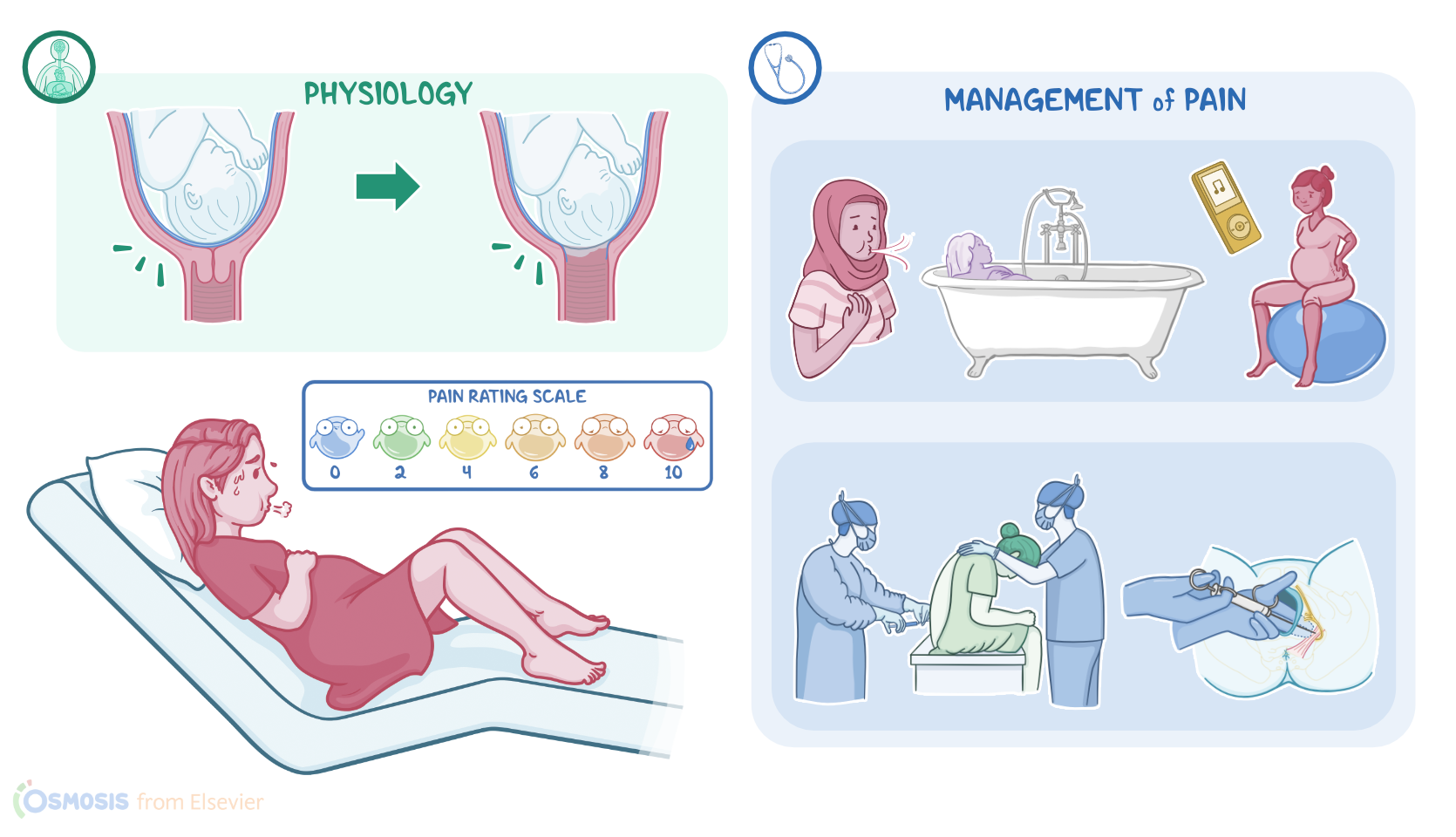
Visceral pain mostly occurs during the first stage of labor due to uterine contractions that lead to hypoxia of the uterine muscles, dilation of the cervix, distension of the lower uterine segment, as well as pressure and pulling on pelvic structures such as the fallopian tubes, ovaries, and bladder.
Then, somatic pain mostly occurs during the later part of the first stage and second stage of labor, as the uterine contractions become more intense.
Also during this time, pain is increased as the fetus pushes directly on maternal tissues like the vagina, perineum, and the lumbosacral plexus during its descent.Now, pain during labor can cause anxiety leading to a stress response that can have an adverse effect on the progression of labor and on the fetus.
Pathology1:39–2:30
Excessive pain can heighten the individual’s fear and anxiety, causing the release of cortisol and catecholamines like epinephrine and norepinephrine.
When these act on alpha receptors, the uterine blood vessels and muscles constrict, reducing uterine blood flow, reducing the fetal oxygen supply, and potentially leading to fetal hypoxia.
Labor also increases the mother’s metabolic rate and demand for oxygen, making the hypoxia worse. Finally, after labor, poorly managed pain can make it difficult to interact with the newborn due to post-labor fatigue and exhaustion.Now, management of labor pain begins with prenatal education, by offering realistic information on pain and expectations, as well as analgesia and anesthesia techniques.
Treatment2:30–5:17
This can reduce anxiety and allow partners to rehearse for labor and develop the necessary skills to cope with labor pain.
Options for pain management can be pharmacological or non-pharmacological. Non-pharmacological measures include cognitive processes and cutaneous techniques.
Cognitive processes include continuous labor support, where the presence of a support person provides emotional and physical support during labor; and music therapy, which can increase pain tolerance and serve as a distraction from pain.Other cognitive processes include relaxation techniques that can be used to conserve energy and decrease fatigue.
On the other hand, cutaneous techniques can be used to modulate the intensity of pain by helping to block pain impulses and stimulating the release of endorphins.
These include back, shoulder, or sacral massage; the use of a birthing ball, which can be used to rock or gently bounce on to decrease perineal pain; and hydrotherapy which uses warmth and buoyancy to promote relaxation and increase pain tolerance.Moving on, there are four types of pharmacologic methods to keep in mind.
First, there are systemic analgesics, which can include IV administration of full opioid agonists like fentanyl and remifentanil; or partial opioid agonists like butorphanol and nalbuphine.
Another type of regional analgesia is a pudendal block, which involves injecting a local anesthetic just below the ischial spine through the vaginal wall.
Next, there’s intermittent inhalation of nitrous oxide which provides pain relief but the client remains conscious. The final method is general anesthesia where the patient is fully unconscious so the most common scenario for its use is for cesarean delivery.All right, let’s talk about the nursing care you’ll be giving to a laboring client to manage their pain.
Management and care5:17–7:05
Your priority nursing goals are to safely manage your client’s pain through non-pharmacological and pharmacological methods.
Begin managing your client’s pain by assessing their current knowledge about their options for non-pharmacological and pharmacological pain management techniques during labor.
Ask them about any techniques they may have learned in prenatal childbirth classes, and determine their preferences on how they plan to cope with pain during labor.
If your client is interested in having epidural analgesia during their labor, be sure to work with the anesthesia team to obtain informed consent for the procedure.As labor progresses, quantify the level of your client’s pain on a pain rating scale, and ask them what level requires pain management interventions.
Also be sure to note indications of how your client is coping or not coping with pain. So, if your client is able to relax between contractions and is inwardly focused, these are indications your client is coping with their labor pain.
On the other hand, if your client is wincing, tense, and unable to focus, these are indications your client is not coping well and will need pain management interventions.
Also, keep in mind that anxiety can heighten the feelings of pain, so be sure to help decrease your client’s anxiety by speaking in a calm, confident voice, and providing updates and reassurance on the progress of their labor.
You can also decrease anxiety and promote relaxation by making environmental adjustments such as turning down bright lights, adjusting the temperature, reducing intrusions into the labor room, and changing any soiled bedding or underpads.
Okay, let’s move on to client and family teaching. Begin by reassuring your client that although pain is expected during the labor process, there are several methods to help them manage their pain.
General client and family teaching7:05–7:36
Review both non-pharmacological and pharmacological methods of pain management, including the effectiveness of each, the effects on their fetus and newborn.
Finally, let them know they will be an active participant in deciding how their pain will be managed. All right, as a quick recap… Labor is the process of cervical dilation and thinning that occurs due to uterine contractions, eventually allowing the fetus to pass through the birth canal and into the extrauterine environment.
Review7:36–9:18
This process results in pain that can be managed in a variety of ways. Now, pain during labor can be either visceral, which mostly occurs during the first stage of labor due to hypoxia of the uterine muscles during contractions,cervical dilation, distension of the lower uterine segment, as well as pressure and pulling on pelvic structures; or somatic, which mostly occurs during the later part of the first stage and second stage of labor, caused by more intense contractions and by the fetus pushing directly on maternal tissues like the vagina, perineum, and the lumbosacral plexus.There are non-pharmacological methods to manage labor pain that include cognitive and cutaneous techniques.
Pharmacological methods include systemic analgesia with full or partial opioid analgesics, local anesthesia such as epidural or spinal administration of local anesthetics plus opioids, and pudendal block; intermittent inhalation of nitrous oxide, and finally, general anesthesia which is often used during cesarean delivery.
The priority nursing goals are to safely manage the client’s pain through non-pharmacological and pharmacological methods.
Client and family education centers on reviewing methods of pain management, teaching about the effectiveness of each, and the effects on their fetus and newborn.
| PAIN MANAGEMENT DURING LABOR | ||
| KEY POINTS | NOTES | |
| DEFINITION |
| |
| PHYSIOLOGY |
| |
| PATHOPHYSIOLOGY |
| |
| TREATMENT |
| |
| MANAGEMENT OF CARE |
| |
| PATIENT AND FAMILY TEACHING |
| |
No notes for this video yet
Try adding a note below