Pediatric psychosocial needs during illness and hospitalization: Nursing

Pediatric psychosocial needs during illness and hospitalization: Nursing

NUR243

NUR243

Growth and development - Infant: Nursing
Growth and development - Preschool-age: Nursing
Growth and development - Toddler: Nursing
Growth and development - School-age: Nursing
Growth and development - Adolescent: Nursing
Growth and development - Early and middle adulthood: Nursing
Failure to thrive (FTT): Nursing
Growth and development theories: Nursing
Congenital heart defects - Acyanotic: Nursing
Congenital heart defects - Cyanotic: Nursing
Kawasaki disease: Nursing
Amblyopia: Nursing
Hearing impairment and otosclerosis: Nursing
Pharyngitis: Nursing
Strabismus: Nursing
Otitis media: Nursing
Conjunctivitis: Nursing process (ADPIE)
Eye injury: Nursing process (ADPIE)
Tonsillitis: Nursing process (ADPIE)
Biliary atresia: Nursing
Cleft lip and palate: Nursing
Esophageal atresia and tracheoesophageal fistula: Nursing
Hirschsprung disease: Nursing
Necrotizing enterocolitis: Nursing
Nutrition - Newborn: Nursing
Omphalocele and gastroschisis: Nursing
Appendicitis: Nursing process (ADPIE)
Hyperbilirubinemia: Nursing process (ADPIE)
Poisoning: Nursing process (ADPIE)
Pyloric stenosis: Nursing process (ADPIE)
Bladder exstrophy: Nursing
Circumcision: Nursing
Cryptorchidism: Nursing
Enuresis: Nursing
Hypospadias and epispadias: Nursing
Hemolytic uremic syndrome: Nursing
Sickle cell disease: Nursing process (ADPIE)
Hypersensitivity reactions - Type I: Nursing
Hypersensitivity reactions - Type II: Nursing
Hypersensitivity reactions - Type III: Nursing
Hypersensitivity reactions - Type IV: Nursing
Diphtheria: Nursing
Erythema infectiosum (Fifth disease): Nursing
Fever: Nursing
Mumps (Parotitis): Nursing
Infectious mononucleosis: Nursing
Pertussis: Nursing
Poliomyelitis: Nursing
Rocky Mountain spotted fever (RMSF): Nursing
Roseola (Exanthem subitum): Nursing
Rubella (German measles): Nursing
Rubeola (Measles): Nursing
Smallpox: Nursing
Zika virus: Nursing
Anaphylaxis: Nursing process (ADPIE)
Chickenpox (Varicella): Nursing process (ADPIE)
Lyme disease: Nursing process (ADPIE)
Child maltreatment: Nursing
Crisis intervention: Nursing
Therapeutic communication: Nursing
Autism spectrum disorder (ASD): Nursing
Pediatric psychosocial needs during illness and hospitalization: Nursing
Anxiety disorders: Nursing process (ADPIE)
Eating disorders: Nursing process (ADPIE)
Muscular dystrophies - Duchenne and Becker: Nursing
Clubfoot: Nursing
Craniosynostosis: Nursing
Developmental dysplasia of the hip: Nursing
Juvenile idiopathic arthritis: Nursing
Scoliosis: Nursing
Shoulder dystocia: Nursing
Fractures: Nursing process (ADPIE)
Cerebral palsy: Nursing
Head injury: Nursing
Brachial plexus injury: Nursing
Phenylketonuria (PKU): Nursing
Hydrocephalus: Nursing process (ADPIE)
Reye syndrome: Nursing process (ADPIE)
Cystic fibrosis: Nursing
Influenza: Nursing
Sudden infant death syndrome (SIDS): Nursing
Asthma: Nursing process (ADPIE)
Bronchiolitis and respiratory syncytial virus (RSV): Nursing process (ADPIE)
Epiglottitis: Nursing process (ADPIE)
Foreign body aspiration and upper airway obstruction: Nursing process (ADPIE)
Laryngotracheobronchitis (LTB) and croup: Nursing process (ADPIE)
Smoke inhalation injury: Nursing process (ADPIE)

Notes

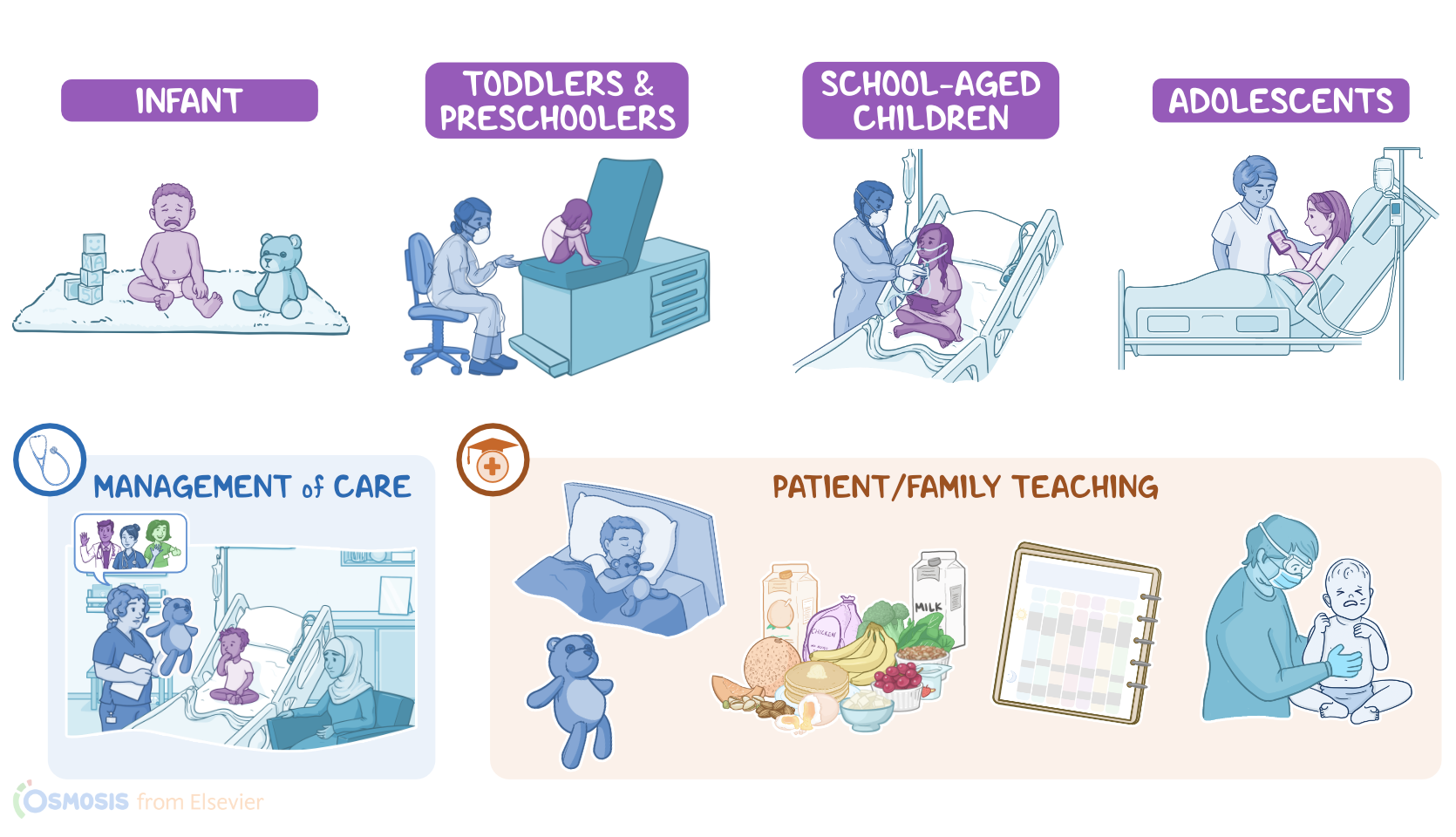
PEDIATRIC PSYCHOSOCIAL NEEDS DURING HOSPITALIZATION

KEY POINTS
NOTES
DEFINITION
  • Psychosocial effects that children experience during hospitalization
    • Fear
    • Separation anxiety
    • Loss of control

EFFECTS OF SEPARATION
  • Fear 
    • Triggered by illness, pain, or injury 
    • Environment changes frightening 
    • Strange equipment, smells, and noises 
    • Crying children and unfamiliar people in gowns 
  • Separation anxiety 
    • Distress from being away from caregivers 
    • May show anger or reject helpers 
    • Can progress to quiet withdrawal and despair 
  • Loss of control 
    • Disruption of routines and independence 
    • Limited choices in self-care and play 
    • Reduces coping ability in stressful situations 
    • Influencing factors 
  • Age and developmental level 
    • Temperament and coping skills 
    • Nature and severity of illness 
    • Planned vs. emergency hospitalization 
    • Length of separation from caregivers 
    • Family and cultural background

SIGNS AND SYMPTOMS
  • Infants 
    • Cry when separated from caregivers 
    • Turn away from unfamiliar people 
    • Sensitive to sensory overload and procedures 
    • Disrupted feeding and sleeping patterns 
    • Express distress through facial expressions and body tension 
  • Toddlers & preschoolers 
    • Fear of strangers and separation 
    • Call out or search for caregivers 
    • May throw tantrums
    • Become withdrawn 
    • Refuse food or medications 
    • Possible regression  
    • May believe illness is their fault 
  • School-age children 
    • Better understanding of illness and procedures 
    • Ask questions and want involvement in care 
    • Use coping strategies for pain 
    • Loss of control
    • Boredom or loneliness 
  • Adolescents 
    • More affected by separation from peers 
    • Concerned about body image and appearance 
    • May hide fears and appear confident 
    • Question care plans
    • Seek independence 
    • Loss of control
    • Anger or withdrawal

MANAGEMENT OF CARE
  • Goal of care
    • Provide supportive care
    • Minimize fear and anxiety
  • Orient child and caregivers to the environment 
  • Introduce health care team members 
  • Use a calm, friendly voice 
  • Explain procedures using age-appropriate, non-medical language 
  • Demonstrate procedures on toys or stuffed animals 
  • Promote involvement and control 
  • Include child in care activities when possible 
  • Encourage expression of feelings 
  • Encourage caregiver presence in the room 
  • Room child with peers of similar age/development 
  • Assign a consistent group of nurses 
  • Involve child life specialists for therapeutic play and education 
  • Refer to social work as needed

PATIENT AND FAMILY TEACHING
  • Explain condition, plan of care, and safe medication administration
  • Promote rest and nutrition for child and caregiver 
  • Maintain routines  
  • Teach soothing techniques 
  • Show caregivers how to comfort child 
  • Suggest bringing a favorite toy or object from home 

Transcript

Watch video only

Psychosocial needs of pediatric clients during illness and hospitalization can be challenging for nurses and other caregivers to meet. There are three main psychosocial effects that children experience during hospitalization, including fear, separation anxiety, and loss of control.

First, fear may arise from an unexpected occurrence of illness, potential physical harm, injuries, and pain. Children typically have a harder time adjusting to changes in the environment which may include scary equipment, smells, noises, other children crying, strange words, needles, and strangers in weird outfits, such as surgical gowns, masks, and caps.

Next is separation anxiety, which refers to the anxiety or emotional distress that a child experiences when separated from their caregiver, or their family, home, and friends. It can be characterized by anger and rejection of those who try to help. Anger can be followed by despair, where they become quiet and withdrawn.

Also, the child’s loss of control over decisions, usual everyday routines, self-care, and play, can adversely affect their coping mechanisms and decrease their ability to deal with new stressful situations.

Now, a child’s reaction to illness and hospitalization can be affected by many things, including age, developmental and cognitive level, temperament, and coping skills. Other important factors include recent stressful situations, the nature and severity of the illness, and whether the hospitalization is planned, unplanned, or if it’s an emergency situation. Also, length of separation from parents, family members, and other familiar caregivers; their reaction to illness or hospitalization; as well as the child’s cultural, ethnic, and religious background, can all have an effect on a child’s reaction.

Okay, in terms of clinical manifestations, how a child expresses their emotions during illness or hospitalization varies depending on their age and stage of development. Starting with infants, children at this stage will often cry when left by their caregivers and turn away from strangers. They are especially vulnerable to the effects of stressors like sensory overload and invasive procedures, which can disrupt their feeding and sleeping patterns. They tend to convey emotions through facial expressions and gestures, such as a tense body posture and furrowed brow.

Now, toddlers and preschoolers are also afraid of strangers, and when separated from their caregivers, they will ask for or call out for them. They may throw temper tantrums, become sad and withdrawn, cry quietly, and be uncooperative with taking medications and food. They can even regress in acquired skills, such as toilet training. Children at this stage begin to understand illness but not its cause, so they tend to believe it’s their fault for becoming sick.

School-age children are often able to deal effectively with separation from caregivers. They have a better understanding of the illness, ask questions about procedures and tests that are being performed, and they want to take part in decision making. Children at this stage tend to have coping mechanisms that can help them deal with pain and discomfort related to invasive procedures; however, losing a sense of control can make them feel isolated, bored, or lonely.