Pregestational conditions: Nursing
Introduction0:00–0:19
Pregestational conditions are chronic medical problems that are present from before pregnancy and can pose a risk to the mother or the fetus during pregnancy.
They include diabetes mellitus, thyroid problems, and certain cardiac conditions, as well as asthma.Alright, now let’s quickly go over each of these conditions, starting with diabetes mellitus, which is when the body has trouble moving glucose from the blood into the cells, so blood glucose levels are constantly high.
Causes & risk factors0:19–2:17
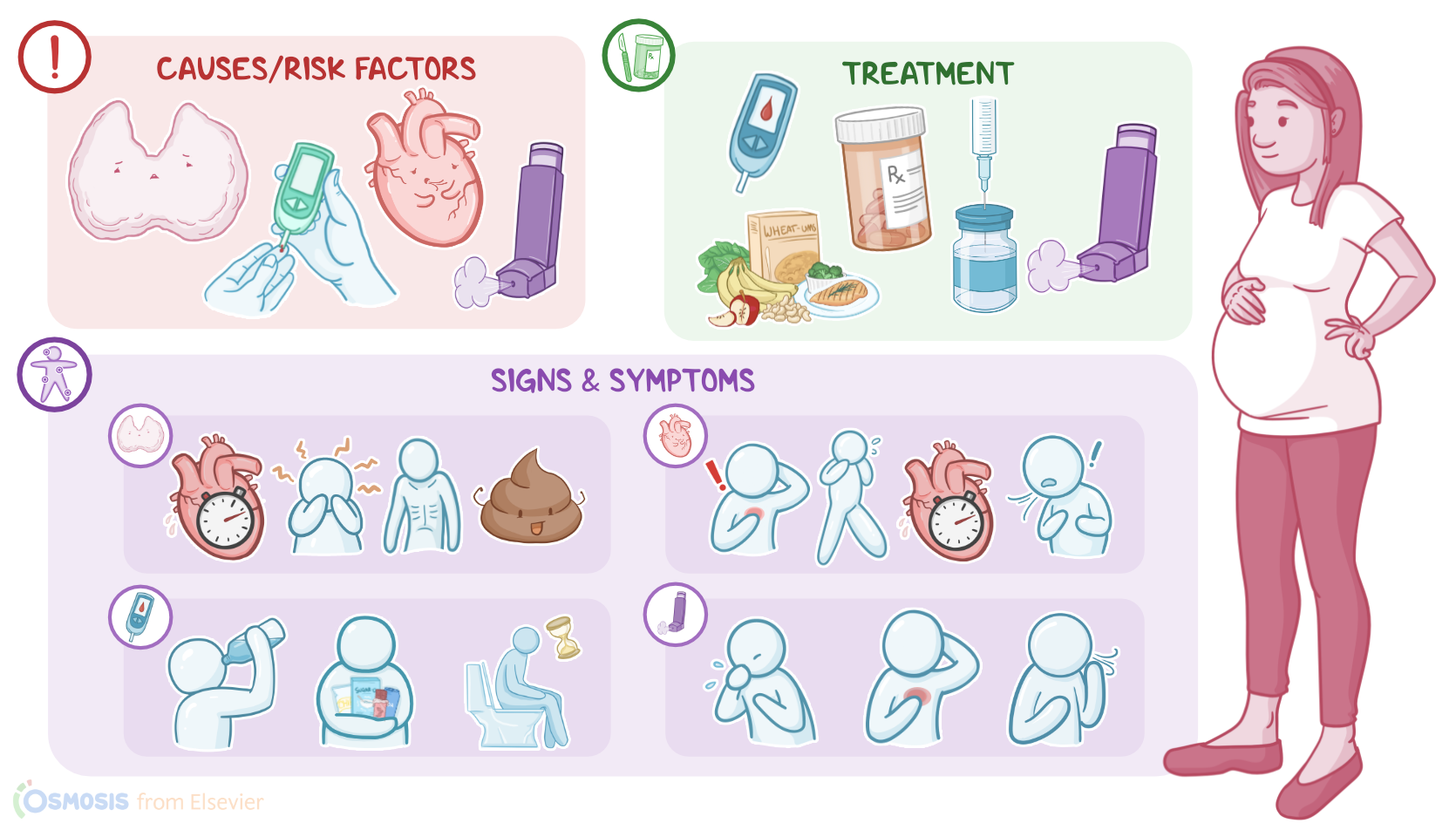
There are two main types of diabetes: type 1 diabetes, which is when the body doesn’t make enough insulin; and type 2 diabetes, which is when the body makes enough insulin, but the cells are insulin resistant, meaning they don’t respond to insulin by taking glucose in.
Next, there are thyroid problems, which can be split into hyper- and hypothyroidism. Hyperthyroidism occurs where there’s excess thyroid hormones, and this is generally caused by overproduction from the thyroid gland.
Conversely, hypothyroidism is typically caused by an immune attack targeting the thyroid gland, causing destruction and inflammation, which results in low circulating thyroid hormones.
Thyroid hormones are important because they increase the rate of metabolism in all cells, so they make us think, move, and talk faster, and they also increase heat generation.
They also activate the sympathetic nervous system, the part of the nervous system responsible for the ‘fight-or-flight’ response, increasing cardiac output.
Third, there are cardiac conditions, which can be either congenital or acquired. Common congenital heart defects include atrial septal defect, or ASD; ventricular septal defect, or VSD; and patent ductus arteriosus, or PDA.
On the other hand, acquired conditions that can complicate pregnancy include rheumatic heart disease; valvulopathies, which are caused by a defect in one or more of the four valves of the heart; and cardiomyopathies, which are disorders affecting the heart muscle, called the myocardium.
Finally, pregestational conditions also include asthma, which is a respiratory disorder characterized by a chronic inflammation of the airways, making them narrower and more difficult to breathe through.Okay, now let’s see how each of these conditions affects pregnancy, starting with the pathology of diabetes mellitus.
Pathology2:17–5:07
Early in pregnancy, diabetes can interfere with fetal organogenesis, resulting in major birth defects and spontaneous abortions.
As pregnancy progresses, hormones released by the placenta increase the body’s resistance to insulin, resulting in higher levels of maternal blood glucose.
Fetal and neonatal effects include macrosomia, or a birth weight equal to or more than 4,000 grams; while diabetes-related renal impairment can cause uteroplacental insufficiency and intrauterine growth restriction, or IUGR.
After delivery, infants of mothers with diabetes have a higher risk of neonatal complications, including hypoglycemia and respiratory distress syndrome.
On the maternal end, diabetes during pregnancy can lead to an increased risk of obstetric complications, such as gestational hypertension, preeclampsia, preterm birth, and postpartum hemorrhage, as well as an increased risk of trauma during delivery and cesarean birth.
Next up, there’s hyperthyroidism, which is when excess thyroid hormones increase the basal metabolic rate, so it’s like the entire body is buzzing at twice the normal rate.
Hyperthyroidism can cause spontaneous abortions, gestational hypertension, and placental abruption, as well as heart failure.
In the fetus, it can lead to IUGR as well as fetal or neonatal thyrotoxicosis, and stillbirth. Conversely, hypothyroidism causes an abnormal decrease in metabolic rate, telling the body to slow down more than usual.
Hypothyroidism may interfere with becoming pregnant or it can be a cause of spontaneous abortion. Additionally, the fetus relies on maternal thyroid hormones until it is able to produce its own, which typically happens around 18 to 20 week’s gestation.
So with maternal hypothyroidism, the development of the fetus is impaired, which can cause low birth weight and congenital hypothyroidism, as well as developmental delays.
Moving on, when it comes to cardiac conditions, pregnancy increases the workload of the heart due to an increase in blood volume, especially towards the third trimester.
In the mother, this can worsen pre-existing cardiac pathology, and can even precipitate congestive heart failure. In addition, infants of mothers with cardiac conditions can have a higher risk of congenital cardiac defects, IUGR, and preterm birth.
Finally, asthma control is essential during pregnancy, as uncontrolled asthma causes decreased oxygen saturation in maternal and fetal blood.
This can lead to gestational hypertension, IUGR, and premature birth.Now, clients with uncontrolled pregestational conditions can present with a variety of clinical manifestations.
Clinical manifestations5:07–7:27
For example, clients with diabetes mellitus can present with a triad of polydipsia, meaning increased thirst; polyphagia, or increased hunger; and polyuria, or excessive urination.
However, polyphagia and polyuria are common findings during normal pregnancy as well, so laboratory screening with fasting blood glucose levels should be part of routine prenatal care in order to diagnose the condition.
Other findings include excess glucose in urine, or glucosuria, as well as increased risk of genitourinary infections, and worsening of eye, kidney, heart, and nerve conditions related to diabetes.
Next, clients with hyperthyroidism typically present with tachycardia, increased appetite, unexplained weight loss or failure to gain weight, and more frequent bowel movements but normally formed stools.
Also, making so much internal heat makes them sweat a lot, so they are typically uncomfortable in warm temperatures. Finally, hyperthyroidism can cause psychological manifestations, such as anxiety, irritability, and mood swings, as well as difficulty sleeping.
On the flip side, clinical manifestations of hypothyroidism include weight gain despite a loss in appetite because of the lower basal metabolic rate; cold sensitivity because the body is producing less heat; and slower heart rate, mental slowness, lethargy, and constipation because of the decreased effect of thyroid hormones on the sympathetic nervous system.
On the other hand, cardiac conditions present with a wide variety of clinical manifestations, like chest pain, tachycardia, and heart palpitations.
Cardiac conditions can also lead to pulmonary manifestations, such as persistent crackles at the base of the lungs, dyspnea on exertion, and intolerance to exercise.
Finally, clients with asthma can have asthma exacerbations, or asthma attacks, that are triggered by environmental factors, leading to coughing; a feeling of chest tightness; dyspnea, or difficulty breathing; and wheezing, or a high-pitched whistling sound that typically happens during exhalation.
Treatment of pregestational conditions varies depending on the underlying condition. Treatment of diabetes focuses on maintaining a healthy diet, monitoring glucose levels and insulin administration, if dietary measures aren’t enough to keep blood glucose levels in check.
Treatment7:27–8:35
On the other hand, treatment of hyperthyroidism can be challenging, as certain medications used outside of pregnancy are teratogenic and can lead to fetal compromise.
Treatment of hyperthyroidism in pregnancy generally involves beta-blockers, like propranolol, which controls the symptoms of excess thyroid hormones; as well as propylthiouracil, or PTU for short, which decreases thyroid hormone synthesis.
For clients with hypothyroidism, treatment requires thyroid hormone substitution with levothyroxine, and the dose might be higher than in non-pregnant individuals because of the increased metabolic demands of pregnancy.
Next, management of heart problems varies depending on the specific medical condition. Finally, treatment of asthma involves medications that are well-tolerated during pregnancy, including inhaled corticosteroids, as well as bronchodilators.
Alright, as a quick recap, Diabetes during pregnancy can cause fetal and neonatal effects, including macrosomia, or a birth weight of 4,000 g or more; while diabetes-related renal impairment can lead to uteroplacental insufficiency and intrauterine growth restriction, or IUGR.
Review8:35–10:11
After delivery, infants of mothers with diabetes have a higher risk of neonatal complications, including hypoglycemia and respiratory distress syndrome.
On the maternal end, diabetes during pregnancy can lead to an increased risk of obstetric complications, such as gestational hypertension, preeclampsia, preterm birth, and postpartum hemorrhage, as well as an increased risk of trauma during delivery and cesarean birth.
Hyperthyroidism can cause a number of problems, including gestational hypertension and placental abruption, as well as heart failure in the mother.
In the fetus, it can lead to IUGR, fetal or neonatal thyrotoxicosis, and stillbirth. On the other hand, hypothyroidism can cause spontaneous abortion, low birth weight, congenital hypothyroidism, and developmental delays.
Now, cardiac conditions during pregnancy can worsen over the course of the pregnancy. In the mother, this can precipitate congestive heart failure; while infants of mothers with cardiac conditions can have a higher risk of congenital cardiac defects, IUGR, and preterm birth.
Finally, asthma control is essential during pregnancy, as uncontrolled asthma causes decreased oxygen saturation in maternal and fetal blood, which can lead to IUGR,
| PREGESTATIONAL CONDITIONS | ||
| KEY POINTS | NOTES | |
| DEFINITION |
| |
| CAUSES AND RISK FACTORS |
| |
| PATHOPHYSIOLOGY |
| |
| SIGNS AND SYMPTOMS |
| |
| TREATMENT |
| |
No notes for this video yet
Try adding a note below