Roseola (Exanthem subitum): Nursing
Definitions & Key takeaways
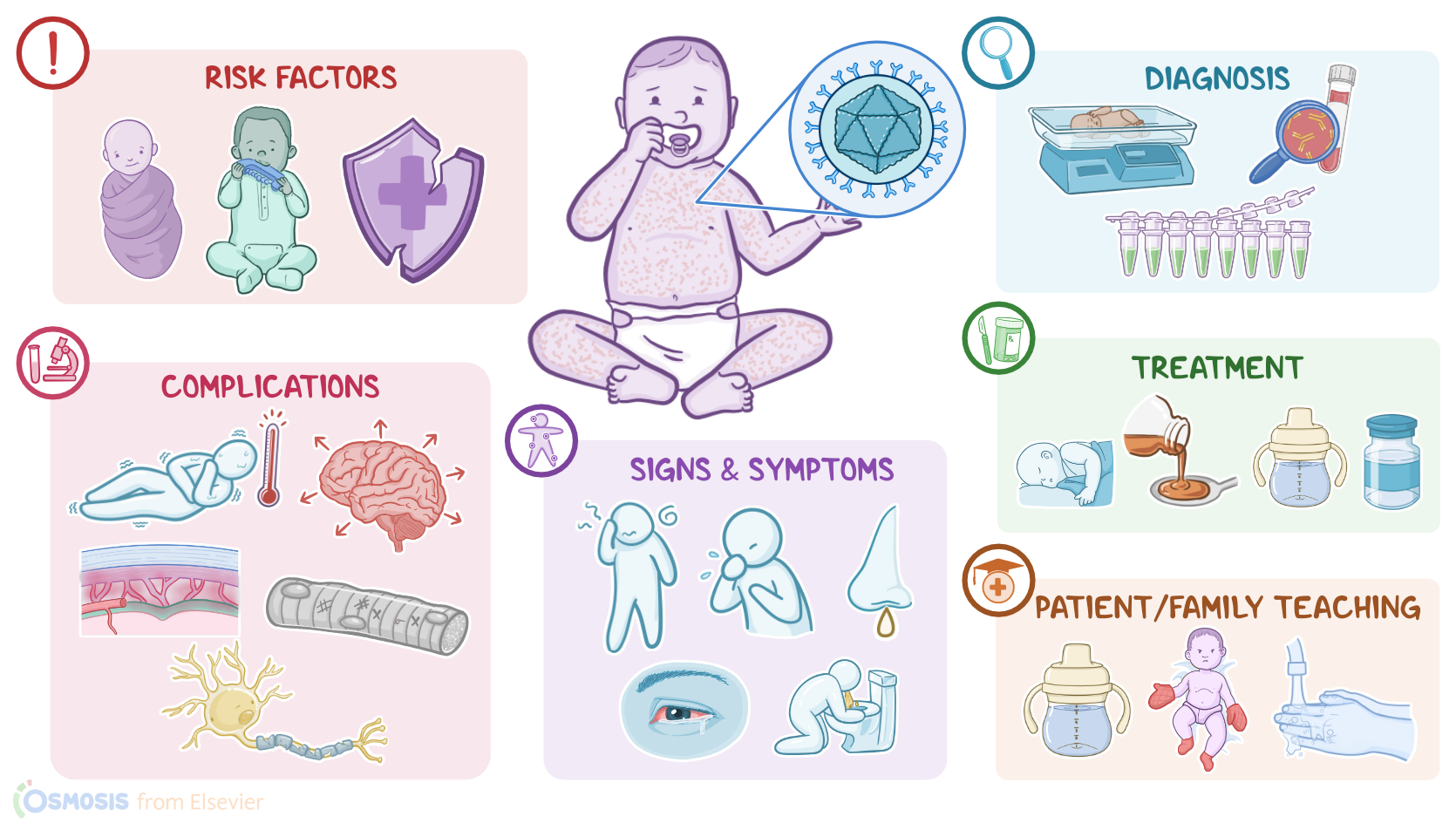
Roseola, also called exanthem subitum, or sixth disease, is a viral exanthem typically caused by human herpesvirus 6 or HHV-6, but can also be caused by other viral pathogens like human herpesvirus 7 (HHV-7). Children between 6 months and 2 years are most commonly affected by this condition.
Signs and symptoms start with the febrile phase which lasts about 3 to 5 days. This phase is characterized by a fever that can exceed 104 degrees F or 40 C, and general symptoms like cough, runny nose, swollen lymph nodes, malaise, diarrhea, and vomiting. Next comes the maculopapular phase, which involves small rose-colored macules and papules. These tend to appear on the neck and trunk and then spread to the face and extremities. The rash usually lasts 1 to 2 days.
Diagnosis of roseola is most commonly made through history and physical assessment along with measuring HHV-6-specific IgM antibodies. Treatment focuses on supportive therapies, while immunocompromised clients might require the administration of antivirals.
Introduction0:00–0:30
Physiology0:30–1:33
Causes & risk factors1:33–2:01
Pathology2:01–3:30
Clinical manifestations3:30–4:51
Diagnosis4:51–5:10
Treatment5:10–5:39
Management and care5:39–6:31
General client and family teaching6:31–7:44
Review7:44–9:09
| ROSEOLA (EXANTHEM SUBITUM) | ||
| KEY POINTS | NOTES | |
| DEFINITION |
| |
| PHYSIOLOGY |
| |
| CAUSES AND RISK FACTORS |
| |
| PATHOPHYSIOLOGY |
| |
| SIGNS AND SYMPTOMS |
| |
| DIAGNOSIS |
| |
| TREATMENT |
| |
| MANAGEMENT OF CARE |
| |
| PATIENT AND FAMILY TEACHING |
| |
No notes for this video yet
Try adding a note below