Sudden infant death syndrome (SIDS): Nursing
Introduction0:00–0:25
Sudden infant death syndrome, or SIDS, which is also known as cot death, or crib death, refers to the sudden death of an otherwise healthy infant during their first year of life, where no cause of death is identified, even after thorough investigation with an autopsy.
SIDS has actually become the leading cause of death in infants between one month and 1 year of age. Now, there’s no known cause of SIDS, but there are a number of risk factors that seem to correlate with getting SIDS.
Causes & risk factors0:25–1:56
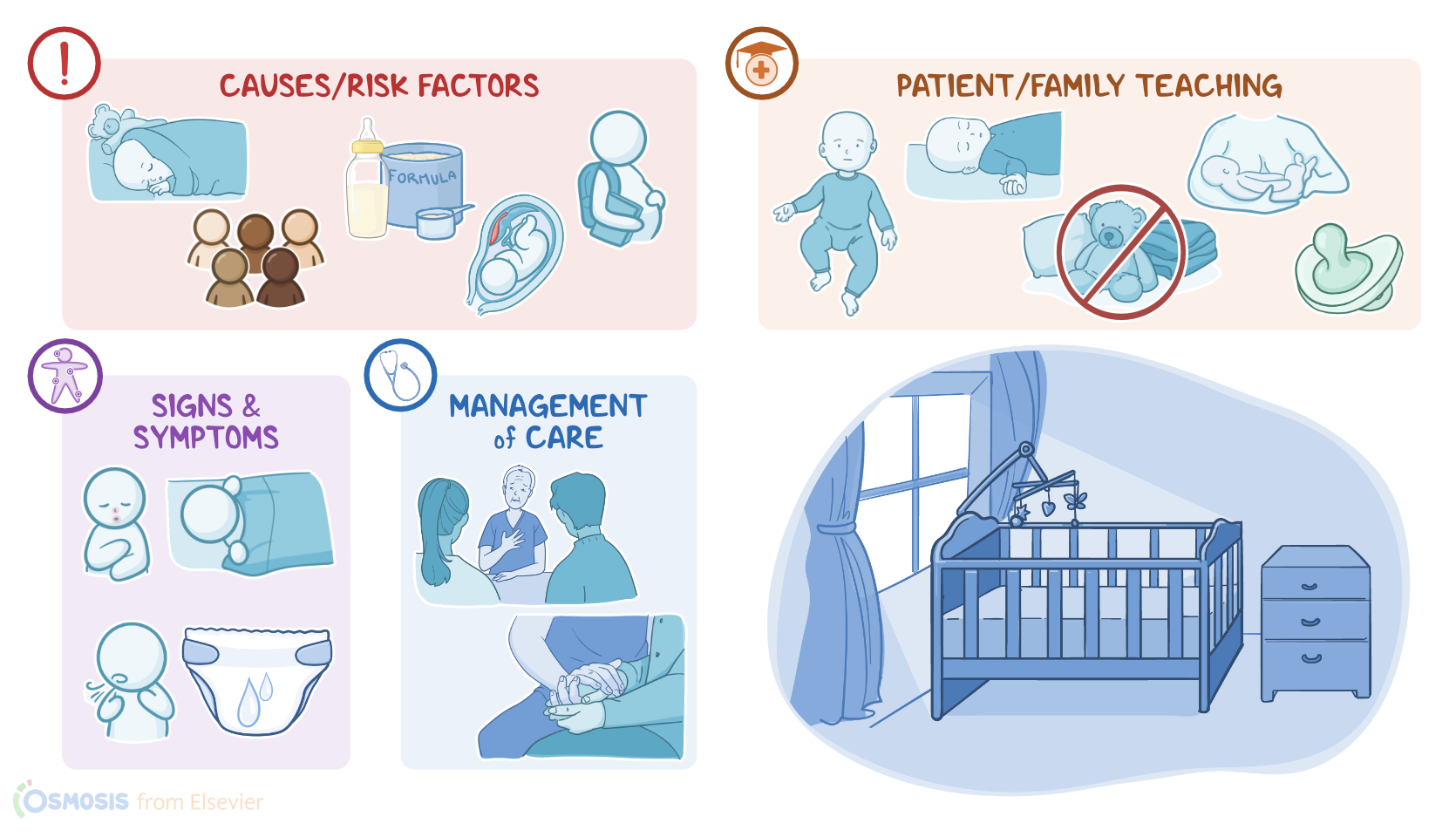
These mainly have to do with how an infant sleeps, so they include sleeping face down or on the side, under soft or loose bedding like a blanket, pillows, or stuffed toys, and on a soft sleep surface like a couch or chair.
Sleeping with parents, or other children or pets, as well as overheating have also been shown to increase the risk for SIDS.
There is also a higher incidence of SIDS among babies two to three months old, those who have been assigned male at birth, as well as among formula-fed babies, those born prematurely or with low birth weight, and those with a family history, so with a sibling that died of SIDS, or history of apnea.
In addition, infants of Hispanic, Native American or African descent have the highest rates of SIDS, while infants of Asian descent have the lowest rates of SIDS.
Risk factors related to the pregnancy include complications like placenta previa, placental abruption, or premature rupture of membranes.
Other pregnancy-related risk factors include receiving little or no prenatal care, being a teenager or young age, and smoking or substance use during the pregnancy, as well as after birth, exposing the baby.
Lastly, alcohol consumption is also thought to be a risk factor because there are more cases of SIDS during weekends, the holidays, and other times of year when drinking is included in celebrations.
Now, although the pathophysiology is unclear, there are some theories as to how SIDS occurs. One such theory is the triple-risk model, where three factors interact and may lead to SIDS.
Pathology1:56–2:29
So this model suggests that when a vulnerable infant, such as an infant born prematurely, which is factor number one, gets exposed to a stressor or triggering event such as a prone sleep position, which is factor number two, during a critical period in development, so particularly in the first six months of age, which is factor number three, they may develop SIDS.Infants with SIDS are typically discovered not breathing or experiencing apnea, blue or cyanotic, lifeless, and with frothy blood-tinged fluid in their nose and mouth.
Clinical manifestations2:29–2:48
Sometimes the infant may have been tightly gripping the sheets or blankets around them. They may also have a wet or stool filled diaper.Now, the diagnosis of SIDS is given when no reasonable cause of death can be discovered for a healthy appearing infant under one year of age.
Diagnosis2:48–3:15
After a completed autopsy, a deeper investigation is often needed to make sure that there isn’t an alternative explanation for the infant’s death.
These investigations may include history-taking, interviews with caregivers, death scene observations made by emergency responders, and postmortem imaging.Okay, when caring for a family or caregiver who has just lost their baby to SIDS, your priority nursing goal is to provide compassionate grief support.
Management and care3:15–4:02
Reassure them that they did not cause their baby’s death. Assess the needs of each parent or caregiver, and answer their questions providing appropriate responses, keeping in mind individual and cultural differences in processing grief.
Be sure to refer to the baby by name, and encourage them to speak openly about how they’re feeling. Assess their support system, and offer to contact other family members, friends, or faith leaders.
Next, collaborate with the healthcare team to coordinate appropriate referrals as needed, including resources to help them and other family members like siblings deal with the loss.Now, let’s take a look at the preventive teaching for families who just had a baby.
General client and family teaching4:02–6:00
Before discharge, begin by reviewing safe sleeping practices. Teach them to always place their baby on their back to sleep, and explain that placing their baby on their stomach can increase the risk of upper airway obstruction, rebreathing expired air, overheating, and can make it difficult for their baby to move their head to the side.
Discuss the importance of providing a firm surface for their baby to sleep on, and to be sure there is no loose bedding, fluffy blankets, pillows, toys, or any other items in the baby’s bed.Instruct them to make sure their baby's head and face remain uncovered during sleep.
Stress the importance of not using wedges or other positioning devices; and explain that they should not let their baby regularly sleep in a swing, upright stroller, or carseat, since the position can cause the baby to slump and obstruct the airway.
Lastly, remind them to dress their baby appropriately for sleep, and adjust the temperature to avoid overheating. If they are concerned that their baby isn’t warm enough, let them know that they should dress their baby in no more than one extra layer than they would wear; or suggest they use a wearable blanket such as a sleeping sack or warm sleeper that is the appropriate size for their baby.Next, teach them about some factors that can protect against SIDS.
Encourage them to arrange for their baby to sleep in the parent’s or caregiver’s room, if possible, but remind them that they should never sleep in the same bed, or have siblings or pets sleep in the same bed as the baby.
Also let the parent or caregiver know they can offer a pacifier when putting their baby down to sleep; and lastly, encourage breastfeeding.Lastly, teach the parent or caregiver about the importance of incorporating “tummy time” when their baby is awake and being watched.
Explain how placing their baby on their tummy for several minutes each day helps develop strong muscles in the neck, shoulders, and arms, prepares them for crawling, and prevents positional plagiocephaly, or a flat spot on the head.
Review6:00–6:45
All right, as a quick recap… Sudden infant death syndrome, or SIDS for short, is the death of an otherwise healthy infant during the first year of life where no cause of death is identified.
There are no known causes of SIDS, but risk factors include unsafe sleep practices, premature birth, low birth weight, being formula-fed, overheating, little or no prenatal care, and smoking and substance abuse.
The triple-risk model suggests that three factors interact to contribute to the infant’s death. Nursing management of SIDS includes providing support to the grieving family; and client education is focused on learning about prevention, risk factors, and protective factors, and providing tummy time while
| SUDDEN INFANT DEATH SYNDROME (SIDS) | ||
| KEY POINTS | NOTES | |
| DEFINITION |
| |
| CAUSES AND RISK FACTORS |
| |
| PATHOPHYSIOLOGY |
| |
| SIGNS AND SYMPTOMS |
| |
| DIAGNOSIS |
| |
| MANAGEMENT OF CARE |
| |
| PATIENT AND FAMILY TEACHING |
| |
No notes for this video yet
Try adding a note below