Irritable bowel syndrome (IBS): Nursing
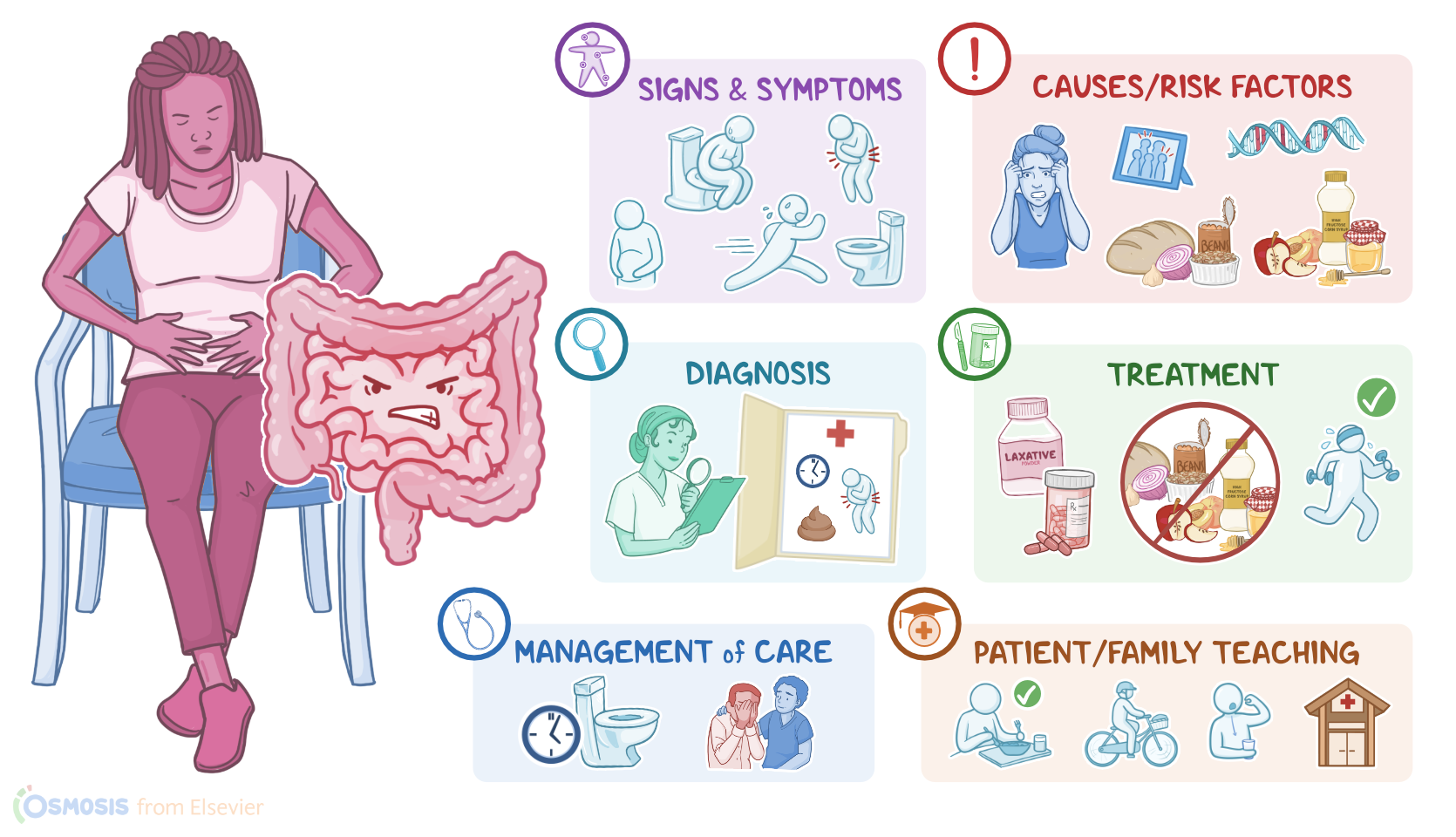
Irritable bowel syndrome, or IBS for short, is a condition characterized by irregular intestinal motility. Based on the associated symptoms it can fall into three groups: IBS - C, which is associated with constipation; IBS - D, which is associated with diarrhea; IBS - M, which is mixed, meaning that it is associated with alternating bouts of constipation and diarrhea; and IBS unclassified, meaning the IBS can’t be classified into one of the other subtypes.
All right, now, let’s zoom into the wall of the intestine, which is made up of four layers. The outermost layer is called serosa or adventitia and is a connective tissue that binds the intestine to the surrounding structures. Next is the muscular layer, which houses three smooth muscle layers. These muscles contract and relax in a rhythmic way to produce wave-like movements of the intestines, called peristalsis, which propel the food down the gastrointestinal tract. The contractions of these muscles are controlled by a mini nervous system that lies within the walls of the intestines. Typically, this system works on its own, but it is also affected by the sympathetic and parasympathetic nervous systems.
After that is the submucosa, which consists of a dense layer of tissue that contains blood vessels, lymphatics, and nerves. And finally, there’s the innermost layer, called the mucosa, which consists of simple columnar epithelium spanned by goblet cells. This mucosa forms invaginations called colonic crypts or glands.
Now, there isn’t a single cause of irritable bowel syndrome, but rather it’s a multifactorial disease, meaning that there’s a combination of risk factors and dietary triggers. These include genetic predisposition and family history, as well as an age below 50, or being assigned female at birth. Additional risk factors include gastrointestinal conditions, such as previous gastrointestinal infections, alterations in the fecal microflora, hypersensitivity of visceral receptors in the wall of the gut; as well as psychological conditions, such as stress, anxiety, post-traumatic stress disorder or PTSD, and depression.
| IRRITABLE BOWEL SYNDROME | ||
| KEY POINTS | NOTES | |
| DEFINITION |
| |
| PHYSIOLOGY |
| |
| CAUSES AND RISK FACTORS |
| |
| PATHOPHYSIOLOGY |
| |
| SIGNS AND SYMPTOMS |
| |
| DIAGNOSIS |
| |
| TREATMENT |
| |
| MANAGEMENT OF CARE |
| |
| PATIENT AND FAMILY TEACHING |
| |
Aún no hay notas para este video
Intenta agregar una nota a continuación