Osmosis video - Neonatal ICU conditions: Clinical
00:00 / 00:00
Video Summary of Neonatal ICU conditions: Clinical
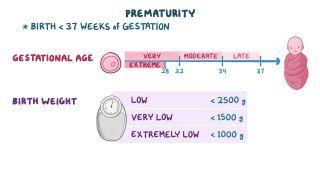
The neonatal intensive care unit (NICU) is a specialized unit within a hospital that provides care for newborn babies who are born prematurely or have serious health problems. In the NICU, newborns receive a variety of medical interventions and treatments to support their growth and development. Some of the conditions that may necessitate NICU include:
Intraventricular hemorrhage: a condition characterized by bleedings that occur in the germinal matrix within the first days after birth. Retinopathy of prematurity: conditions in which the blood vessels of the retina grow in an abnormal pattern, resulting in vision loss. Apnea of prematurity: a condition characterized by the presence of apneic spells in preterm infants apnea. Bronchopulmonary dysplasia: a condition characterized by scarring and abnormal development of the airways and lung tissue, which can lead to breathing problems and impaired blood oxygenation. Persistent pulmonary hypertension: a condition in which newborns' pulmonary vascular resistance doesn’t decrease as it should after birth, causing high blood pressure in pulmonary arteries. Respiratory distress syndrome: a condition that occurs when the lungs are not fully developed and have surfactant deficiency, which impairs effective alveolar-capillary gas exchange. Feeding difficulties: usually happen due to underdeveloped oral feeding skills or anatomical anomalies. Gastroesophageal reflux disease: a condition that occurs when the stomach contents flow back into the esophagus and irritates its mucosa. Neonatal necrotizing enterocolitis: an inflammatory disorder characterized by coagulation necrosis secondary to intestinal mucosal injury followed by bacterial invasion. Neonatal jaundice: a condition that occurs when there is an excess of bilirubin in the blood, becoming visible on the skin and the sclera as a yellowish discoloration.