

Venereal Disease Research Laboratory (VDRL)

False Positive VDRL Results Mnemonic

Author: Lily Guo, MD
Editor: Alyssa Haag, MD
Editor: Emily Miao, MD, PharmD
Editor: Kelsey LaFayette, DNP, ARNP, FNP-C
Illustrator: Abbey Richard, MSc
Modified: Dec 23, 2025

What is syphilis?

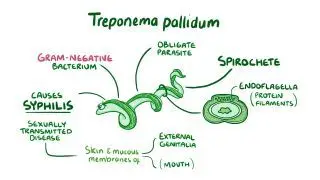
Syphilis is a sexually transmitted infection caused by the spirochete, or spiral-shaped, gram-negative bacteria Treponema pallidum. The clinical manifestations of syphilis depend upon the stage of disease. The signs and symptoms of primary syphilis infection include a painless, firm, and round ulcer called a chancre. Secondary infection presents with a diffuse, symmetric macular (i.e., flat) or papular (i.e., raised) rash involving the entire trunk and extremities, including the palms and soles.  

Tertiary syphilis which can be classified as early latent syphilis (<1 year) or late latent syphilis (>1 year or unknown), presents with aortitis (i.e., inflammation of the aorta) or aortic aneurysm (i.e., widening of the aorta), and disseminated gummas (i.e., tumor-like growth of tissue).   

Other less specific symptoms of syphilis include aortic insufficiency, cranial nerve dysfunction, chronic headache, meningitis, and other signs of meningovascular disease, including cerebrovascular accidents 

Screening for syphilis requires serologic testing, including the venereal disease research laboratory (VDRL) test. Treatment of disease involves intravenous antibiotics, such as penicillin G, followed by prolonged monitoring to ensure successful eradication of the infection.  

An infographic detailing the false positive VDRL results mnemonic, VDRL.

What is a venereal disease research laboratory test?

The venereal disease research laboratory (VDRL) test is a nontreponemal screening test for syphilisNontreponemal indirectly measures the body’s response to cellular damage caused by the syphilis spirochete. In addition to VDRL, other nontreponemal tests such as the rapid plasma reagin (RPR) can be used for screening, however, the VDRL remains the most common syphilis screening test worldwide.  

The VDRL can be performed via venipuncture or through a lumbar puncture to obtain cerebrospinal fluid (CSF). The latter is typically reserved for cases where neurosyphilis is suspected. In a healthy person, the test is negative, however false positive results (i.e., the test states someone has syphilis, when in fact they do not) can occur in up to 11% of cases. Thus, obtaining a proper medical history and performing a thorough review of symptoms and physical examination are important when making a diagnosis of syphilis.   

In addition to the VDRL, there are other methods used to screen for syphilis, including direct observation of the spirochete by dark field microscopy and treponemal serologic antibody studies. In contrast to nontreponemal tests, treponemal tests directly detect antibodies to Treponema pallidum proteinsExamples include fluorescent treponemal antibody absorption (FTA-ABS) test and Treponema pallidum hemagglutination assay. These specific treponemal tests help to diagnose syphilis after cost-effective screening tests are performed.   

What is the VDRL mnemonic?

The VDRL mnemonic helps one to remember some of the conditions that can cause false positive test results on VDRL testing for syphilis

What does the “V” in the VDRL mnemonic mean?

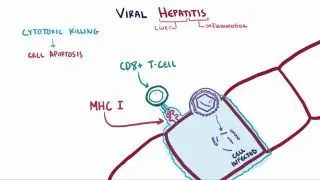
The “V” in VDRL represents viral infections, such as mononucleosis and hepatitis. Mononucleosis is an infection caused by the Epstein-Barr virus, spread through saliva and results in fatigue, sore throat, fever, and in some cases an enlarged spleen (i.e., splenomegaly). Hepatitis refers to inflammation of the liver, caused by any of the five main strains of the hepatitis virus, referred to as types A, B, C, D and E. Toxic substances (e.g., alcohol, drugs), autoimmune diseases (e.g., autoimmune hepatitis, thyroiditis, Graves disease, and type 1 diabetes) can also cause hepatitis. 

What does the “D” in the VDRL mnemonic mean?

The “D” in VDRL represents drugs such as procainamide and chlorpromazine. Procainamide is a drug used to treat life-threatening arrhythmias including ventricular arrhythmias, supraventricular arrhythmias, atrial flutter, atrial fibrillation, AV nodal re-entrant tachycardia, and Wolf-Parkinson-White syndrome (i.e., a rare congenital heart condition). Chlorpromazine is an antipsychotic medication commonly used to treat schizophrenia and bipolar disorder. It is also used to help control nausea and vomiting. 

What does the “R” in the VDRL mnemonic mean?

The “R” in VDRL represents rheumatic fever, an inflammatory disease which occurs secondary to infection from Group A streptococcus bacteria. The bacteria can cause strep throat and scarlet fever, and when left untreated results in rheumatic fever, an inflammatory disease characterized by fever, joint pain/swelling, endocarditis, and cutaneous rash referred to as erythema marginatum. It most commonly affects those aged 5 to 15 years old.  

What does the “L” in the VDRL mnemonic mean?

The “L” in VDRL represents lupus and leprosy. Lupus, also known as systemic lupus erythematosus, is an autoimmune condition that affects various parts of the body including the skin, joints, lungs, heart, kidneys, and brain. Leprosy is an infectious condition caused by the bacteria Mycobacterium leprae and affects the affects the eyes, skin, peripheral nervous system, and upper respiratory tract. It is transmitted through droplets from the nose and mouth usually after prolonged, close contact over months with someone with untreated leprosy. Leprosy is characterized by hypopigmented (i.e., pale) skin patches with diminished sensation and muscle weakness 

What are the most important facts to know about the VDRL mnemonic?

Syphilis is a sexually transmitted infection caused by the bacterium Treponema pallidumIt typically presents in three stages: primary, secondary, and tertiary. Screening for syphilis is performed using nontreponemal tests such as the VDRL, whereas confirmation relies on treponemal testing such as the FTA-ABS test.  

The VDRL mnemonic describes conditions known to cause false positives on the venereal disease research laboratory (VDRL) blood test for syphilis: viral infections (e.g., mononucleosis, hepatitis), drugs (e.g., procainamide, chlorpromazine), rheumatic fever, and lupus and leprosy 

Key Takeaways

Syphilis 

- Syphilis is a sexually transmitted infection caused by the spirochete Treponema pallidum. 

- It’s characterized by stage-dependent clinical manifestations ranging from a painless chancre in primary disease, to a diffuse rash in secondary disease, and late cardiovascular, neurologic, and gummatous complications 

- Screening is based on serologic, nontreponemal tests (e.g., VDRL), while diagnosis is confirmed with treponemal testings (e.g., FTA-ABS)  

- Treatment is with penicillin G 

Diagnostic Tests for Syphilis 

- Nontreponemal serologic tests  VDRL (venereal disease research laboratory), RPR 

     - Used for screening 

          - VDRL – most common screening test 

     - Detect Abs to cardiolipin released during cellular damage 

     - Inexpensive 

     - Can yield false positives 

     - Useful for disease activity monitoring. 

- Treponemal serologic tests - FTA-ABS, Treponema pallidum hemagglutination assays (TPHA/TPPA) 

     - Used for confirmation 

     - Detect antibodies specific to Treponema pallidum 

     - More specific 

     - Typically remain positive for life. 

- Direct detection methods - dark-field microscopy 

     - Allow visualization of the spirochete from lesion exudate in early disease 

VDRL Mnemonic 

Mnemonic for conditions that can cause false positive VDRL test results: 

- V – Viral infections (e.g., mononucleosis, hepatitis) 

- D – Drugs (e.g., procainamide, chlorpromazine) 

- R Rheumatic fever 

- L Lupus (SLE) & Leprosy 

References


Henao-Martínez AF, Johnson SC. Diagnostic tests for syphilis: New tests and new algorithms. Neurol Clin Pract. 2014;4(2):114-122. doi:10.1212/01.CPJ.0000435752.17621.48. PMID:27606153; PMCID:PMC4999316.


Liu F, Liu LL, Guo XJ, et al. Characterization of the classical biological false-positive reaction in the serological test for syphilis in the modern era. Int Immunopharmacol. 2014;20:331-336. doi:10.1016/j.intimp.2014.03.011.


Matthias J, Klingler EJ, Schillinger JA, et al. Frequency and characteristics of biological false-positive test results for syphilis reported in Florida and New York City, USA, 2013 to 2017. J Clin Microbiol. 2019;57(11):e00898-19. doi:10.1128/JCM.00898-19. PMID:31462551; PMCID:PMC6813008.


Nayak S, Acharjya B. VDRL test and its interpretation. Indian J Dermatol. 2012;57(1):3-8. doi:10.4103/0019-5154.92666. PMID:22470199; PMCID:PMC3312652.


Smikle MF, James OB, Prabhakar P. Biological false positive serological tests for syphilis in the Jamaican population. Genitourin Med. 1990;66:76-78. doi:10.1136/sti.66.2.76.


World Health Organization. Leprosy. Published January 27, 2023. https://www.who.int/news-room/fact-sheets/detail/leprosy