

Amniotic Band Syndrome · What It Is, Causes, Signs and Symptoms, and More

Published: Jan 06, 2026
Author: Emily Miao, PharmD, MD
Editor: Alyssa Haag, MD
Editor: Józia McGowan, DO
Editor: Kelsey LaFayette, DNP, ARNP, FNP-C
Illustrator: Abbey Richard, MSc
Copyeditor: David G. Walker
7-day free trial

Go deeper with Osmosis

Osmosis is a learning platform with videos, questions, and AI tools to help you master topics like this.

4.8 · 12,000+ reviews
Watch quick, visual videos
Practice with Qbank-style questions
Use AI to explain, quiz, and review
Study anytime with the mobile app
Start free trial

No credit card · Cancel anytime

What is amniotic band syndrome?

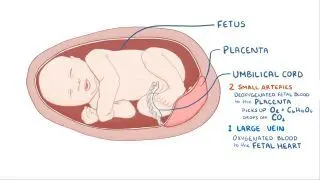
Amniotic band syndrome, also called amniotic band sequence, is a rare, congenital anomaly characterized by the formation of fibrous bands within the amniotic sac that wrap around fetal body parts during fetal development. The amniotic sac, a membrane that surrounds the fetus within the uterus, contains an outer layer called the chorion and an inner layer called the amnion

Amniotic fluid is contained within the amniotic sac, and together, these structures serve as a protective barrier for the developing fetus. The fibrous bands that are formed within the amnion can wrap around the fetus’ body parts (e.g., arm or leg), thereby restricting blood flow and leading to a variety of congenital abnormalities. Rarely, the fibrous bands may cut off the entire blood supply to an affected body part, resulting in severe vascular compromise and loss of tissue or limb. Amniotic band syndrome is estimated to occur in 1 in 1,200 to 15,000 live births.   

Learn deeper with Osmosis

Master this topic faster with videos, questions, and AI.

Used by 8M+ healthcare learners.

Start free trial

No credit card · Cancel anytime

What causes amniotic band syndrome?

The exact causes of amniotic band syndrome are currently unknown, but several theories have been proposed, such as the extrinsic theory and intrinsic theory. The extrinsic theory proposes that amniotic band syndrome occurs due to external factors outside of the fetus. It suggests that early rupture of the amnion due to polyhydramnios or trauma results in the exposure of the fetus to fibrous bands of tissue that are free-floating in the amniotic fluid. These bands can disrupt and entangle around the fetus’ body parts. Rarely, these fibrous bands may constrict around the umbilical cord, causing severe vascular disruptions and even life-threatening consequences.  


In contrast, the intrinsic theory proposes that amniotic band syndrome is caused by internal factors in the fetus. It suggests that the features of amniotic band syndrome arise from abnormalities in early embryonic development, leading to tissue malformations, fibrosis, and associated vascular abnormalities. These tissue changes can result in the formation of constriction rings and fibrous bands characteristic of amniotic band syndrome.  

 
Risk factors associated with amniotic band syndrome include first pregnancies; premature births; young genetic females; genetic females of African American descent; and taking a prostaglandin analog called misoprostol during pregnancy, which leads to intense uterine contractions. 

What are the signs and symptoms of amniotic band syndrome?

Signs and symptoms of amniotic band syndrome include craniofacial abnormalities (e.g., cleft lip and palate), the presence of tissue strands attached to fingers or toes, and malformations of the arms and legs. Malformations of the body include partially or completely missing digits; fused fingers or toes (e.g., syndactyly); and clubbed feet, which is a congenital deformity characterized by abnormal inward rotation and downward flexion of the ankle and foot. In severe cases, vital structures such as the umbilical cord or major blood vessels may be compromised, resulting in life-threatening consequences including death. 

How is amniotic band syndrome diagnosed?

Diagnosis of amniotic band syndrome begins with a thorough review of symptoms and medical history of the pregnant patient. Routine prenatal imaging with transabdominal ultrasound may reveal severe limb abnormalities, but it may be difficult to detect cases with mild or subtle malformations. If severe malformations are detected during a routine ultrasound, more specialized imaging studies (e.g., high-resolution ultrasound) can be used to confirm the presence of amniotic bands. Generally, amniotic band syndrome is suspected at birth or soon after birth based on characteristic physical findings on an exam (e.g., syndactyly, presence of tissue strands attached to fingers/toes). Following delivery, a detailed examination of the placenta by a perinatal pathologist may reveal the absence of an amnion on the chorionic surface of the amniotic sac. While placenta examination is not routinely performed, it may provide additional information to support the diagnosis. 

How is amniotic band syndrome treated?

Treatment of amniotic band syndrome is aimed at correcting the underlying structural defects and providing supportive measures to improve the individual’s quality of life. Disease severity may vary between individuals, ranging from mild disease to life-threatening disease. For example, a mild fusion of fingers may have minimal impact on functional status; therefore, surgical intervention may not be warranted. Severe cases involving vital structures may warrant surgical intervention, and the timing and urgency depend on where the fibrous bands are located and how tightly it is wrapped around the affected structure. Whenever possible, the newborn should be transferred to a specialized children's hospital that offers fetal surgery or reconstructive surgery to provide surgical release of the constrictive, fibrous bands around the affected structures and to repair any structural abnormalities. Craniofacial defects (e.g. cleft lip and palate) can also be repaired, if present. Following surgery, physical and occupational therapy can help ensure infants can regain functional status and perform activities of daily living. 

What are the most important facts to know about amniotic band syndrome?

Amniotic band syndrome is a rare, congenital anomaly characterized by the formation of fibrous bands within the amniotic sac and fetal body parts during fetal development. The fibrous bands can wrap around fetal structures, restricting blood flow to affected structures ranging from the ends of fingers to vital organs. The exact causes of amniotic band syndrome are unclear, but several theories have been proposed, such as the extrinsic theory and intrinsic theory. Signs and symptoms of amniotic band syndrome include craniofacial abnormalities, the presence of tissue strands attached to fingers or toes, and malformations of the arms and legs. While the diagnosis can sometimes be made prenatally, most cases are diagnosed shortly after birth based on physical examination and clinical suspicion. Treatment of amniotic band syndrome is aimed at correcting the underlying structural defects via surgery, if necessary, and providing supportive measures to improve the individual’s quality of life 

Key Takeaways

Definition 

Amniotic band syndrome, also called amniotic band sequence, is a rare, congenital anomaly characterized by the formation of fibrous bands within the amniotic sac that wrap around fetal body parts during fetal development restricting blood flow 

Causes  

Exact causes unknown; proposed theories:  

- Extrinsic theory: causes are external (outside of the fetus) 

     - Early rupture of amnion (polyhydramnios/trauma) → exposure to free-floating fibrous bands, which tangle around body parts or umbilical cord (life-threatening) 

- Intrinsic theory: causes are internal to the fetus  

     - Impaired blood flow to developing parts of the fetus  


Risk factors 

- First pregnancies  

- Premature births  

- Biological females 

- Biological females of African American descent  

- Individuals taking misoprostol during pregnancy  

Signs and Symptoms 

- Craniofacial abnormalities (e.g., cleft and lip palate 

- Tissue strands attached to fingers and toes  

- Limb malformations  

     - Partially or completely missing digits  

     - Fused fingers or toes (e.g., syndactyly)  

     - Clubbed feet  

     - Life-threatening consequences (including death) if umbilical cord or major blood vessels compromised 

Diagnosis  

- Review of symptoms and medical history of the pregnant individual  

- Routine prenatal ultrasound (mild/subtle malformations difficult to detect)  

     - Severe malformations detected → more specialized imaging (e.g., high-resolution ultrasound) to detect bands 

- At birth: suspected upon characteristic physical findings (e.g., syndactyly)  

- Placenta examination: absence of amnion on chorionic surface  

Treatment  

- Aim: correct underlying structural defects + improve quality of life 

- Surgery: required in severe cases involving vital structures or craniofacial defects  

     - Transfer to specialized children’s hospital that offers fetal or reconstructive surgery, when possible  

     - Followed by physical and occupational therapy  

Students say Osmosis is 100% worth it

Because Osmosis saves them time. Lowers stress. And actually helps them remember when it counts.

I used Osmosis to prepare for my first medical school licensing exam! Super helpful and interactive for people who may not do great with just pages of text info!

Cecilia Ruiz

Cecilia Ruiz

MD student

Sayan Misra

I have used Osmosis for about four years. Best thing I have ever used for my medical studies.

Sayan Misra

Sayan Misra

Med student

Osmosis videos are superior because they define simple concepts, tell a story with a clear progression, and provide context.

Jay Pate

Jay Pate

Dental student

References


Amniotic band syndrome. Boston Children’s Hospital. Published 2020. Accessed February 23, 2024. https://www.childrenshospital.org/conditions/amniotic-band-syndrome.  


Daya M, Makakole M. Congenital vascular anomalies in amniotic band syndrome of the limbs. J Pediatr Surg. 2011;46(3):507-513. doi:10.1016/j.jpedsurg.2010.09.006  


Gueneuc A, Chalouhi GE, Borali D, Mediouni I, Stirnemann J, Ville Y. Fetoscopic release of amniotic bands causing limb constriction: Case series and review of the literature. Fetal Diagn Ther. 2019;46(4):246-256. doi:10.1159/000495505 


Jain JA, Fuchs KM. Amniotic band sequence. In: Copel JA, D’Alton ME, Feltovich H, et al, eds. Obstetric Imaging: Fetal Diagnosis and Care. 2nd ed. Elsevier; 2018.

Javadian P, Shamshirsaz AA, Haeri S, et al. Perinatal outcome after fetoscopic release of amniotic bands: A single-center experience and review of the literature. Ultrasound Obstet Gynecol. 2013;42(4):449-455. doi:10.1002/uog.12510 


Seeds JW, Cefalo RC, Herbert WN. Amniotic band syndromeAm J Obstet Gynecol. 1982;144(3):243-248. doi:10.1016/0002-9378(82)90574-9