
Granulomatosis with Polyangiitis · What It Is, Causes, Signs and Symptoms, Diagnosis, and More

Published: Jun 21, 2026
Author: Emily Miao, MD, PharmD
Editor: Alyssa Haag, MD
Editor: Józia McGowan, DO
Editor: Kelsey LaFayette, DNP
Illustrator: Abbey Richard
7-day free trial

Go deeper with Osmosis

Videos, flashcards & practice questions built for healthcare learners.

4.8 · 12,000+ reviews
1,700+ whiteboard-style videos
2,700+ board-style questions
Spaced-repetition flashcards
Mobile app — study anywhere
Start free trial

No credit card · Cancel anytime

What is granulomatosis with polyangiitis?

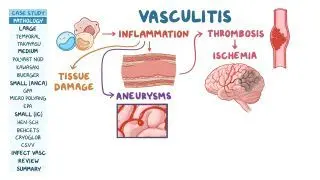
Granulomatosis with polyangiitis (GPA), previously called Wegener granulomatosis, is a rare, multi-organ disorder characterized by inflammation of the blood vessels. It is a specific type of vasculitis (i.e., an autoimmune disorder that causes inflammation of the blood vessels) that affects small- and medium-sized blood vessels of the upper and lower respiratory tract and kidneys. Additionally, life-threatening complications can include permanent hearing loss, kidney damage, and deep vein thrombosis (DVT) in the lower extremities. GPA affects all sexes equally and although it most commonly affects those who are Caucasian, it can affect people of any race or ethnicity. GPA also commonly affects people in the later decades of life (i.e., ages 40 to 65 years). 

Learn deeper with Osmosis

Master this topic faster with videos, questions, and AI.

Used by 8M+ healthcare learners.

Start free trial

No credit card · Cancel anytime

What causes granulomatosis with polyangiitis?

While the exact causes of GPA are poorly understood, it is thought to be caused by a combination of genetic, environmental, and immune factors, though GPA is not inherited. It is presumed that defective immune-regulatory processes are responsible for the inflammation that occurs in GPA. Anti-neutrophil cytoplasmic antibody (ANCA), a specific type of IgG autoantibody, plays a major role in the pathogenesis of GPA. Environmental insults such as infection may lead to an abnormal and excessive production of cytokines, which results in the development of a granulomatous vascular lesion. ANCA predominantly activates neutrophils, which are a specific type of white blood cell that make up the body’s first line of defense. They trigger an inflammatory cascade which further damages endothelial cells. Acquired GPA may also occur due to exposure to sulfa-containing medications such as hydralazine, phenytoin, sulfasalazine, and allopurinol. 

What are the signs and symptoms of granulomatosis with polyangiitis?

Signs and symptoms of GPA may vary between individuals, but most people experience respiratory symptoms. Respiratory tract symptoms include persistent runny nose (i.e., rhinorrhea); formation of sores on the nares or nasal septum, saddle deformity (i.e., collapse of nasal bridge); nasal pain; nasal discharge from persistent inflammation of the nose, throat, and lungs; cough with or without bloody phlegm; shortness of breath; and in severe cases, pulmonary hemorrhage. Inflammation of the kidney vasculature is also common, therefore additional signs include hematuria, decreased urine output, and flank pain. The classic triad of GPA is necrotizing granulomatous of the upper and lower respiratory system, systemic vasculitis, and kidney (e.g., glomerulonephritis) vasculature. 

Individuals may also experience middle ear inflammation which may manifest as otitis media and ear pain. If left untreated, this may lead to permanent hearing loss. If the blood vessels that supply the brain are involved (i.e., cerebral vasculitis), neurologic symptoms may be apparent including altered mental status, headache, and muscle weakness. Involvement of the cardiac vasculature may lead to hypertension, myocarditis (i.e., inflammation of the myocardium), or pericarditis (i.e., inflammation of the pericardium). Other symptoms may include eye inflammation or pressure behind the eye; proptosis or bulging of one or both of the eyes; joint pain; gastrointestinal bleeding; and skin sores. 

How is granulomatosis with polyangiitis diagnosed?

Diagnosis of granulomatosis with polyangiitis begins with a thorough review of symptoms and medical history. A focused physical examination of the ears, nose, and throat can help identify signs and symptoms of systemic disease involvement (e.g., sinusitis, nasal discharge, bloody sputum). Laboratory blood tests including a complete blood count (CBC), comprehensive metabolic panel (CMP), inflammatory markers including erythrocyte sedimentation rate (ESR) and C-reactive protein (CRP), liver function tests (e.g., AST/ALT, bilirubin), serum creatinine level, and urine tests (e.g., urinalysis) can be helpful in the initial work-up 

Additional rheumatologic serology tests, which include anti-nuclear antibody (ANA), anti-glomerular basement membrane (anti-GBM) antibodies, serum complement levels, hepatitis B and C viral titers, and HIV, can be performed to exclude other alternative diagnoses that can manifest in similar ways. Testing for antineutrophil cytoplasmic antibodies (ANCA) should be pursued in any individual who presents with clinical symptoms suggestive of vasculitis. ANCA is usually detected using an indirect antigen-specific enzyme-linked immunosorbent assay (ELISA) and approximately 80-94% of individuals with GPA will test positive for this antibody assay. However, a negative ANCA serology does not exclude the diagnosis of GPA.  
 
In individuals who present with pulmonary symptoms and are suspected of having GPA, imaging tests, which include computed tomography (CT) of the chest, are indicated. A CT scan will demonstrate lesions, alveolar opacities, pleural-based lesions, or large areas of airway inflammation that are not seen in plain radiographs (e.g., X-ray). Additional imaging of other areas of the body (e.g., CT of the sinus, orbits, and mastoids) is tailored to the individual’s symptom presentation.  
 
Whenever possible, the diagnosis of GPA should be confirmed by obtaining a tissue biopsy of an area where there is suspected active disease. Common biopsy sites include the skin, lungs, and kidneys. Kidney biopsy pathology findings range from mild focal to segmental glomerulonephritis and diffuse, necrotizing, and crescentic glomerulonephritis. Skin histopathology typically reveals a “nonspecific” vasculitis of the dermal capillaries and venules (i.e., leukocytoclastic vasculitis) with little or no complement fixation seen on immunofluorescence. Finally, respiratory tract and lung histopathology may show acute or chronic inflammation associated with the capillaries and less commonly granulomatous features (e.g., areas of clustered immune cells that are walled off).

How is granulomatosis with polyangiitis treated?

Treatment for GPA depends on the severity, extent, and etiology of the disease. In non-life-threatening GPA with no internal organ involvement (i.e., no evidence of active glomerulonephritis and normal serum creatinine; only symptoms include rhinosinusitis, arthritis, pulmonary nodules), treatment consists of induction therapy with glucocorticoids (e.g., prednisone) for 3 to 4 months, followed by a slow taper to prevent disease relapse and glucocorticoid-related complications (e.g., adrenal insufficiency). Treatment is continued with maintenance methotrexate weekly for a minimum of 6 months.  

In individuals who experience disease relapse or are intolerant of glucocorticoids, alternative immunosuppressive agents (e.g., azathioprine, methotrexate) can be added for maintenance therapy. In life-threatening GPA (i.e., internal organ involvement including active glomerulonephritis, pulmonary hemorrhage, cerebral vasculitis, gastrointestinal bleeding secondary to vasculitis, and pericarditis) a chemotherapy agent, such as cyclophosphamide or rituximab, is typically added to the glucocorticoid regimen for remission induction. For maintenance therapy, individuals are typically initiated on an immunosuppressive agent such as methotrexate, azathioprine, or mycophenolate mofetil 

Management of GPA is medically complex and long-term use of immunosuppressants can lead to side effects (e.g., increased risk of severe infections). Therefore, individuals may benefit from a multidisciplinary team of professionals including a rheumatologist, pulmonary specialist, neurologist, cardiologist, nephrologist, dermatologist, mental health specialist, and occupational and physical therapist to help tailor therapy and co-manage disease-related complications. 

What are the most important facts to know about granulomatosis with polyangiitis?

Granulomatosis with polyangiitis (GPA), previously called Wegener granulomatosis, is a rare, multi-organ disorder characterized by inflammation of the blood vessels. It is a specific type of vasculitis that commonly affects small- and medium-sized blood vessels of the upper and lower respiratory tract and kidneys. While the exact causes of GPA are poorly understood, it is thought to be caused by a combination of genetic, environmental, and immune factors. Anti-neutrophil cytoplasmic antibody (ANCA), a specific type of IgG auto-antibody, plays a major role in the pathogenesis of GPA. Signs and symptoms of GPA may vary between individuals, but most people experience hematuria and respiratory symptoms including nasal discharge, cough with bloody sputum, and persistent runny nose. A biopsy of the affected tissue site helps confirm GPA. Early diagnosis and treatment of GPA improves clinical outcomes and can help individuals recover most of their baseline function. Pharmacotherapy consists of medications that suppress the immune system, including corticosteroids, methotrexate, cyclophosphamide, and mycophenolate mofetil.

Key Takeaways

Definition 

A rare, multiorgan disorder characterized by inflammation of small- and medium-sized blood vessels of the upper and lower respiratory tract and kidneys.  

Epidemiology 

 - Both sexes equally affected  

 - Most common in Caucasians 

 - Later decades of life (40-65 years)  

Causes 

ANCA-driven vasculitis, due to:  

 - Genetic susceptibility  

 - CTLA4, PTPN22, COL11A2, SERPINA1, MHC class II cluster 

 - Environmental factors (infections, medications)  

Signs and Symptoms 

 - Respiratory symptoms  

 - Rhinorrhea, saddle deformity, nasal pain and discharge, cough +/– hemoptysis, shortness of breath, pulmonary hemorrhage 

 - Renal involvement 

 - Glomerulonephritis: hematuria, red blood cell casts, proteinuria  

 - Systemic vasculitis, e.g.:  

 - Ear involvement: otitis media, mastoiditis, hearing loss  

 - Cutaneous involvement: purpura, subcutaneous granulomas 

 - Ocular involvement: conjunctivitis, scleritis  

 - Cerebral involvement: altered mental status, headache, muscle weakness  

 - Cardiac involvement: hypertension, pericarditis, valvular insufficiency, coronary arteritis  

 - Musculoskeletal involvement: arthralgia, myalgia  

Diagnosis 

 - Medical history  

 - Physical examination  

 - Laboratory tests 

 - Initial work-up: CBC, CMP, inflammatory markers, liver function tests, serum creatinine, urine tests  

 - Serology to exclude alternative diagnoses: anti-ANA, anti-GBM, serum complement levels, HBV, HCV, HIV  

 - ANCA testing (negative → can’t exclude GPA)  

 - Imaging (e.g., chest CT scan) 

 - Confirmation: tissue biopsy  

Treatment 

 - Non-life threatening with no internal organ involvement:  

 - Induction therapy with glucocorticoids (3-4 months) followed by slow tapering  

 - Maintenance methotrexate weekly (at least 6 months) 

 - If disease relapse/intolerant of glucocorticoids: alternative immunosuppressive agents  

 - Life-threatening GPA: chemotherapy agent added to glucocorticoid  

Students say Osmosis is 100% worth it

Because Osmosis saves them time. Lowers stress. And actually helps them remember when it counts.

I used Osmosis to prepare for my first medical school licensing exam! Super helpful and interactive for people who may not do great with just pages of text info!

Cecilia Ruiz

Cecilia Ruiz

MD student

Sayan Misra

I have used Osmosis for about four years. Best thing I have ever used for my medical studies.

Sayan Misra

Sayan Misra

Med student

Osmosis videos are superior because they define simple concepts, tell a story with a clear progression, and provide context.

Jay Pate

Jay Pate

Dental student

References


Cartin-Ceba R, Peikert T, Specks U. Pathogenesis of ANCA-associated vasculitis. Curr Rheumatol Rep. 2012;14(6):481-493. doi:https://doi.org/10.1007/s11926-012-0286-y


Chung SA, Langford CA, Maz M, et al. 2021 American College of Rheumatology/Vasculitis Foundation guideline for the management of antineutrophil cytoplasmic antibody-associated vasculitis. Arthritis Care Res (Hoboken). 2021;73(8):1088-1105. doi:https://doi.org/10.1002/acr.24634


Gantous A, Fernández-Pellón Garcia RF. Nasal reconstruction in granulomatosis with polyangiitis: a two decade review. Facial Plast Surg Aesthet Med. 2023;25(1):61-67. doi:https://doi.org/10.1089/fpsam.2021.0348


Hoffman GS, Kerr GS, Leavitt RY, et al. Wegener granulomatosis: an analysis of 158 patients. Ann Intern Med. 1992;116(6):488-498. doi:https://doi.org/10.7326/0003-4819-116-6-488


Jennette JC, Falk RJ, Bacon PA, et al. 2012 revised International Chapel Hill Consensus Conference nomenclature of vasculitides. Arthritis Rheum. 2013;65(1):1-11. doi:https://doi.org/10.1002/art.37715


Ntatsaki E, Watts RA, Scott DG. Epidemiology of ANCA-associated vasculitis. Rheum Dis Clin North Am. 2010;36(3):447-461. doi:https://doi.org/10.1016/j.rdc.2010.04.002


Stone JH, Hoffman GS, Merkel PA, et al. A disease-specific activity index for Wegener's granulomatosis: modification of the Birmingham vasculitis activity score. Arthritis Rheum. 2001;44(4):912-920. doi:https://doi.org/10.1002/1529-0131(200104)44:4<912::AID-ANR148>3.0.CO;2-5