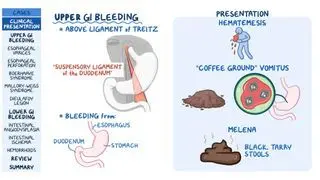
Causes of hematochezia in adults commonly include inflammatory bowel disease (IBD), including ulcerative colitis; hemorrhoids; and bleeding from a diverticulum in the colon. Additionally, peptic ulcer disease and esophageal varices are causes of upper gastrointestinal bleeding that can produce hematochezia when severe.
Ulcerative colitis is a subtype of inflammatory bowel disease that involves autoimmune attack of the large intestine (i.e., colon), resulting in inflammation and ulcers of the mucosal lining. Severe ulcerative colitis can result in hematochezia due to bleeding from the ulcers.
Hemorrhoids are swollen veins in the lower rectum and can be painless or painful, depending on whether they are located internally or externally, respectively. They are usually caused by straining during bowel movements and are associated with obesity and pregnancy. When the walls of the blood vessels in the hemorrhoid stretch too thin as a result of increased pressure in the lower rectum, typically from straining, hematochezia can occur.
Diverticulosis is a condition that occurs when small pouches (i.e., diverticulum) form and push outward through the wall of the colon, which can cause bleeding. Genetics as well as a high-fat, low-fiber diet make an individual more likely to develop diverticular pouches.
Peptic ulcer disease occurs when the protective mucosal lining of the stomach and the duodenum of the small intestine erodes due to infection with the bacteria Helicobacter pylori (H. pylori) or long-term use of nonsteroidal anti-inflammatory drugs (NSAIDs). If the ulcer is severe, rapid hemorrhage may occur, and immediate treatment is necessary due to the risk for hypovolemic shock.
Esophageal varices refer to the presence of enlarged veins in the esophagus due to obstruction of flow through the portal vein, which is often caused by severe liver scarring. The backup of blood may lead to esophageal vein rupture, which presents as massive amounts of blood loss and melena (i.e, black, tarry stools) or hematochezia.
In older individuals, arteriovenous malformation (AVM) can lead to multiple repeated, often smaller, hemorrhages. An AVM is a vascular lesion that can occur anywhere along the GI tract, commonly in the colon and is related to advanced age; chronic kidney disease; and certain types of heart disease, such as aortic stenosis. Less common causes of colonic hemorrhage in adults include cancer and ischemic colitis (i.e., inflammation of the colon).
Causes of hematochezia in neonates include necrotizing enterocolitis and midgut volvulus. Necrotizing enterocolitis refers to the death of the tissue in parts of the colon due to decreased blood flow, and midgut volvulus occurs when the intestine becomes twisted during embryonic development.