Hematocrit · What Is It, Importance, and More

Published: Jan 06, 2025
Author: Nikol Natalia Armata
Editor: Alyssa Haag
Editor: Ian Mannarino, MD, MBA
Illustrator: Jessica Reynolds, MS
Copyeditor: David G. Walker
7-day free trial

Go deeper with Osmosis

Osmosis is a learning platform with videos, questions, and AI tools to help you master topics like this.

4.8 · 12,000+ reviews
Watch quick, visual videos
Practice with Qbank-style questions
Use AI to explain, quiz, and review
Study anytime with the mobile app
Start free trial

No credit card · Cancel anytime

What is hematocrit?

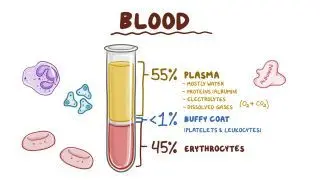
Hematocrit (HCT) refers to the proportion of red blood cells (RBCs) in an individual’s blood. Adults with XY chromosomes usually have an HCT that ranges from 40% to 54%, and adults with XX chromosomes have an HCT that ranges from 36% to 48%. In addition to RBCs, blood has three other major components: white blood cells, platelets, and plasma. 

Learn deeper with Osmosis

Master this topic faster with videos, questions, and AI.

Used by 8M+ healthcare learners.

Start free trial

No credit card · Cancel anytime

What does hematocrit measure?

Hematocrit measures the percentage of red blood cells in the total blood volume. A hematocrit test can be performed using a capillary tube and a centrifuge machine (i.e., a machine using centrifugal force to separate the substances of the blood due to their different densities). Usually, the hematocrit levels are identified as part of a complete blood count (CBC), but they can also be tested alone. However, a CBC is the most common blood test that measures HCT while also measuring the red blood cell count, white blood cell count, hemoglobin levels, and platelets

Why is hematocrit important?

Hematocrit is a very useful laboratory finding as having too few or too many RBCs may be a clinical indication of various medical conditions, like anemia or polycythemia, respectively. It can also be used to monitor individuals post-operatively in order to prevent or screen for complications, like internal bleeding.

What causes low hematocrit levels?

Low hematocrit levels, also known as anemia, may be the result of decreased production of RBCs, increased loss of blood, increased destruction of RBCs, or a combination of these.

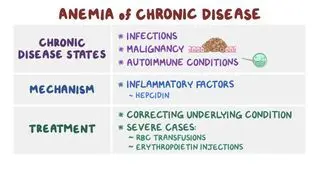
The most common cause of low hematocrit levels is chronic (e.g., ulcers, colon cancer) or acute (e.g., trauma, internal bleeding) bleeding, which leads to significant blood loss. Notably, individuals of reproductive age who are assigned female at birth may have low hematocrit due to menstruation. However, hematocrit may also decrease due to peripheral destruction of RBCs as seen in conditions like sickle cell anemia, where RBCs have a shorter lifespan; and splenomegaly (i.e., enlargement of the spleen), where a great number of healthy RBCs are destroyed in the spleen. Another cause of low hematocrit is decreased production of RBCs, as seen in chronic inflammatory diseases, or bone marrow suppression caused by radiation therapy, malignancies, or medications like chemotherapy. Lastly, malnourishment (e.g., iron, B12, and folate deficiency) as well as overhydration may also lead to decreased hematocrit levels.

What causes high hematocrit levels?

High hematocrit levels may be the result of hemoconcentration, or overproduction of RBCs.

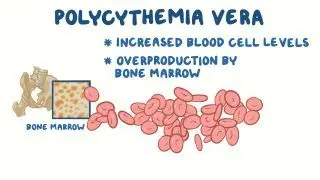
Dehydration, due to fluid loss from repetitive vomiting, overheating, or limited access to fluids, may cause hemoconcentration. Additionally, low oxygen availability triggers the production of new blood cells in order to transport oxygen throughout the body and can be caused by smoking; high altitudes; congenital heart diseases; or certain pulmonary disorders, such as pulmonary fibrosis or chronic obstructive pulmonary diseases (COPD). In addition, polycythemia vera, which is characterized by the overproduction of RBCs as a result of increased bone marrow stimulation (i.e., myeloproliferation), can cause high hematocrit levels. Similarly, increased erythropoietin production, either due to androgen use or due to erythropoietin production from kidney, liver, and ovarian tumors, can also increase hematocrit. Finally, various pathologies of the endocrine system, like Cushing syndrome, may also result in high hematocrit levels. 
What are the most important facts to know about hematocrit?

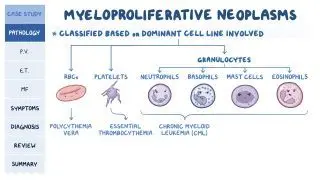
Hematocrit measures the percentage of red blood cells in the total blood volume. A wide variety of medical conditions and especially blood disorders can be detected by a hematocrit test. Low hematocrit levels, also known as anemia, may be the result of decreased RBC production, increased blood loss, increased destruction of RBCs, or a combination of the above. On the other hand, high hematocrit levels may be the result of hemoconcentration, or RBC overproduction, which can be triggered by various factors. 
Students say Osmosis is 100% worth it

Because Osmosis saves them time. Lowers stress. And actually helps them remember when it counts.

I used Osmosis to prepare for my first medical school licensing exam! Super helpful and interactive for people who may not do great with just pages of text info!

Cecilia Ruiz

Cecilia Ruiz

MD student

Sayan Misra

I have used Osmosis for about four years. Best thing I have ever used for my medical studies.

Sayan Misra

Sayan Misra

Med student

Osmosis videos are superior because they define simple concepts, tell a story with a clear progression, and provide context.

Jay Pate

Jay Pate

Dental student

References


Dixon, L. R. (1997). The complete blood count: physiologic basis and clinical usage. The Journal of Perinatal & Neonatal Nursing, 11(3), 1–18. DOI: 10.1097/00005237-199712000-00003


Kragh-Hansen, U. (2018). Possible mechanisms by which enzymatic degradation of human serum albumin can lead to bioactive peptides and biomarkers. Frontiers in molecular biosciences, 5: 63. DOI: 10.3389/fmolb.2018.00063