
Lymphocytosis · What It Is, Causes, Signs and Symptoms, and More

Published: Mar 04, 2025
Author: Emily Miao, PharmD
Editor: Alyssa Haag
Editor: Lily Guo
Editor: Kelsey LaFayette, DNP
Illustrator: Jessica Reynolds, MS
7-day free trial

Go deeper with Osmosis

Osmosis is a learning platform with videos, questions, and AI tools to help you master topics like this.

4.8 · 12,000+ reviews
Watch quick, visual videos
Practice with Qbank-style questions
Use AI to explain, quiz, and review
Study anytime with the mobile app
Start free trial

No credit card · Cancel anytime

What is lymphocytosis?

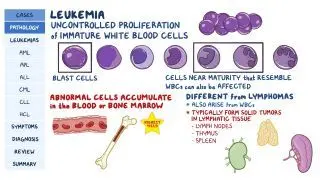
Lymphocytosis refers to an increased number of lymphocytes in the bloodstream. Lymphocytes are a type of white blood cell that plays an important role in the immune system and helps in fighting off bacterial and viral infections. In lymphocytosis, high lymphocyte count in the blood may be suggestive of an evolving infection, an underlying systemic disorder (e.g., leukemia, lymphoma), or an iatrogenic cause (e.g., medication-induced hypersensitivity reactions). 

Learn deeper with Osmosis

Master this topic faster with videos, questions, and AI.

Used by 8M+ healthcare learners.

Start free trial

No credit card · Cancel anytime

What causes lymphocytosis?

Lymphocytosis can be a normal, physiologic response (i.e., reactive lymphocytosis) to stress (i.e., trauma, seizure) and infection; or an abnormal, pathologic response suggestive of an underlying systemic illness (e.g., leukemia, lymphoma). For example, the body undergoes physiologic lymphocytosis to increase the number of lymphocytes in order to eradicate some bacterial (e.g., tuberculosis, Bordetella pertussis) and viral infections (e.g., Epstein-Barr virus, cytomegalovirus). 

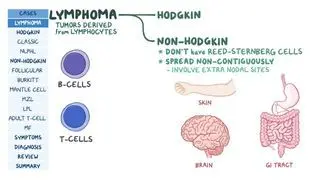
In pathologic lymphocytosis, the increase in lymphocytes is unregulated and leads to uncontrolled proliferation, which is commonly seen in hematologic neoplastic disorders like leukemia and lymphoma. 

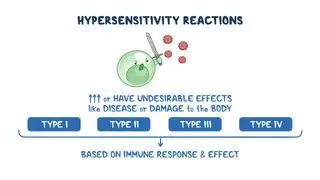
Iatrogenic causes include drug hypersensitivity reactions (e.g., drug reaction with eosinophilia and systemic symptoms or DRESS), which can occur in response to an offending medication (e.g., carbamazepine, lamotrigine, phenytoin). In some instances, lymphocytosis may occur after splenectomy (i.e., removal of the spleen) and in individuals with thymoma (i.e., malignancy of thymus), although the underlying causative mechanisms are poorly understood. 

What are the signs and symptoms of lymphocytosis?

Lymphocytosis is often detected incidentally and therefore, signs and symptoms may be nonspecific and can include fever, tachycardia, malaise, night sweats, and lymphadenopathy. Unintentional weight loss in the setting of an infection or neoplastic process may also be present. In particular viral infections, like Epstein-Barr virus, splenomegaly may be seen. In the case of a suspected drug hypersensitivity reaction, a rash may be present.  Lymphocytosis caused by an acute condition (e.g., infection) typically resolves within one to two months after the underlying infectious process has cleared. A longer duration of lymphocytosis raises concerns for an underlying malignant process.

How is lymphocytosis diagnosed?

Lymphocytosis is often detected incidentally using a laboratory blood test called a complete blood count (CBC) with a differential. The abnormal CBC and differential count are often repeated to exclude laboratory error. A CBC with differential quantitatively measures the white blood cell count in the body along with the breakdown of various subtypes of white blood cells including the lymphocyte count. A surgical and medical history (e.g., recent medication changes) and physical exam to assess lymphadenopathy, splenomegaly, or rash can help determine the underlying etiology and whether the observed lymphocytosis is physiologic or pathologic. Additionally, a peripheral blood smear is a qualitative way of assessing lymphocyte morphology. For example, normal-appearing or reactive lymphocytes (i.e., large lymphocytes with abundant basophilic cytoplasm) are often seen in viral infections whereas binucleate (i.e., two nuclei) lymphocytes are suggestive of a lymphoproliferative disorder. Lastly, a specialized blood test known as flow cytometry may be ordered if there is suspicion of acute leukemia, or if the absolute lymphocyte count is >30,000 cells/microL without a known diagnosis.

How is lymphocytosis treated?

Management of lymphocytosis includes treating the underlying cause. In the case of bacterial infections, antibiotic treatment can shorten the symptom burden and duration of illness. Viral infections are typically self-limiting and treatment is mainly supportive care with fluids. For drug hypersensitivity reactions, cessation of the offending medication is the mainstay of treatment along with supportive care measures (e.g., fluid and electrolyte supplementation). For lymphoproliferative diseases, a variety of treatments including chemotherapy, radiation therapy, or stem cell transplantation can be considered. Referral to a hematology specialist may also help manage complex, hematologic disorders resulting in lymphocytosis.

What are the most important facts to know about lymphocytosis?

Lymphocytosis refers to an increased number of lymphocytes in the bloodstream. Lymphocytes are a type of white blood cell that plays an important role in the immune system and helps in fighting off bacterial and viral infections. Lymphocytosis can occur due to a variety of etiologies including stress, infection, systemic illness, or drug hypersensitivity reactions. Signs and symptoms of lymphocytosis may be nonspecific and may include fever, tachycardia, malaise, night sweats, and lymphadenopathy. Lymphocytosis is diagnosed using a laboratory blood test called a complete blood count (CBC) with a differential. A thorough review of symptoms, medical history, and physical exam can all help determine the underlying etiology causing lymphocytosis. Treatment is aimed at managing the underlying cause.
Students say Osmosis is 100% worth it

Because Osmosis saves them time. Lowers stress. And actually helps them remember when it counts.

I used Osmosis to prepare for my first medical school licensing exam! Super helpful and interactive for people who may not do great with just pages of text info!

Cecilia Ruiz

Cecilia Ruiz

MD student

Sayan Misra

I have used Osmosis for about four years. Best thing I have ever used for my medical studies.

Sayan Misra

Sayan Misra

Med student

Osmosis videos are superior because they define simple concepts, tell a story with a clear progression, and provide context.

Jay Pate

Jay Pate

Dental student

References


Cacoub P, Musette P, Descamps V, et al. The DRESS syndrome: a literature review. Am J Med. 2011;124(7):588-597. doi:10.1016/j.amjmed.2011.01.017


Fiala M, Heiner DC, Turner JA, Rosenbloom B, Guze LB. Infectious mononucleosis and mononucleosis syndromes. West J Med. 1977;126(6):445-459.


Juneja S, Januszewicz E, Wolf M, Cooper I. Post-splenectomy lymphocytosis. Clin Lab Haematol. 1995;17(4):335-337. 


Troussard X, Cornet E, Lesesve JF, Kourel C, Mossafa H. Polyclonal B-cell lymphocytosis with binucleated lymphocytes (PPBL). Onco Targets Ther. 2008;1:59-66. Published 2008 Oct 1. doi:10.2147/ott.s4182


Vetsika EK, Callan M. Infectious mononucleosis and Epstein-Barr virus. Expert Rev Mol Med. 2004;6(23):1-16. Published 2004 Nov 5. doi:10.1017/S1462399404008440