
Parenteral Route · What Is It, Methods of Administration, Advantages, Disadvantages, and More

Published: Mar 04, 2025
Author: Lily Guo
Editor: Alyssa Haag
Author: Emily Miao, PharmD
Editor: Kelsey LaFayette, DNP, RN, FNP-C
Illustrator: Jessica Reynolds, MS
Copyeditor: Stacy Johnson, LMSW
7-day free trial

Go deeper with Osmosis

Osmosis is a learning platform with videos, questions, and AI tools to help you master topics like this.

4.8 · 12,000+ reviews
Watch quick, visual videos
Practice with Qbank-style questions
Use AI to explain, quiz, and review
Study anytime with the mobile app
Start free trial

No credit card · Cancel anytime

What is the parenteral route?

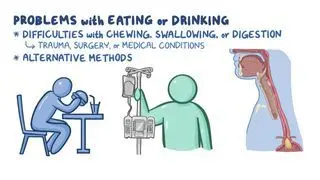
The parenteral route refers to administering liquids, such as nutrition or medications, by bypassing the gastrointestinal system. Parenteral nutrition (PN) refers explicitly to administering liquid nutrition intravenously to an individual unable to use their digestive system. The term parenteral translates to "outside of the digestive tract” and allows an individual to bypass the usual process of eating and digestion. Nutritional products administered parenterally contain carbohydrates, proteins, fats, vitamins, minerals, and electrolytes. Parenteral nutrition may be administered as a continuous 24-hour or cyclic infusion, generally over 8 to 12 hours. Cyclic infusion allows individual freedom from the intravenous tubing and pump apparatus. 

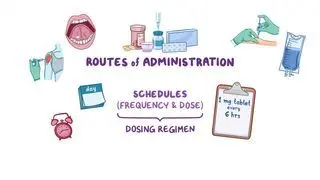
The parenteral route is also used for medication administration when a rapid drug effect is desired; a precise serum drug level is needed; or when drugs are unstable or poorly absorbed in the gastrointestinal tract. The parenteral route for medication administration can involve the intravenous, intramuscular, subcutaneous, and intrathecal routes. 

Learn deeper with Osmosis

Master this topic faster with videos, questions, and AI.

Used by 8M+ healthcare learners.

Start free trial

No credit card · Cancel anytime

What is the difference between the parenteral and enteral routes?

The difference between parenteral and enteral routes of administration is that the parenteral route completely bypasses the digestive system, eliminating the effects of first-pass metabolism. In contrast, enteral routes use the digestive system, including the mouth, stomach, small intestine, and anus

Unlike parenteral nutrition, enteral nutrition can be administered via a tube to the stomach or small intestine. Enteral nutrition is generally preferred over parenteral nutrition for most people since inserting and maintaining an enteral feeding tube is safer and less costly. Furthermore, enteral nutrition contributes to the health of the intestinal border over time. In contrast, long-term parenteral nutrition can lead to steatohepatitis, an advanced stage of nonalcoholic fatty liver disease, and infection due to increased bacterial growth at the IV site. Enteral nutrition requires less monitoring, whereas parenteral nutrition requires monitoring via laboratory tests (e.g., complete blood count, electrolytes, glucose, albumin, blood urea nitrogen, creatinine, triglycerides) weekly or monthly basis. Additionally, parenteral nutrition must be prepared in a sterile environment using a customized recipe for the individual, refrigerated, and used within 24 to 48 hours after being removed from refrigeration. 

The enteral route of drug administration is the most common route for medications and supplements. This includes ingesting pills orally, commonly referred to as PO, derived from the Latin phrase for by mouth, ‘per os.’ PO is the least invasive and convenient method of drug administration; however, medications given via the oral route must be acid stable or protected from gastric acid (e.g., by enteric coatings). In contrast, parenteral medication administration is more invasive. It can be used when a drug is unstable or poorly absorbed in the gastrointestinal tract or when the effects of the drug must act immediately, such as in anaphylaxis or other emergencies.

What are the four types of parenteral routes?

The four types of parenteral routes include intravenous (IV), intramuscular (IM). subcutaneous (SQ), and intrathecal (IT) administration

Intravenous

Intravenous injection refers to the placement of nutrition or medication directly into a vein through an intravenous line, which is a flexible tube placed inside a vein, usually in the hand or arm. Drug solutions are given as a single dose or continuously infused through the line. This route injects medications into the blood, eliminating the need for first-pass metabolism through the liver or gut wall. Specifically, first-pass metabolism refers to the reduction in the concentration of a drug as it gets processed at a specific location in the body (e.g., liver, lungs, gastrointestinal tract) before reaching the systemic circulation. This results in decreased bioavailability, the proportion of the drug that can enter circulation and yield the desired effect.

Examples of intravenous medications include antibiotics (e.g., piperacillin/tazobactam, cefepime; opioids (hydromorphone, morphine); and medications to treat hypotension (e.g., epinephrine, norepinephrine). 

Intramuscular

Intramuscular medications are injected into the body of a muscle. This route of administration is preferred to the subcutaneous route when larger volumes of medication are required. Additionally, an intramuscular injection requires a longer needle since the muscle lies deeper into the skin and fatty tissues. Common sites of injection include the upper arm, thigh, and buttock. 

Intramuscular medications include antibiotics (e.g., penicillin, streptomycin); biologicals (e.g., immunoglobulins, vaccines, toxoids); and hormonal agents (e.g., testosterone, medroxyprogesterone). 

Subcutaneous

Subcutaneous injection refers to the injection of medication via a needle into the loose connective tissue directly under the dermis. Once in the connective tissue, the medication moves into the capillaries, or the small blood vessels, to circulate around the body. 

Parenterally administered medications injected subcutaneously include insulin, opioids, heparin, and epinephrine. Lastly, common intrathecal medications include morphine and ziconotide for pain relief and baclofen, a muscle relaxant to treat muscle spasticity

Intrathecal

Lastly, intrathecal administration refers to administering medication into the subarachnoid space around the spinal cord. An anesthetic is first injected into the top layer of skin to numb the area. A needle is then inserted into the lower spine between two vertebrae. Medications are injected into the subarachnoid space, filled with cerebrospinal fluid (CSF), to allow for rapid effects on the central nervous system, including the brain, spinal cord, and the meninges. Medications, such as opioids, may be administered intrathecally when individuals have intractable pain that fails to respond to other treatments; or pain that responds to analgesia, but the dose required would result in extreme adverse side effects. Pain medications are often administered intrathecally for end-of-life hospice care patients and for chronic cancer-related pain or chemotherapeutic agents. 

Parenterally administered nutrition includes Kabiven and Perikabiven, combinations of amino acids, dextrose, lipids, and electrolytes. The amount of parenteral nutrition is determined by calculating the individual's caloric, protein, lipid, and fluid needs. 

What are the advantages of using the parenteral route?

Advantages of using the parenteral route in nutrition include providing nutritional and caloric support to those unable to meet their nutritional goals through enteral feeding. Conditions that may require parenteral nutrition include gastrointestinal fistulas, bowel obstruction, severe acute pancreatitis, and those who are critically ill. Overall, total parenteral nutrition is used when the digestive system is not functioning correctly or the individual needs to give their digestive system a rest. 

Advantages of using parenteral medication administration include the ability to deliver a precise dose of a medication rapidly since it is being injected directly into the tissue and circulatory system, bypassing liver metabolism. Additionally, the parenteral route may be the best option for those with nausea and vomiting; those who cannot tolerate oral fluids; individuals taking medications that can irritate the gastrointestinal tract (e.g., non-steroidal anti-inflammatory drugs); and those who are unable to swallow. Compared to the enteral route of medication administration, where the bioavailability of the drug can vary, parenteral drugs given intravenously have 100% bioavailability. Of note, bioavailability is defined as the proportion of an administered drug that reaches the systemic circulation.

What are the disadvantages of using the parenteral route?

Disadvantages of the parenteral route, specifically total parenteral nutrition, include potential complications and adverse metabolic effects, such as dehydration, electrolyte imbalances, thrombosis, hyperglycemia, hypoglycemia, infection, and liver failure, and micronutrient deficiencies of vitamins and minerals. Routine monitoring of serum glucose, electrolytes, and volume status is recommended. Those who use parenteral nutrition support are also at risk for infection and complications related to venous access, such as a fungal or bacterial bloodstream infection. Routine monitoring of serum glucose, electrolytes, and volume status is recommended.

Disadvantages of using the parenteral route for medications include unsafe injection practices resulting in exposure to infections. Additionally, medications administered parenterally are absorbed rapidly into the body, increasing the risk for overdose. It may be difficult to reverse their physiological effects due to the speed of drug absorption. Additionally, the parenteral route is a more invasive route of drug administration than the enteral, requiring assistance from a healthcare professional. Finally, the parenteral route of medication delivery can cause fear, pain, potential tissue damage, and an increased risk of infection. 

What are the most important facts to know about the parenteral route?

The parenteral route refers to the intravenous administration of nutrition and medications by bypassing the gastrointestinal system. The parenteral route of drug delivery includes four types: subcutaneous, intramuscular, intravenous, and intrathecal administration. Examples of medications delivered parenterally include insulin, opioid analgesics, vaccines, and antibiotics, amongst other drugs. The parenteral route is useful for rapid medication delivery and for supplementing calories. Its disadvantages include adverse metabolic reactions and the potential for infection. 
Students say Osmosis is 100% worth it

Because Osmosis saves them time. Lowers stress. And actually helps them remember when it counts.

I used Osmosis to prepare for my first medical school licensing exam! Super helpful and interactive for people who may not do great with just pages of text info!

Cecilia Ruiz

Cecilia Ruiz

MD student

Sayan Misra

I have used Osmosis for about four years. Best thing I have ever used for my medical studies.

Sayan Misra

Sayan Misra

Med student

Osmosis videos are superior because they define simple concepts, tell a story with a clear progression, and provide context.

Jay Pate

Jay Pate

Dental student

References


Baker, R. D., Baker, S. S., & Bojczuk, G. (n.d.). Parenteral nutrition in infants and children. UpToDate. Retrieved July 12, 2022, from https://www-uptodate-com.rosalindfranklin.idm.oclc.org/contents/parenteral-nutrition-in-infants-and-children?search=paraenteral+route+&source=search_result&selectedTitle=2~150&usage_type=default&display_rank=2 


Enteral administration- an overview | ScienceDirect Topics. Sciencedirect.com. (n.d.). Retrieved July 12, 2022, from https://www.sciencedirect.com/topics/medicine-and-dentistry/enteral-administration 


Jatoi, A., Loprinzi, C. L. (n.d.). The role of parenteral and enteral/oral nutritional support in patients with cancer. UpToDate. Retrieved July 12, 2022, from https://www-uptodate-com.rosalindfranklin.idm.oclc.org/contents/the-role-of-parenteral-and-enteral-oral-nutritional-support-in-patients-with-cancer?search=paraenteral+route+&source=search_result&selectedTitle=4~150&usage_type=default&display_rank=4 


Le, J. (2022, July 1). Drug administration. Merck Manuals Consumer Version. Retrieved July 12, 2022, from https://www.merckmanuals.com/home/drugs/administration-and-kinetics-of-drugs/drug-administration 


Parenteral nutrition: Drug information. UpToDate. (n.d.). Retrieved July 12, 2022, from https://www-uptodate-com.rosalindfranklin.idm.oclc.org/contents/parenteral-nutrition-drug-information?search=paraenteral+route+&topicRef=104221&source=see_link 


Polania-Gutierrez, J.J., Munakomi, S. Intramuscular Injection. [Updated 2022 May 12]. In: StatPearls [Internet]. Treasure Island (FL): StatPearls Publishing; 2022 Jan-. Available from: https://www.ncbi.nlm.nih.gov/books/NBK556121/


Siparsky, N. (n.d.). Postoperative parenteral nutrition in adults. UpToDate. Retrieved July 12, 2022, from https://www-uptodate-com.rosalindfranklin.idm.oclc.org/contents/postoperative-parenteral-nutrition-in-adults?search=paraenteral+route+&source=search_result&selectedTitle=1~150&usage_type=default&display_rank=1 


Worthington, P., Balint, J., Bechtold, M., Bingham, A., Chan, L.N., Durfee, S., Jevenn, A.K., Malone, A., Mascarenhas, M., Robinson, D.T., Holcombe, B. When Is Parenteral Nutrition Appropriate? JPEN J Parenter Enteral Nutr. 2017 Mar;41(3):324-377. doi: 10.1177/0148607117695251. Epub 2017 Feb 1. PMID: 28333597.