
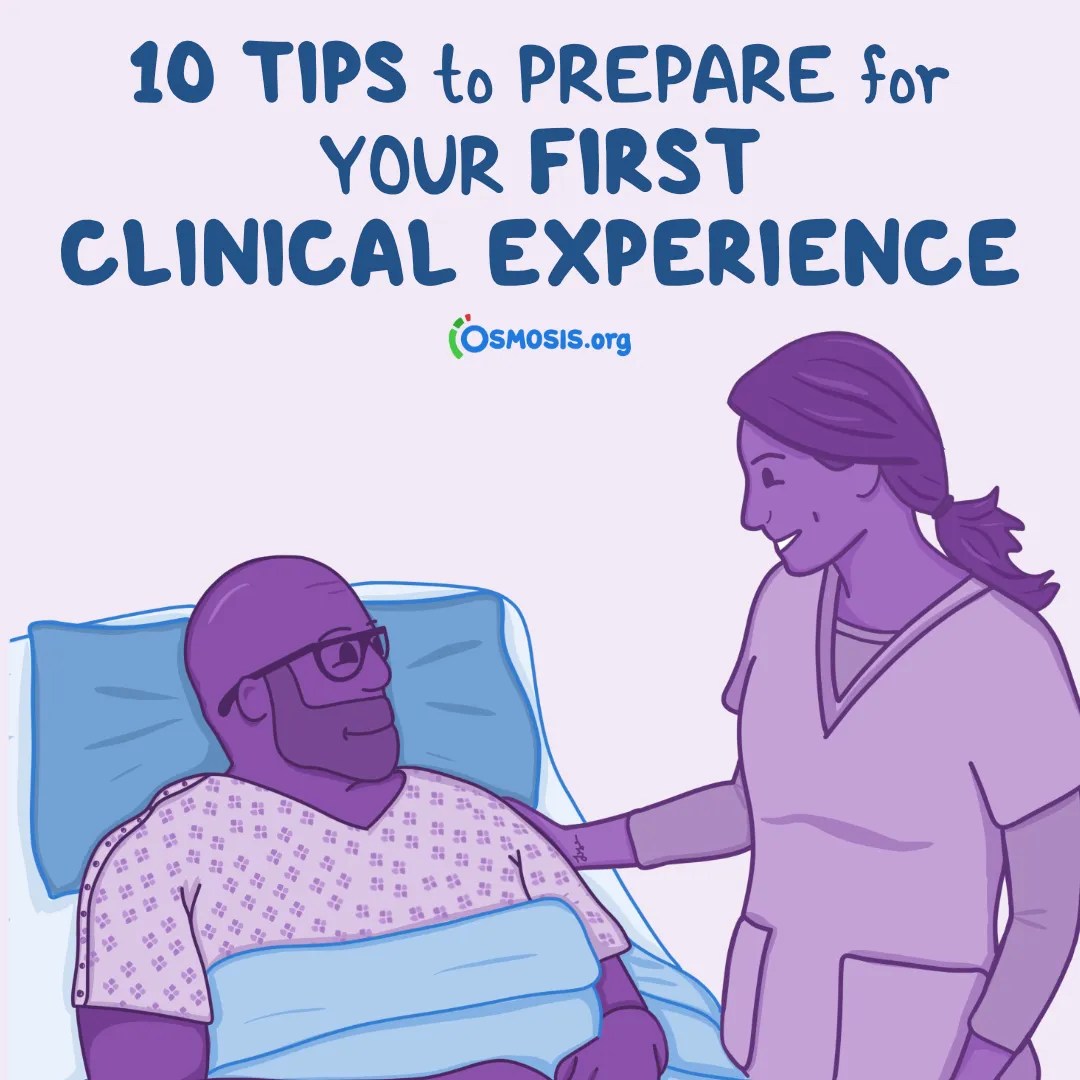
There’s no doubt: Nursing clinicals can be scary, but they don’t have to be! In today’s Osmosis blog, learn how to make the most of your time in nursing clinicals, including everything from what to wear to how to choose future employers.
The first day of clinical rotation is an important milestone in your nursing school experience. It’s normal to feel a mix of emotions, such as nervousness, trepidation, and excitement. Here are ten tips for preparing for the first day of your clinical rotation.
1. Dress for Success and Wear Water-repellent Shoes!
Before clinical starts, check your school’s student handbook, which usually has a section about how to dress for clinicals. Typically, your hair should be clean and your nails short and manicured (remember, acrylic nails carry more bacteria). Avoid wearing dangling jewelry, and make sure your uniform is clean and neat. Also, nothing ruins your favorite pair of sneakers more than a bodily fluid spill that’s hard to clean off. Wearing a pair of comfortable shoes with a water-repellant outer layer is a great way to avoid this.
2. Don’t Be Afraid to Ask Questions
Asking questions is key to being successful in clinicals, whether you’re asking your instructor or a staff member. Remember, you’re starting from square one, so it’s okay not to know everything. The important thing is to acknowledge this and seek out the answers to provide safe client care. In fact, nursing students and new nurses who ask lots of questions are more trusted by experienced nurses than those who don’t!
3. Get a Good Night’s Sleep and Eat Breakfast
Although this seems like common sense, clinical days typically start very early in the morning, so a good night’s rest will come in handy. In addition, you’ll want to have something in your stomach to ensure you don’t feel lightheaded or queasy.
4. Have a Slice of Humble Pie
As a nursing student, you’ll receive constructive feedback from your instructor and staff members. Although it might sting at first, try to accept this feedback with humility since their intention is usually to promote client safety. One day you’ll be on the other side of the input!
5. Share Your Feelings with Your Classmates
You aren’t the only nursing student feeling nervous before your first clinical experience; almost all of your classmates probably feel the same way. This is a great time to bond with them. Sometimes sharing these feelings can make them feel less overwhelming.

6. Show Gratitude
Nurses who help you are treasures, so make sure to let them know you’re thankful! Also, a big plus is that people who express gratitude tend to have less depression and stress.
7. Do Your Research
Go to the hospital webpage, check out the hospital’s mission and vision statement, and compare it with your career goals to see if you want to work there once you graduate.
8. And Then Do a Little More Research
How does the hospital rate? Go to Leapfrog Group ratings and enter the hospital name to see where it excels and where it needs improvement. Even as a nursing student, you can initiate positive change.
9. You Are Being Interviewed While You’re Interviewing Them
Is this a hospital where you would like to work? Let them see you shine and make connections for future networking. Leave the best impression everywhere you go!
10. Schedule Some Time to Decompress
Clinical days tend to be physically and emotionally tiring, especially in the first few weeks. Do yourself a favor and plan some “me time” into your schedule so you can decompress afterward. Whether it be a massage, going to the gym, or watching a movie, self-care is essential to your success in nursing school and throughout yoru career.
Good luck with your nursing clinicals from all of Osmosis!
- Preparation and environment matter; dress appropriately and minimize distractions.
- Do not hesitate to ask questions early; use feedback to grow.
- Prioritize rest, nutrition, and planned decompression to sustain performance.
- Build professionalism and networking skills to support opportunities.
- Plan, reflect, and adapt as you gain clinical experience.
About the Author
Paige Randall MS, RN, CEN, CNE, Script Writer and Editor, has been a Registered Nurse for ten years with a clinical background in cardiac, emergency nursing, and nursing education. Paige is recently earned her PhD in nursing at Duke University. She lives in Raleigh, NC, with her husband and their dog, Bocelli.

Want more NCLEX®-style practice questions? Try Osmosis by Elsevier today! Access your free trial and find out why millions of current and future clinicians and caregivers love learning by Osmosis.
Leave a Reply