
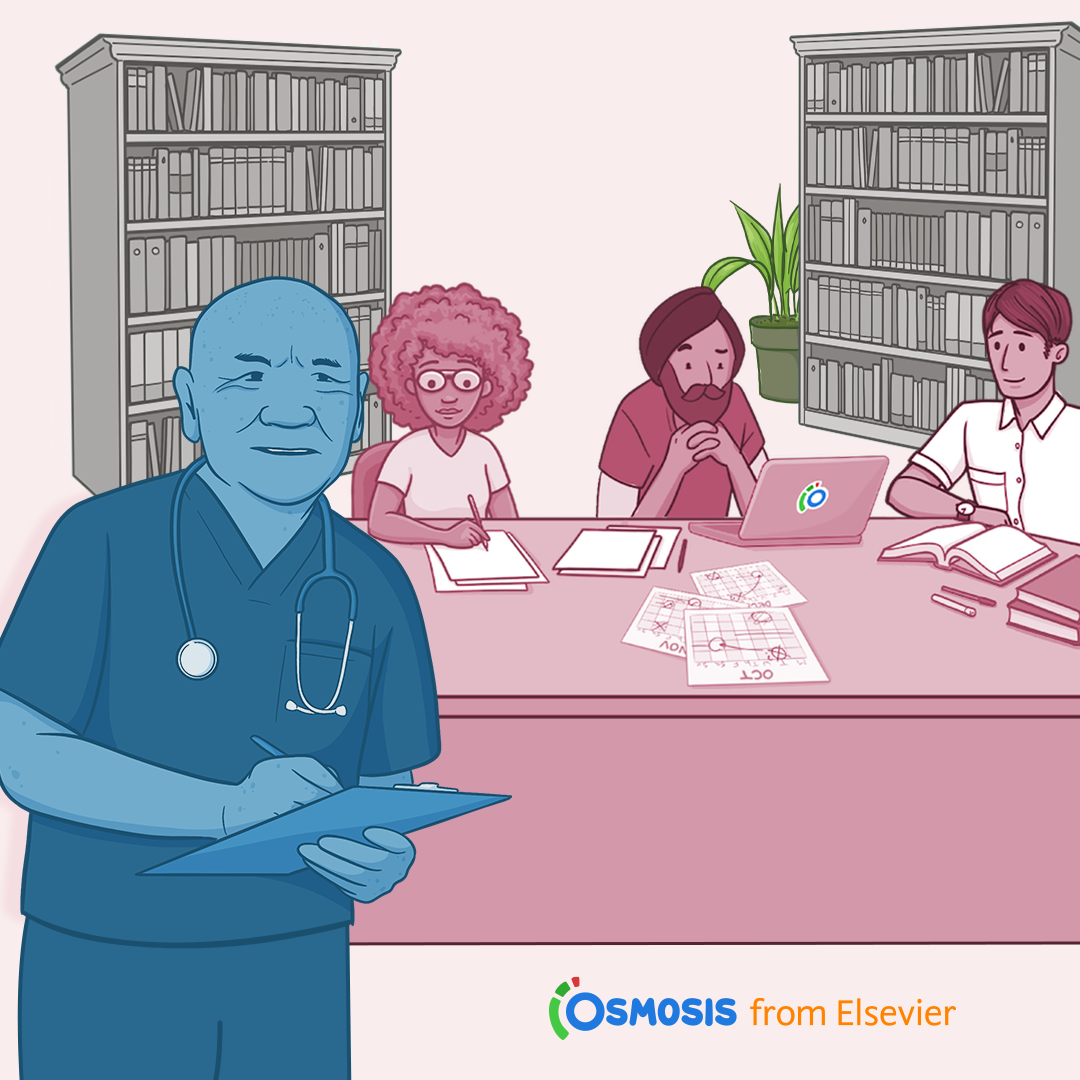
Even the most capable medical students can develop study habits that work against them. Between rigorous coursework, packed schedules, and the emotional intensity of training, it’s easy for ineffective routines to take hold.
As a medical educator, you have a unique opportunity to notice these patterns early and help students build self-awareness before small challenges turn into burnout or disengagement. Reflect on the following five study mistakes to learn how to help students not only succeed academically but also sustain their motivation and well-being along the way.
Poor Time Management and Procrastination
One of the significant stressors facing medical students is time management, especially when juggling multiple courses, labs, and clinical responsibilities. When deadlines pile up or study plans fall apart, procrastination often follows. Students may express concerns about feeling constantly behind or overwhelmed, which can erode confidence and lead to last-minute cramming that reinforces surface-level learning.
Help by modeling and teaching structured planning techniques.
Introducing time-blocking, SMART goal-setting, or simple prioritization strategies empowers students to approach studying with more intention.
For instance, one student may spend hours rewriting notes but still feel behind. When their instructor introduces simple time-blocking—allocating two focused study hours followed by short breaks—they often realize they can accomplish more with less stress. Small, structured changes like this transform a student’s confidence.
Regular check-ins or guided reflections also create accountability and open the door for meaningful conversations about workload, balance, and self-discipline. These small moments of support often help students feel seen and capable of change.
But even students who manage their time well can still struggle if they’re not studying effectively. Poor time management may waste hours, but passive learning habits waste effort—leaving students busy, yet not truly learning.
Passive Learning Habits
It’s common for students to equate studying with time spent rather than depth of engagement. They may reread notes or highlight lecture slides (passive learning techniques), believing that repetition alone will lead to retention. While these strategies may feel productive, they rarely lead to deep understanding or long-term recall.
Research consistently shows that active recall is one of the most effective techniques for improving exam performance. This study found that students who regularly test their knowledge retain information better and perform significantly better on assessments than those who rely on passive methods.
Asking students to quiz themselves, summarize material in their own words, or explain a topic to a peer transforms passive review into active engagement. Additionally, techniques such as active recall and spaced repetition are particularly effective. When you embed these strategies into your teaching, students begin to see learning as a process of discovery rather than memorization.
Of course, even students who actively engage with the material can hit a plateau if they use strategies that don’t align with their individual learning preferences. That’s where helping each student discover the study methods that truly work for them becomes essential.
Lack of Personalization in Study Methods
Many students arrive at medical school relying on study methods that once worked for them but now fall short. They may adopt their peers’ routines or follow a generic schedule without considering how they learn best. When their performance doesn’t match their effort, frustration sets in—and often, self-doubt.
It’s important to guide students toward more personalized learning. Encouraging reflection on individual learning preferences—visual, auditory, or kinesthetic—helps students tailor their approach. The Osmosis Study Schedule is one tool that supports this process, allowing students to mix different modalities, such as videos, flashcards, and quizzes, in ways that align with their strengths. When students see that learning strategies can be adapted to fit them, not the other way around, they become more confident, efficient, and engaged.
Still, even the most effective study plan falls apart when students are exhausted or overwhelmed. Without attention to their well-being, personalized strategies lose their impact, and burnout quickly takes hold.
Neglecting Well-being and Burnout
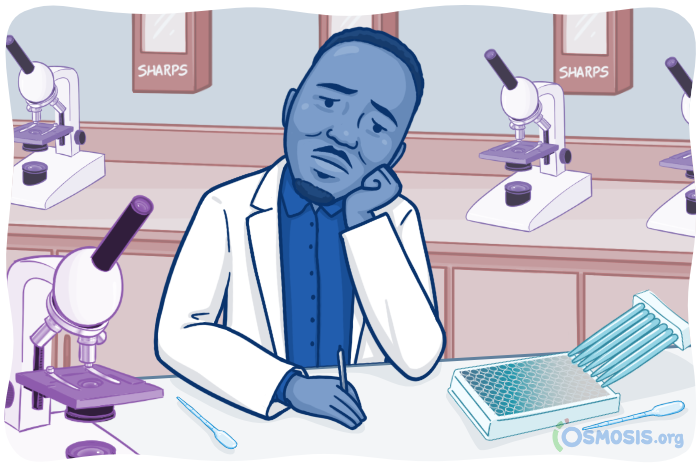
In medicine, exhaustion is often worn as a badge of honor. Many students believe that pushing through fatigue is simply part of the journey, but chronic stress and sleep deprivation quickly undermine both academic performance and emotional health. Research links chronic sleep deprivation to reduced working memory and decision-making accuracy—two essential skills in clinical reasoning. When students lose motivation or start disengaging, it’s often a sign that they’re running on empty.
You play a key role in shifting this culture. Checking in when a student seems withdrawn or overextended makes a meaningful difference. Normalizing conversations about rest, mental health, and self-care reminds students that taking breaks is not a weakness but a crucial part of sustainable success. Integrating brief mindfulness activities or discussions about well-being into class time also signals that you value students as whole people, not just future clinicians.
When students are stressed or exhausted, they often rely on memorization rather than actively applying what they’ve learned. Building time for applied practice ensures that knowledge is not only retained but can be used effectively in real-world clinical situations.
Inadequate Practice of Applied Learning
Memorization has its place in medical education, but without consistent opportunities to apply knowledge, understanding remains shallow. There is concern that students may perform well on written exams yet struggle to connect concepts during clinical scenarios. This gap between theory and practice leads to uncertainty and frustration as students transition into real-world healthcare settings.
Consider a small-group discussion where students review cardiovascular physiology. One student easily recites every step of the cardiac cycle but freezes when asked to apply that knowledge to a patient with heart failure.
When the instructor introduces a short case study and guides the group to connect each symptom to its underlying mechanism, the student suddenly “clicks” with the material. Moments like this illustrate how applying knowledge—not just recalling it—cements understanding and prepares learners for real clinical reasoning.
Bridge the gap between theory and practice by emphasizing application early and often. Incorporating case studies, simulation exercises, and practice questions encourages students to think critically and integrate concepts across systems. Group discussions that require explanation and reasoning also build confidence and teamwork. When students are guided to move beyond recall toward clinical reasoning, their learning becomes both more meaningful and durable.
Conclusion
Supporting students through medical education means doing more than teaching content—it means helping them learn how to learn. When you recognize the signs of poor time management, passive habits, or burnout, you can intervene with empathy and evidence-based strategies. Encouraging personalization, balance, and applied learning equips students not only to succeed in their studies but to carry forward habits that sustain them in their professional lives.
When you model curiosity, compassion, and intentionality, students learn to do the same. And that’s how we help shape not just knowledgeable physicians, but lifelong learners who care deeply—for their patients and for themselves.
Want to help your students build stronger study habits and prevent burnout? Discover how Osmosis empowers active, personalized learning that supports both performance and well-being. Schedule a call today!
Key Takeaways
- Early recognition of poor study habits helps educators guide timely interventions.
- Active learning strategies promote deeper understanding and long-term retention.
- Personalized study methods increase student confidence and efficiency.
- Prioritizing well-being supports focus, balance, and academic success.
- Applied learning activities strengthen clinical reasoning and real-world readiness.
Resources
- https://pmc.ncbi.nlm.nih.gov/articles/PMC6179084/
- https://www.lifescied.org/doi/10.1187/cbe.20-05-0091
- https://nsj.org.sa/content/28/2/91
- https://pmc.ncbi.nlm.nih.gov/articles/PMC12228860/

Leave a Reply