
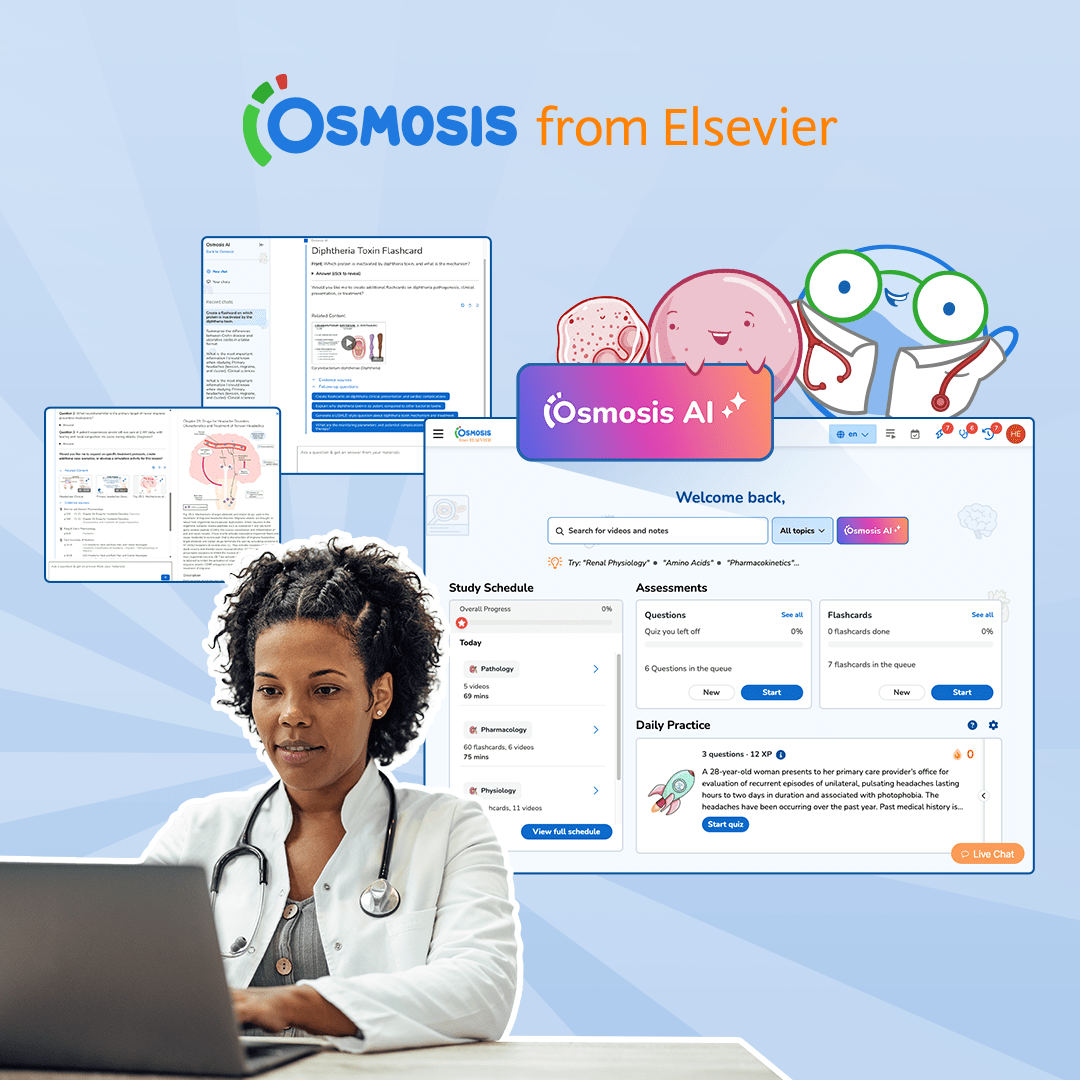
The idea of a “flipped classroom” has been part of the conversation in medical education for years, but putting it into practice is often another story. At its core, flipping the classroom means moving foundational content—like lectures—outside of class time, so that in-person sessions can focus on application, discussion, and clinical reasoning.
It’s a model that aligns well with how students learn best. For many educators, the challenge isn’t the concept, it’s the implementation.
Today’s medical educators are balancing more than ever: lesson planning, assessment creation, and supporting learners with diverse needs and varying levels of preparation. Redesigning a course to fit a flipped model can feel like one more demand on an already full plate.
Osmosis AI is designed with this reality in mind.
Rather than functioning as a general-purpose AI tool, it’s built specifically for medical education — grounded in trusted, vetted content and aligned with how educators already teach. Let’s dive into how Osmosis AI can help reduce the blank‑page problem and accelerate flipped classroom lesson plan drafts.
Build Smarter Lesson Plans in Minutes
Getting started is often the hardest part. Creating a lesson that fits faculty time constraints, aligns with course goals, and meets students at the right level can take significant effort.
With Osmosis AI, faculty can generate structured lesson outlines tailored to topic, lecture time, and learner level in minutes. For example, a faculty member can ask Osmosis AI to create a 60-minute flipped classroom-friendly lesson plan for first-year medical students on heart failure that includes pre-class learning, in-class active learning, and post-class reinforcement resources.
These lesson plans go beyond basic organization. For pre‑class work, Osmosis AI cites materials to prime learning and clearly defines learning objectives based on topic and learner level. For in-class learning, faculty can find detailed activity suggestions that support active, applied learning. Post‑class reinforcement includes ideas on follow‑up quizzes, curated resource links, and topic ideas to encourage continued learning and reinforce key concepts. Throughout faculty responses, Osmosis AI can weave in relevant teaching tips and clinical pearls that help enhance lesson delivery and learning outcomes.
Osmosis AI can support common active-learning approaches, such as case-based discussion, small-group activities, formative checks, and learner-level explanations. Through context-aware follow-up prompts, faculty can also quickly create or discover related items, such as post-class quizzes with detailed rationales, common student misconceptions about the topic, expanded case scenarios, or helpful learning support handouts.
Instead of starting from scratch each time, faculty can refine and build lessons on a solid foundation that aligns with their curriculum. With a clear lesson plan in place, the next step is to ensure students come to class prepared with the foundational knowledge needed to fully engage.
Assign Pre-Work to Set Students Up for Success
A flipped classroom depends on what happens before class just as much as what happens during it. Curating the right mix of pre-work materials like videos, readings, and formative assessments is key. Osmosis AI simplifies this process by surfacing high-quality, aligned pre-work. To help flesh out your flipped classroom lesson plan outlines, Faculty can ask Osmosis AI for detailed pre-work materials or activities.
- Osmosis videos and Elsevier textbook figure review: Each response on a medical topic prompt includes relevant Osmosis videos and Elsevier textbook figures that can be shared to help students build foundational knowledge before class.
- Assigned reading: Each Osmosis AI response is supported by trusted Elsevier textbook citations, providing confidence in accuracy and relevance, and making it easier for faculty to identify and review readings that align with their syllabus and local curriculum
- Pre-class quizzes: Faculty can generate short pre-class quizzes to assess baseline understanding. These quick checks make it easier to identify knowledge gaps early, so class time can be spent where it matters most.
With that foundational knowledge established, class time can shift from reviewing content to actively applying it in meaningful, clinically relevant ways.
Turn Class Time into Active, Engaging Learning
When students arrive prepared, class time can be dedicated to meaningful active learning, applied activities, and focused discussion.
Osmosis AI can help you make the most of that time by generating practical teaching materials like tables, handouts, and checklists that reinforce key concepts and support structured learning.
Additionally, it makes it easier to design interactive experiences. Whether you’re using Case-Based Learning (CBL), Team-Based Learning (TBL), or Problem-Based Learning (PBL), Osmosis AI can generate scenarios, prompts, and discussion frameworks that encourage students to apply their knowledge in clinically relevant ways. To support consistency in evaluation, Osmosis AI can generate rubrics for in-class activities. This makes it easier to provide clear, structured feedback while setting transparent expectations for students.
By surfacing common topic misconceptions, Osmosis AI can also help faculty proactively address potential points of confusion and intentionally design discussions and activities around them. This early intervention prevents incorrect thought processes from becoming ingrained and creates space for clearer reasoning, stronger clinical judgment, and deeper understanding.
As students begin applying concepts more actively in class, the next step is to ensure assessments continue to support learning rather than simply evaluate it.
Create Assessments That Reinforce (Not Just Measure) Learning
Assessment plays a significant role in medical education. However, creating high-quality questions can be one of the most time-intensive parts of teaching. Osmosis AI can help streamline this process by generating low-stakes, exam-style formative questions that align with your objectives, helping students build confidence while reinforcing key concepts.
Beyond traditional quizzes, you can also create flashcards, case-based prompts, and diagnostic reasoning exercises. This allows assessment to become an ongoing part of the learning process, not just a final checkpoint.
By reducing the time spent on content creation, educators can shift their focus toward what matters most. These shifts in planning, preparation, and assessment allow faculty more time to focus on guiding discussions, supporting clinical reasoning, and responding to student needs in real time.
A More Human Approach to Teaching — Powered by AI
Flipping your classroom isn’t just about changing when students engage with content; it’s about changing how they engage with it.
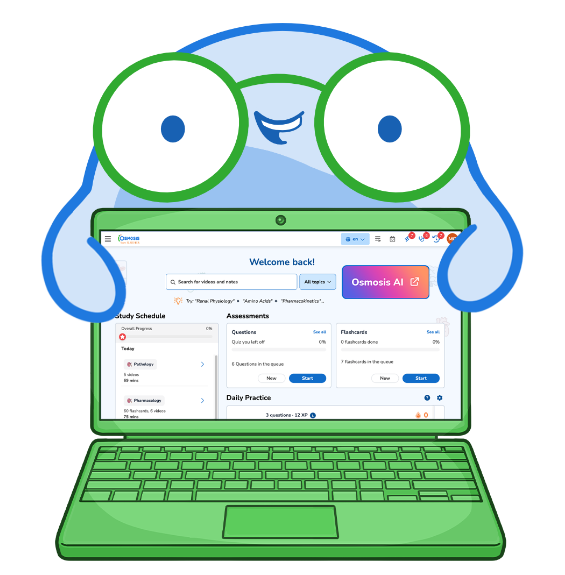
By moving foundational learning outside of class, you create space for interaction, application, and critical thinking, and with the support of Osmosis AI, that shift becomes more practical to implement.
With less time spent building materials from scratch, there’s more opportunity to focus on teaching itself, having student conversations, addressing misconceptions, and helping students connect knowledge to real-world clinical practice.
Key Takeaways
- Osmosis AI makes flipping the classroom more practical by reducing the time and effort needed to design lessons, pre-work, and assessments.
- Educators can quickly generate structured, evidence-based lesson plans tailored to their topic, learners, and available class time.
- Pre-class learning is strengthened with curated videos, cited textbook excerpts, and quick diagnostic quizzes to assess understanding early.
- In-class time becomes more interactive through AI-supported case-based, team-based, and problem-based learning activities.
Learn how Osmosis empowers active, personalized learning that supports both academic performance and student engagement. Schedule a call today!
Leave a Reply