
Category: Exam Prep
-
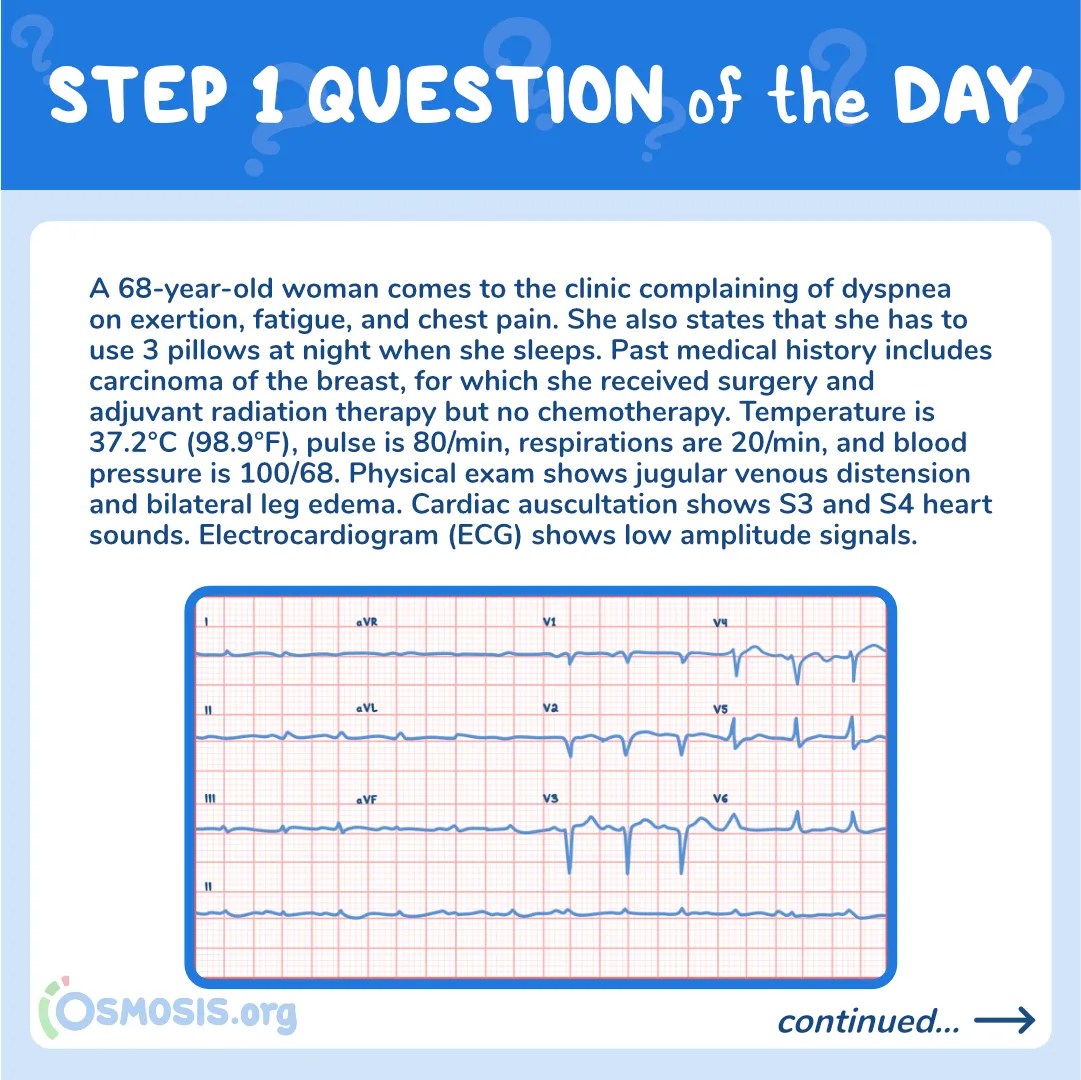
USMLE® Step 1 Question of the Day: Dyspnea on Exertion and Fatigue
— Updated:
This week, we are sharing another USMLE® Step 1-style practice question to test your knowledge of medical topics. Today’s case focuses on a 68-year-old woman complaining of dyspnea on exertion, fatigue, and chest pain. Past medical history includes carcinoma of the breast. Can you figure this one out? A 68-year-old woman…
-
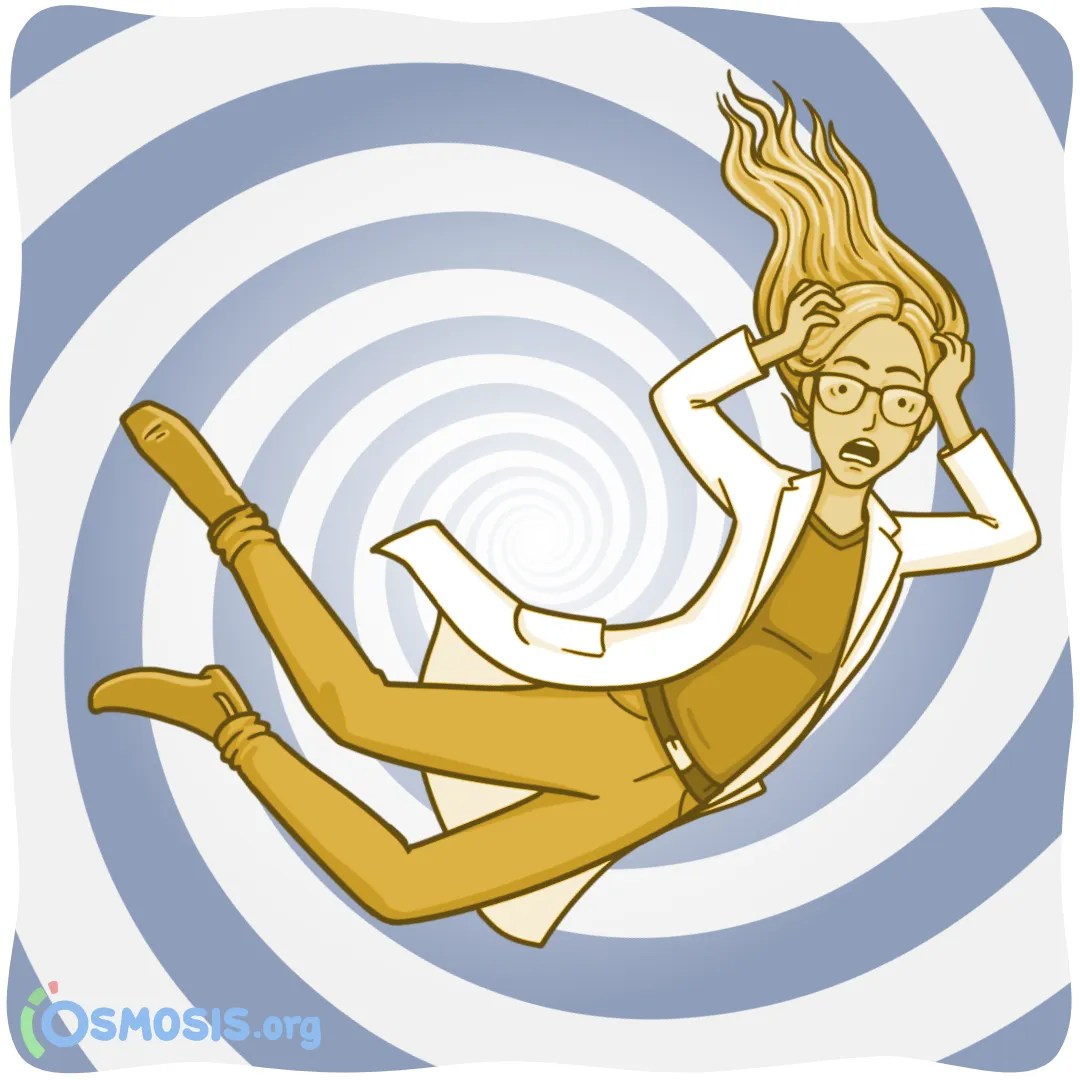
At Least Humor Is a Mature Defense Mechanism: An Unqualified Guide to USMLE® Step 1 Anxiety
— Updated:
Today on the Osmosis blog, former Osmosis Health Leaders Initiative member Kayla Hicks shares a humorous account of how she dealt with board exam stress leading up to her USMLE Step 1 exam. Studying for Step 1. You’ve been at it for weeks, using every medical education tool imaginable, and…
-
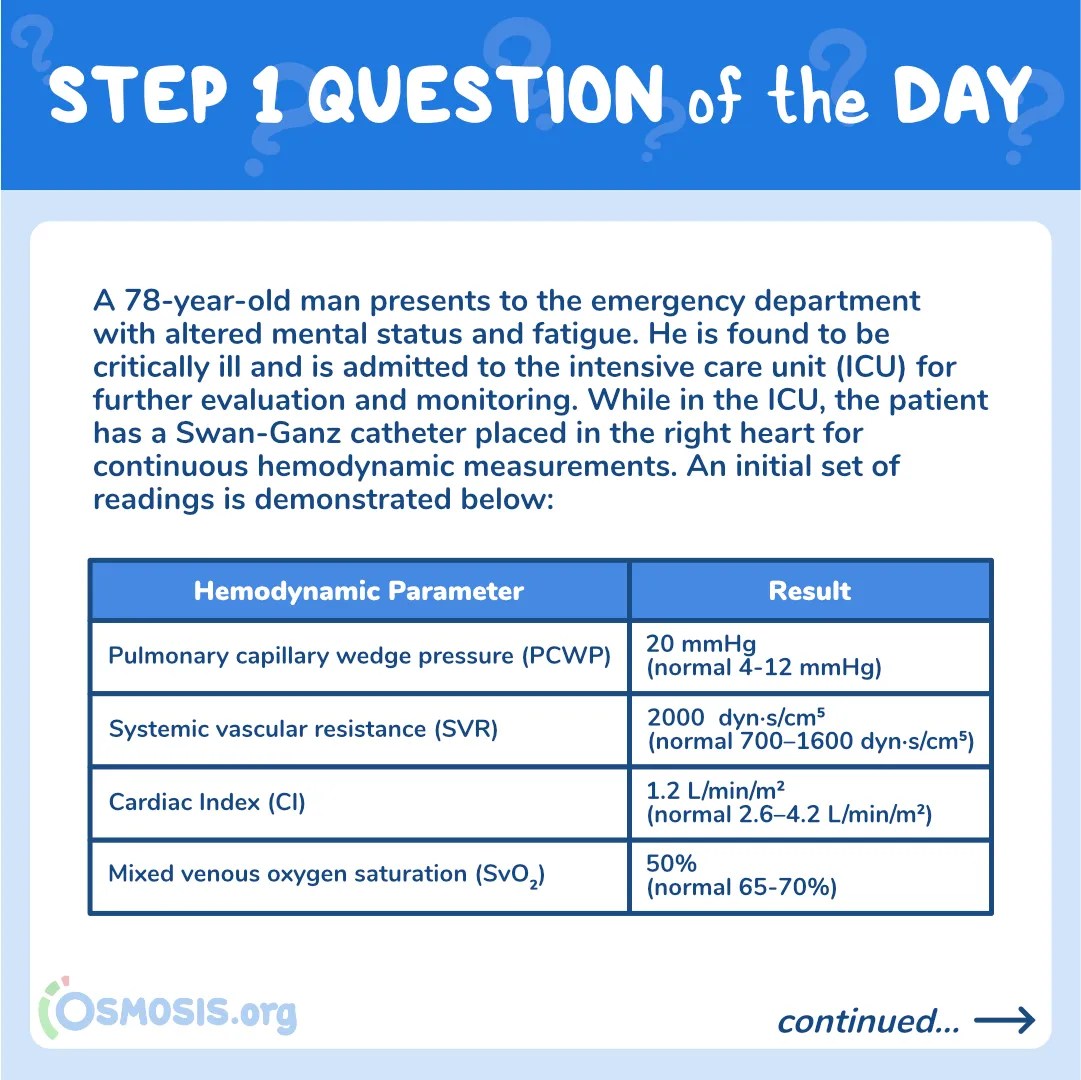
USMLE® Step 1 Question of the Day: Altered Mental State
— Updated:
Analyze Swan-Ganz catheter hemodynamics in a critically ill patient with elevated PCWP and SVR, low cardiac index, and low SvO2. What’s the cause?
-
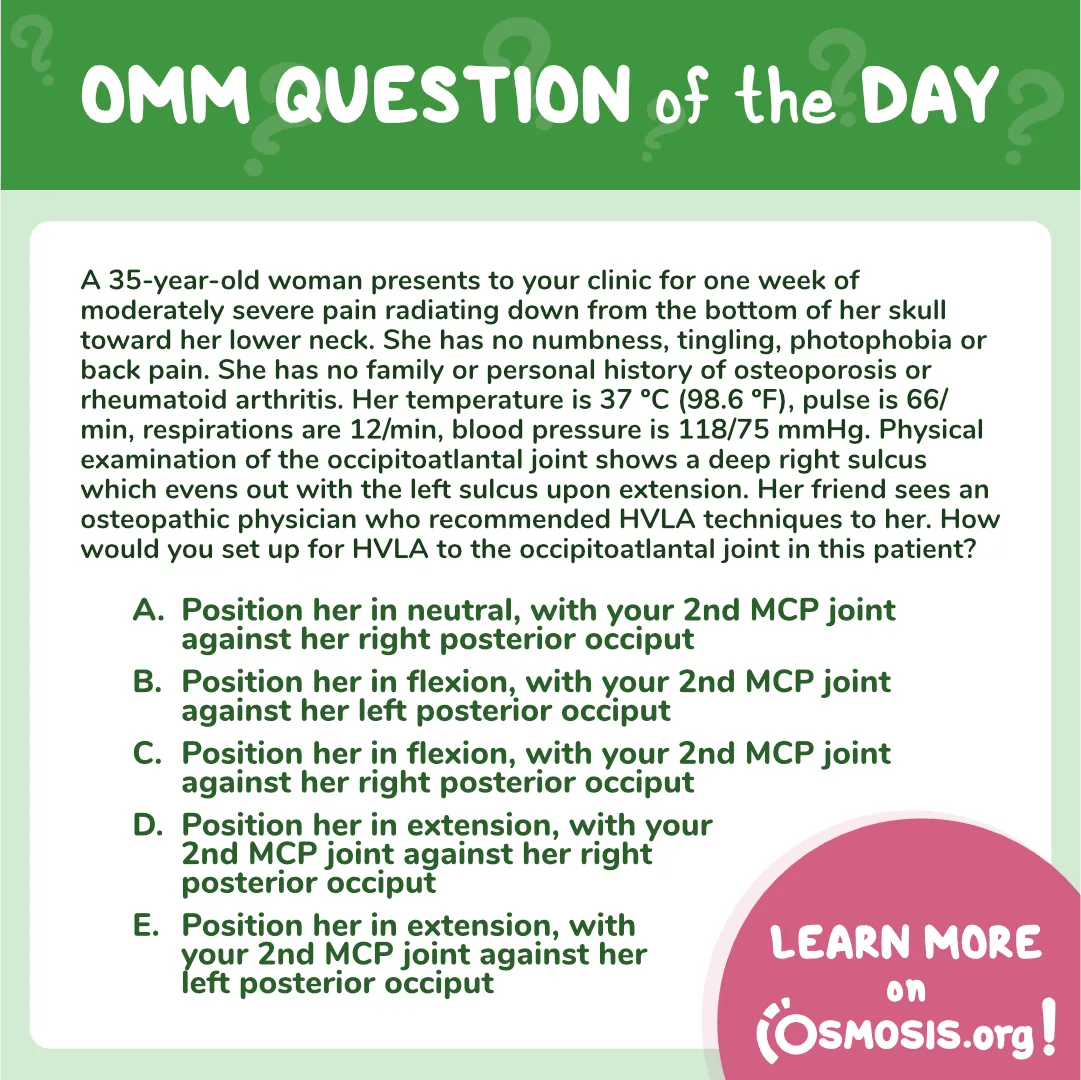
OMM Question of the Day: OA HVLA
— Updated:
Today’s OMM question involves a 35-year-old woman with pain radiating down from the bottom of her skull toward her lower neck. How would you set up for HVLA to the occipitoatlantal joint in this patient? A 35-year-old woman presents to your clinic for one week of moderately severe pain radiating…
-
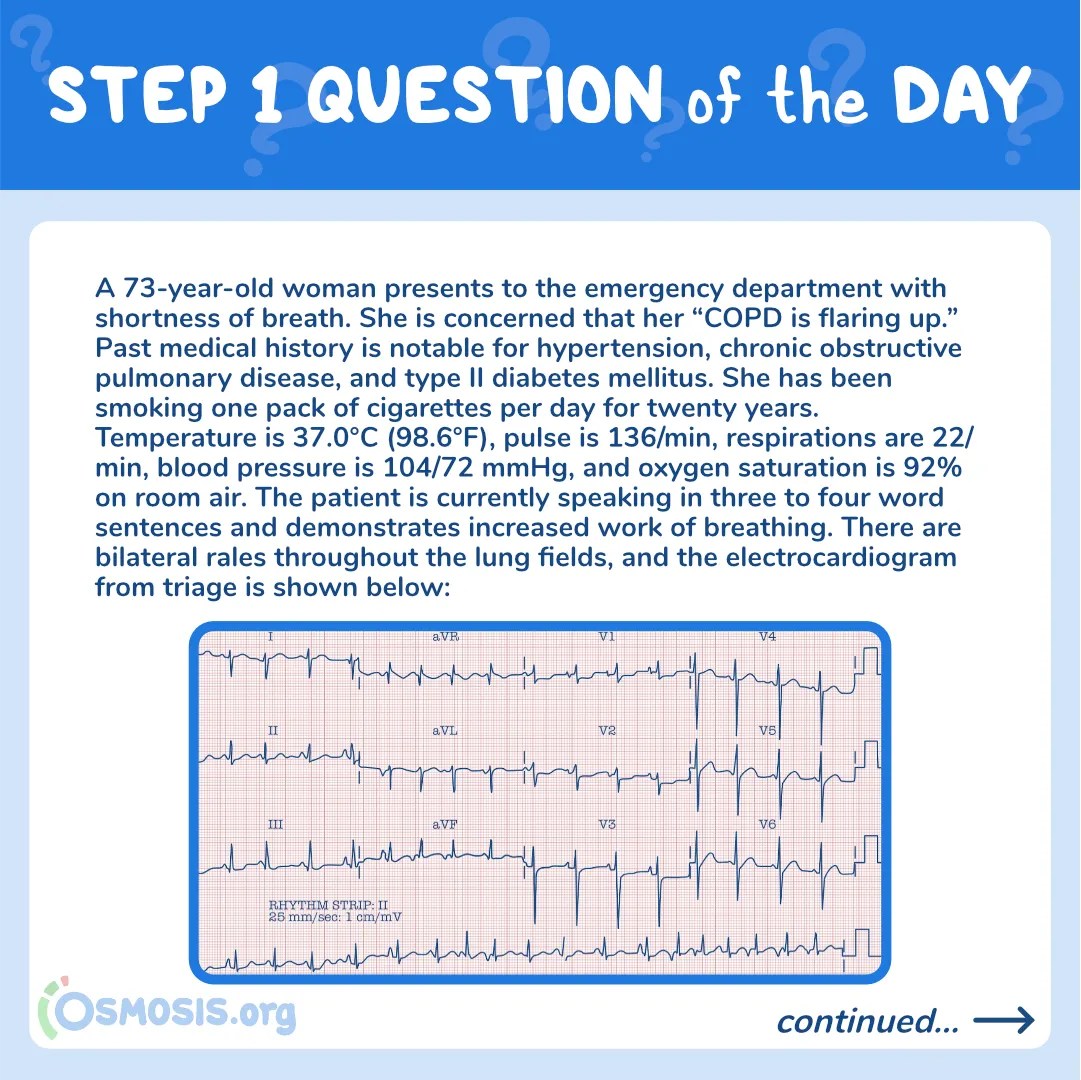
USMLE® Step 1 Question of the Day: Shortness of Breath
— Updated:
This week, we are sharing another USMLE® Step 1-style practice question to test your knowledge of medical topics. Today’s case focuses on a 73-year-old woman with shortness of breath. Past medical history is notable for hypertension, chronic obstructive pulmonary disease, and type II diabetes mellitus. Can you figure it out? A 73-year-old…
-

NCLEX-RN® Question of the Day: Venous insufficiency
— Updated:
Today’s NCLEX-RN® question of the day focuses on a client diagnosed with venous insufficiency. Can you figure it out? The nurse is interviewing a client diagnosed with venous insufficiency. Which of the following statements by the client is consistent with this diagnosis? A. “My feet are always cold, and I can’t…
-
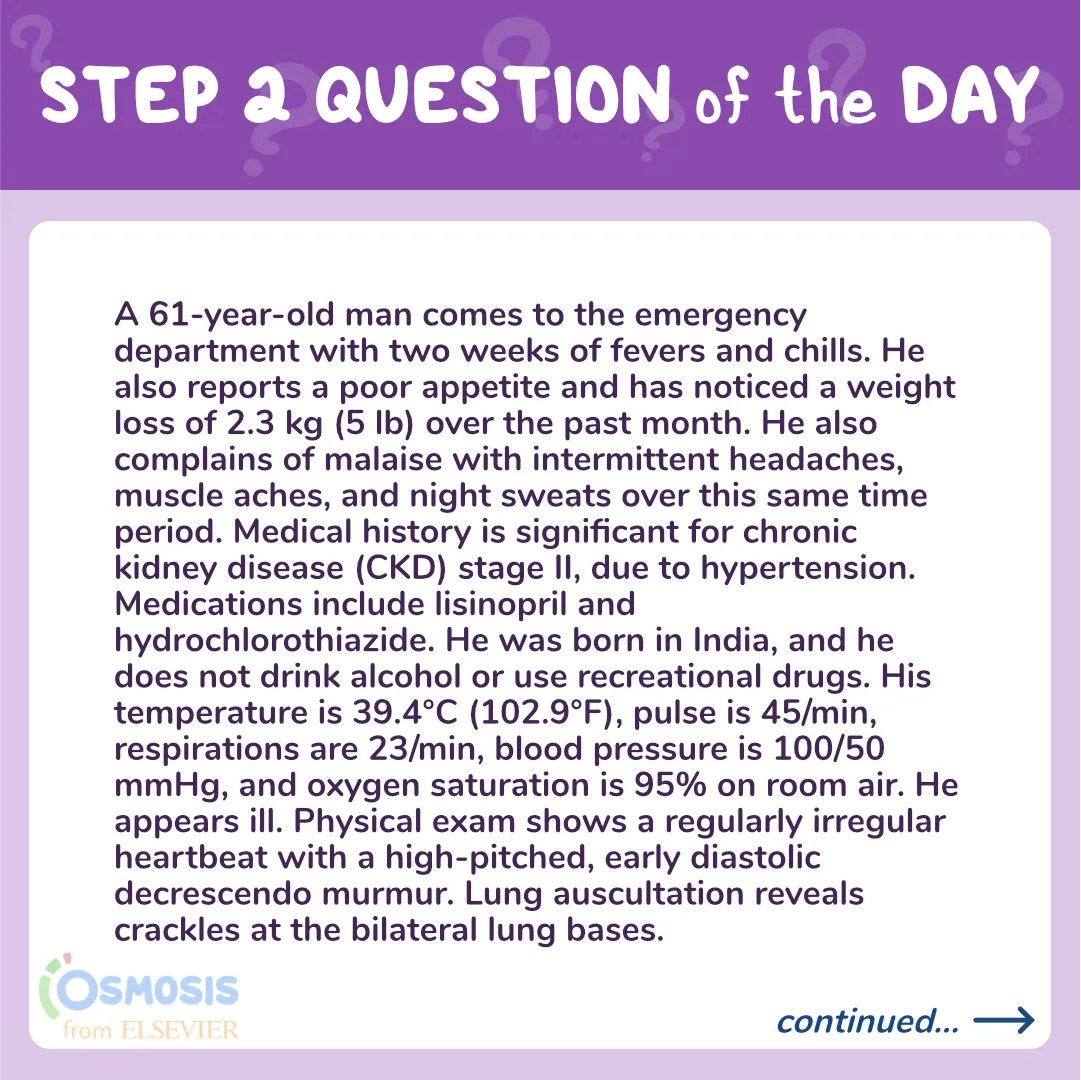
USMLE® Step 2 CK Question of the Day: Second Degree Mobitz type II AV block
— Updated:
Enhance your USMLE® Step 2 CK exam prep with this clinical case involving a 66-year-old woman with left-sided weakness and symptoms suggestive of cardiac issues. Test your clinical knowledge and improve your diagnostic skills for effective patient care!
-
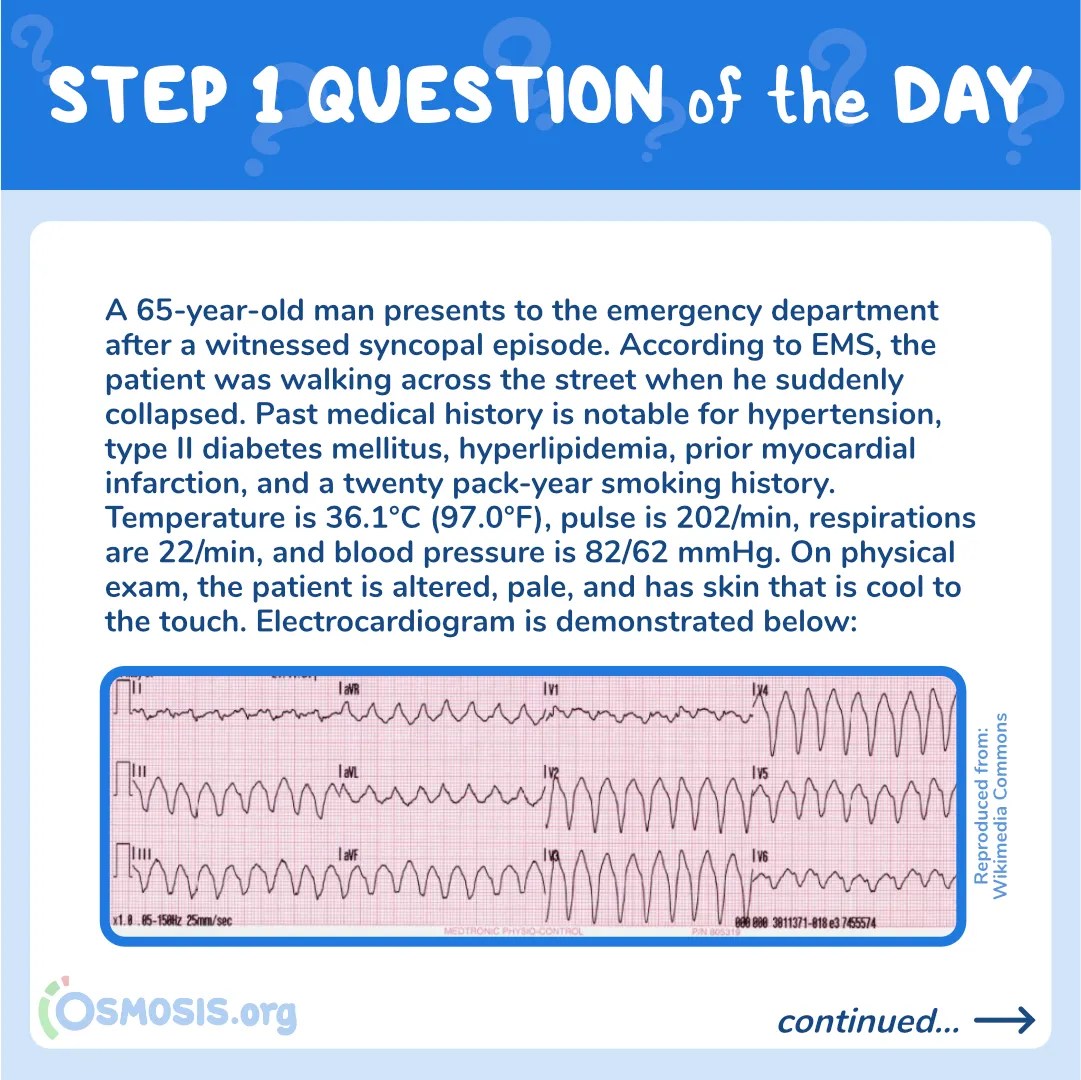
USMLE® Step 1 Question of the Day: Syncopal Episode
— Updated:
This week, we are sharing another USMLE® Step 1-style practice question to test your knowledge of medical topics. Today’s case involves a 65-year-old man who suddenly collapsed when crossing the street. An electrocardiogram is demonstrated below. Can you figure out which pathophysiologic process is likely the result of this cardiac activity? A…
-
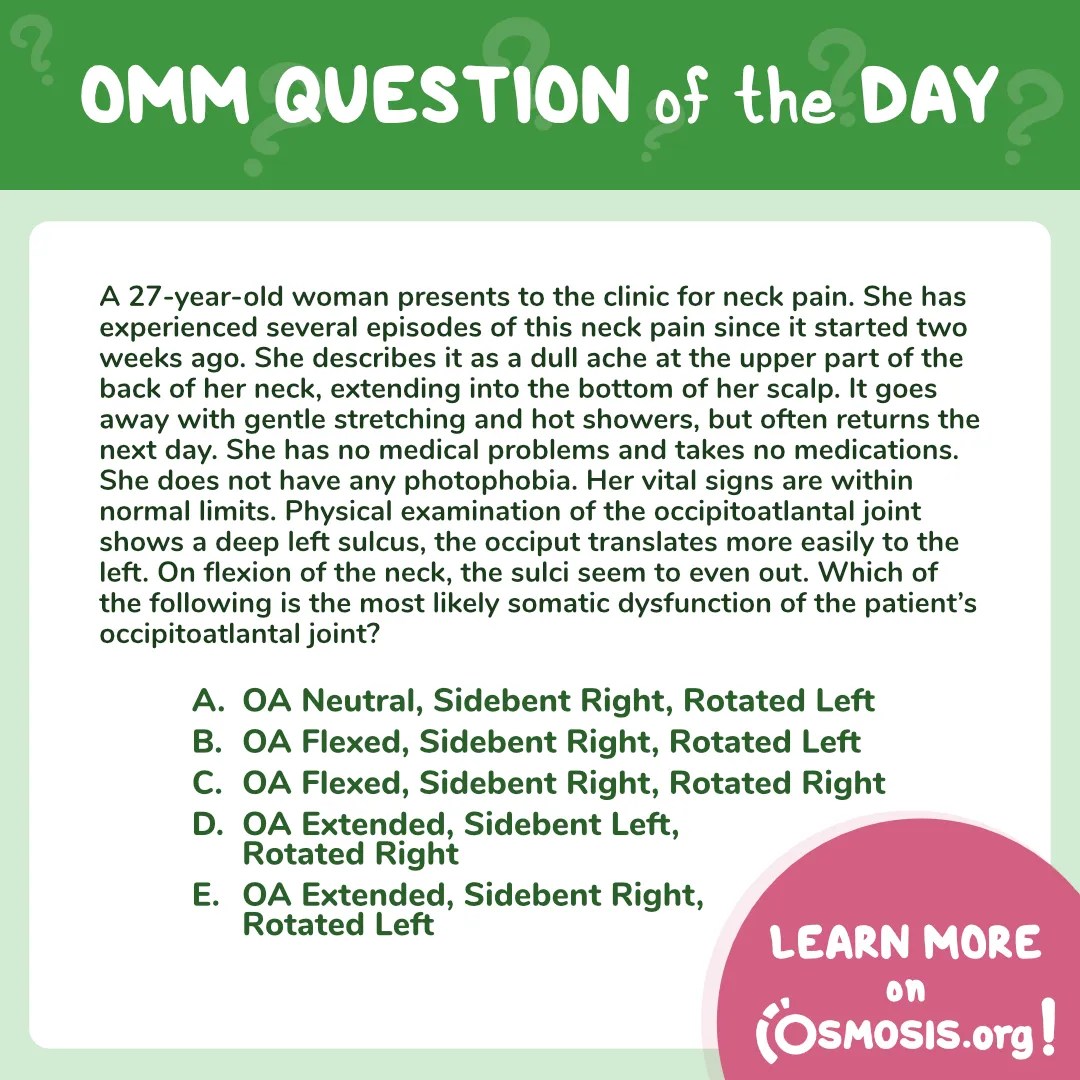
OMM Question of the Day: OA Joint Motion Testing
— Updated:
A 27-year-old woman presents to the clinic for neck pain. She has experienced several episodes of this neck pain since it started two weeks ago. She describes it as a dull ache at the upper part of the back of her neck, extending into the bottom of her scalp. It…
-
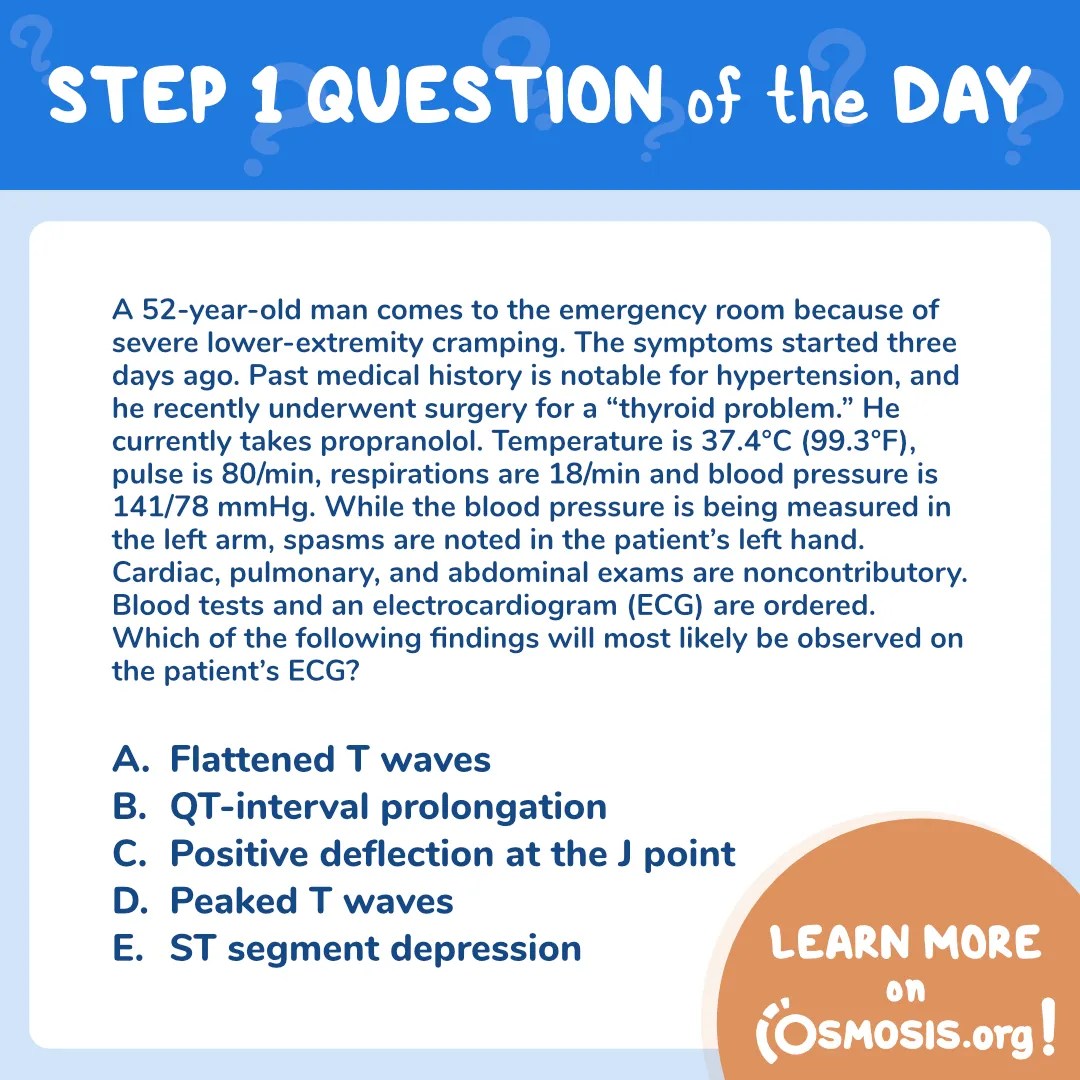
USMLE® Step 1 Question of the Day: Severe Lower-Extremity Cramping
— Updated:
This week, we are sharing another USMLE® Step 1-style practice question to test your knowledge of medical topics. Today’s case focuses on a 52-year-old man with severe lower-extremity cramping. The cramping appeared after recent thyroid surgery. Can you figure it out? A 52-year-old man comes to the emergency room because of severe…
-
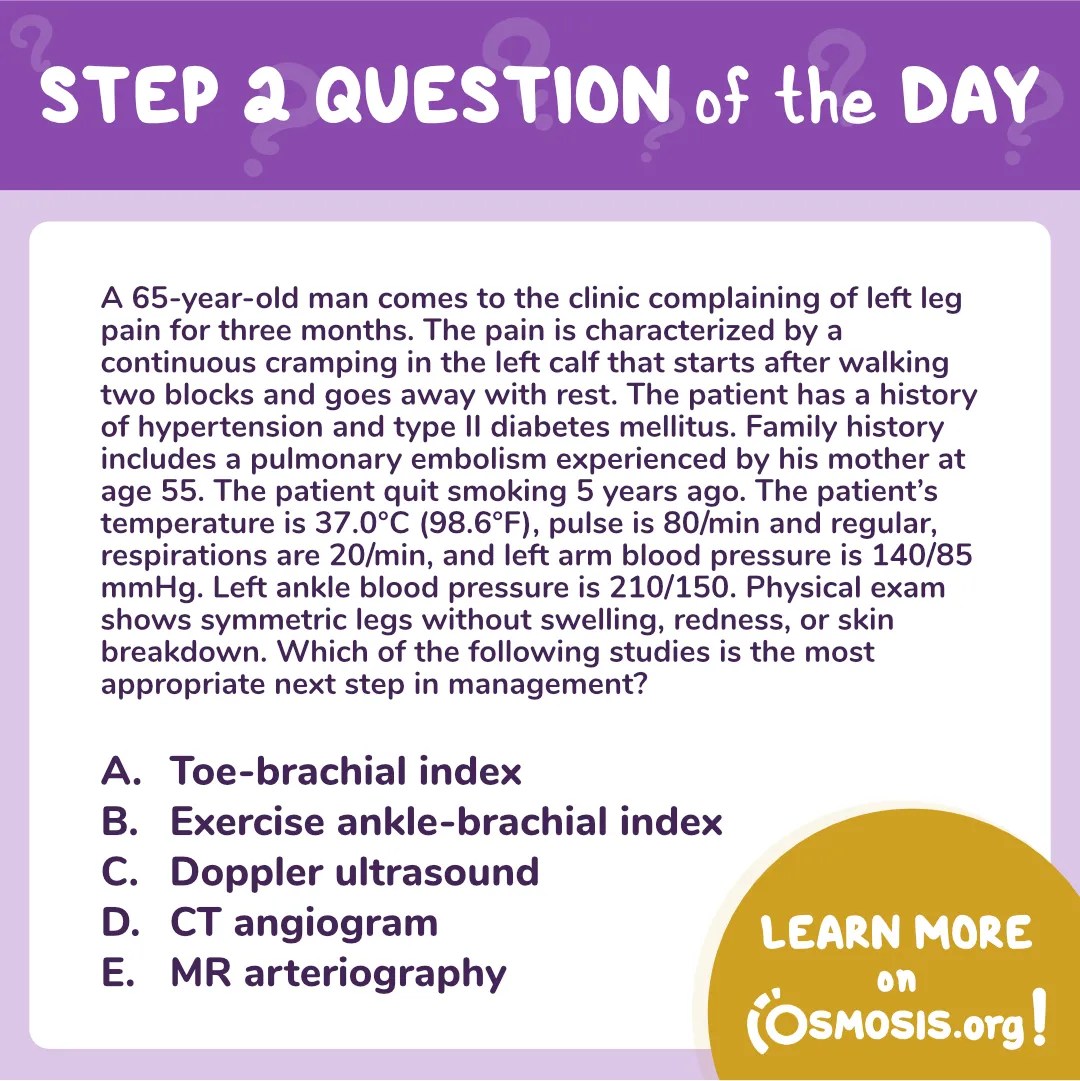
USMLE® Step 2 CK Question of the Day: Ankle-Brachial Index
— Updated:
Prep for the USMLE Step 2 CK with this case that tests you on what index is preferred in diagnosing peripheral vascular disease with calcified arteries and claudication.
-
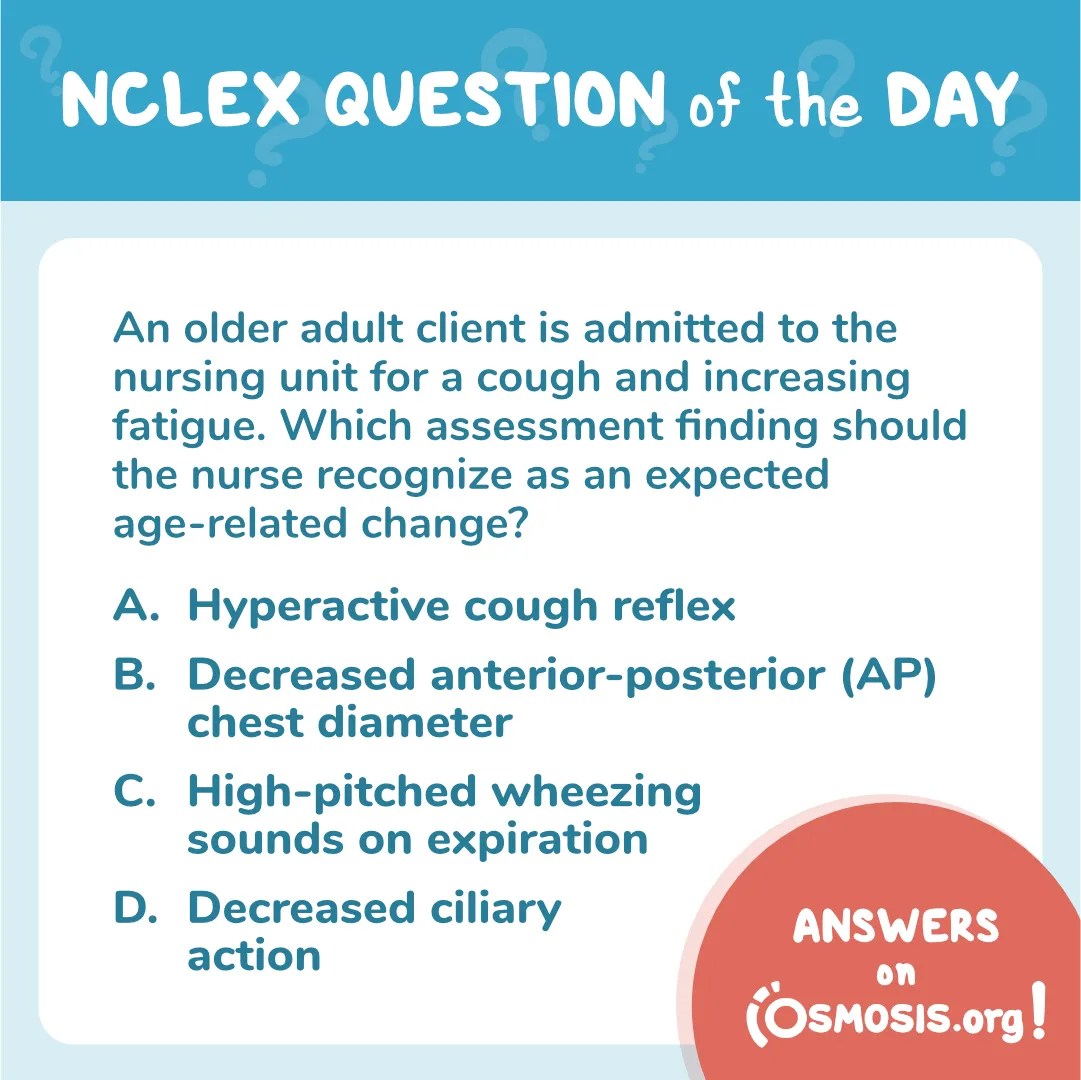
NCLEX-RN® Question of the Day: Age-related changes
— Updated:
Today’s NCLEX-RN® question of the day focuses on which assessment findings are expected to be found in older patients and which are not. An older adult client is admitted to the nursing unit for a cough and increasing fatigue. Which assessment finding should the nurse recognize as an expected age-related…
-
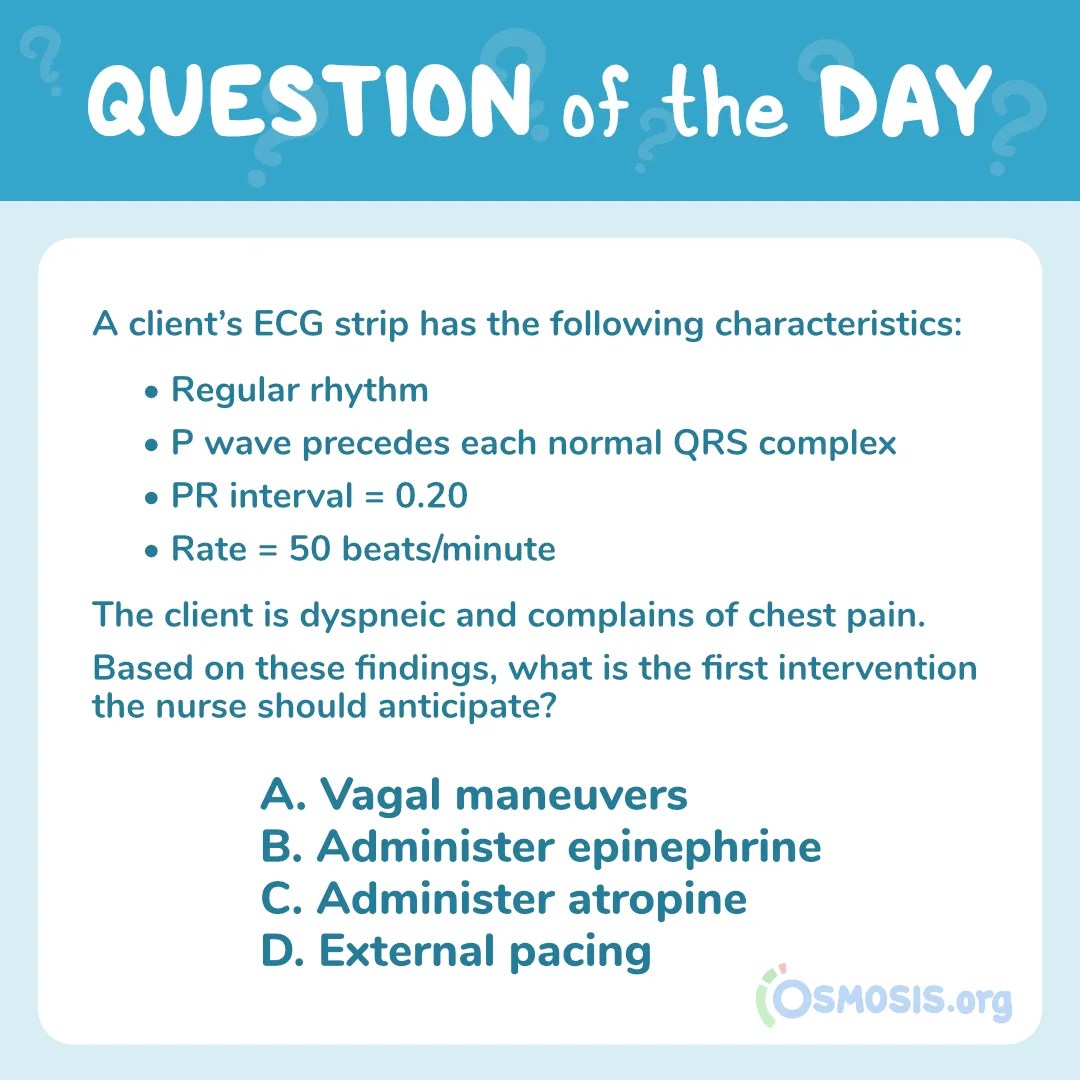
NCLEX-RN® Question of the Day: Electrocardiogram (ECG) strip
— Updated:
A patient with a slow, regular heart rhythm presents with chest pain and dyspnea. Which nursing intervention should be anticipated first?
-
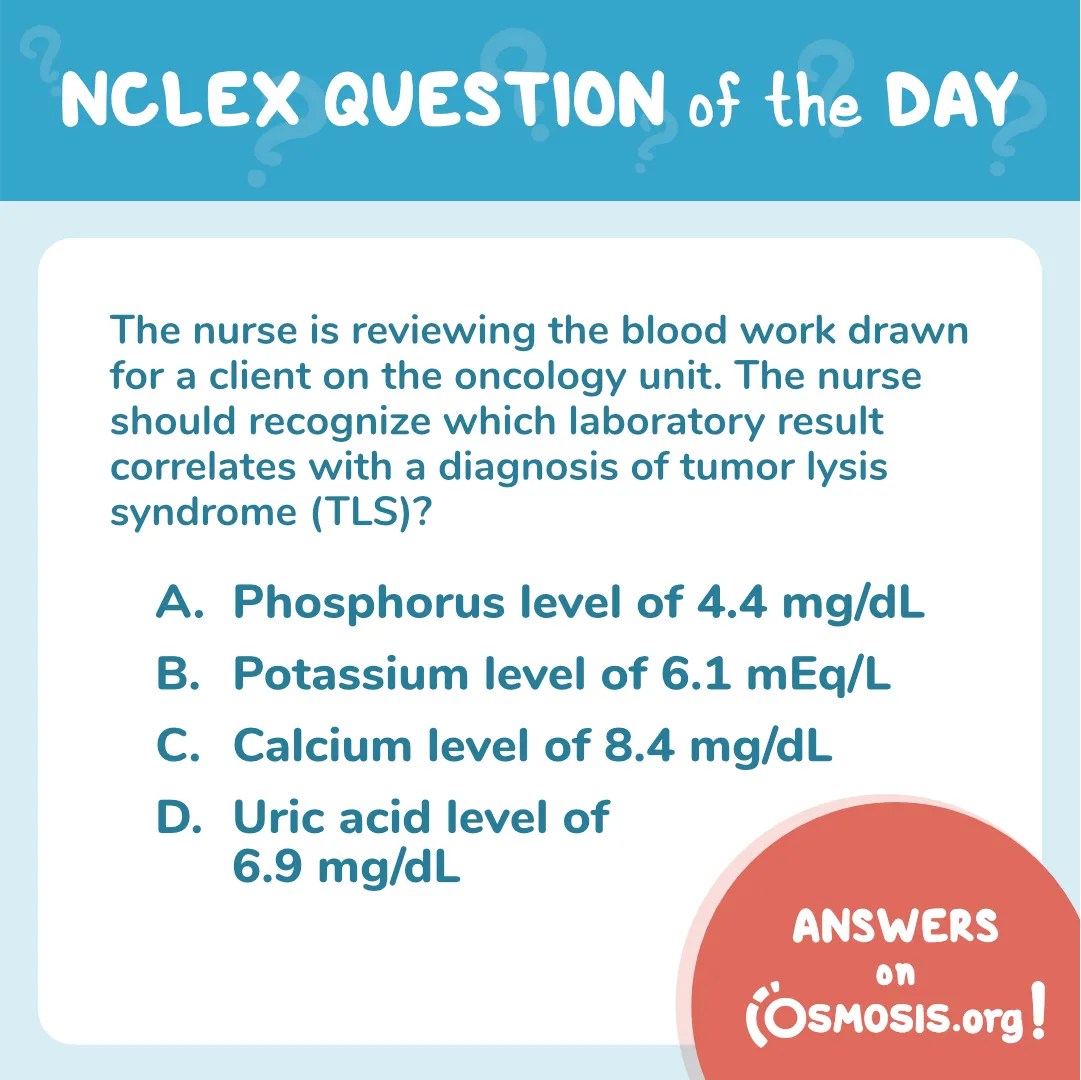
NCLEX-RN® Question of the Day: Tumor lysis syndrome (TLS)
— Updated:
Today’s NCLEX-RN® question of the day focuses on a nurse reviewing laboratory results on an oncology unit. The nurse is reviewing the blood work drawn for a client on the oncology unit. The nurse should recognize which laboratory result correlates with a diagnosis of tumor lysis syndrome (TLS)? A. Phosphorus…
-
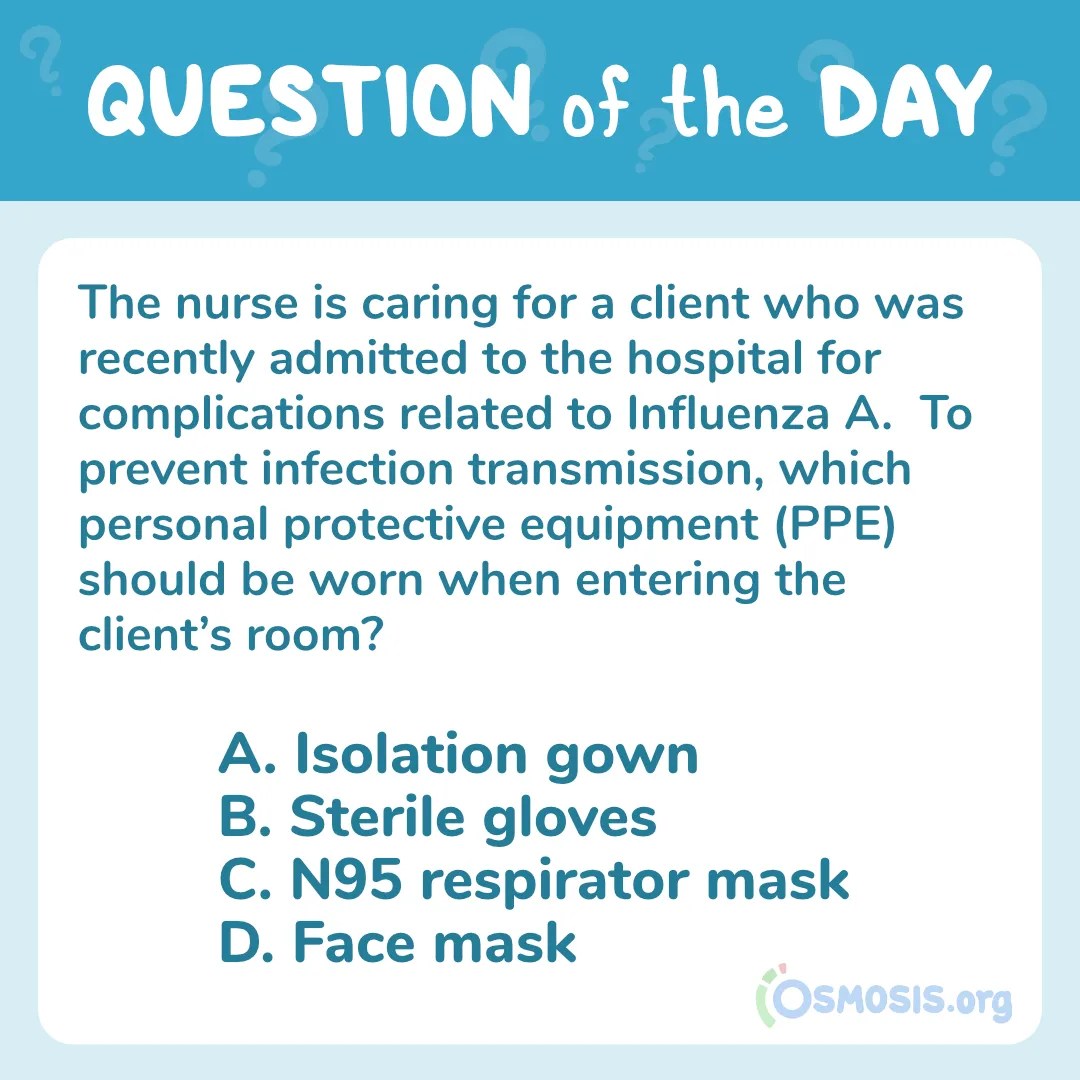
NCLEX-RN® Question of the Day: Influenza A
— Updated:
Which PPE should a nurse wear when caring for a patient with Influenza A to effectively prevent transmission of the virus?
-
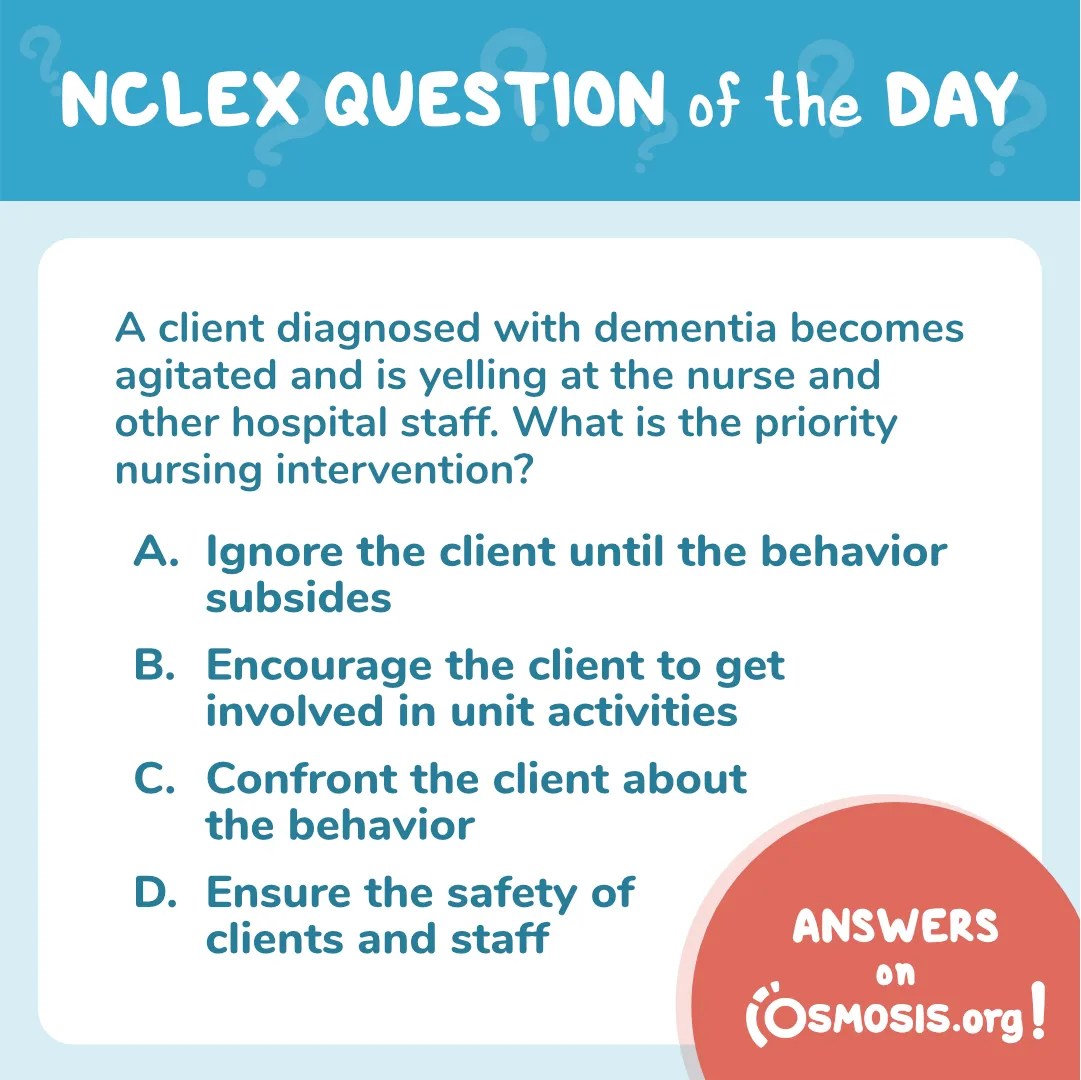
NCLEX-RN® Question of the Day: Agitated dementia client
— Updated:
Today’s NCLEX-RN® question of the day focuses on how a nurse should handle an agitated client diagnosed with dementia. The nurse in the medical-surgical unit is caring for a client diagnosed with dementia. The client becomes agitated and starts to yell at the nurse and other hospital staff. Which is…
-
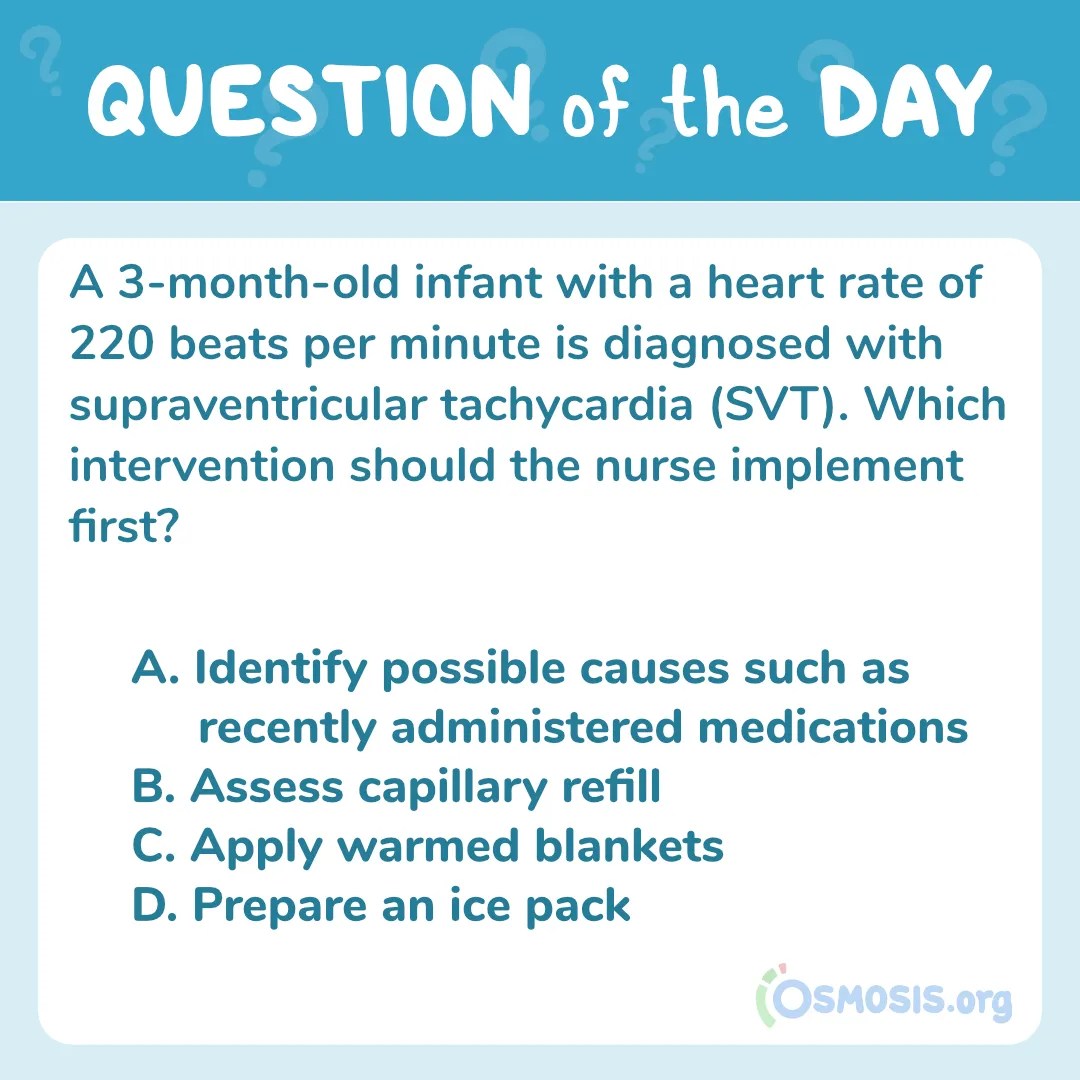
NCLEX-RN® Question of the Day: Supraventricular tachycardia (SVT) in an infant
— Updated:
Today’s NCLEX-RN® question of the day focuses on a nurse taking care of an infant with SVT. A 3-month-old infant with a heart rate of 220 beats per minute is diagnosed with supraventricular tachycardia (SVT). Which intervention should the nurse implement first? A. Identify possible causes such as recently administered medications …
-

Active Recall: The Most Effective High-Yield Learning Technique
— Updated:
Are you maximizing your study effectiveness? Many healthcare and medical students rely on familiar methods like rereading text or flashcards without realizing it’s less effective. Discover science-backed study techniques that can improve learning, boost your exam performance, and transform your study habits.
-
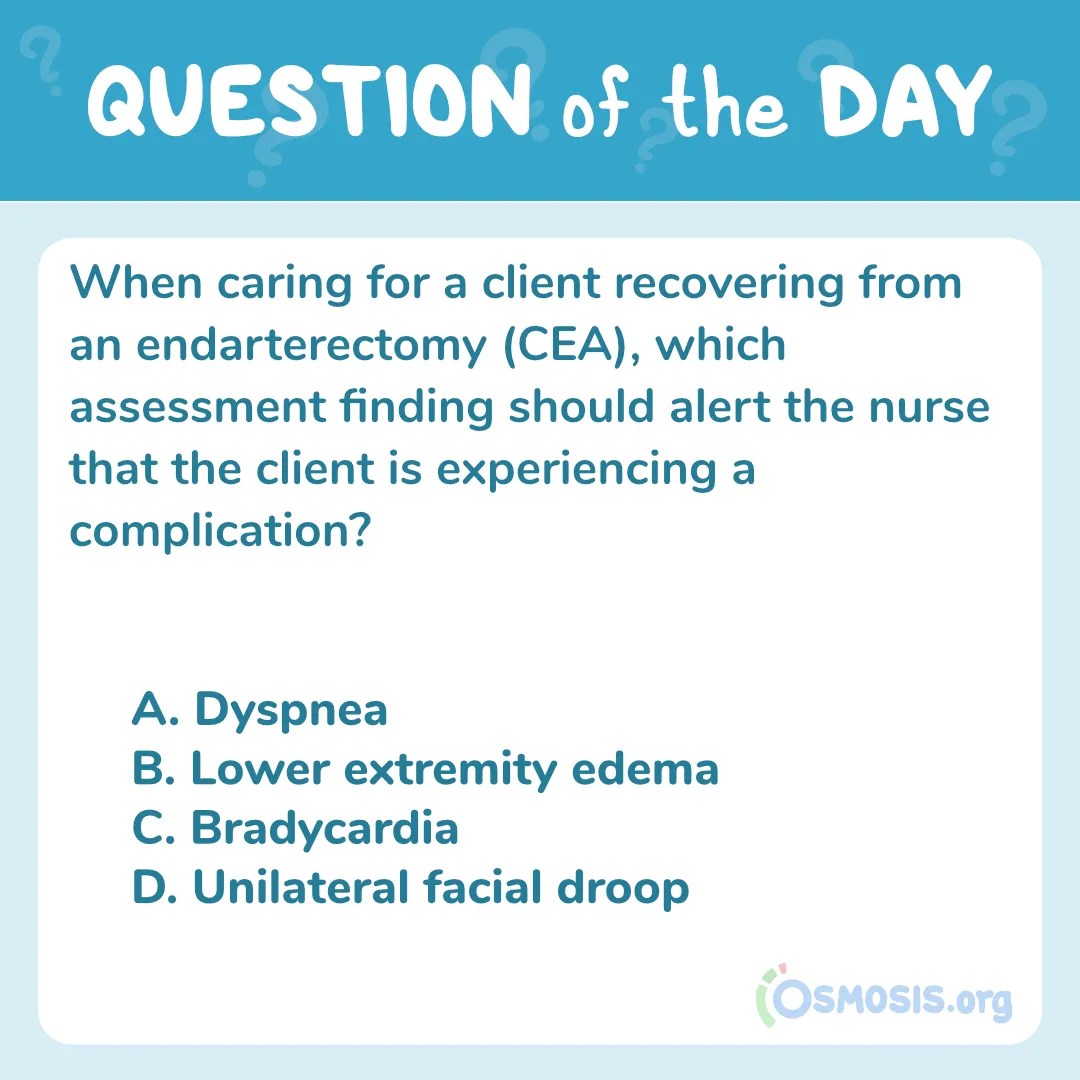
NCLEX-RN® Question of the Day: Carotid endarterectomy (CEA)
— Updated:
Today’s NCLEX-RN® question of the day focuses on a nurse taking care of a client who is recovering from a carotid endarterectomy. When caring for a client recovering from a carotid endarterectomy (CEA), which assessment finding should alert the nurse that the client is experiencing a complication? A. Dyspnea B.…
-
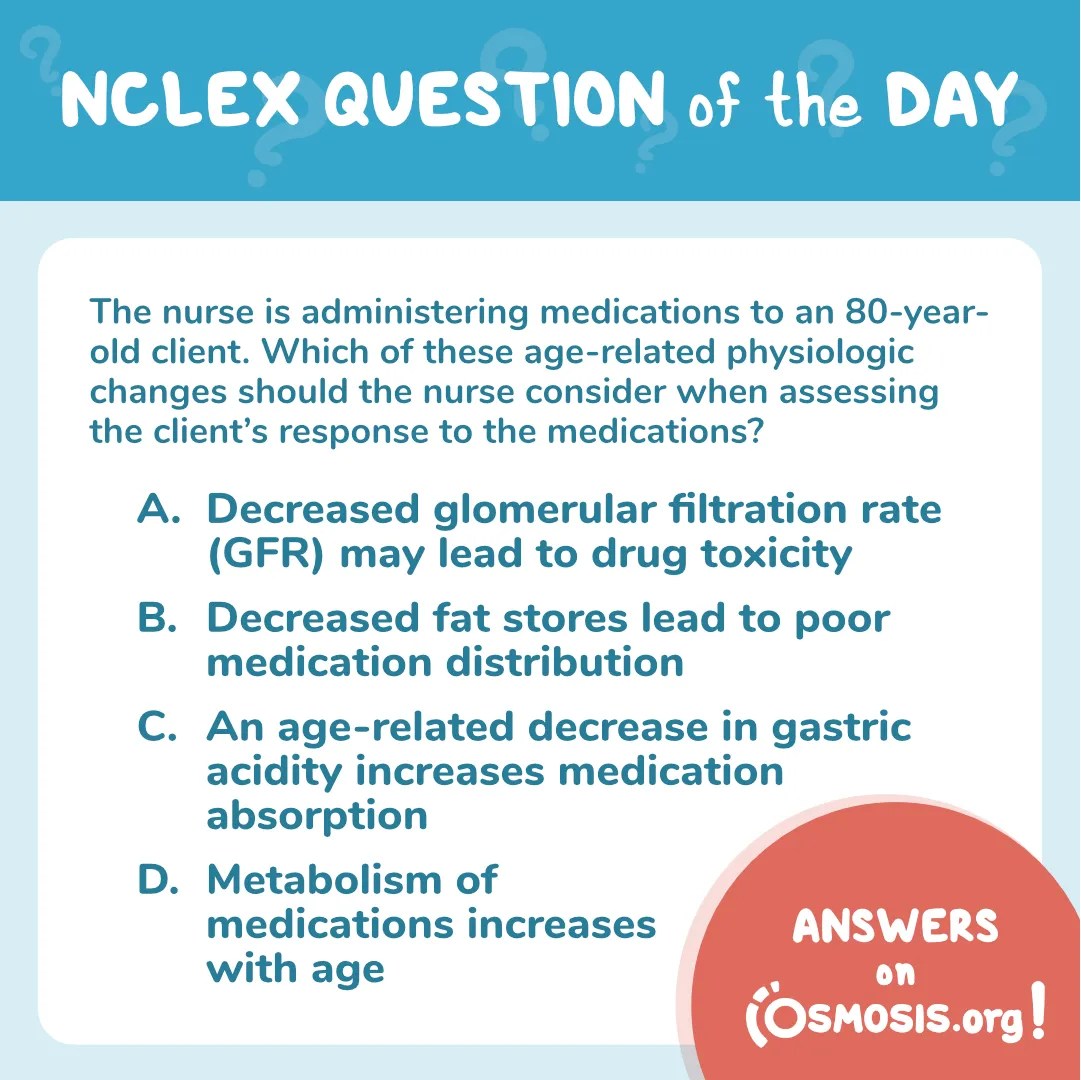
NCLEX-RN® Question of the Day: Age-related physiological changes
— Updated:
Explore an NCLEX® question on how aging impacts drug response, focusing on decreased GFR and risks of medication toxicity in elderly patients.
-
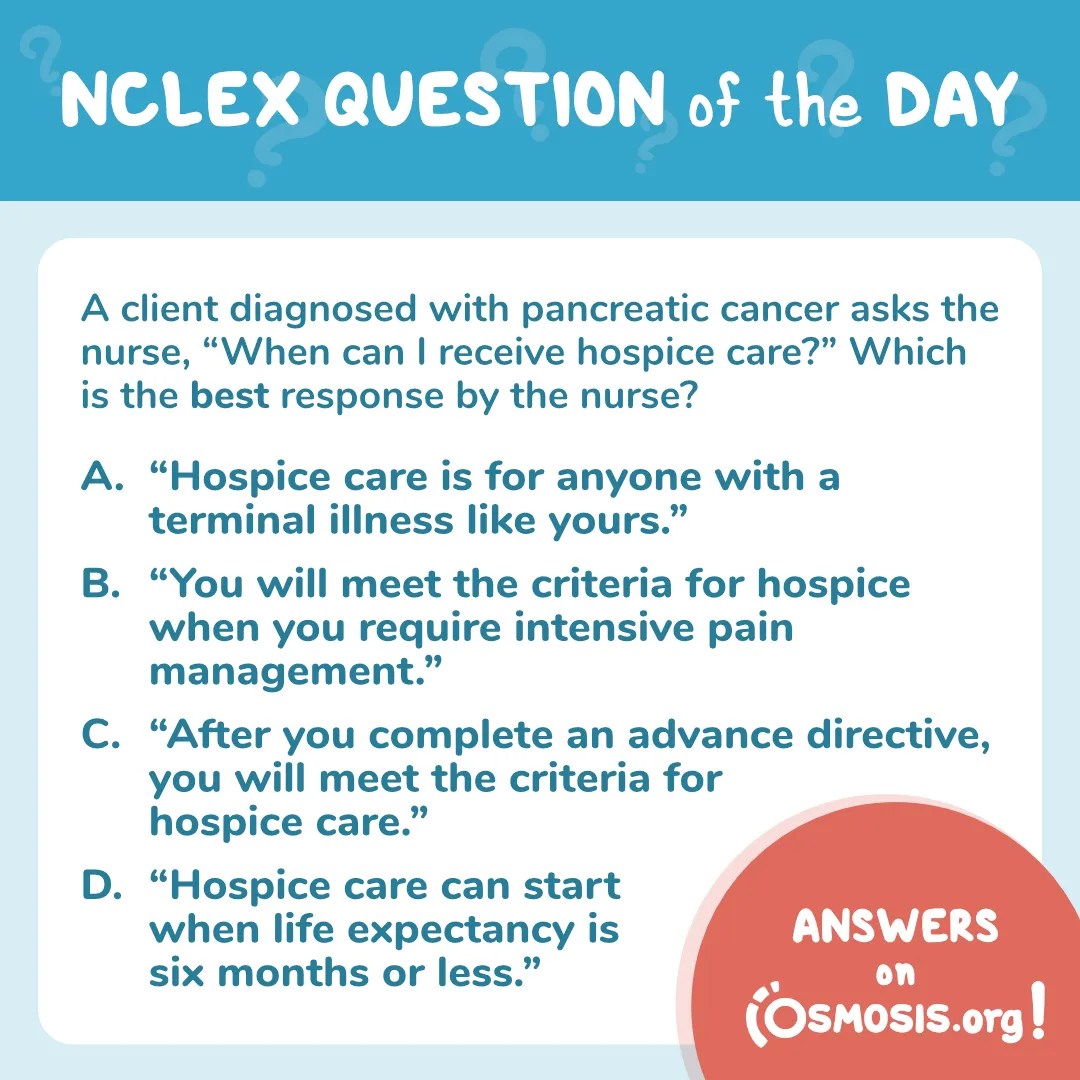
NCLEX-RN® Question of the Day: Hospice
— Updated:
Today’s NCLEX-RN® question of the day focuses on a client’s right to receive hospice care. A client diagnosed with pancreatic cancer asks the nurse, “When can I receive hospice care?” Which is the best response by the nurse? A. “Hospice care is for anyone with a terminal illness like yours.” B. “You will meet…
-
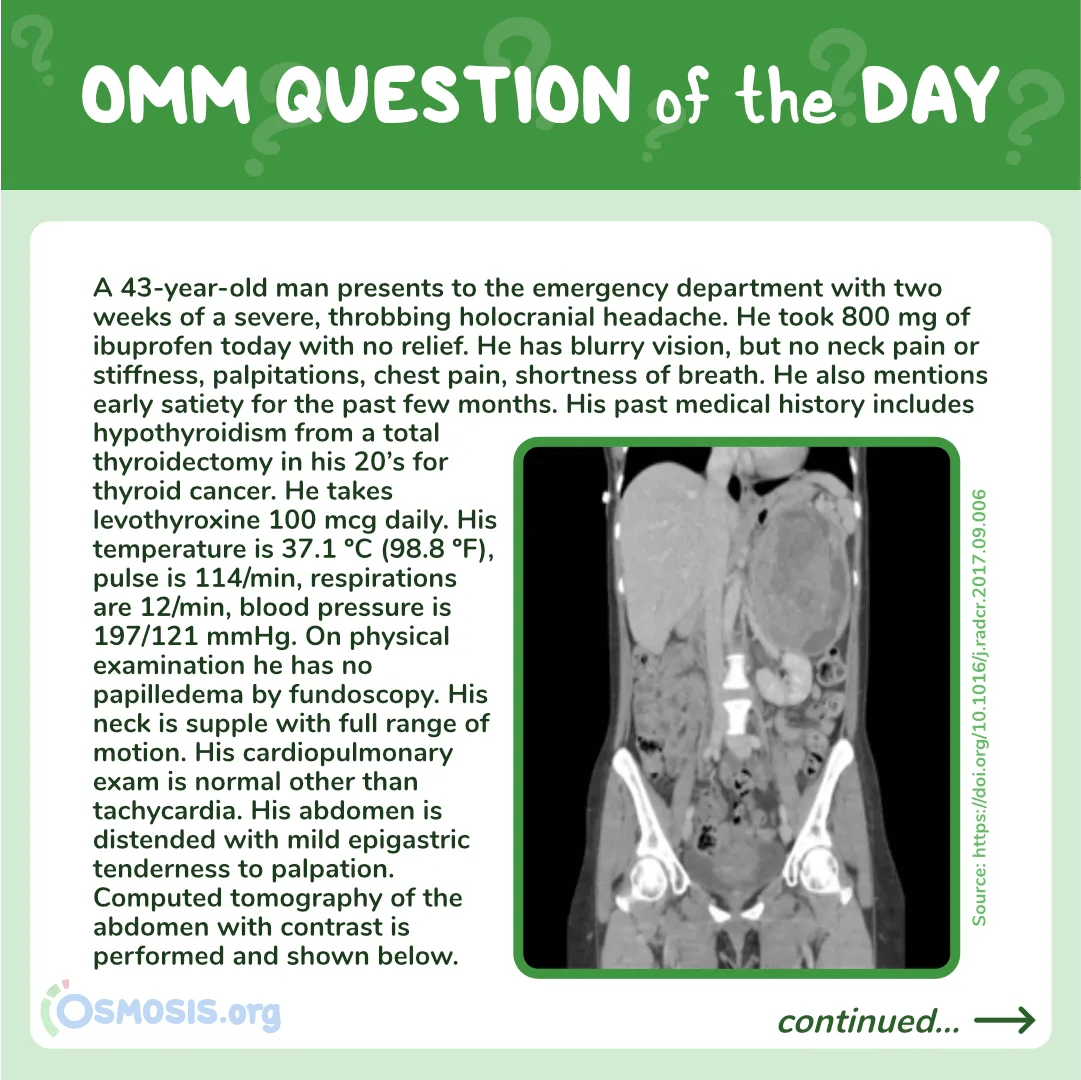
OMM Question of the Day: Chapman Points
— Updated:
Explore a clinical case presenting with headaches and tachycardia. Discover how to locate the anterior adrenal Chapman point for diagnosis and treatment.
-
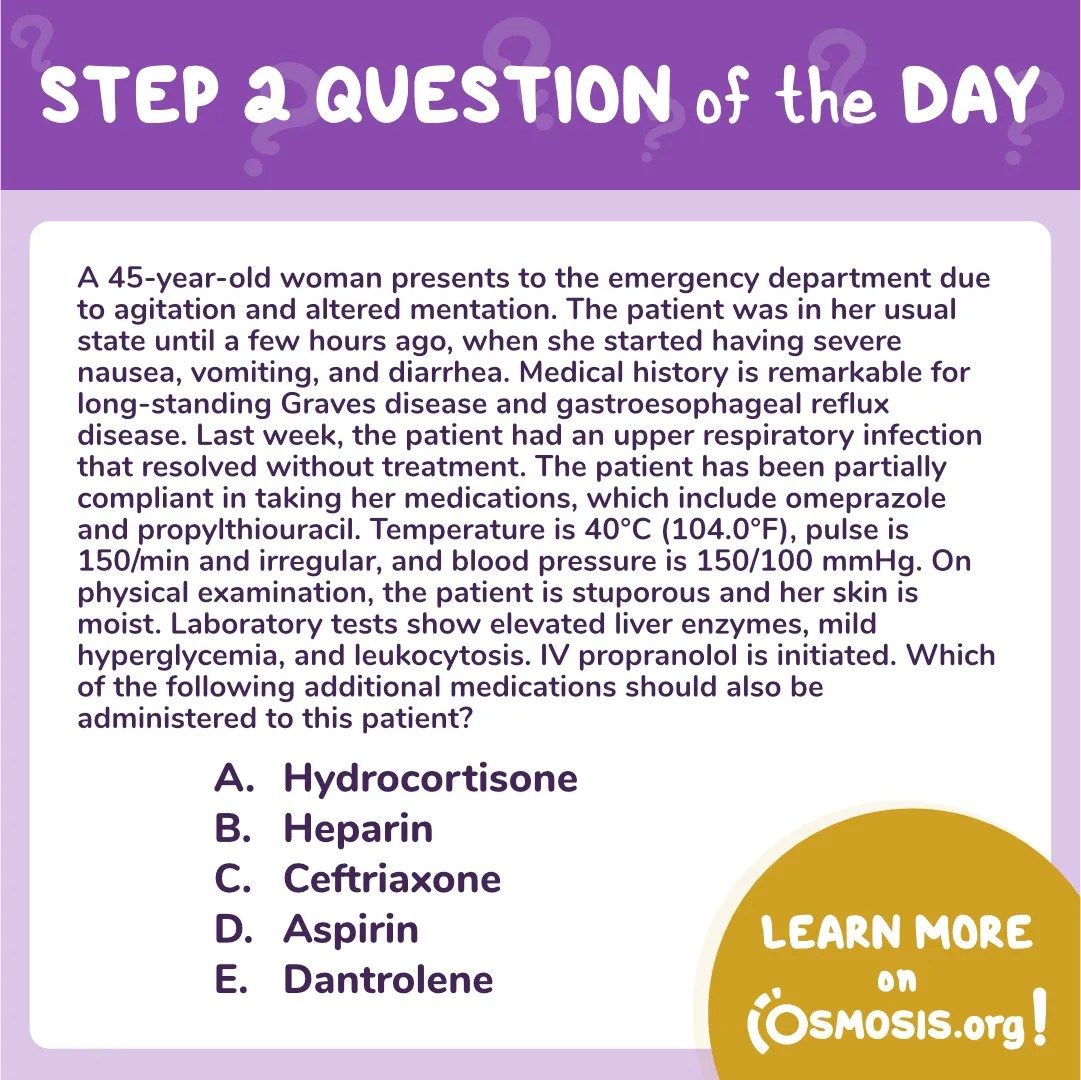
USMLE® Step 2 CK Question of the Day: Thyroid Storm
— Updated:
Here’s another USMLE® Step 2 CK Question of the Day! Today’s case involves a 45-year-old woman with altered mental status, nausea, vomiting, and diarrhea. Medical history is remarkable for long-standing Graves disease and gastroesophageal reflux disease. IV propranolol is initiated. Which additional medications should also be administered to this patient? A 45-year-old woman presents…
-
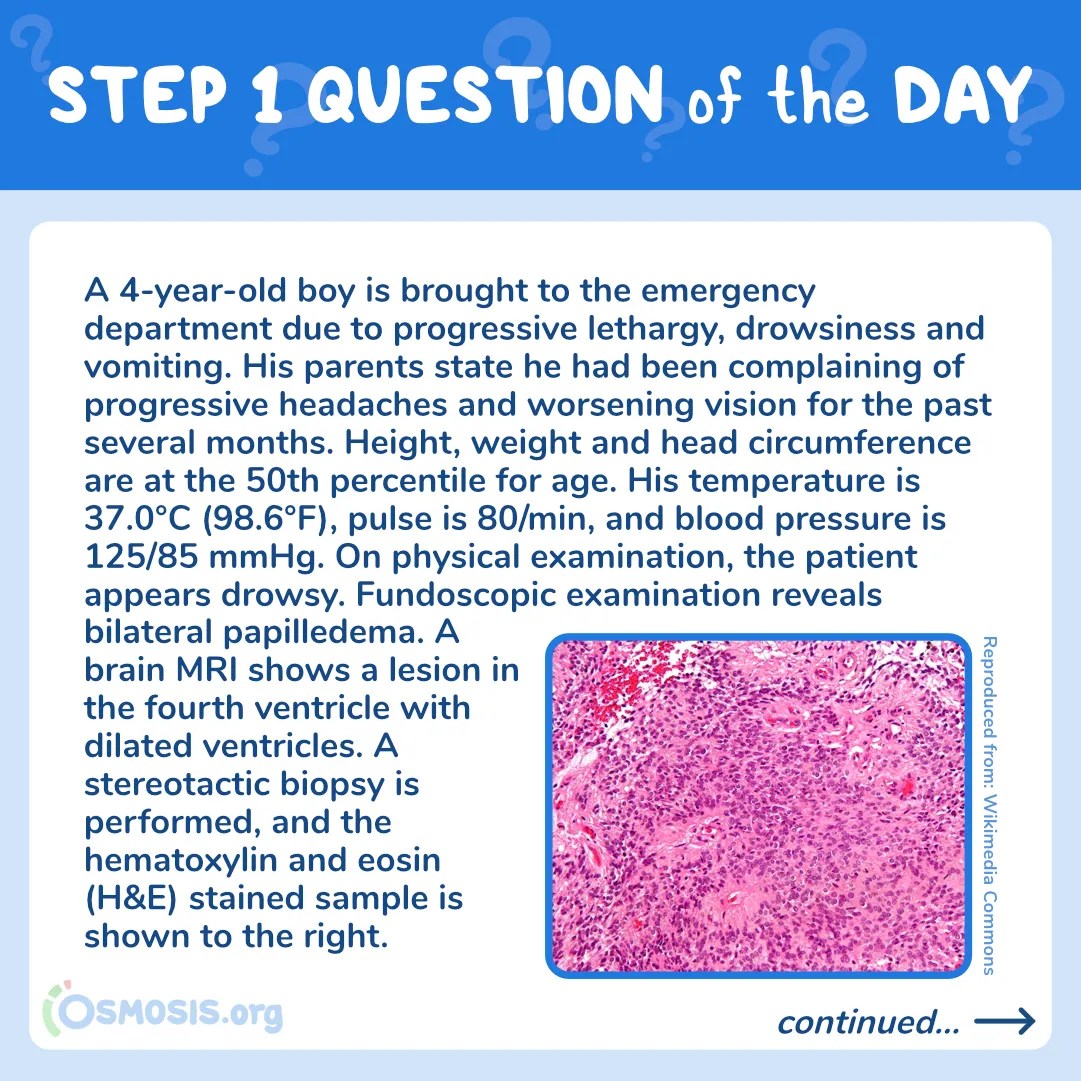
USMLE® Step 1 Question of the Day: Progressive Lethargy
— Updated:
Each week, Osmosis shares a USMLE® Step 1-style practice question to test your knowledge of medical topics. Today’s case involves a 4-year-old boy with progressive lethargy, headaches, and worsening vision. A brain MRI shows a lesion in the fourth ventricle with dilated ventricles. Can you figure the most likely diagnosis? A…
-
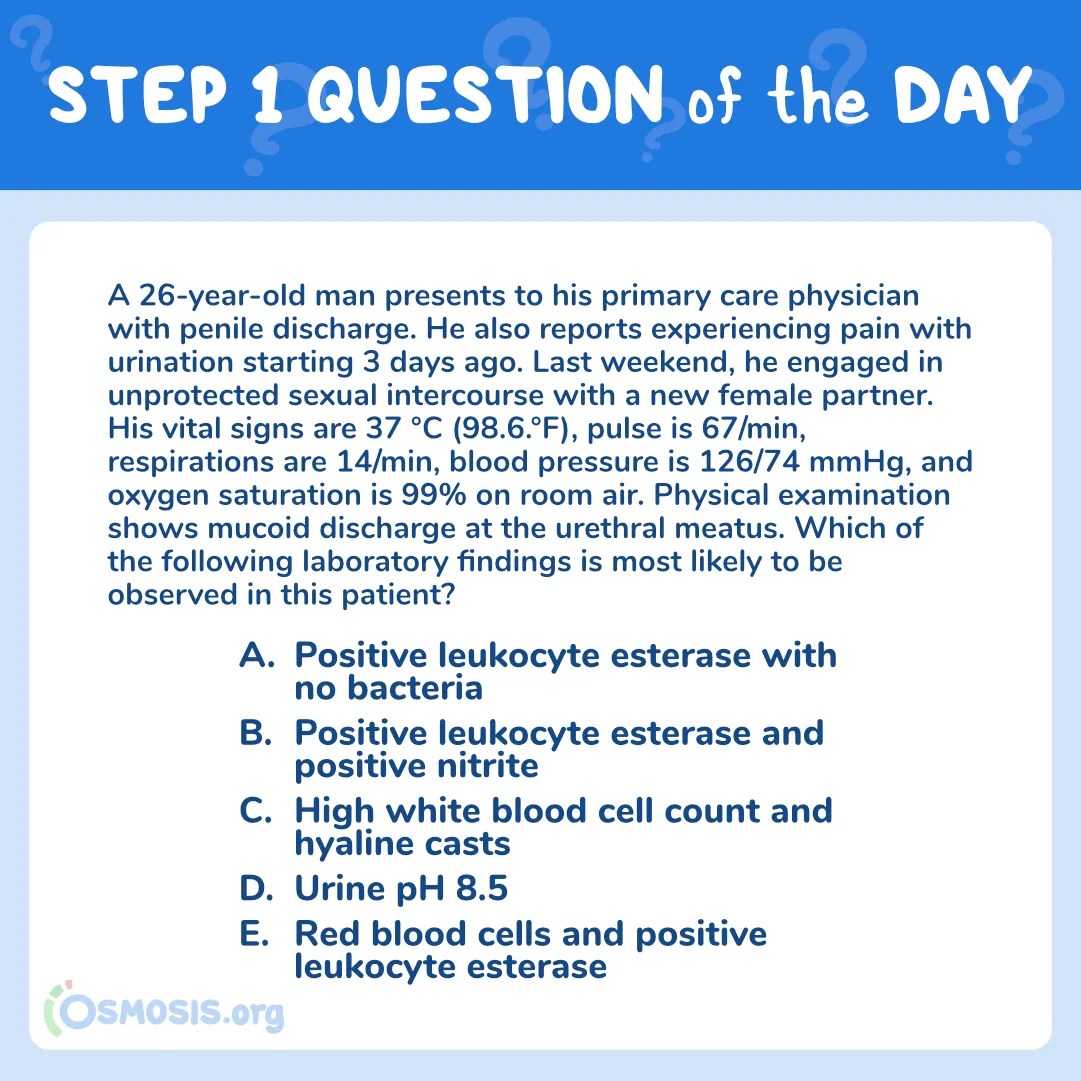
USMLE® Step 1 Question of the Day: Urethritis
— Updated:
Each week, Osmosis shares a USMLE® Step 1-style practice question to test your knowledge of medical topics. Today’s case focuses on a 26-year-old man with penile discharge and urination pain after engaging in unprotected sexual intercourse. Can you figure it out? A 26-year-old man presents to his primary care physician with…
-
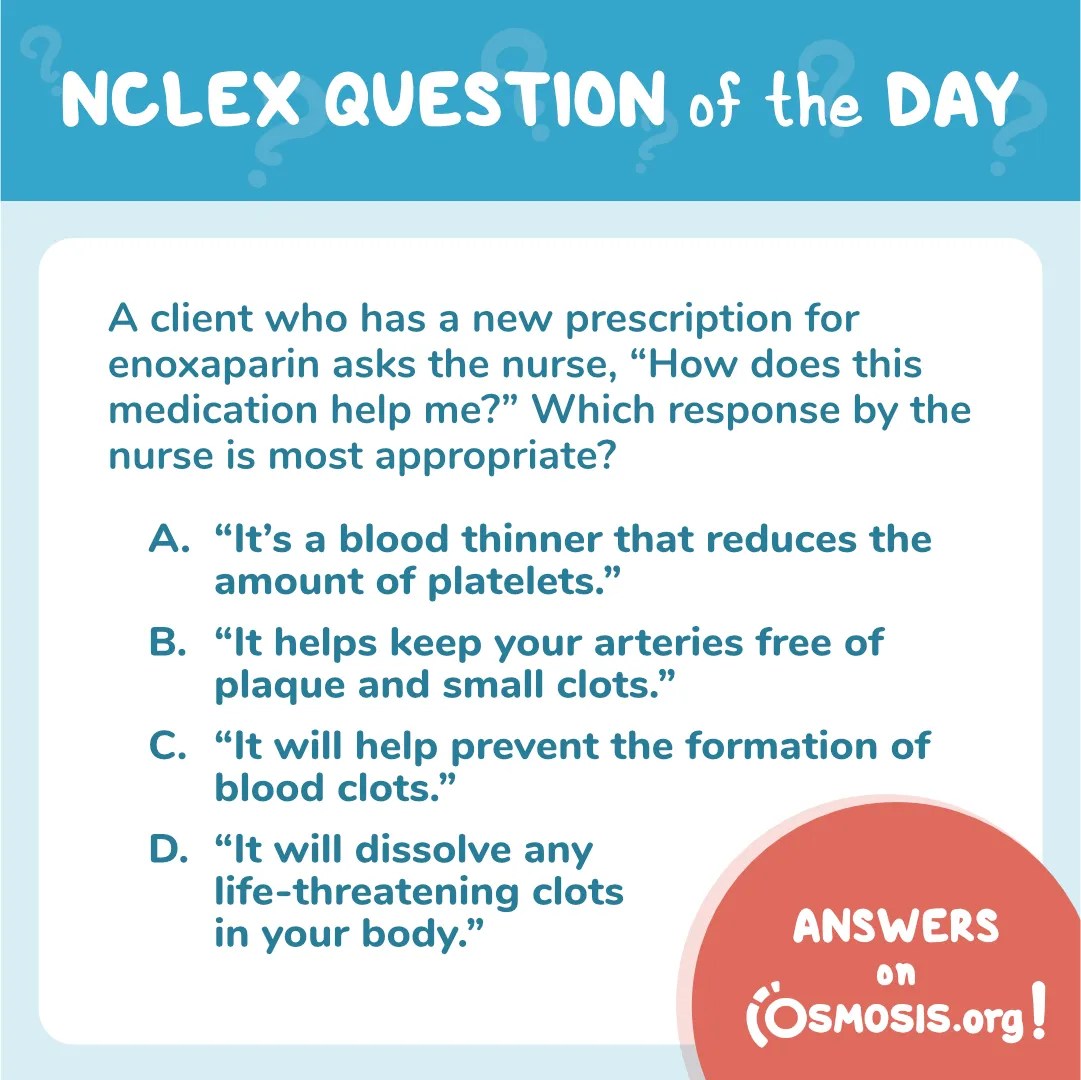
NCLEX-RN® Question of the Day: Enoxaparin
— Updated:
How does enoxaparin help patients? Understand its role in preventing blood clots without dissolving existing ones or affecting platelets.
-
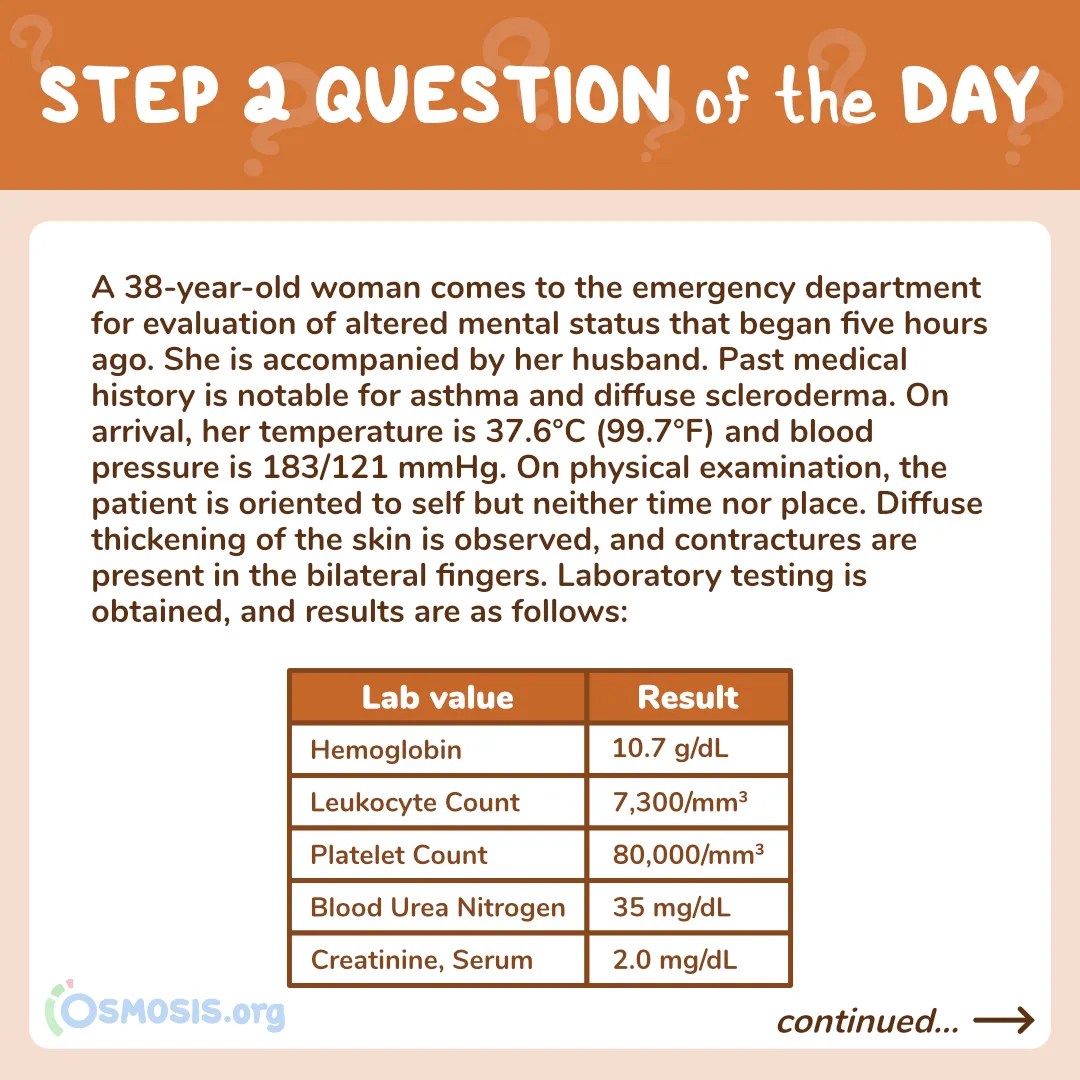
USMLE® Step 2 CK Question of the Day: Scleroderma Renal Crisis
— Updated:
A 38-year-old woman comes to the emergency department for evaluation of altered mental status that began five hours ago. She is accompanied by her husband. Past medical history is notable for asthma and diffuse scleroderma. On arrival, her temperature is 37.6°C (99.7°F) and blood pressure is 183/121 mmHg. On physical…
-
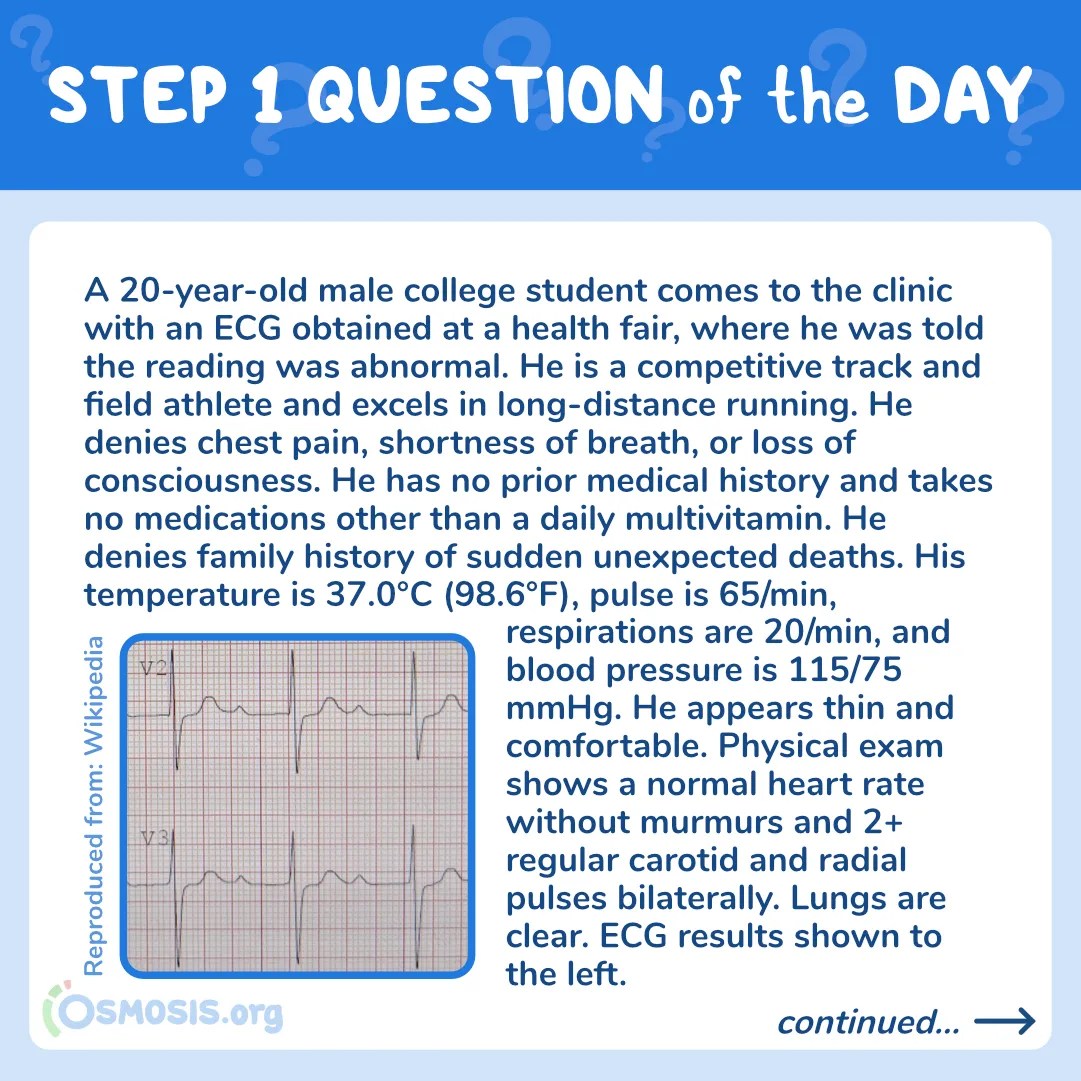
USMLE® Step 1 Question of the Day: AV Block
— Updated:
Each week, Osmosis shares a USMLE® Step 1-style practice question to test your knowledge of medical topics. Today’s case involves a 20-year-old male patient with a seemingly abnormal ECG reading. Can you figure it out? A 20-year-old male college student comes to the clinic with an ECG obtained at a health…
-
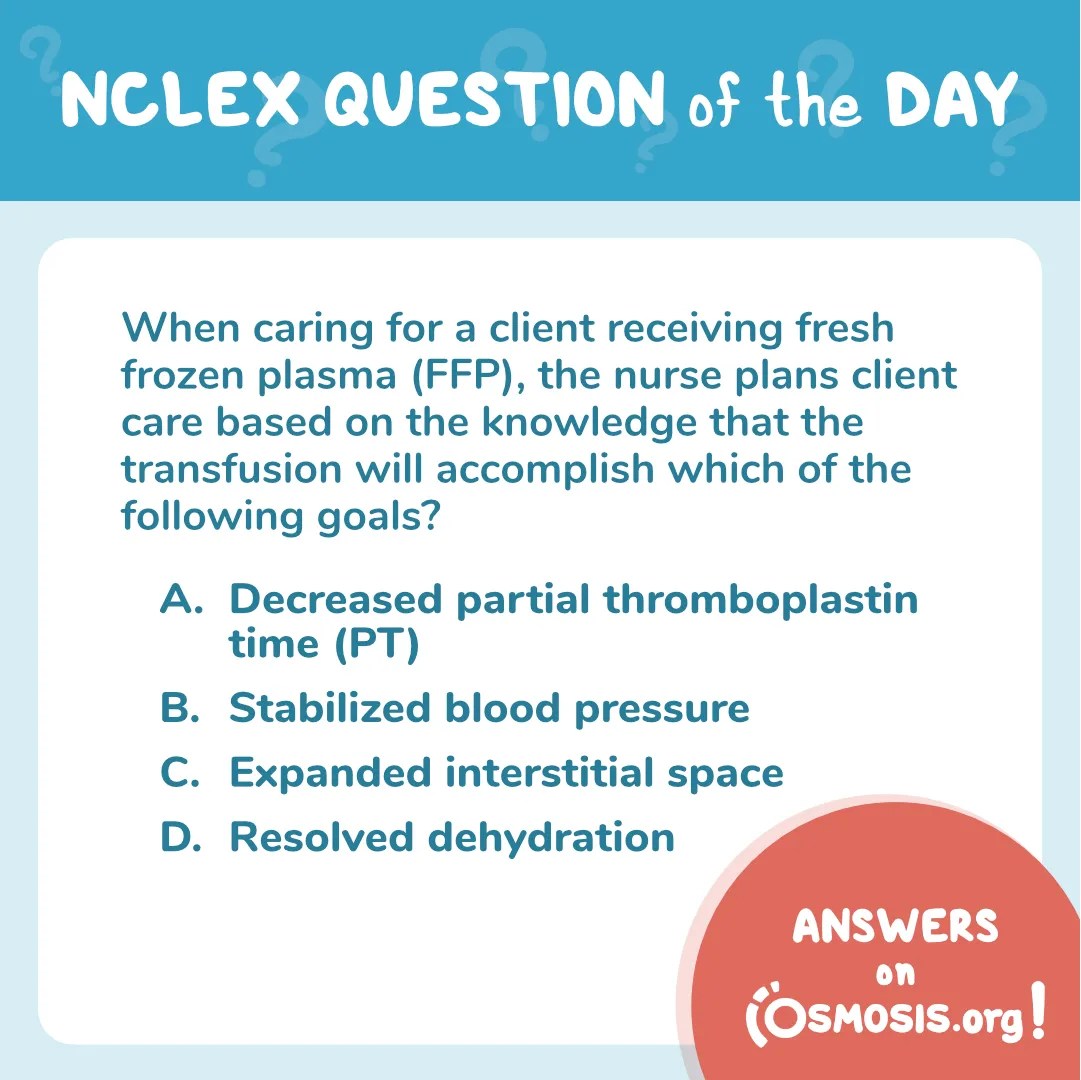
NCLEX-RN® Question of the Day: Fresh frozen plasma
— Updated:
Today’s NCLEX-RN® question of the day focuses on a client receiving fresh frozen plasma (FFP). When caring for a client receiving fresh frozen plasma (FFP), the nurse plans client care based on the knowledge that the transfusion will accomplish which of the following goals? A. Decreased partial thromboplastin time (PT)…
-
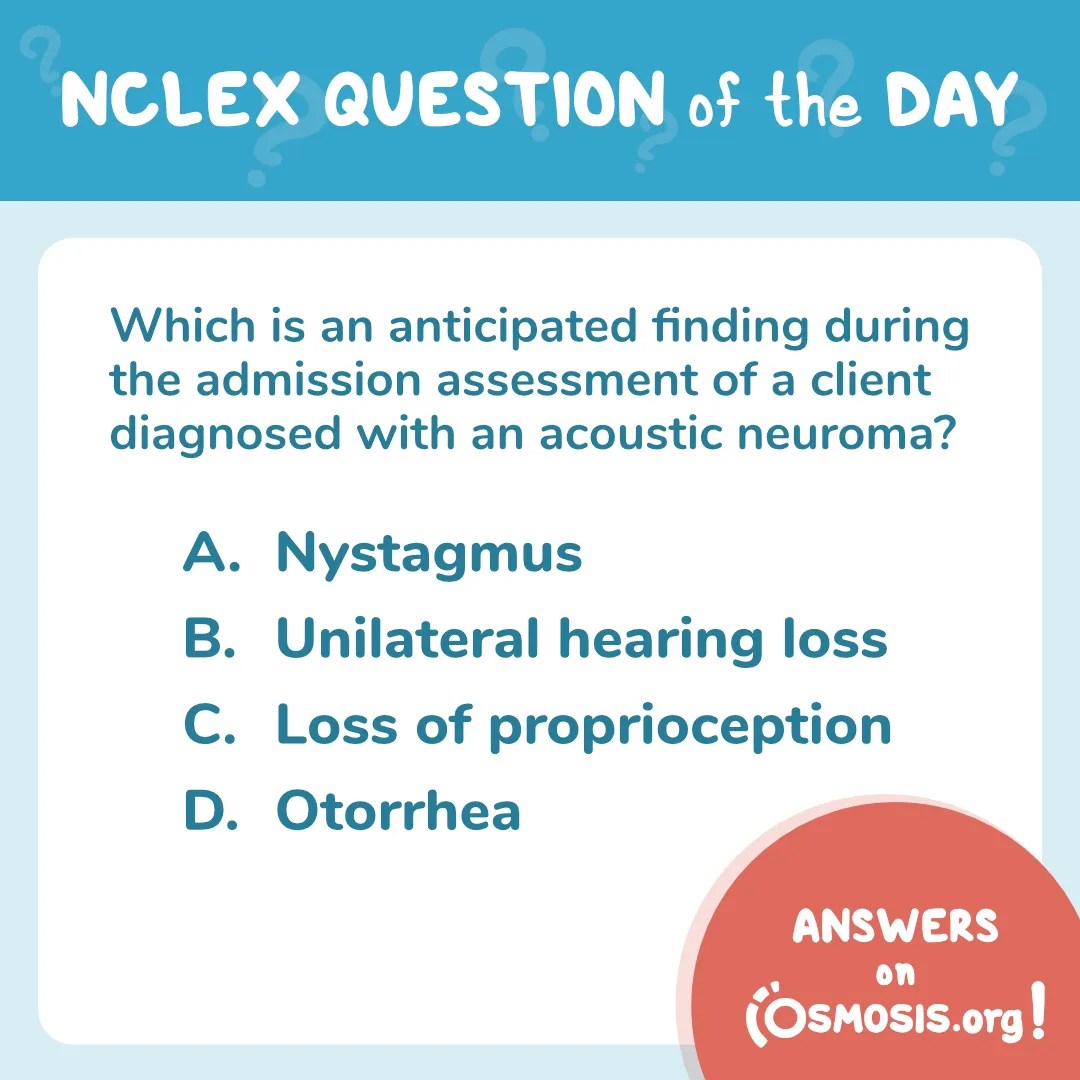
NCLEX-RN® Question of the Day: Acoustic neuroma
— Updated:
Which is an anticipated finding during the admission assessment of a client diagnosed with an acoustic neuroma? A. Nystagmus B. Unilateral hearing loss C. Loss of proprioception D. Otorrhea Scroll down for the correct answer! The correct answer to today’s NCLEX-RN® Question is… B. Unilateral hearing loss Rationale: Unilateral hearing loss…