
Category: NCLEX
-
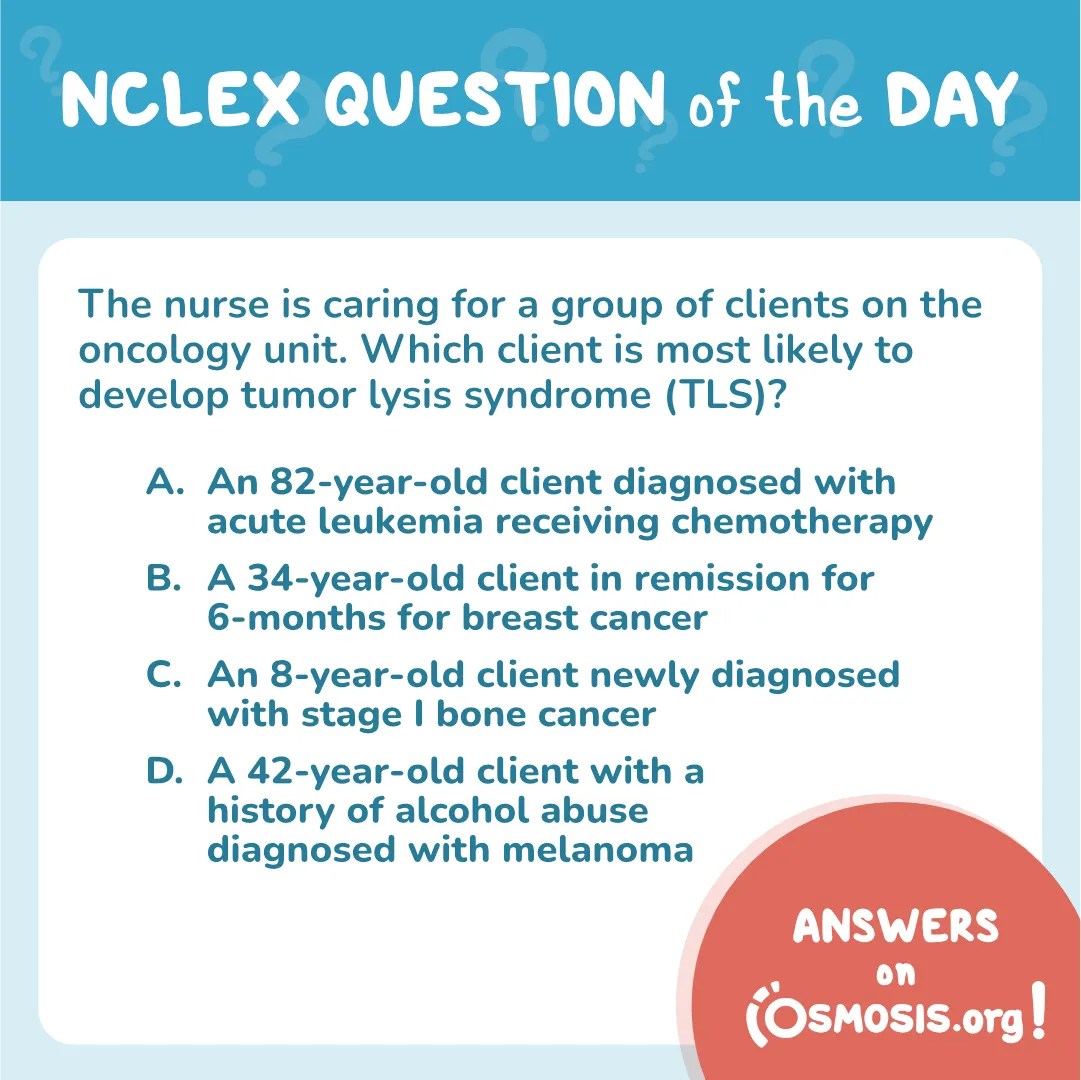
NCLEX-RN® Question of the Day: Tumor lysis syndrome (TLS)
— Updated:
Today’s NCLEX-RN® question of the day focuses on a nurse caring for a group of clients in the oncology unit. Which client is most likely to develop tumor lysis syndrome (TLS)? Can you figure it out? The nurse is caring for a group of clients on the oncology unit. Which client…
-
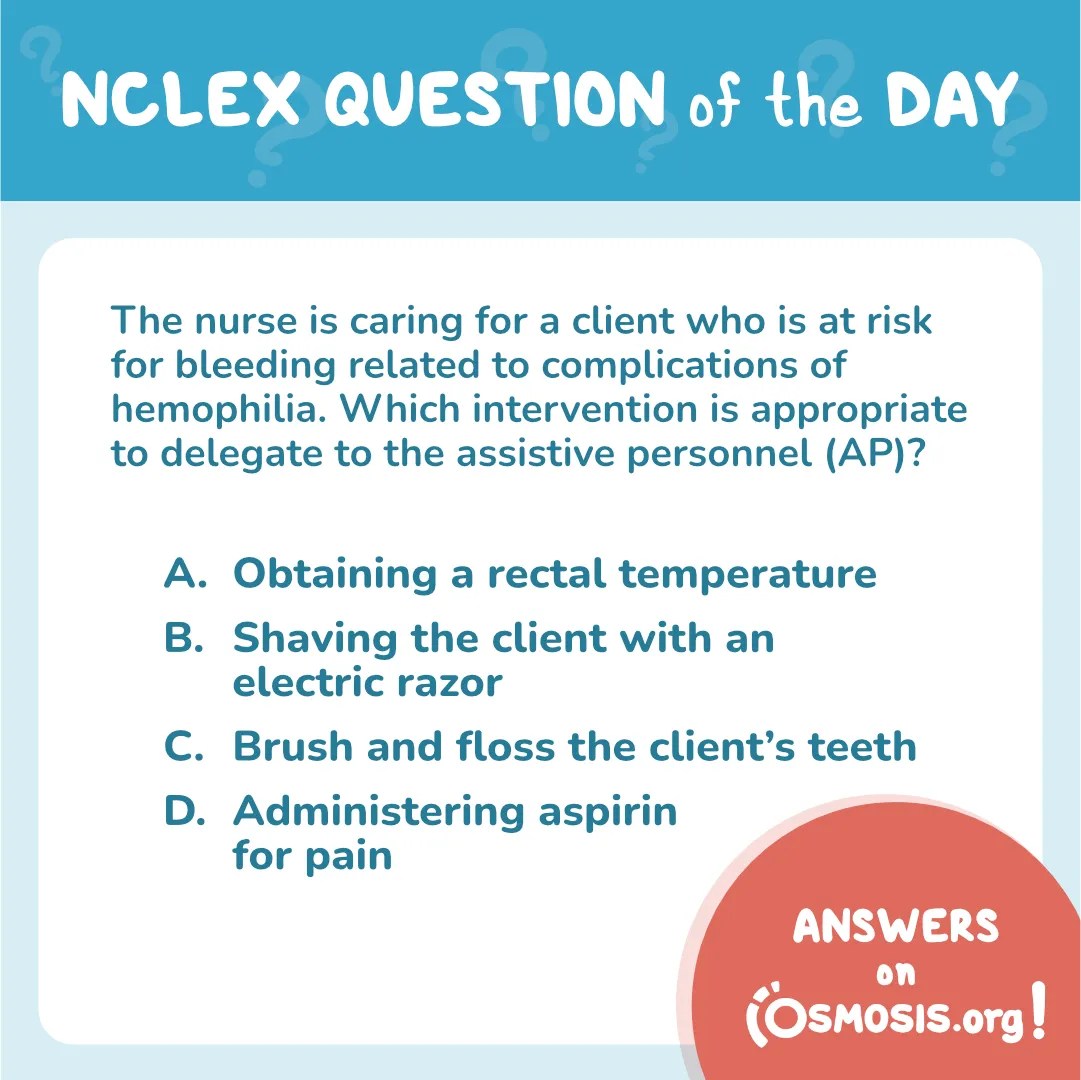
NCLEX-RN® Question of the Day: Hemophilia
— Updated:
Today’s NCLEX-RN® question of the day focuses on a client who is at risk for bleeding related to complications of hemophilia. Which intervention is appropriate to delegate to the assistive personnel (AP)? Can you figure it out? The nurse is caring for a client who is at risk for bleeding related…
-
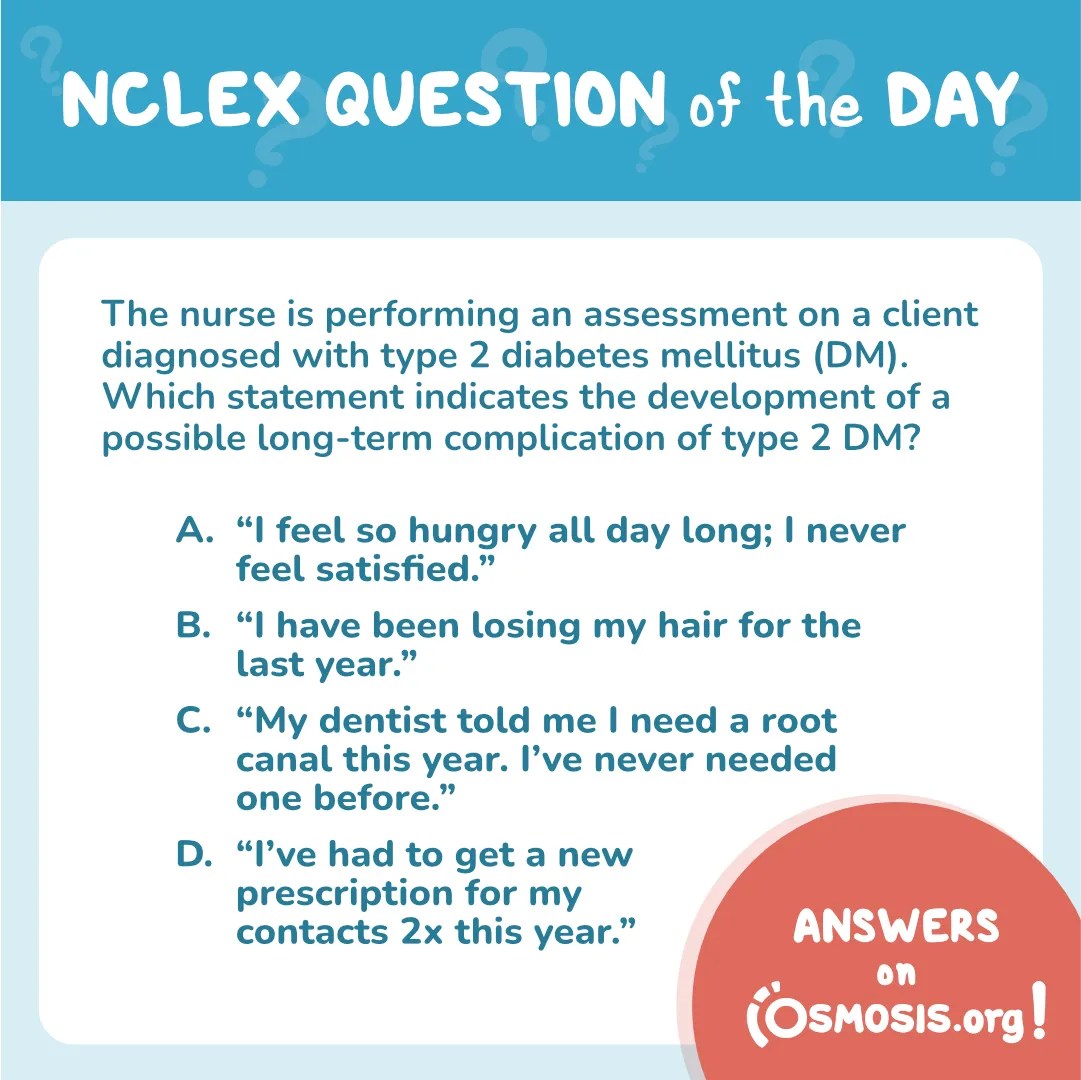
NCLEX-RN® Question of the Day: Type 2 diabetes mellitus
— Updated:
Which laboratory test provides the most accurate insight into a client’s adherence to their Type 2 diabetes treatment regimen over several months?
-
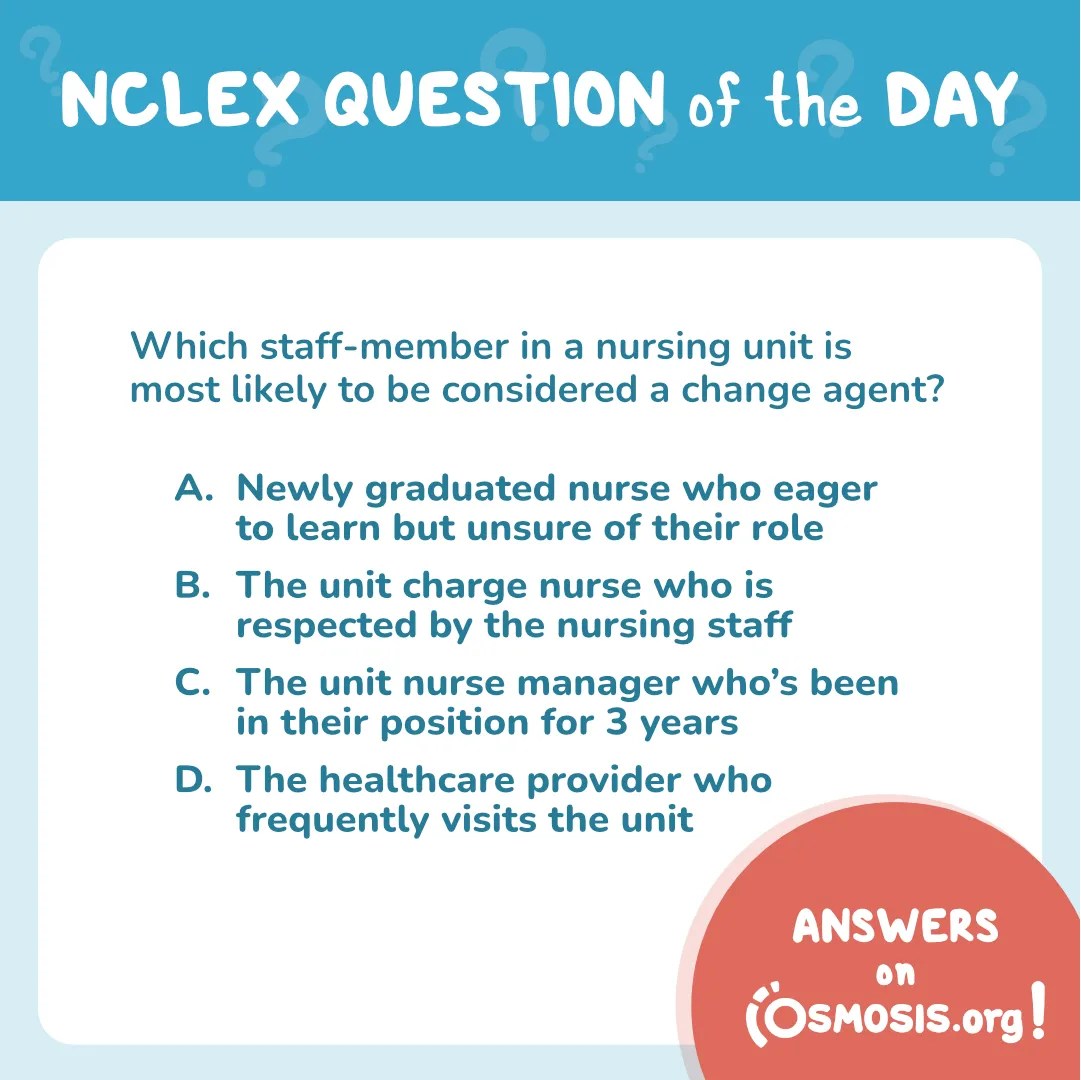
NCLEX-RN® Question of the Day: Change agent
— Updated:
Today’s NCLEX-RN® question of the day focuses on a staff that is most likely to be considered a change agent. Can you figure it out? Which staff-member in a nursing unit is most likely to be considered a change agent? A. Newly graduated nurse who eager to learn but unsure…
-
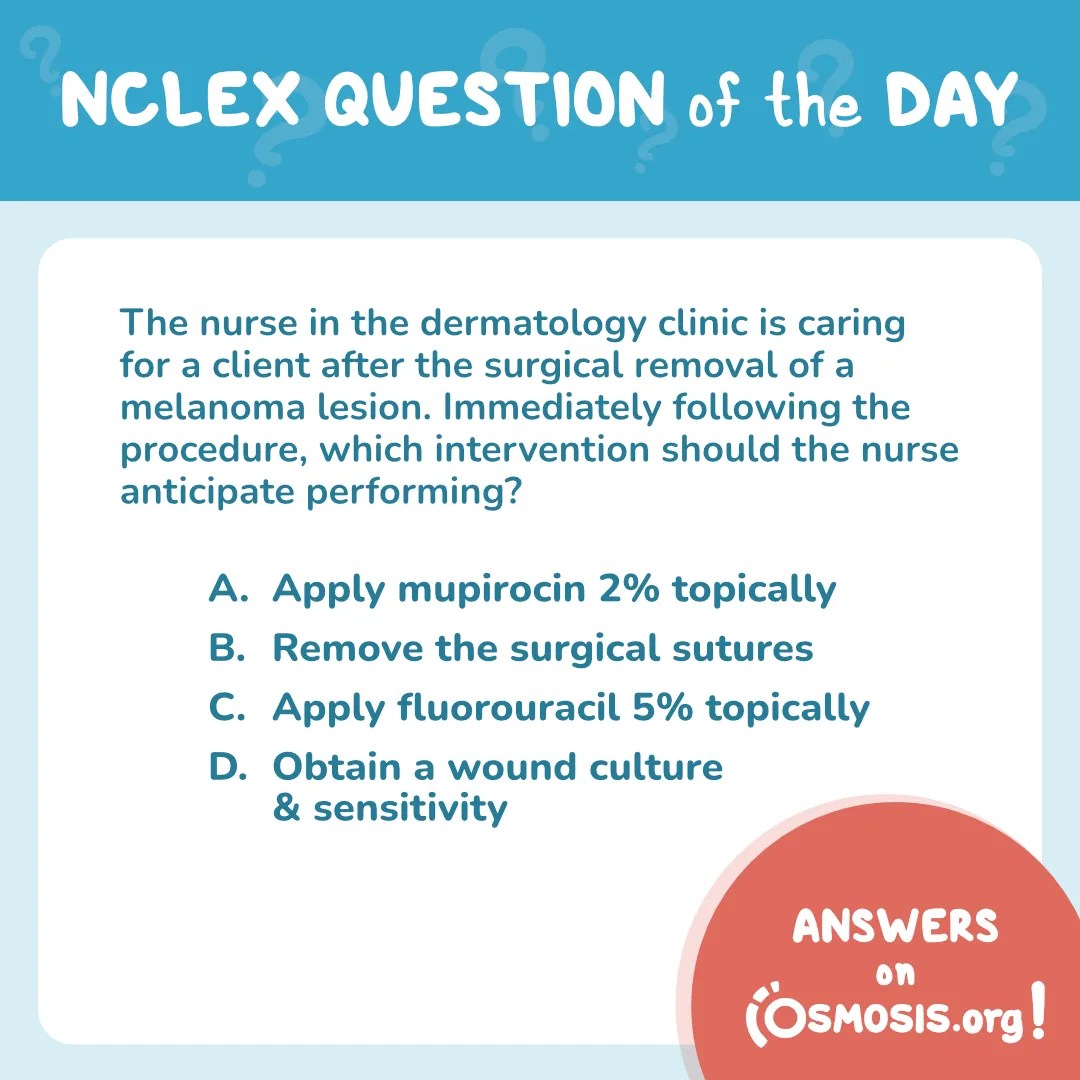
NCLEX-RN® Question of the Day: Melanoma lesion
— Updated:
Today’s NCLEX-RN® question of the day focuses on a client who had undergone a melanoma lesion removal. After the procedure, which intervention should the nurse anticipate performing? Can you figure it out? The nurse in the dermatology clinic is caring for a client after the surgical removal of a melanoma…
-
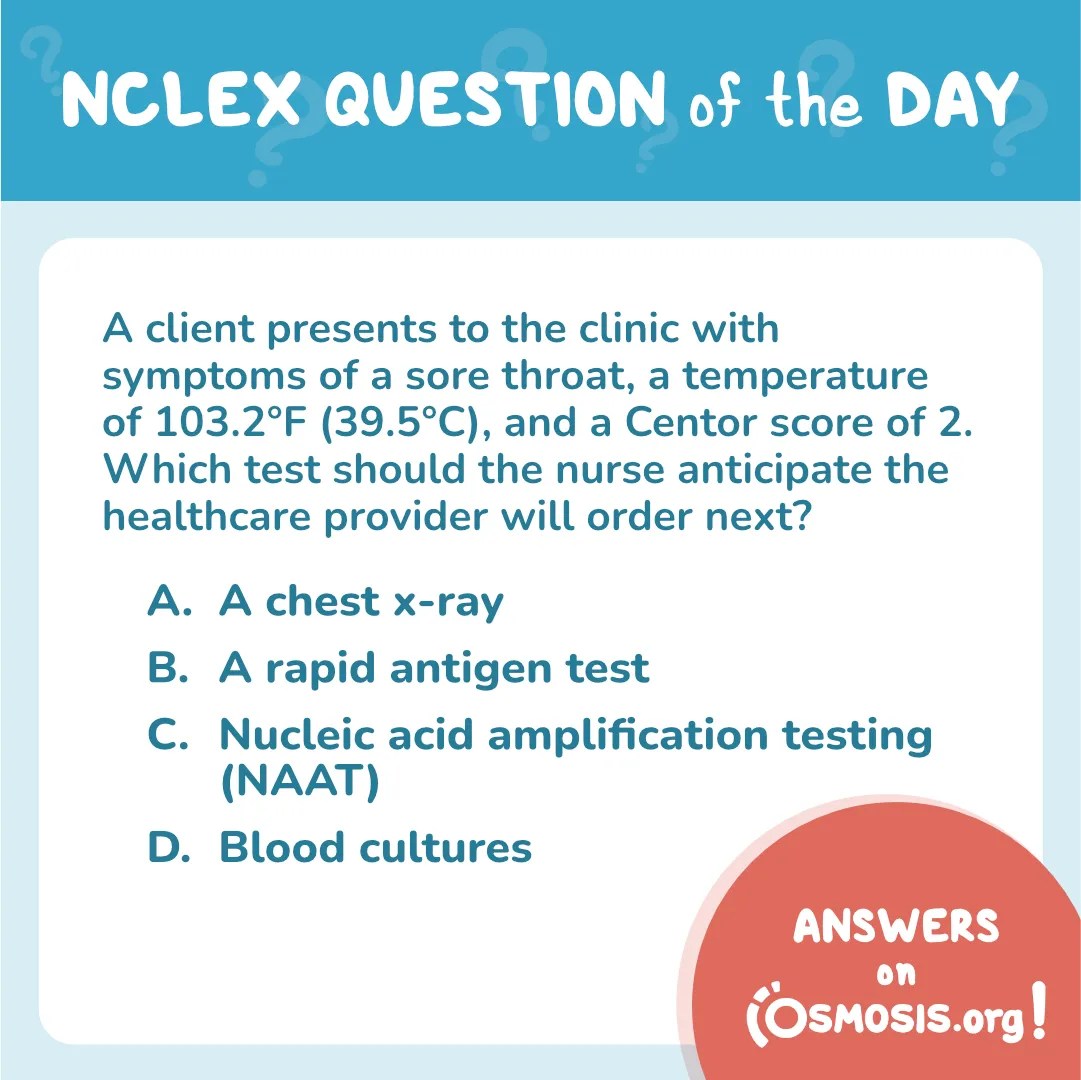
NCLEX-RN® Question of the Day: Healthcare Provider Orders for a Sore Throat and High Fever
— Updated:
Today’s NCLEX-RN® question of the day focuses on a client who presents symptoms of sore throat and a fever. Can you figure it out? A client presents to the clinic with symptoms of a sore throat, a temperature of 103.2°F (39.5°C), and a Centor score of 2. Which test should…
-
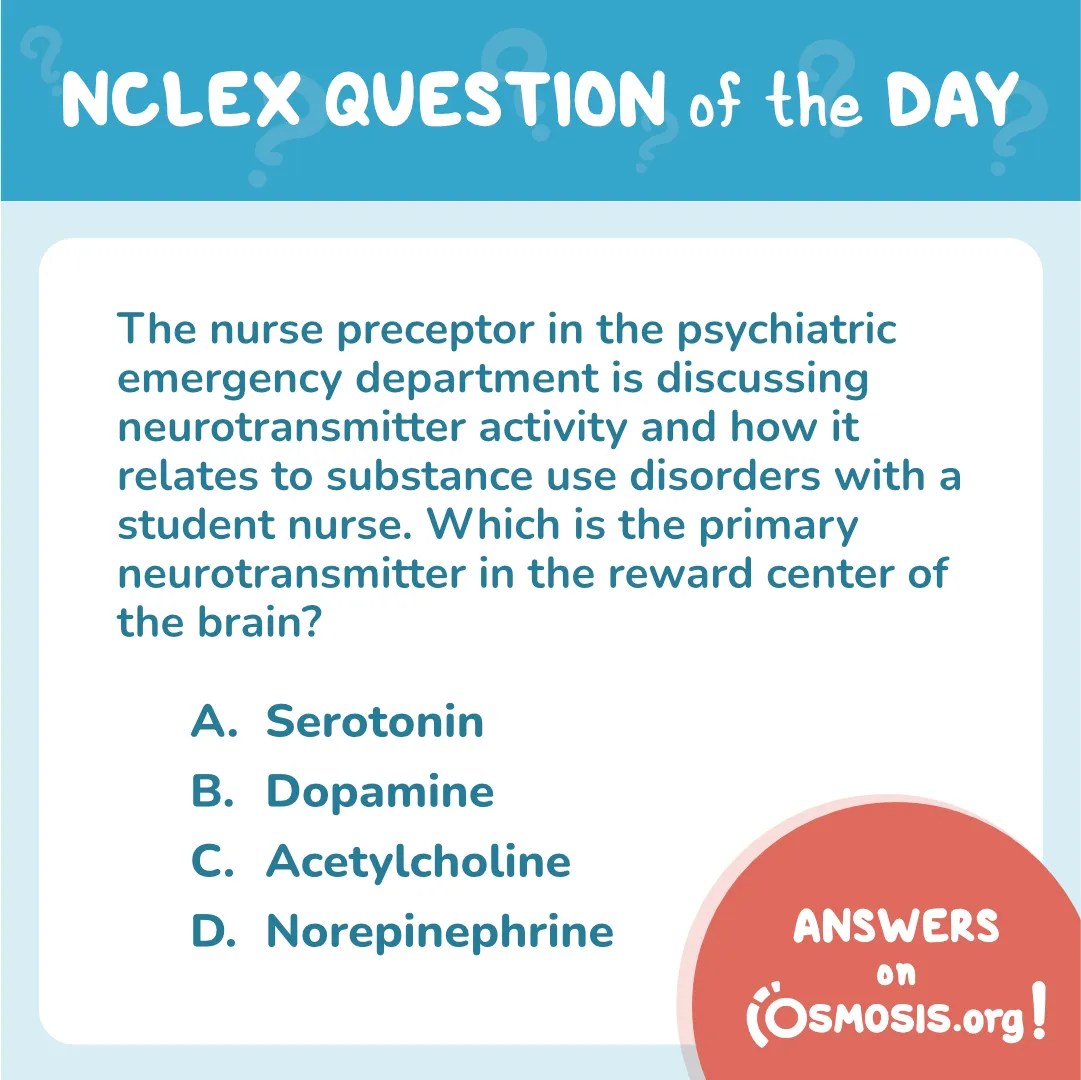
NCLEX-RN® Question of the Day: Substance use disorder
— Updated:
Which neurotransmitter plays a central role in the brain’s reward center and influences substance use behaviors?
-
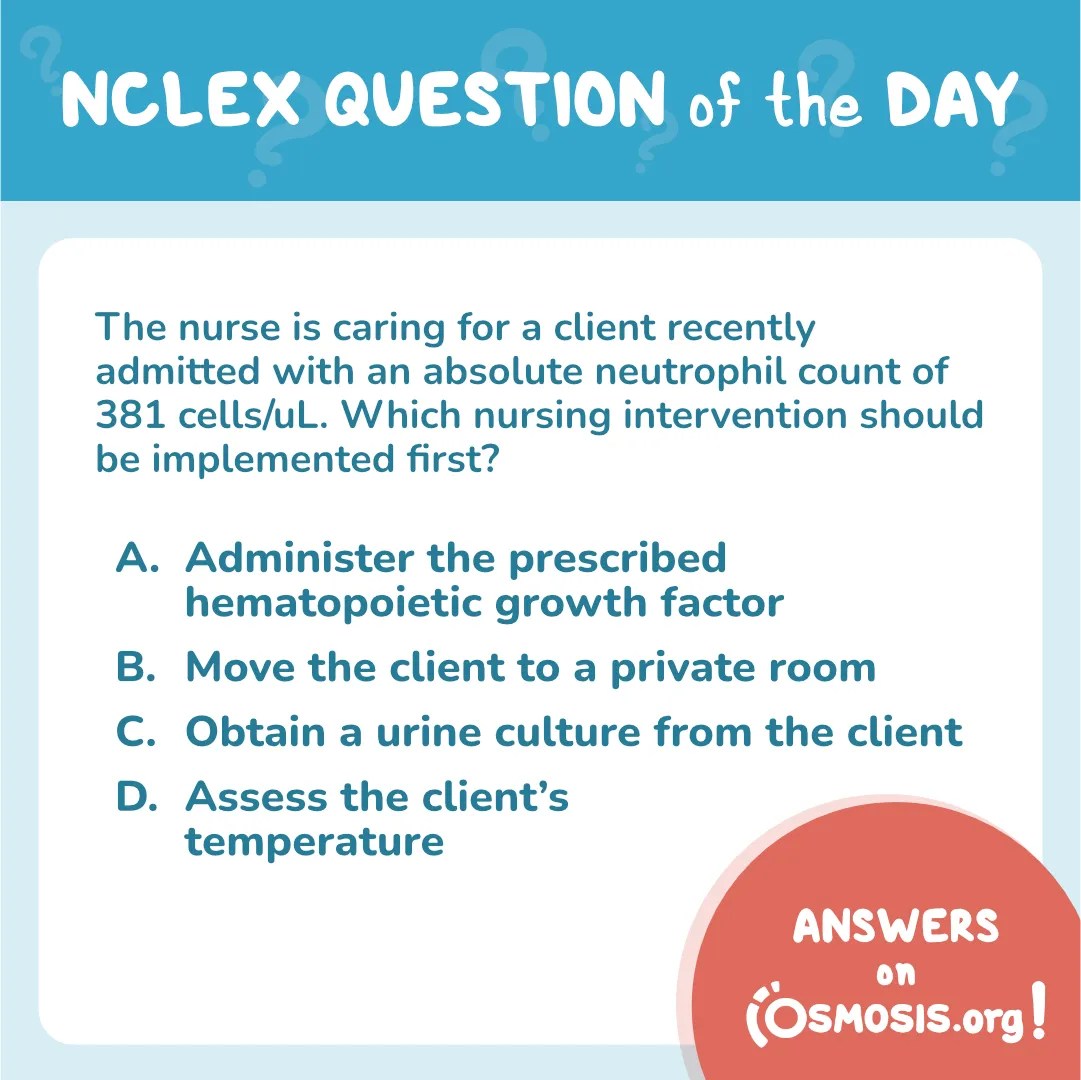
NCLEX-RN® Question of the Day: Absolute neutrophil count
— Updated:
Today’s NCLEX-RN® question of the day focuses on nursing intervention for a client with an absolute neutrophil count of 381 cells/uL. Can you figure it out? The nurse is caring for a client recently admitted with an absolute neutrophil count of 381 cells/uL. Which nursing intervention should be implemented first?…
-
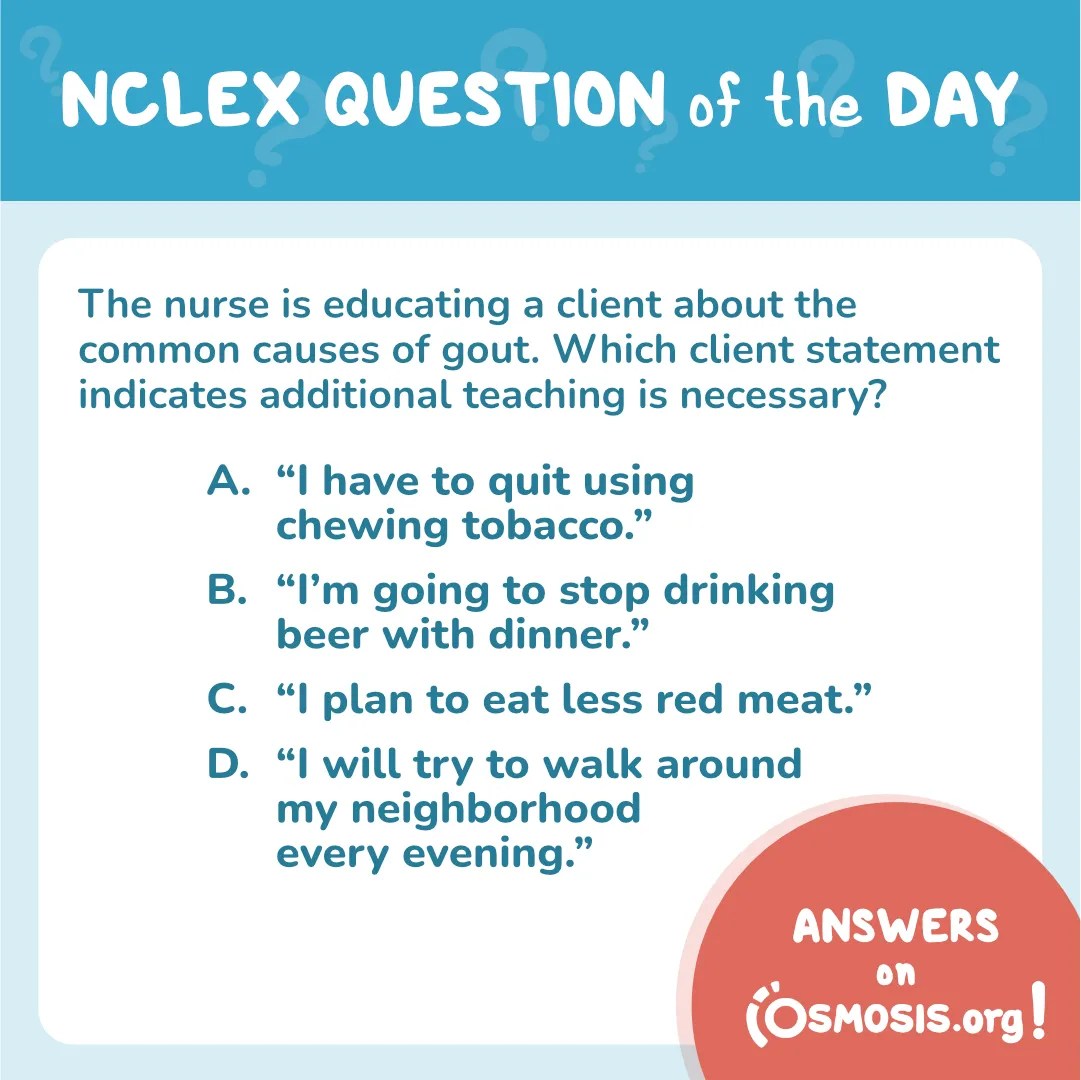
NCLEX-RN® Question of the Day: Gout cause education
— Updated:
Today’s NCLEX-RN® Question of the day focuses on teaching techniques in educating a patient about gout. Can you figure it out? The nurse is educating a client about the common causes of gout. Which client statement indicates additional teaching is necessary? A. “I have to quit using chewing tobacco.” B.…
-
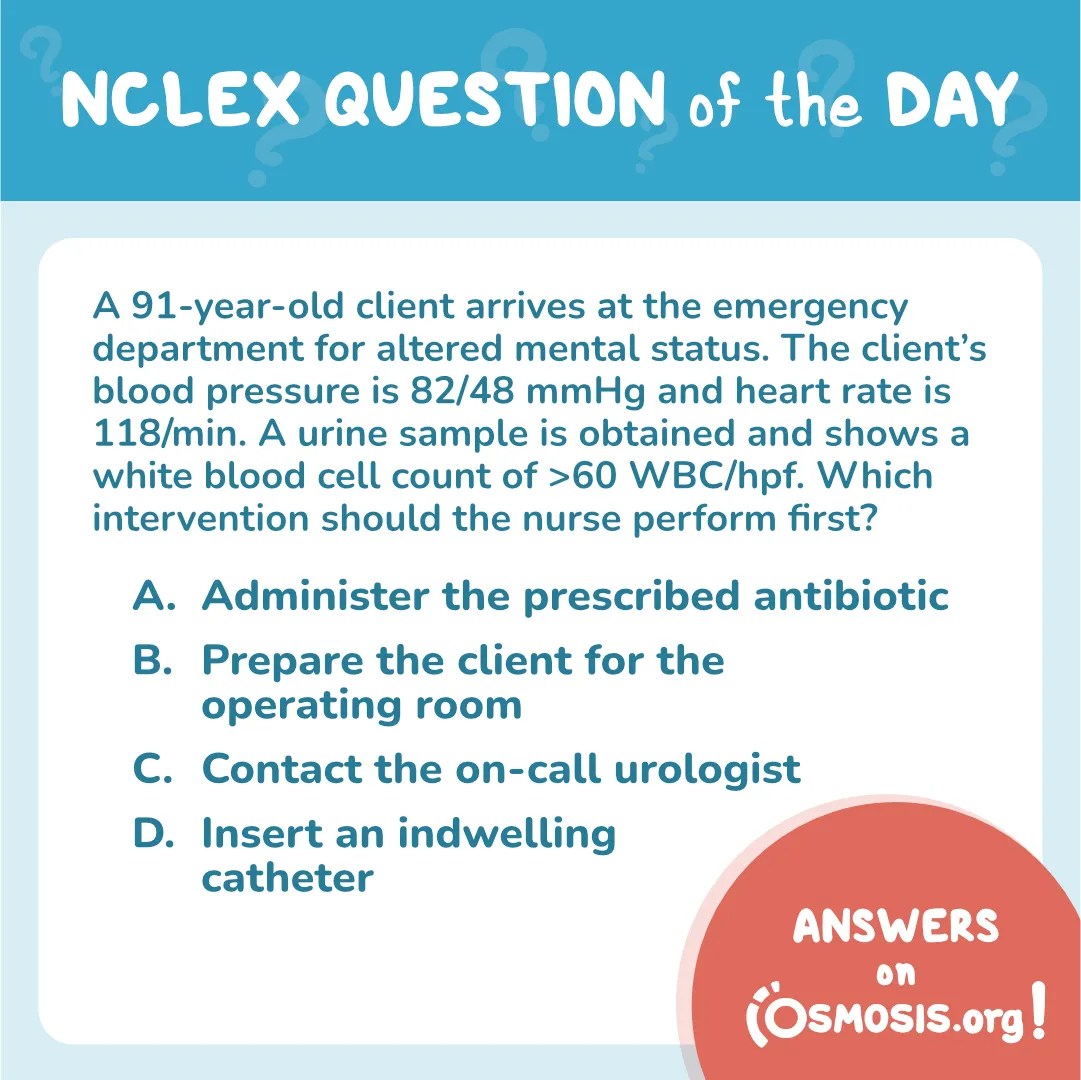
NCLEX-RN® Question of the Day: Altered mental state with high white blood count
— Updated:
An older adult presents with altered mental status, hypotension, and laboratory findings suggestive of infection. Can you identify the highest-priority nursing intervention in this NCLEX-style clinical scenario?
-
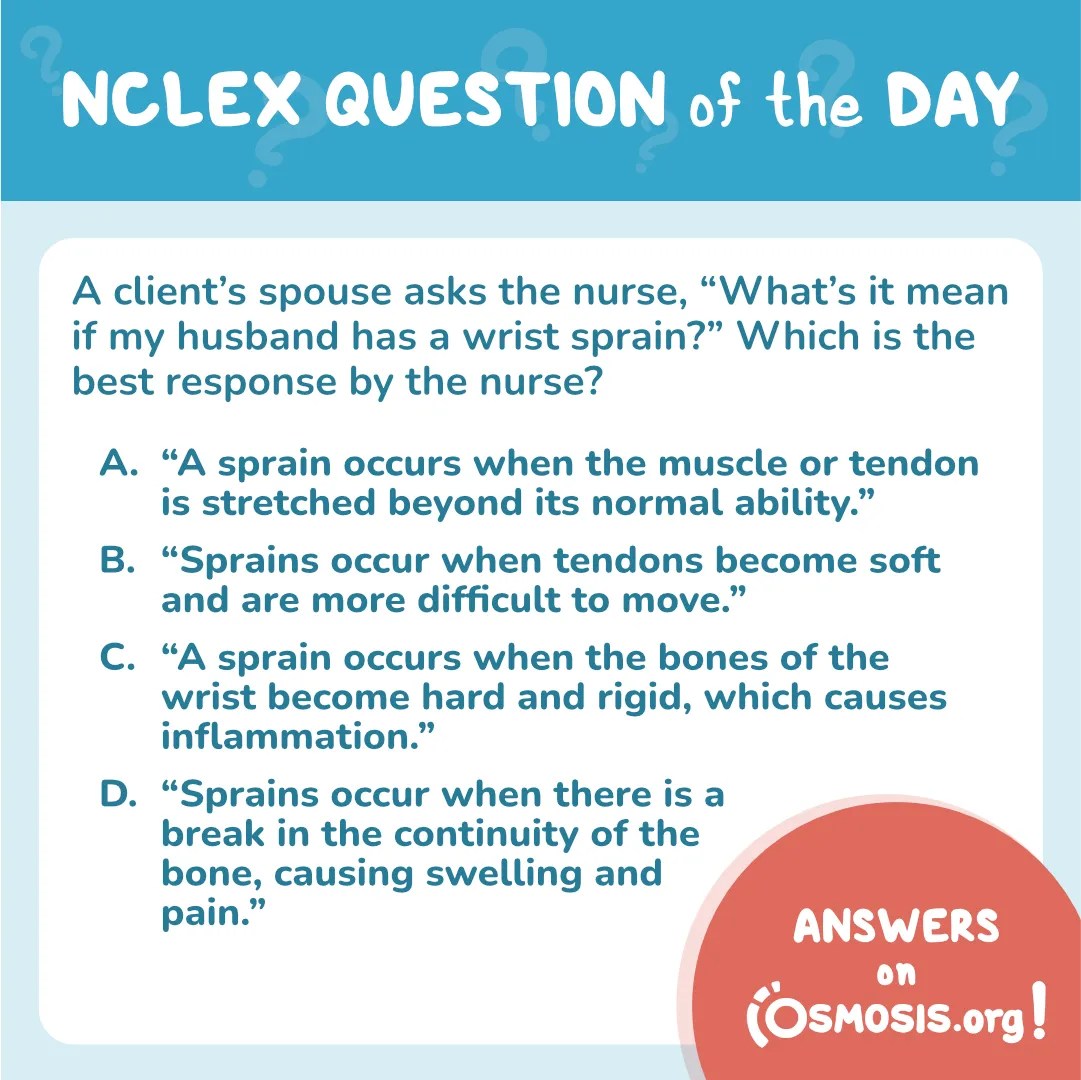
NCLEX-RN® Question of the Day: Wrist sprain
— Updated:
Today’s NCLEX-RN® question of the day focuses on a nurse’s best response about a question regarding wrist sprain. Can you figure it out? A client’s spouse asks the nurse, “What’s it mean if my husband has a wrist sprain?” Which is the best response by the nurse? A. “A sprain…
-
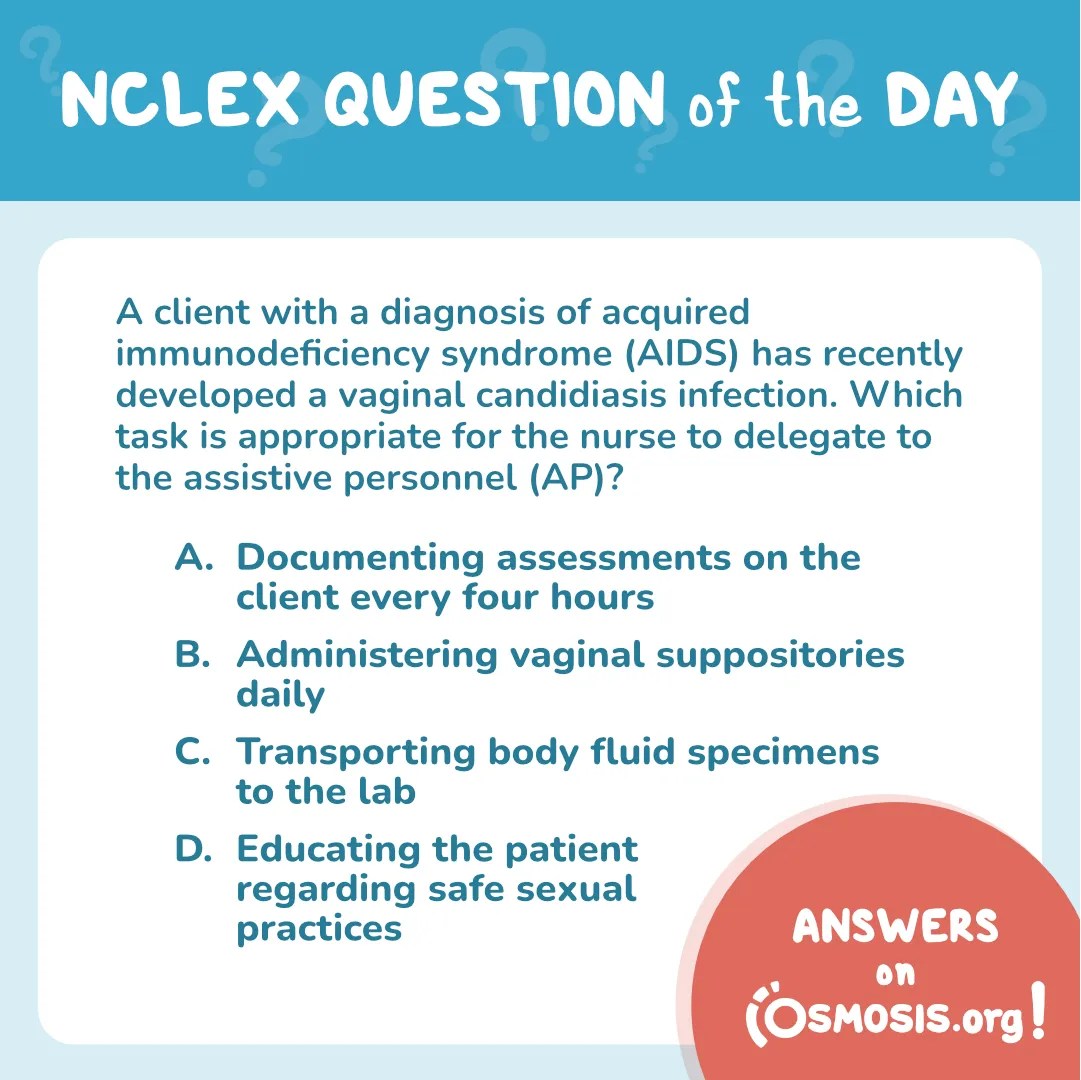
NCLEX-RN® Question of the Day: Vaginal candidiasis infection tasks for assistive personnel
— Updated:
Today’s NCLEX-RN® question of the day focuses on a nurse who is delegating a task to the assistive personnel regarding a client with vaginal candidiasis infection. Can you figure it out? A client with a diagnosis of acquired immunodeficiency syndrome (AIDS) has recently developed a vaginal candidiasis infection. Which task…
-
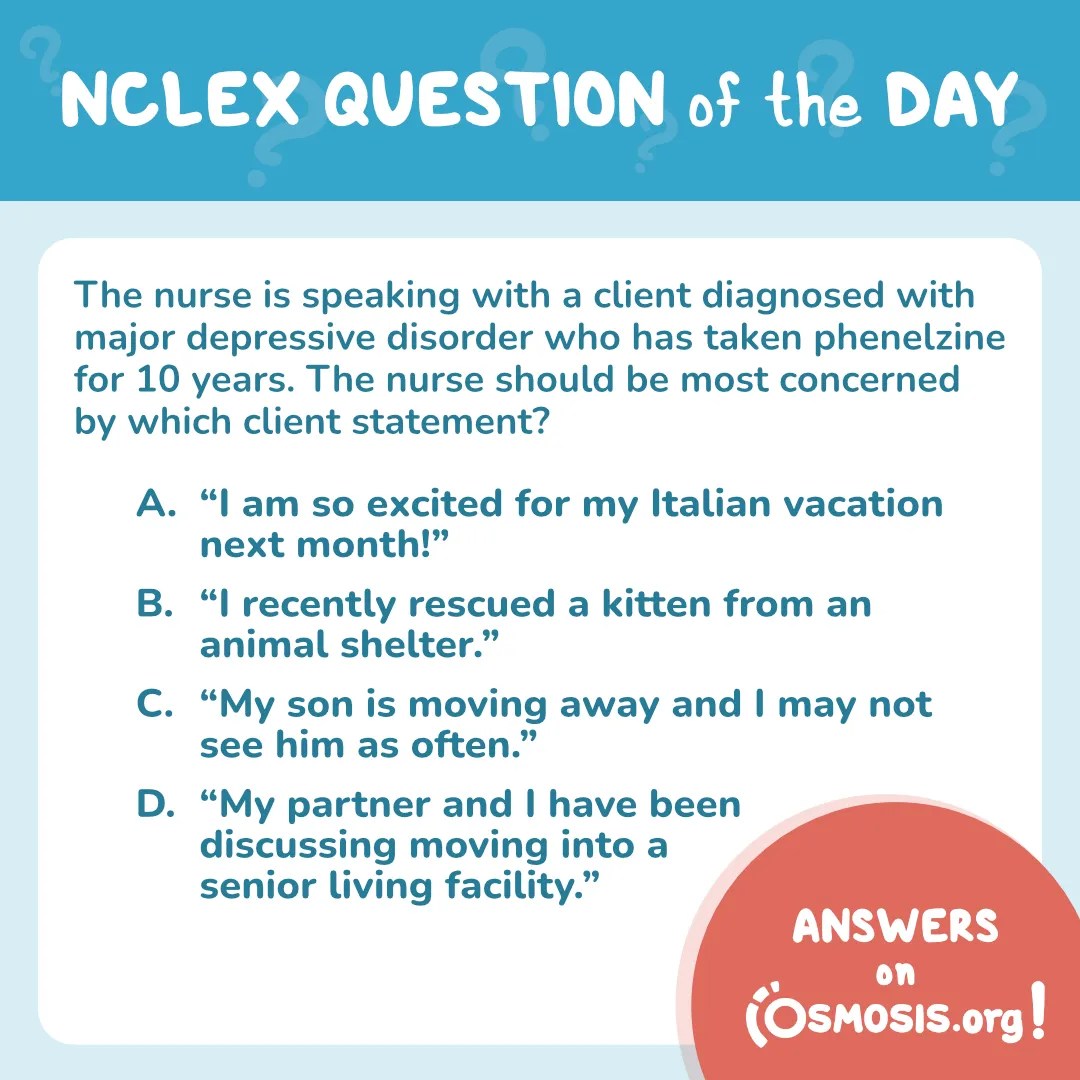
NCLEX-RN® Question of the Day: Phenelzine client teachings
— Updated:
Today’s NCLEX-RN® question of the day focuses on a nurse who is speaking with a client diagnosed with major depressive disorder who has taken phenelzine. Can you figure it out? The nurse is speaking with a client diagnosed with major depressive disorder who has taken phenelzine for 10 years. The…
-
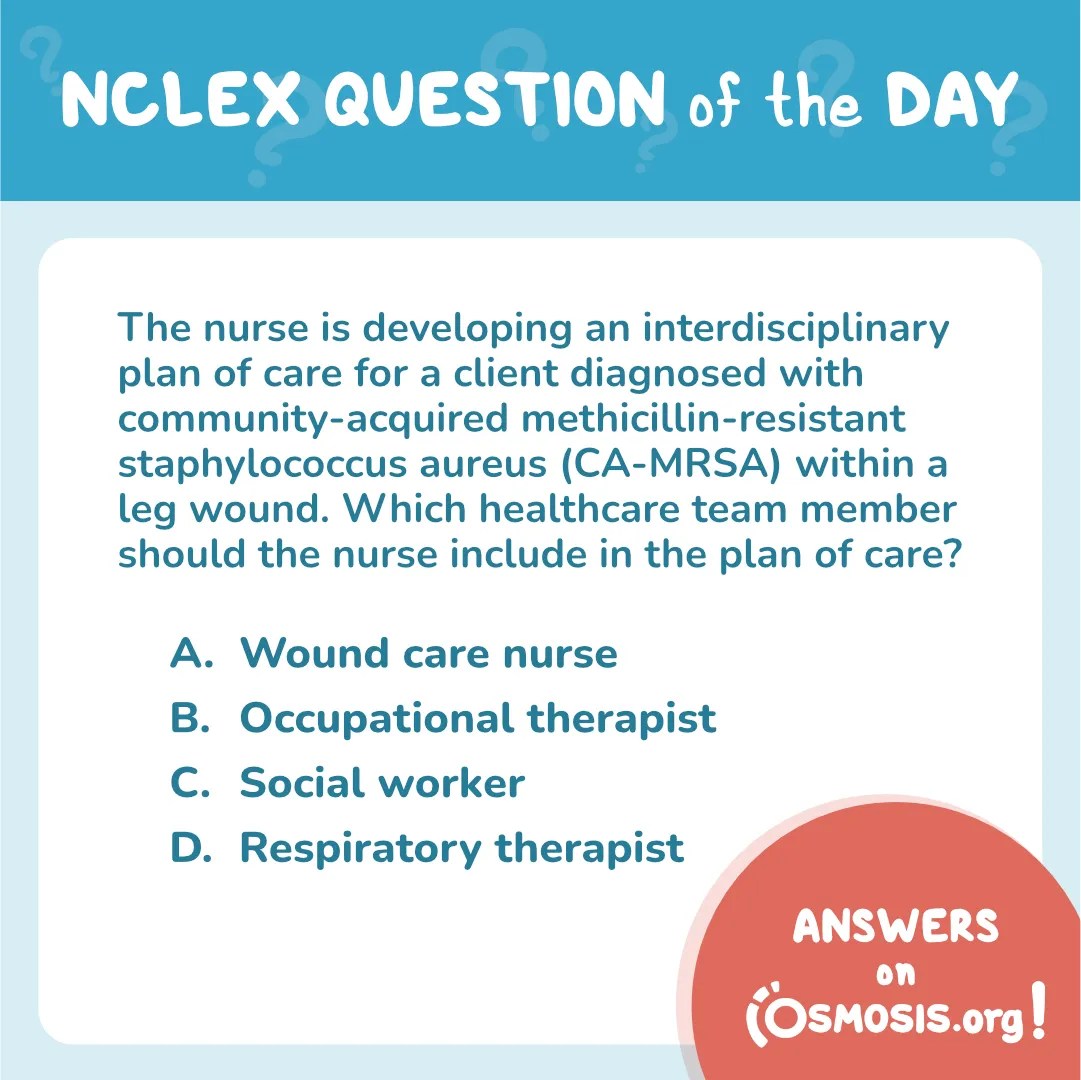
NCLEX-RN® Question of the Day: Interdisciplinary care plan
— Updated:
Today’s NCLEX-RN® question of the day focuses on a nurse who is creating an interdisciplinary plan of care for a client. Can you figure it out? The nurse is developing an interdisciplinary plan of care for a client diagnosed with community-acquired methicillin-resistant staphylococcus aureus (CA-MRSA) within a leg wound. Which healthcare…
-
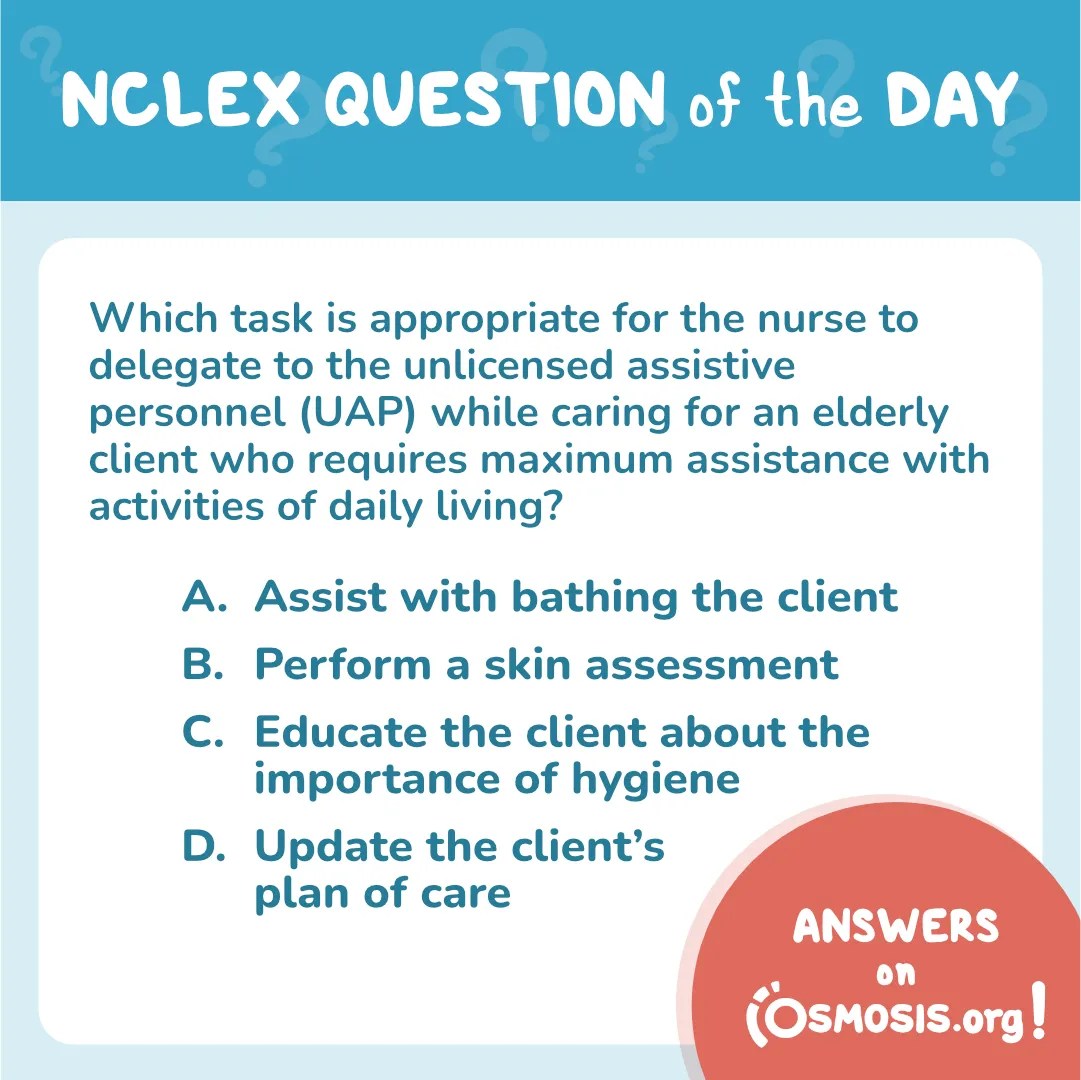
NCLEX-RN® Question of the Day: Unlicensed assistive personnel (UAP) appropriate activities
— Updated:
Today’s NCLEX-RN® question of the day focuses on delegating to unlicensed assistive personnel while caring for an elderly patient. Can you figure it out? Which task is appropriate for the nurse to delegate to the unlicensed assistive personnel (UAP) while caring for an elderly client who requires maximum assistance with activities…
-
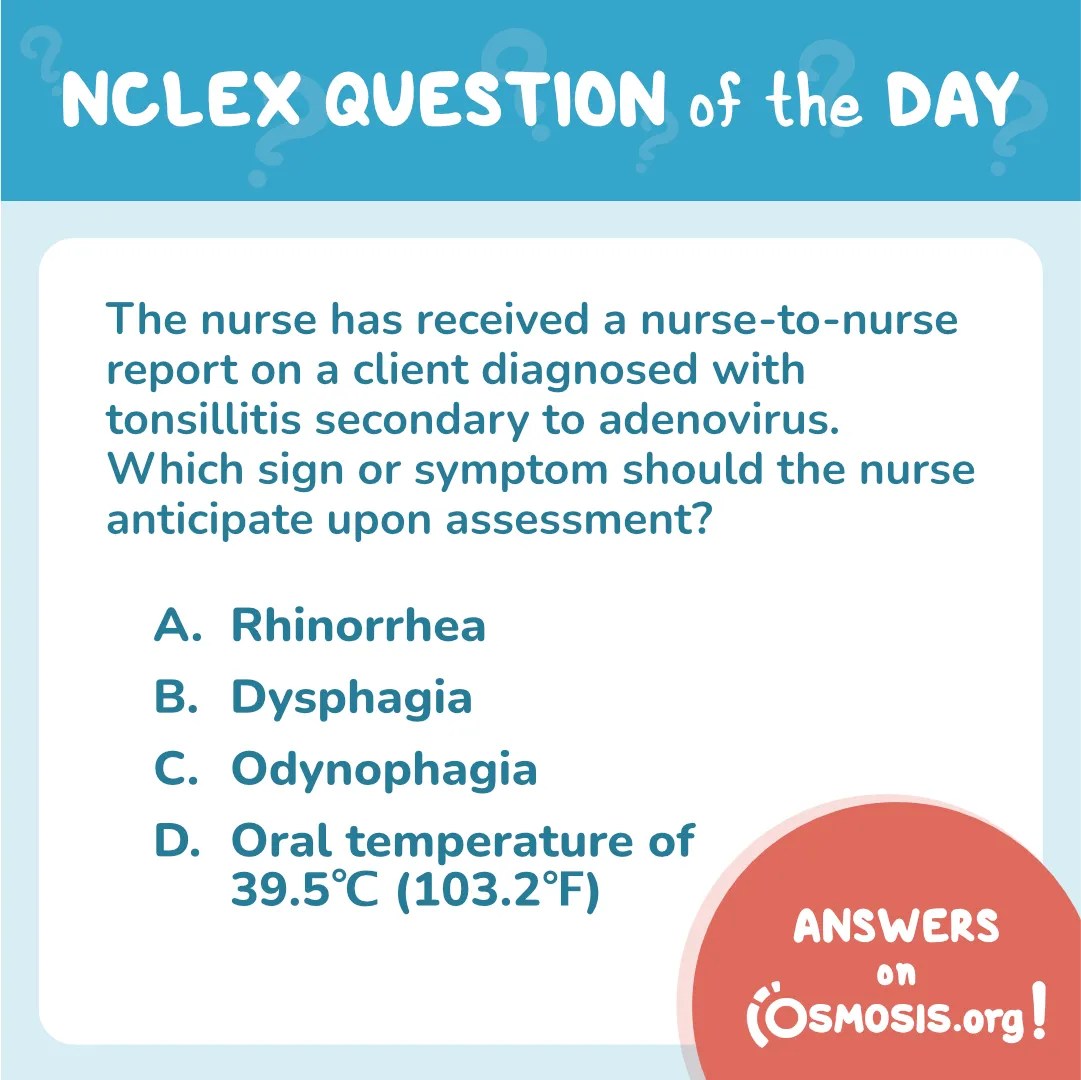
NCLEX-RN® Question of the Day: Tonsillitis secondary to adenovirus
— Updated:
Today’s NCLEX-RN® question of the day focuses on a client diagnosed with Tonsillitis Secondary to Adenovirus. Can you figure it out? The nurse has received a nurse-to-nurse report on a client diagnosed with tonsillitis secondary to adenovirus. Which sign or symptom should the nurse anticipate upon assessment? A. Rhinorrhea B.…
-
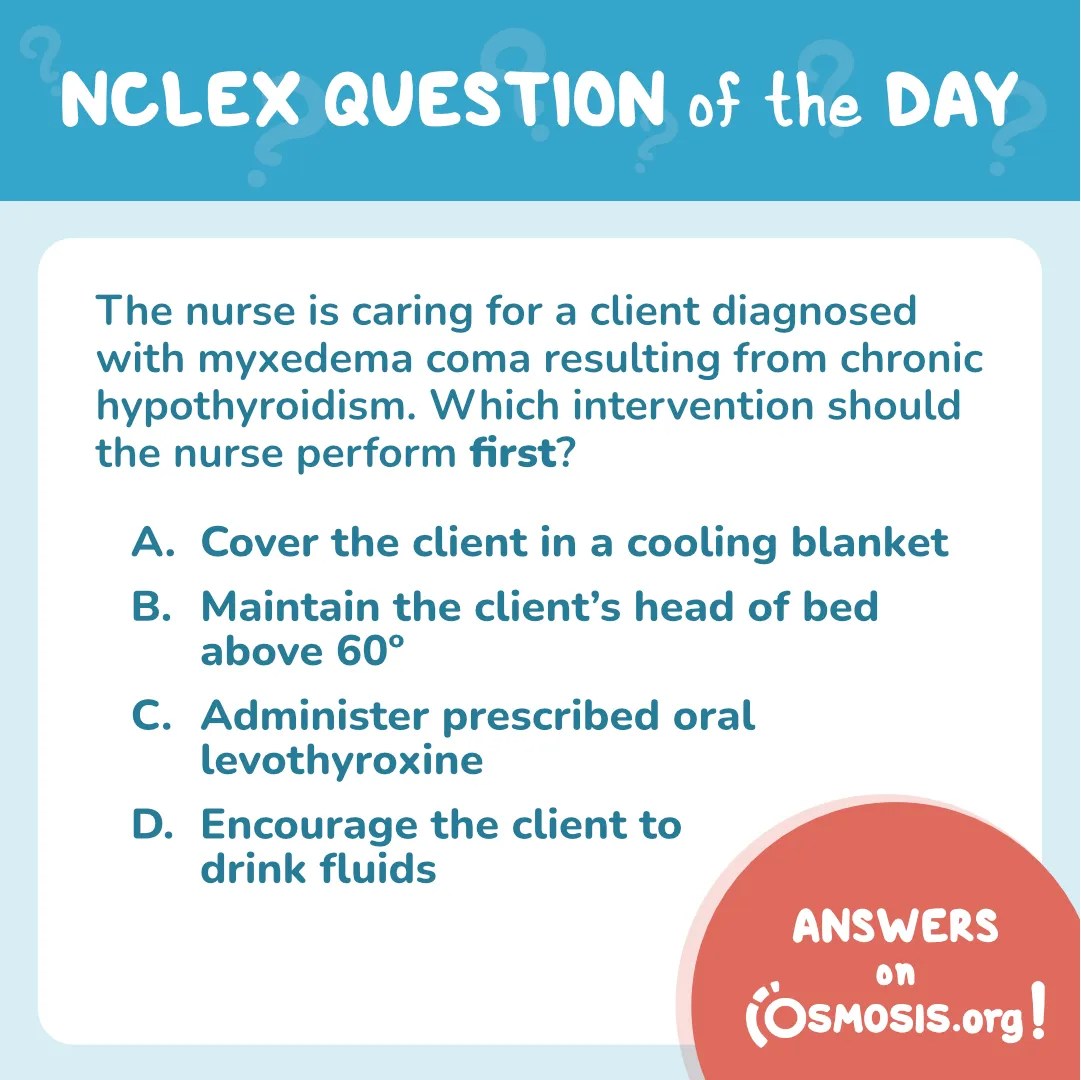
NCLEX-RN® Question of the Day: Chronic hypothyroidism
— Updated:
Which nursing intervention should be performed first for a client with myxedema coma to ensure airway safety and support breathing?
-
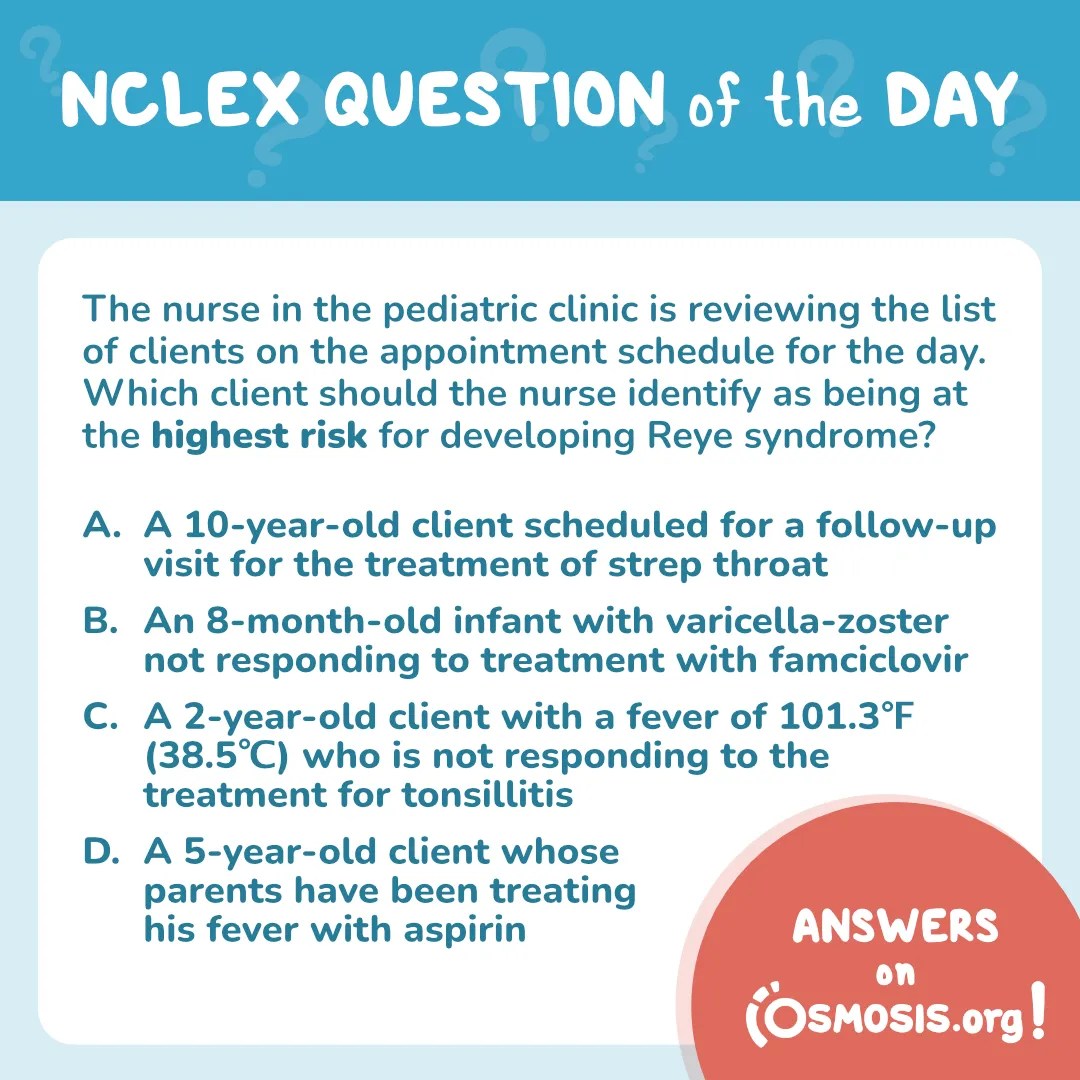
NCLEX-RN® Question of the Day: Reye syndrome risk
— Updated:
Today’s NCLEX-RN® question of the day focuses on risk factors associated with the development of Reye syndrome. Can you figure it out? The nurse in the pediatric clinic is reviewing the list of clients on the appointment schedule for the day. Which client should the nurse identify as being at…
-
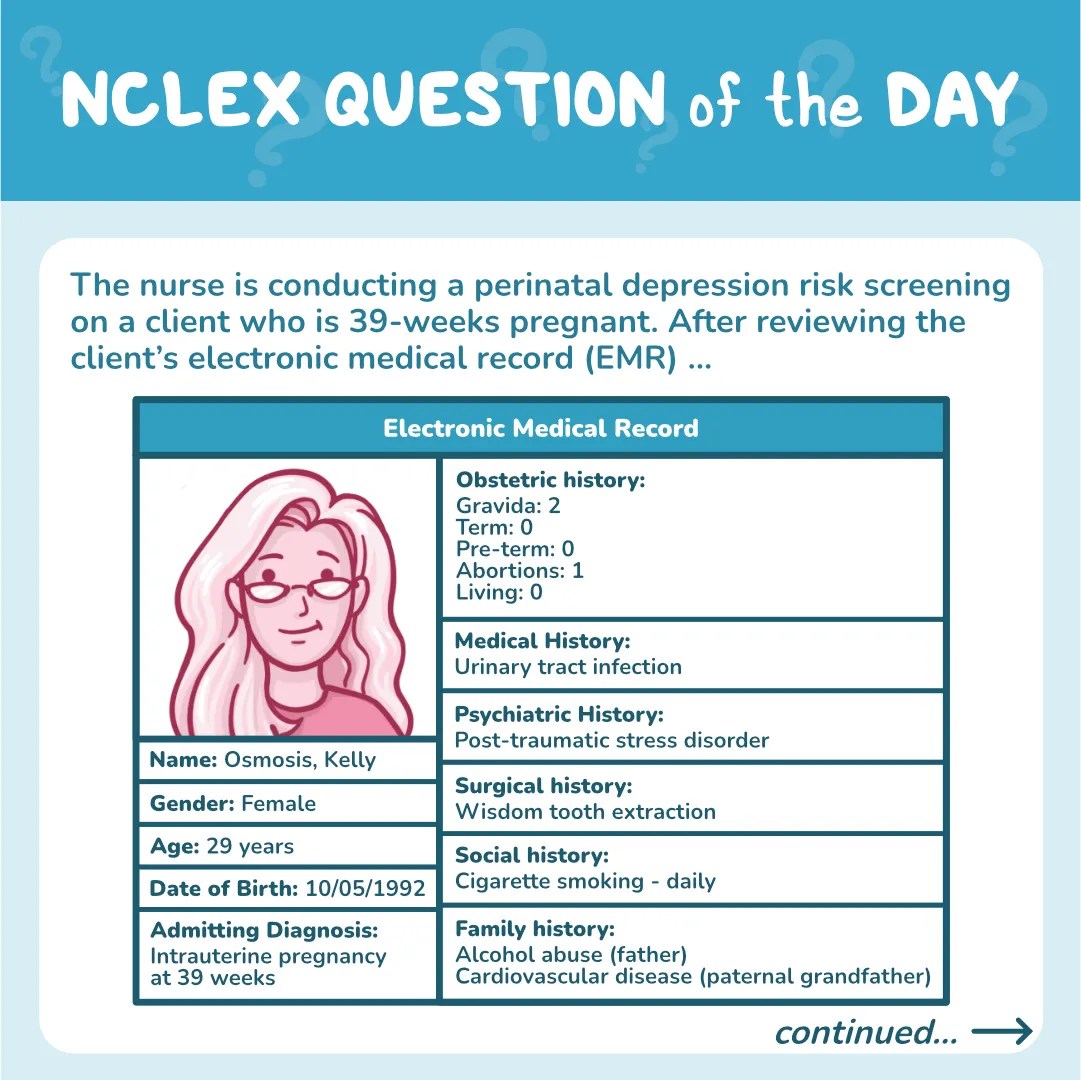
NCLEX-RN® Question of the Day: Perinatal depression risk screening
— Updated:
Today’s NCLEX-RN® question of the day focuses on risk factors for developing perinatal depression. The nurse is conducting a perinatal depression risk screening on a client who is 39-weeks pregnant. After reviewing the client’s electronic medical record (EMR), which finding should the nurse identify as a risk factor for developing…
-
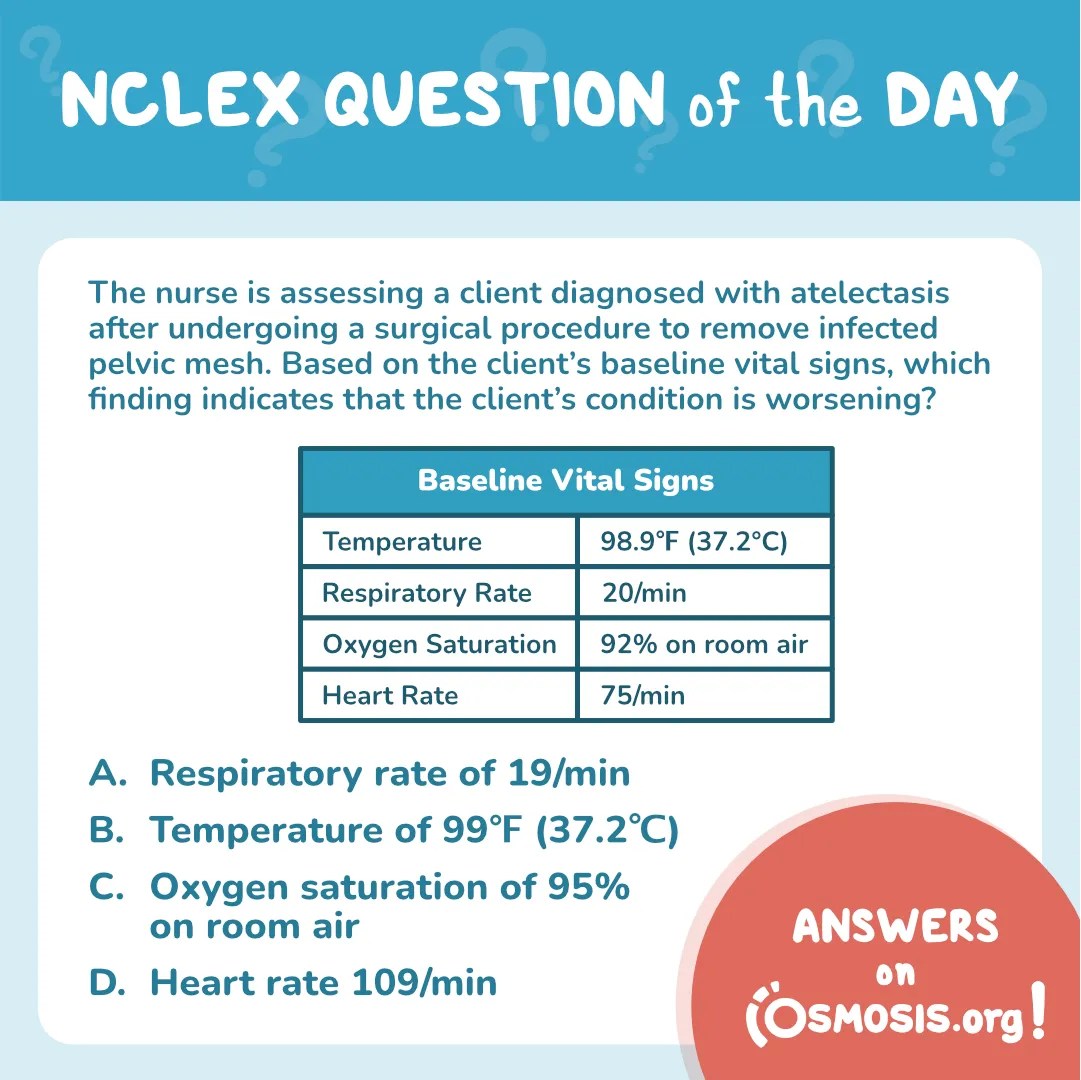
NCLEX-RN® Question of the Day: Atelectasis after removal of pelvic mesh
— Updated:
Today’s NCLEX-RN® question of the day focuses on the client’s baseline vital signs after surgery. Can you figure it out? The nurse is assessing a client diagnosed with atelectasis after undergoing a surgical procedure to remove infected pelvic mesh. Based on the client’s baseline vital signs, which finding indicates that the…
-
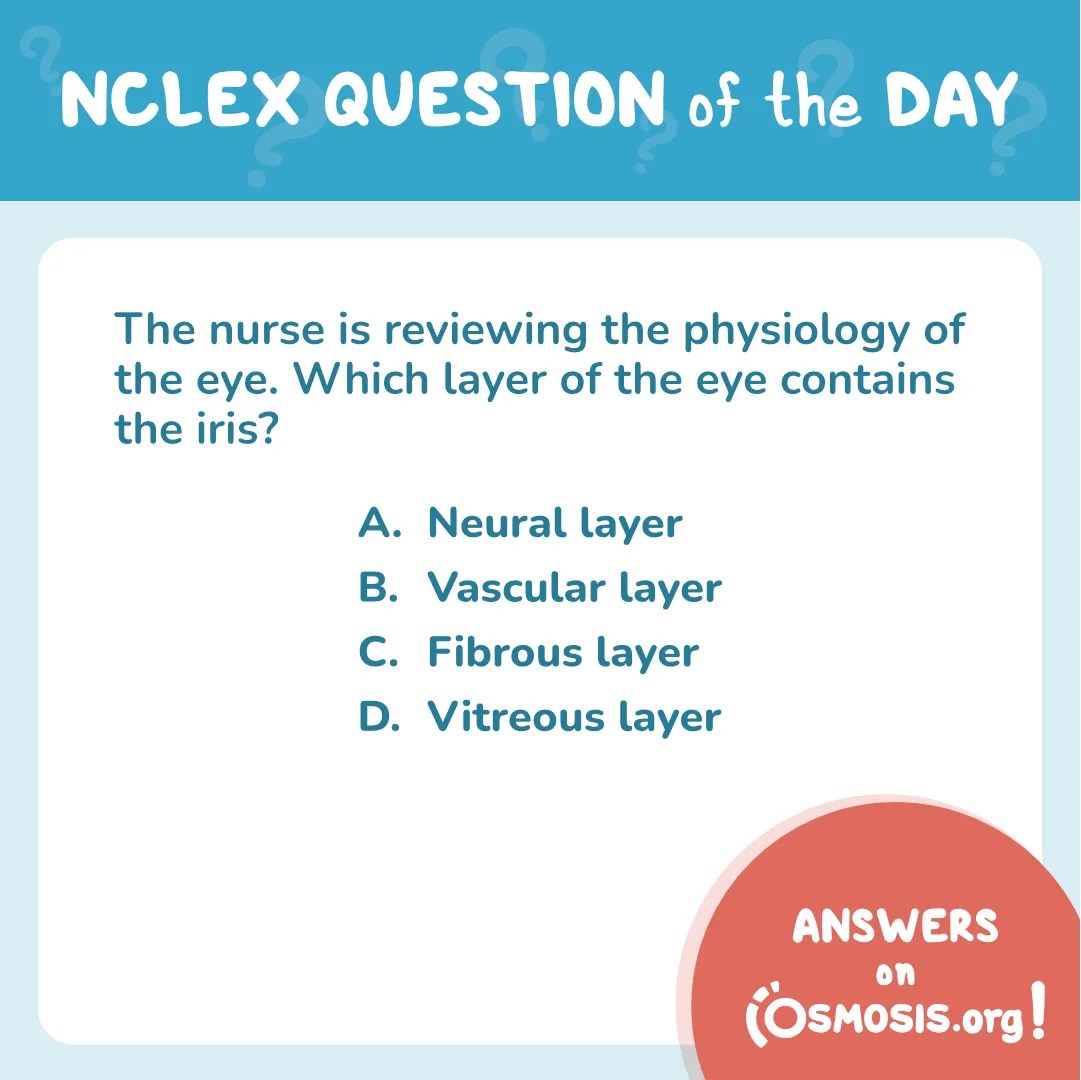
NCLEX-RN® Question of the Day: Physiology of the eye
— Updated:
Today’s NCLEX-RN® question of the day focuses on the physiology of the eye. The nurse is reviewing the physiology of the eye. Which layer of the eye contains the iris? A. Neural layer B. Vascular layer C. Fibrous layer D. Vitreous layer Scroll down for the correct answer! Check out our NCLEX-RN Study…
-
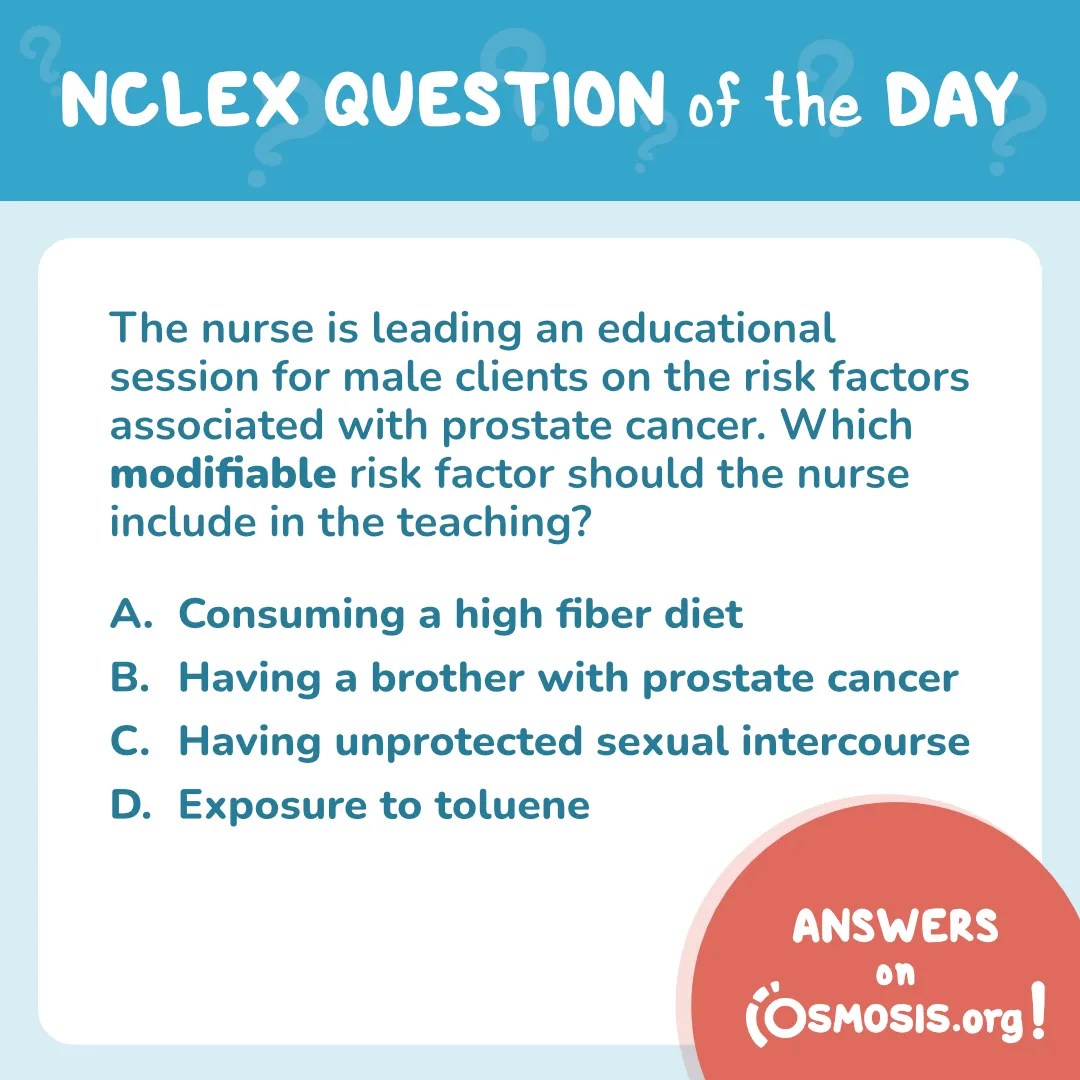
NCLEX-RN® Question of the Day: Modifiable risk factors for prostate cancer
— Updated:
Today’s NCLEX-RN® question of the day focuses on modifiable risk factors associated with prostate cancer. Can you figure it out? The nurse is leading an educational session for male clients on the risk factors associated with prostate cancer. Which modifiable risk factor should the nurse include in the teaching? A. Consuming a high fiber diet…
-
How to Answer Different Question Types on the NCLEX®
— Updated:
Osmosis recently hosted nurse Elizabeth “Liz” Lucas for an insightful webinar explaining the different types of NCLEX questions and providing some strategies for conquering them. In addition to working as a nurse, Liz is the Senior Content Manager at Osmosis and head of the question writing team for us. If you’re curious…
-

The NCLEX-RN® Pass Rates for 2022
— Updated:
The National Council Licensure Examination (NCLEX®), administered by the National Council of State Boards of Nursing (NCSBN), is the exam that aspiring nurses must pass to apply for licensure in a state board of nursing. Learn more about the 2022 NCLEX pass rate for both U.S. and International nursing students…
-

NCLEX-RN® Question of the Day: Venous insufficiency
— Updated:
Today’s NCLEX-RN® question of the day focuses on a client diagnosed with venous insufficiency. Can you figure it out? The nurse is interviewing a client diagnosed with venous insufficiency. Which of the following statements by the client is consistent with this diagnosis? A. “My feet are always cold, and I can’t…
-
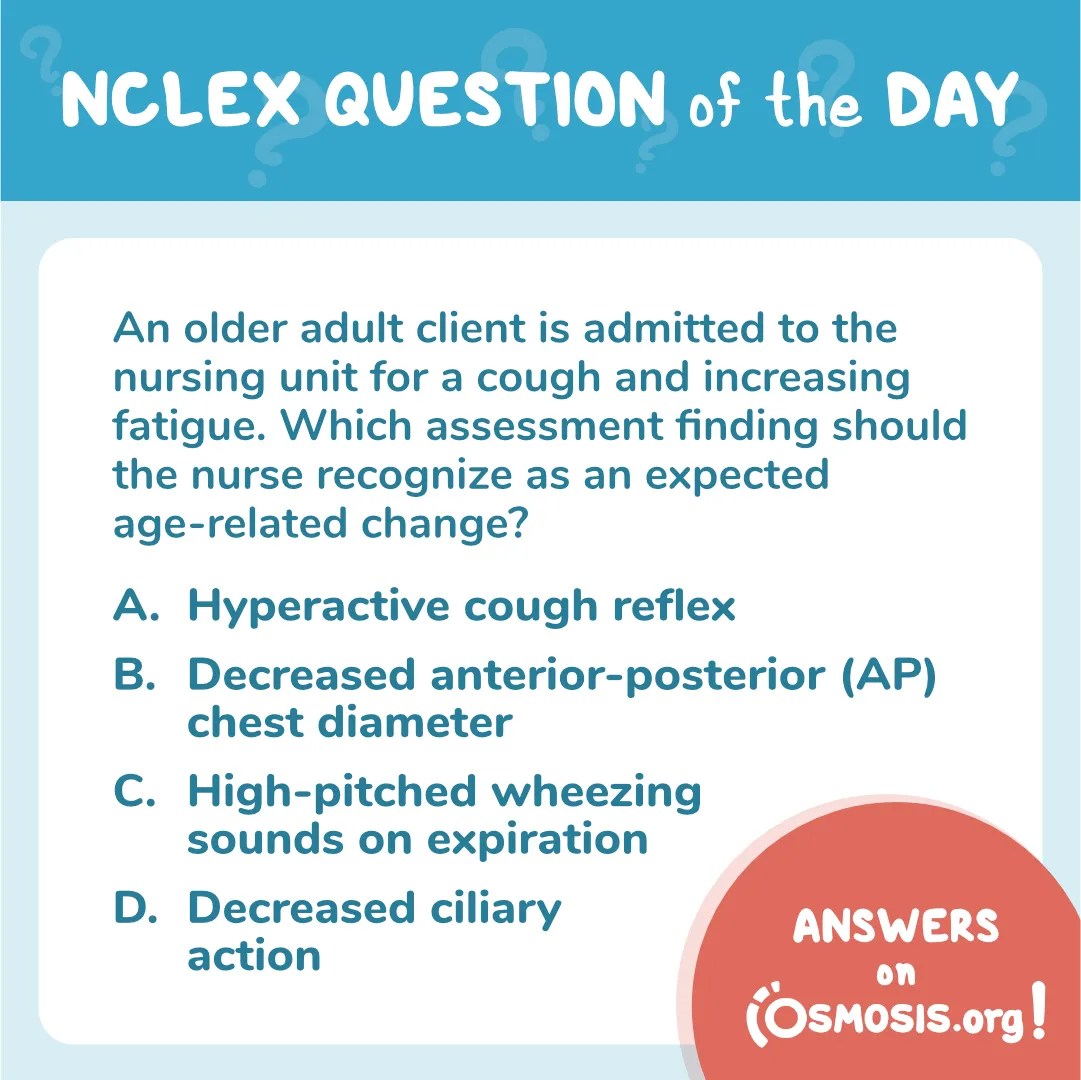
NCLEX-RN® Question of the Day: Age-related changes
— Updated:
Today’s NCLEX-RN® question of the day focuses on which assessment findings are expected to be found in older patients and which are not. An older adult client is admitted to the nursing unit for a cough and increasing fatigue. Which assessment finding should the nurse recognize as an expected age-related…
-
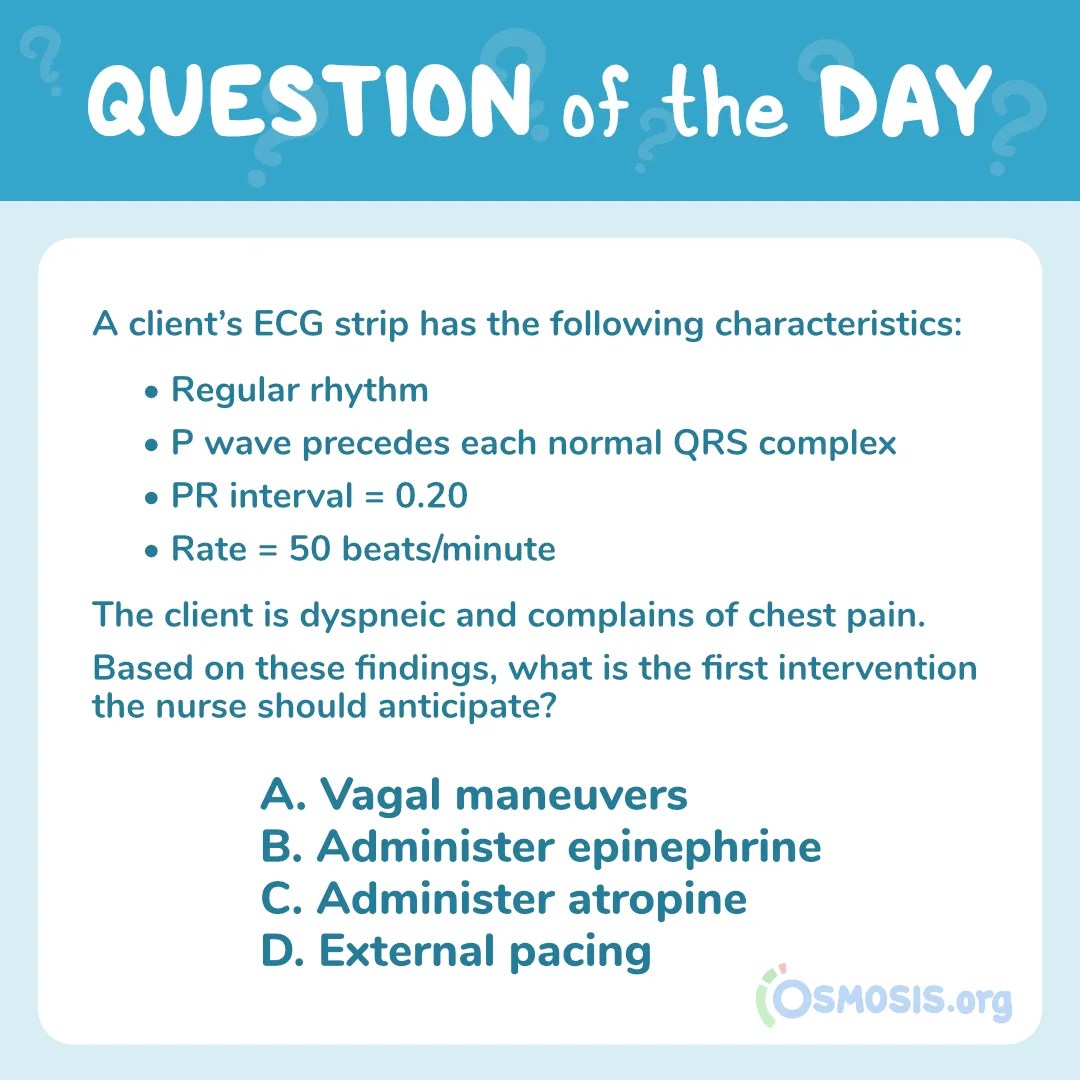
NCLEX-RN® Question of the Day: Electrocardiogram (ECG) strip
— Updated:
A patient with a slow, regular heart rhythm presents with chest pain and dyspnea. Which nursing intervention should be anticipated first?
-
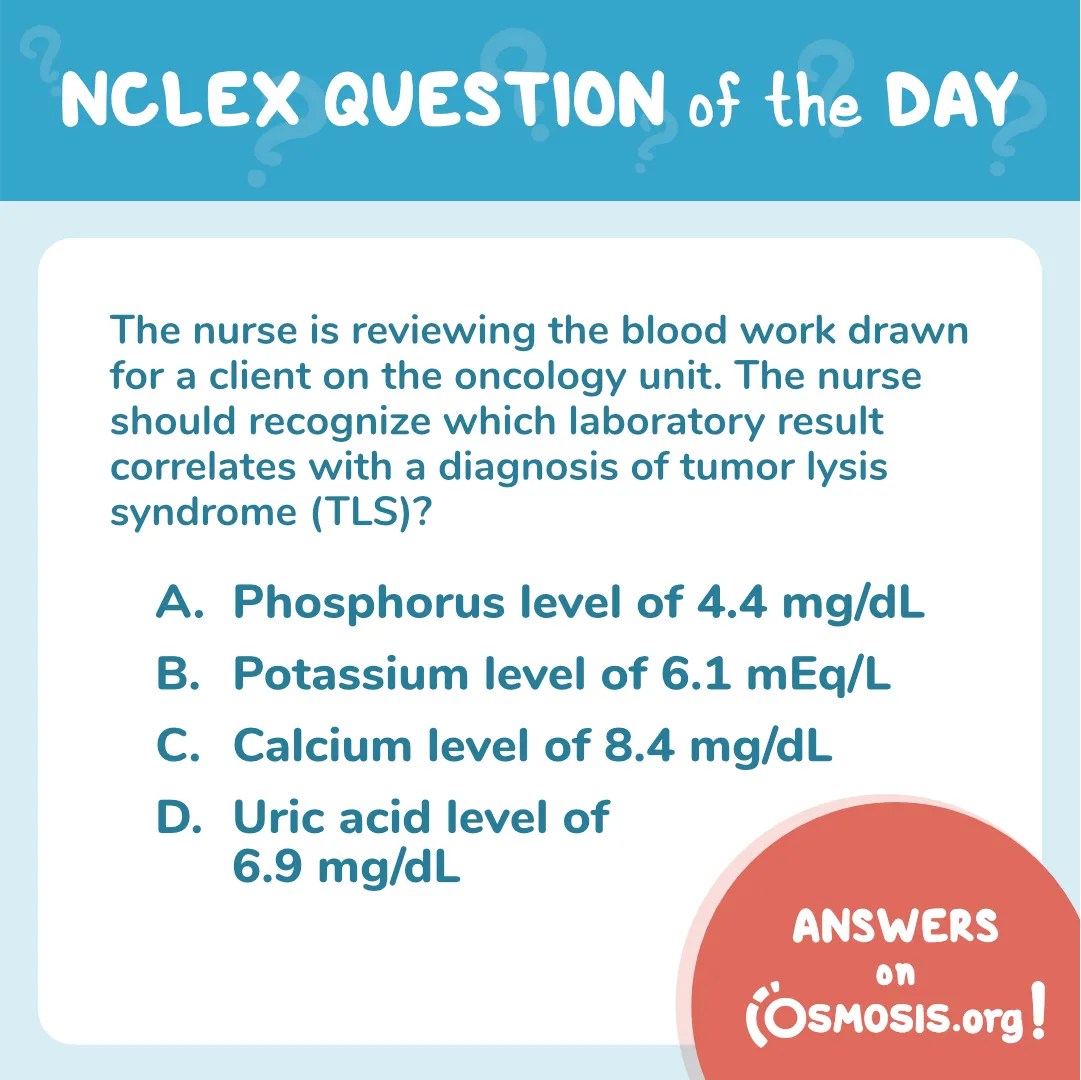
NCLEX-RN® Question of the Day: Tumor lysis syndrome (TLS)
— Updated:
Today’s NCLEX-RN® question of the day focuses on a nurse reviewing laboratory results on an oncology unit. The nurse is reviewing the blood work drawn for a client on the oncology unit. The nurse should recognize which laboratory result correlates with a diagnosis of tumor lysis syndrome (TLS)? A. Phosphorus…
-
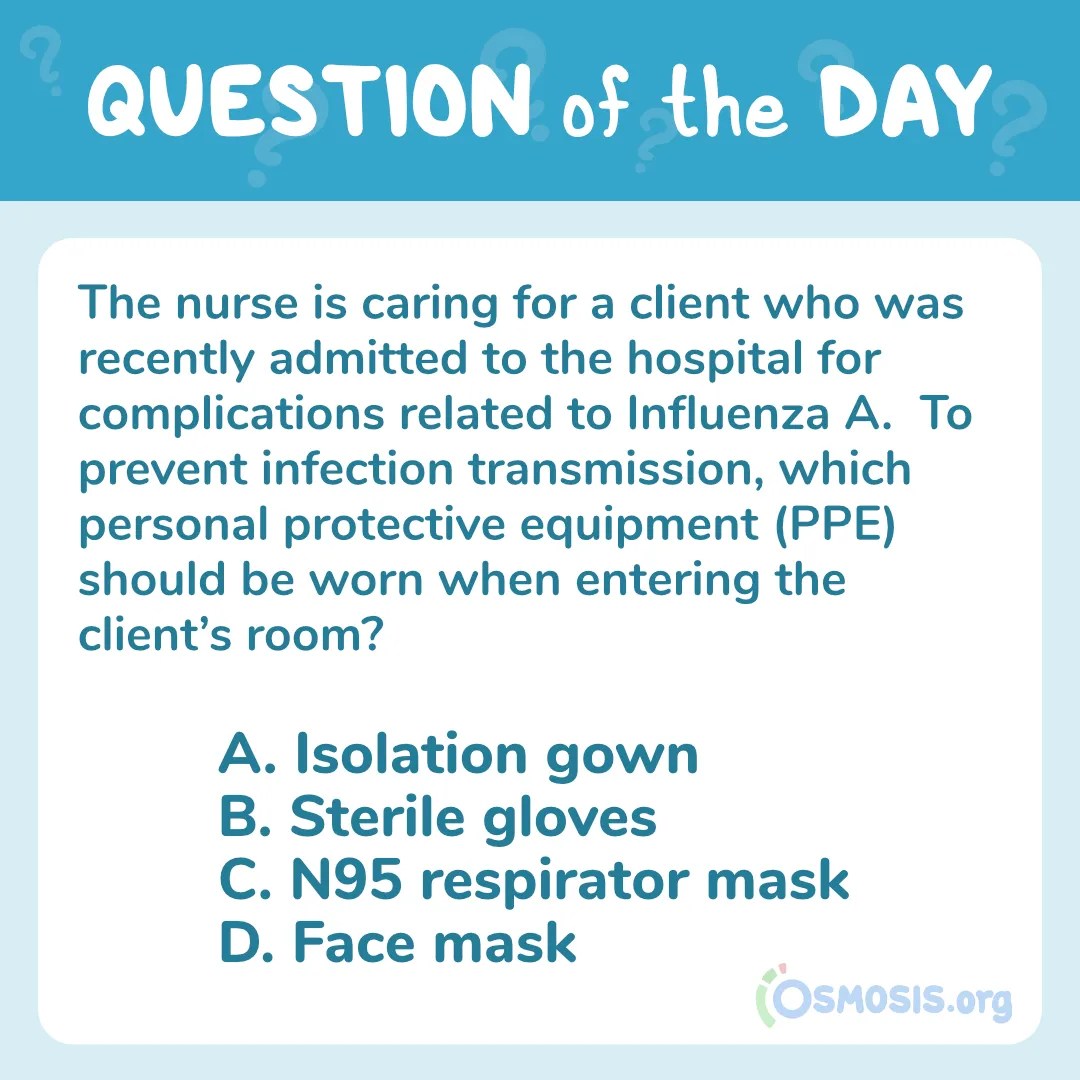
NCLEX-RN® Question of the Day: Influenza A
— Updated:
Which PPE should a nurse wear when caring for a patient with Influenza A to effectively prevent transmission of the virus?
-
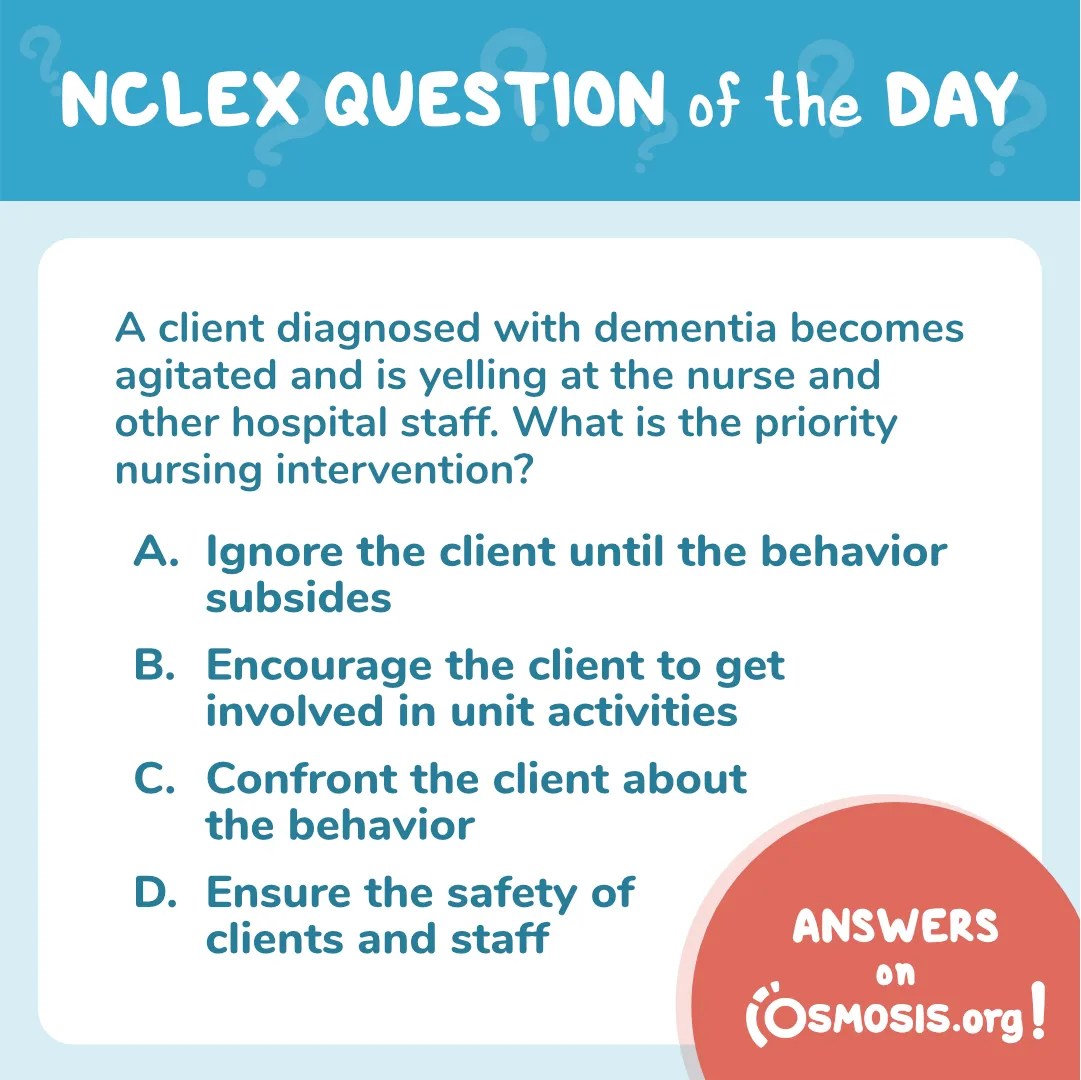
NCLEX-RN® Question of the Day: Agitated dementia client
— Updated:
Today’s NCLEX-RN® question of the day focuses on how a nurse should handle an agitated client diagnosed with dementia. The nurse in the medical-surgical unit is caring for a client diagnosed with dementia. The client becomes agitated and starts to yell at the nurse and other hospital staff. Which is…