
Today’s NCLEX-RN® question of the day focuses on gas exchange. Do you know the answer? Let’s find out!
The nursing instructor has provided education to a student nurse about gas exchange. Which statement by the student nurse indicates the teaching was successful?
A. “During exhalation, carbon dioxide moves into the blood from the alveoli, and oxygen moves into the alveolar sacs.”
B. “During inhalation, oxygen moves from the alveoli into the blood, while carbon dioxide moves into the alveolar sacs to be exhaled.”
C. “With each inhalation, carbon dioxide and oxygen move into the blood to be circulated through the body.”
D. “With each exhalation, oxygen moves from the blood into the alveolar sacs and circulates in the lungs.”
Scroll down for the correct answer!
The correct answer to today’s NCLEX® Question is…
B. “During inhalation, oxygen moves from the alveoli into the blood, while carbon dioxide moves into the alveolar sacs to be exhaled.”
Rationale: Alveoli are tiny air-filled sacs where most gas exchange occurs. As we breathe, inhaled oxygen moves from the alveolar sacs into the blood, while carbon dioxide moves from the blood into the alveolar sacs to be exhaled.
Main Takeaway
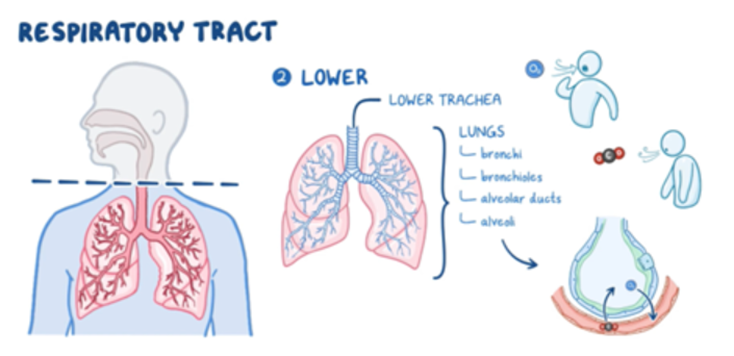
The respiratory tract can be divided into two regions: the upper respiratory tract and lower respiratory tract. The upper respiratory tract includes the nose, nasal cavity, the oral cavity, pharynx, epiglottis, larynx, and the upper part of the trachea; while the lower respiratory tract includes the lower part of the trachea, and the lungs containing the bronchi, bronchioles, alveolar ducts, and finally the alveoli. Alveoli are tiny air-filled sacs where most gas exchange occurs, so as we breathe, the inhaled oxygen moves from the alveolar sacs into the blood, while the carbon dioxide moves from the blood into the alveolar sacs to be exhaled.
Incorrect Answer Explanations
A. “During exhalation, carbon dioxide moves into the blood from the alveoli, and oxygen moves into the alveolar sacs.”
Rationale:Carbon dioxide does not move into the blood from the alveoli during exhalation and oxygen does not move into the alveolar sacs.
C. “With each inhalation, carbon dioxide and oxygen move into the blood to be circulated through the body.”
Rationale: Carbon dioxide and oxygen do not move into the blood to be circulated through the body during inhalation.
D. “With each exhalation, oxygen moves from the blood into the alveolar sacs and circulates in the lungs.”
Rationale: Oxygen does not move into the alveolar sacs to be circulated through the lungs during exhalation.
Want to learn more about this topic?
Watch the Osmosis video: Gas exchange in the lungs, blood and tissues

Get your free trial and find out why millions of current and future clinicians and caregivers love learning by Osmosis.
Leave a Reply