
The nurse at the hematology office is reinforcing education to a patient with thalassemia. Which description of thalassemia should the nurse use? Do you know the answer? Let’s find out!
A. “Thalassemia is a set of genetic disorders characterized by mutations in the hemoglobin gene, impairing the function and number of red blood cells.”
B. “Thalassemia is a set of genetic disorders characterized by mutations in the bone marrow, impairing the function and number of stem cells.”
C. “Thalassemia is a set of genetic disorders characterized by mutations in the liver, impairing the production of clotting factors.”
D. “Thalassemia is a set of genetic disorders characterized by mutations in the white blood cell gene, impairing the production of leukocytes.”
Scroll down for the correct answer!
The correct answer to today’s NCLEX-PN® Question is…
A. “Thalassemia is a set of genetic disorders characterized by mutations in the hemoglobin gene, impairing the function and number of red blood cells.”
Main Takeaway
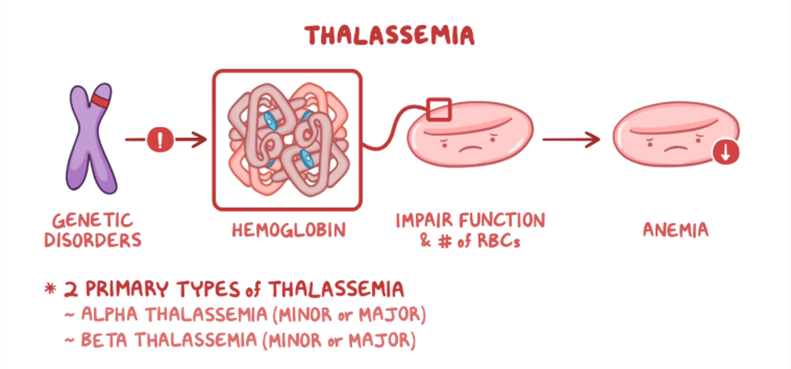
Thalassemia is a set of genetic disorders characterized by mutations in the hemoglobin gene, which impairs the function and number of red blood cells, causing anemia. There are two primary types of thalassemia: alpha thalassemia and beta-thalassemia, both of which can have minor or major versions. Thalassemia is not a set of genetic disorders characterized by mutations in the bone marrow, liver, or white blood cell gene.
Incorrect Answer Explanations
B. “Thalassemia is a set of genetic disorders characterized by mutations in the bone marrow, impairing the function and number of stem cells.”
Rationale: Thalassemia is not a set of genetic disorders characterized by mutations in the bone marrow, impairing the function and number of stem cells.
C. “Thalassemia is a set of genetic disorders characterized by mutations in the liver, impairing the production of clotting factors.”
Rationale: Thalassemia does not refer to a set of genetic disorders characterized by mutations in the liver, impairing the production of clotting factors.
D. “Thalassemia is a set of genetic disorders characterized by mutations in the white blood cell gene, impairing the production of leukocytes.”
Rationale: Thalassemia is not a set of genetic disorders characterized by mutations in the white blood cell gene, impairing the production of leukocytes.
Want to learn more about this topic?
Watch the Osmosis video: Thalassemia: Nursing

Try Osmosis from Elsevier today! Access your free trial and find out why millions of current and future clinicians and caregivers love learning with us.
Leave a Reply