
Today’s NCLEX® LPN question of the day focuses on Type II diabetes mellitus. Do you know the answer? Let’s find out!
The nurse in the primary care clinic is reviewing the electronic health record (EHR) of a patient suspected of having type 2 diabetes mellitus.
The nurse identified which factor, documented in the EHR, as increasing the risk of developing this condition?
A. The patient plays in a local soccer league.
B. Their maternal cousin has type 2 diabetes mellitus.
C. They have a past medical history of hypertension.
D. The patient is 12-years-old.
Scroll down for the correct answer!
The correct answer to today’s NCLEX-PN® Question is…
C. They have a past medical history of hypertension.
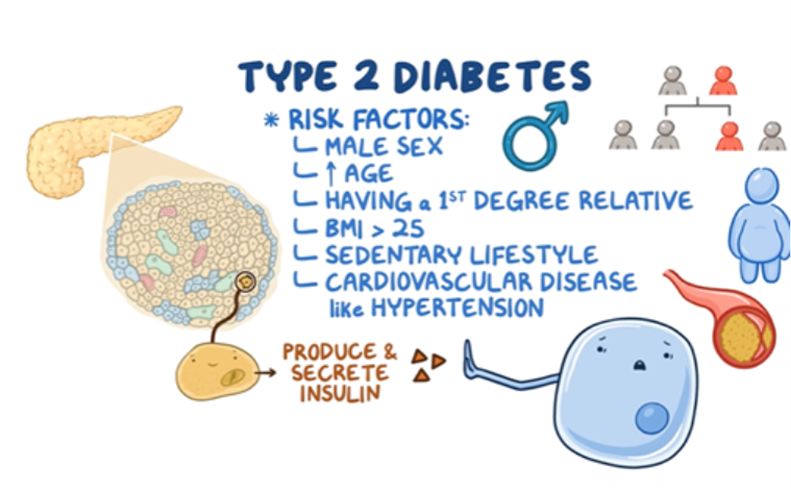
Rationale: A risk factor for type 2 diabetes mellitus is having cardiovascular disease, like hypertension.
Main Takeaway
The nurse should use clinical judgment to recognize cues related to type 2 diabetes mellitus by identifying relevant and important information from different sources. In patients with type 2 diabetes, the pancreas is able to produce and secrete insulin, but the tissue cells tend to be insulin resistant, meaning they are unable to respond well to insulin stimulation. Risk factors include male sex, increasing age, or having a first-degree relative with type 2 diabetes, a body mass index (BMI) over 25, a sedentary lifestyle, or a cardiovascular disease, like hypertension. Typically, the symptoms begin after age 45 and gradually worsen over a few months.
Incorrect Answer Explanations
A. The patient plays in a local soccer league.
Rationale: A risk factor for type 2 diabetes mellitus is living a sedentary lifestyle. Playing in a local soccer league indicates the patient is physically active.
B. Their maternal cousin has type 2 diabetes mellitus.
Rationale: A risk factor for type 2 diabetes mellitus includes having a first-degree relative with type 2 diabetes. A material cousin is not a first-degree relative.
D. The patient is 12-years-old.
Rationale: An age less than 30 years old is a risk factor for type 1 diabetes mellitus rather than type 2 diabetes mellitus. Typically, the symptoms of type 2 diabetes mellitus begin after the age of 45.
Want to learn more about this topic?
Watch this Osmosis video: Diabetes mellitus (DM): Nursing process (ADPIE)
References
- Ignatavicius, D. D., Workman, M. L., Rebar, C. R., & Heimgartner, N. M. (2020). Medical-Surgical nursing: Concepts for interprofessional collaborative care (10th ed.). Elsevier. ISBN 9780323654050.

Try Osmosis from Elsevier today! Access your free trial and find out why millions of current and future clinicians and caregivers love learning with us.
Leave a Reply