
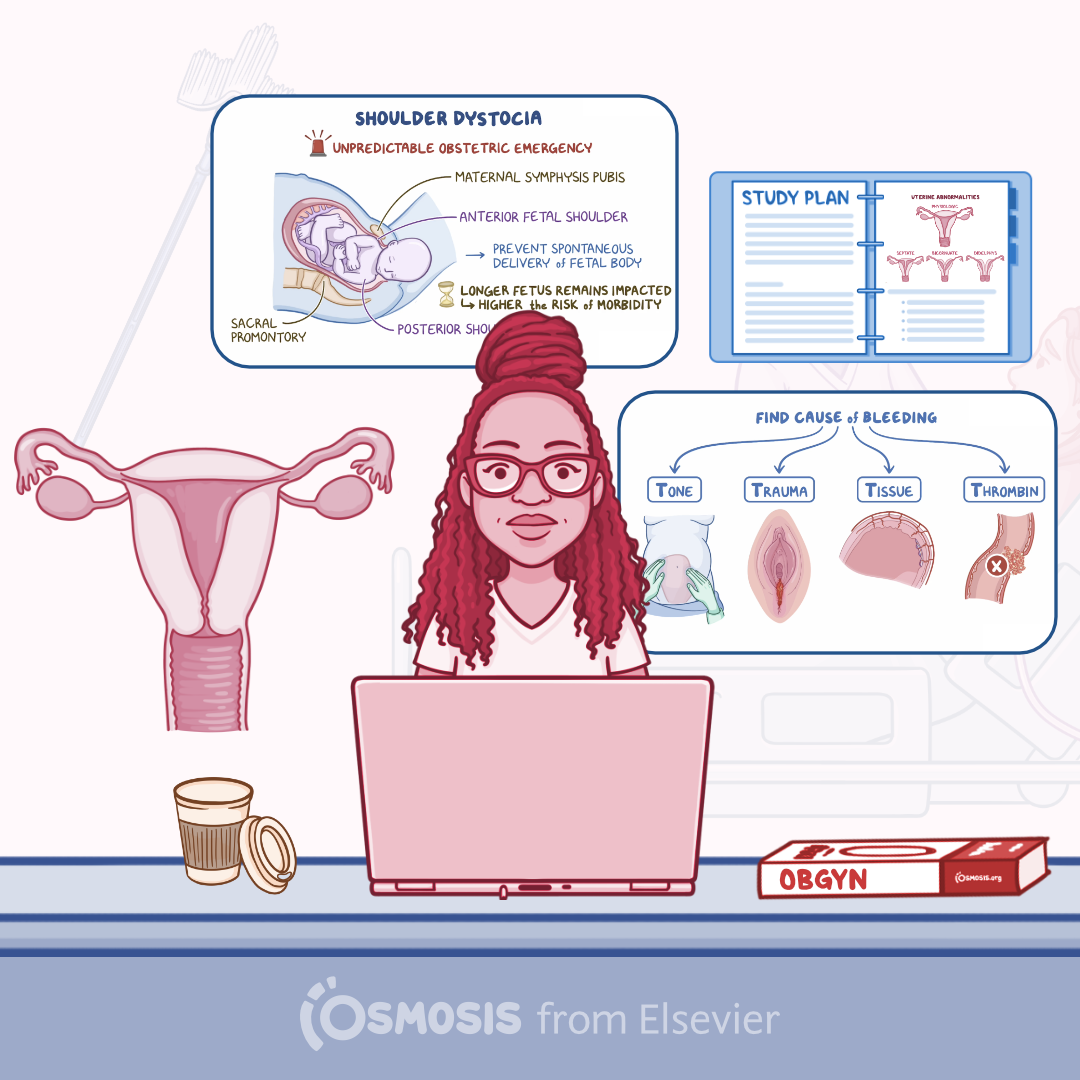
The OB/GYN shelf exam is unique and, many would say, more stressful compared to other shelf exams in medical school because it combines elements of surgery and internal medicine, emergency medicine, and outpatient care into a single clerkship. Medical students are expected to shift between obstetric emergencies, routine prenatal visits, gynecologic surgery, and preventive health, and the shelf exam reflects that.
In addition, OBGYN clinical experiences often resemble the surgery rotation due to the unpredictable nature of labor and delivery, along with call shifts, and the intensity of maternal-fetal care can make it challenging to maintain a consistent, manageable study routine. Fortunately, success on this shelf exam depends less on mastering an endless volume of unique topics than on recognizing common clinical patterns and understanding the nature of decision-making behind ACOG guidelines and management algorithms.
To support you during clinical rotations, we’re focusing on high-yield, efficient study strategies to help you study less, score better, avoid burnout, and keep your sanity intact!
Why the OB/GYN Shelf Exam Feels So Different (and Hard)
The OB/GYN shelf exam is difficult because it draws from so many disciplines. In a single exam, you’ll answer questions about preeclampsia, fetal heart tracing interpretation, contraceptive counseling, and the management of gynecologic malignancies. The constant shift between these areas requires students to apply different clinical frameworks from one question to the next.
The exam also places heavy emphasis on time-sensitive clinical decision-making skills. Unlike shelf exams where you can work through a differential at a gradual pace, OB/GYN questions frequently require consideration of gestational age, hemodynamic stability, or fetal status. Management often depends on a single clinical variable. For example, the correct next step at 34 weeks’ gestation may differ substantially from the correct answer at 24 weeks, even when the underlying diagnosis is the same.
A large percentage of the NBME® OB/GYN shelf tests the “best next step” rather than pure diagnosis alone. You might recognize the condition immediately, but the question is really asking whether you know the safest and most appropriate management strategy. Students who emphasize management patterns tend to pull ahead on this exam than those who focus primarily on identifying diagnoses.
Finally, the intensity of the OB/GYN rotation can make it more difficult to maintain a consistent study routine. Caring for patients during labor, delivery, and complicated pregnancies is both physically demanding and emotionally challenging, making it difficult to transition into study mode after a long day. Recognizing and acknowledging those demands and building a realistic, sustainable study plan is an important part of preparing effectively for the OB/GYN shelf exam.
The Biggest Mistake Students Make When Studying for the OB/GYN Shelf
The most common mistake is trying to memorize every pregnancy complication and treatment algorithm in isolation and without context. OB/GYN loves management algorithms, and it’s tempting to memorize them without understanding the underlying clinical reasoning behind each step. If you don’t understand why delivery is recommended at 37 weeks versus 34 weeks, memorizing the cutoff won’t help when the question changes the variables even slightly.
Another common mistake is spending too much time on learning rare obstetric emergencies and obscure gynecologic cancers. Amniotic fluid embolism is an interesting, deadly, and important diagnosis to recognize, but it shows up far less on the shelf exam than preeclampsia, gestational diabetes, and ectopic pregnancy. Focus on mastering common conditions and their management before devoting significant time to lower-yield topics.
Passive studying is also a common pitfall. Reading through guidelines without applying them through practice questions makes it difficult to develop the clinical decision-making skills this exam requires. The OB/GYN shelf is especially pattern-based, and repeated exposure to those concepts through answering practice questions is one of the best ways to recognize those patterns.
Finally, students tend to put too much emphasis on surgical details. You’re not expected to know the operative steps of a cesarean section. Instead, understand when a cesarean delivery is indicated, the associated maternal and fetal risks, and how to manage the common postoperative complications.
The Mindset Shift: What the OB/GYN Shelf Is Actually Testing
The OB/GYN shelf primarily tests clinical prioritization and patient safety. Success depends on you using clinical reasoning to recognize when immediate intervention is required, when a patient can be safely monitored, or when they need to undergo delivery immediately.
A major component of the exam is understanding how pregnancy impacts normal physiology and clinical management. A blood pressure of 145/95 means something very different in a 28-year-old who’s 36 weeks pregnant than in a non-pregnant patient. Similarly, the interpretation of labs, medications, and imaging decisions often shift in the context of pregnancy, and the shelf expects you to know how.
The OB/GYN shelf exam also tests your ability to apply algorithms to common presentations like vaginal bleeding, pelvic pain, and labor abnormalities. While it won’t demand that you recall every detail of these algorithms, you’ll be expected to rapidly identify the most appropriate next step based on the patient’s presentation and gestational age.

What You Actually Need to Know to Score Well
Routine prenatal care and normal pregnancy: Understand routine prenatal screening, the normal physiologic changes of pregnancy, and the factors that constitute a high-risk pregnancy.
Hypertensive disorders, gestational diabetes, and preterm labor: These three categories alone account for a significant portion of the exam. Know the diagnostic criteria, management algorithms, and indications for delivery for each. Pay particular attention to the differences between gestational hypertension, preeclampsia, and eclampsia.
Fetal heart tracings and labor management: Test writers frequently include image-based questions on the OB/GYN shelf, making fetal heart tracings one of the highest-yield visual concepts to master. The best way to learn them is through practice questions, as the patterns become recognizable with repeated exposure. Make sure you’re able to identify common tracing patterns, interpret their clinical significance, and determine when intervention is required. Also take the time to understand the stages of labor, along with the evaluation and management of common labor abnormalities, including arrest disorders.
Common gynecologic complaints. Abnormal uterine bleeding, pelvic pain, pelvic inflammatory disease, and ectopic pregnancy are consistently high-yield topics. Know the workup, red flags, and management for each.
Preventive women’s health. Cervical cancer screening, contraception, STI management, and breast cancer screening are tested regularly. These are often straightforward points if you’ve reviewed them, but they’re easy to overlook when most of your studying has been on obstetrics.
What You Don’t Need to Master (Despite Feeling Like You Do)
You don’t need to memorize ACOG guidelines word for word: Focus on understanding the clinical reasoning behind the recommendations. Similarly, rare gynecologic oncology presentations, malignancies, and detailed cancer staging, along with uncommon obstetric presentations, are lower yield than the foundational topics covered above.
You also don’t need to know the detailed operative techniques if cesarean sections or gynecologic surgeries: Instead, the shelf is much more likely to test when these procedures are indicated, their associated risks, and the management of common postoperative complications. Complex infertility workups beyond common causes and rare fetal syndromes are also relatively lower yield. Prioritize those topics after you’ve developed a strong foundation in the core, high-yield material.
A High-Yield, Time-Efficient Study Strategy
Start reviewing practice questions on day one of your rotation. The OB/GYN shelf heavily emphasizes pattern-based interventions and clinical decision-making, so practice questions are one of the most effective ways to prepare. Use a reliable question bank, and organize your review by common clinical presentations to study by presentation framework. Vaginal bleeding, pregnancy complications, pelvic pain, labor abnormalities, and postpartum issues mirror how the exam presents clinical cases.
One of the most important study habits for this shelf is to connect gestational age with diagnosis and management. As you review each condition, make sure to consider how changes in gestational age would alter the appropriate next step in management.
Repeated exposure to concepts through practice questions helps you recognize common presentations of preeclampsia, ectopic pregnancy, and labor evaluation more quickly and efficiently. For topics like contraception and screening guidelines, spaced repetition is particularly effective because these topics rely more heavily on memorization. These conditions require rote memorization by nature, and short, repeated exposure over weeks will solidify them in your mind more effectively than trying to jam them in during a single cramming session. When you encounter a concept you find challenging, focus your review on that specific topic rather than rereading an entire chapter.
Set a realistic study goal by dividing your total question target by the number of rotation days, minus five to seven, for a manageable daily goal with a built-in buffer due to unexpected schedule changes. And as always, know when to stop. If you find yourself losing focus or simply rereading explanations without retaining them, it’s usually more productive to rest and return with a fresh perspective. Forcing yourself to study once you’ve reached your brain’s limit has diminishing and even harmful effects.
How to Balance Shelf Studying with an OB/GYN Rotation
Go into the rotation understanding that labor and delivery will make your routine unpredictable. Some call shifts will leave you with little to no time for dedicated study sessions. When that happens, accept it and focus on learning from your clinical experiences. Consider it training for residency, where learning on the fly during clinical situations is expected and essential.
When possible, look for periods of downtime between deliveries, surgical cases, or clinic patients. Even if the next case is in 15 minutes, brief study periods add up over the rotation. Just like on previous rotations, study the topics related to the patients you’ve seen that day. If you care for a patient with preeclampsia, review the diagnosis and management of preeclampsia that same day. Linking clinical experiences to independent study reinforces learning and improves your long-term retention.
Adjust your expectations during especially demanding weeks. On heavier days, stick to lighter review and get adequate rest. On less demanding clinic days, devote more time to active learning through practice questions. The flexibility built into your study schedule will help you stay consistent despite an unpredictable workload.
If there’s any specific advice we want you to take away from this series, it’s that sleep is a top priority. Sacrificing sleep will always result in a net learning loss because sleep when information is consolidated and stored in the brain. A well-rested hour of focused studying is often more productive than several hours spent downing caffeine and pushing through fatigue.
What Scoring Well Actually Looks Like
Scoring well on the OB/GYN shelf means being able to quickly recognize obstetric emergencies, identify high-risk scenarios, and select the most appropriate next step in management. Much of the exam emphasizes clinical prioritization and patient safety, requiring you to determine whether monitoring, medication, delivery, or reassurance is the best course of action. These same clinical reasoning skills form the foundation of NBME Step 2 and COMLEX Level 2 and extend well beyond the clerkship itself.
A strong performance comes from developing confidence with common clinical scenarios, trusting your preparation, and consistently applying management principles. Students who perform well on the OB/GYN shelf exam focus on the high-yield, foundational concepts, repeatedly practice next-step care management questions, prioritize their sleep, and don’t get distracted by medical outliers.
By the end of your OB/GYN rotation, success won’t be measured by how many facts you’ve memorized, but by how confidently you can apply your knowledge to make safe, evidence-based clinical decisions. You’ll leave the rotation feeling mentally stretched but clinically accomplished, and a more capable clinician in the process.
Conclusion
The OB/GYN shelf rewards structured clinical reasoning, management prioritization, and a strong foundation in the concepts you’ll encounter most often. Most questions come down to patient safety, timing by recognizing high-yield clinical patterns and choosing the most appropriate next step in management. Mastering these skills will not only help you succeed on the shelf exam but also prepare you for USMLE® Step 2, COMLEX Level 2, and the clinical decisions you’ll make throughout your training.
The pace and unpredictability of the OB/GYN rotation can make this rotation feel especially challenging, but an efficient, targeted study strategy goes a long way in building the clinical instincts you’ll carry into every rotation and shelf exam that follows. The students who do well aren’t the ones who studied the most hours. They’re the ones who studied the right concepts. Study less, study smarter, and trust that it’s enough.
Key Takeaways
- The OB/GYN shelf emphasizes clinical prioritization, patient safety, and management decisions over simple diagnosis.
- High-yield topics include hypertensive disorders of pregnancy, fetal heart tracings, labor management, prenatal care, and common gynecologic conditions.
- Practice questions and repeated exposure to management algorithms are the most effective preparation strategies.
- Gestational age frequently changes the appropriate next step in management and should guide clinical reasoning.
- Consistent, focused studying and connecting clinical experiences to independent review build stronger long-term retention and exam performance.

Get your free trial now to discover why millions of clinicians and caregivers love learning by Osmosis.
Leave a Reply