
Today’s NCLEX® LPN question of the day focuses on taking vital signs and pulse rates. Do you know the answer? Let’s find out!
The nurse is reviewing the vital signs of several patients in the pediatric emergency department. Which patient has a pulse rate outside the expected range for age?
A. An 8-year-old patient with a radial pulse of 88/min
B. A 6-month-old patient with an apical pulse of 121/min
C. A 14-year-old patient with a brachial pulse of 94/min
D. A 4-year-old patient with a pulse of 131/min
Scroll down for the correct answer!
The correct answer to today’s NCLEX-PN® Question is…
D. A 4-year-old patient with a pulse of 131/min
Rationale: A pulse of 131/min is considered tachycardic for a 4-year-old, because it exceeds the expected range of 80 to 120/min for preschool-aged children between 3 and 5 years of age.
Main Takeaway
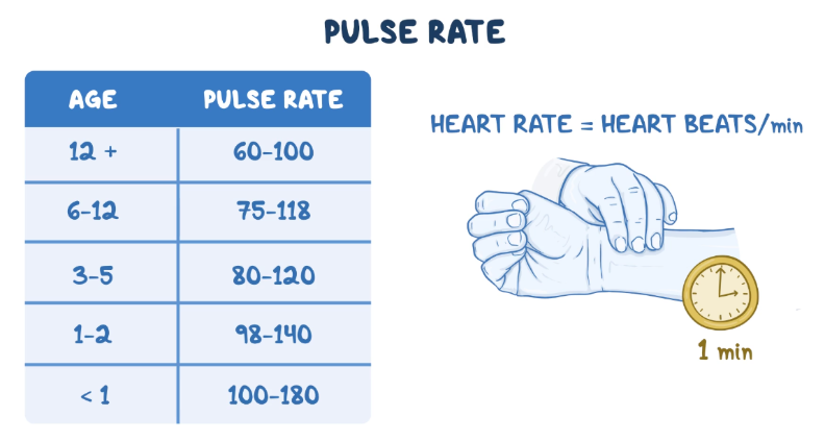
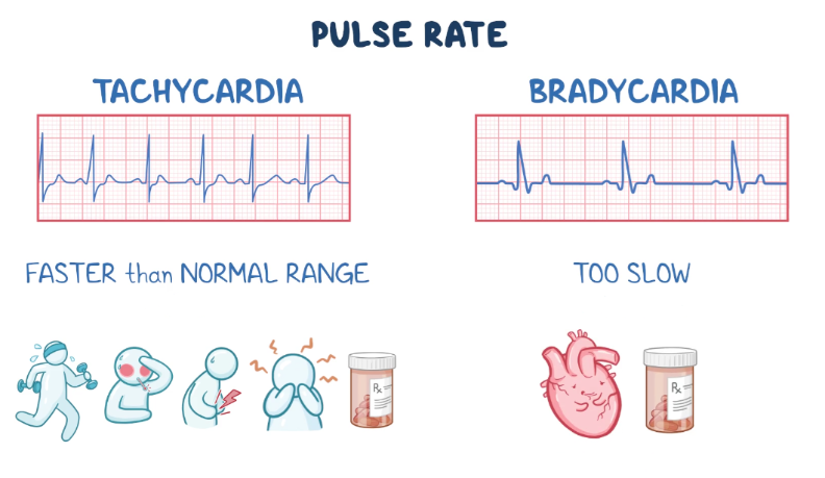
Normal pulse rates vary among different age groups. Adolescents and adults 12 years of age and older typically have a pulse rate between 60 and 100/min. School-aged children 6 to 12 years of age normally have a pulse rate between 75 and 118/min, preschool-aged children 3 to 5 years of age between 80 and 120/min, toddlers 1 to 2 years of age between 98 and 140/min, and infants younger than 1 year of age between 100 and 180/min Tachycardia is when the pulse rate is faster than the normal range and can result from strenuous exercise, fever, pain, anxiety, or certain medications. Bradycardia is when the pulse rate is slower than the normal range and can be due to heart problems or various medications.
Incorrect Answer Explanations
A. An 8-year-old patient with a radial pulse of 88/min
Rationale: The normal pulse for school-aged children between 6 and 12 years old is 75 to 118/min; therefore, this is an anticipated finding.
B. A 6-month-old patient with an apical pulse of 121/min
Rationale: The normal pulse for an infant younger than 1 year of age is 100 to 180/min; therefore, an apical pulse of 121/min is an expected finding.
C. A 14-year-old patient with a brachial pulse of 94/min
Rationale: The normal pulse for adolescents 12 years of age or older is 60 to 100/min; therefore, a pulse of 94/min is an expected finding.
Want to learn more about this topic?
Watch this Osmosis video: Vital signs – Pulse: Nursing skills

Get your free trial to find out why millions of current and future clinicians and caregivers love learning with us.
Leave a Reply