
Today’s learners have access to more information than ever before. Yet when students encounter a difficult concept, many still fall into the same pattern: opening multiple tabs, searching different websites, and trying to piece together explanations from various sources. While this approach can feel productive, it often creates confusion instead of clarity.
As artificial intelligence (AI) becomes increasingly integrated into education, medical educators face an important question: How can AI support learning without compromising critical thinking, clinical reasoning, or evidence-based study habits? Osmosis AI was designed with that challenge in mind.
Turn Student Confusion into Deeper Understanding
Learning is about much more than finding the right answer. Your students must understand underlying mechanisms, connect concepts across disciplines, and apply knowledge in clinical contexts.
When a student asks, “Can you explain the pathophysiology of type 1 diabetes?” the goal isn’t simply to provide a definition. Effective learning requires helping students understand why the disease develops, how physiological processes are affected, and how those changes relate to symptoms, diagnosis, and treatment.
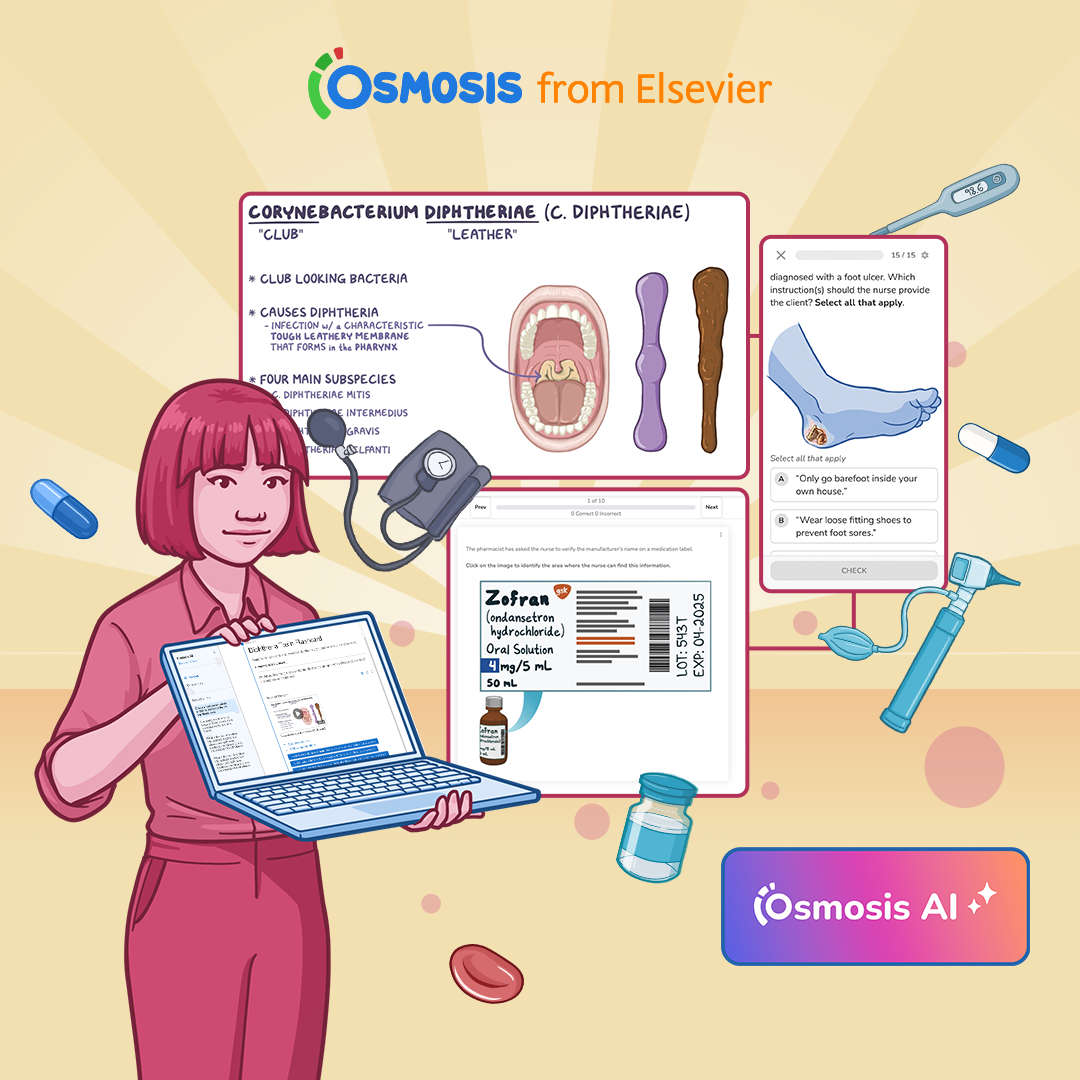
Osmosis AI supports this deeper learning process by providing explanations grounded in trusted healthcare education content while connecting learners to relevant Osmosis videos and study resources. Students can continue exploring a topic through follow-up questions, comparisons, flashcards, and practice questions using the Osmosis Quiz Builder (AKA Osmosis QBank) that reinforce understanding rather than rote memorization.
This approach aligns with an evidence-based learning cycle: learn, apply, assess, and review. When you encourage active engagement with content, students can transform moments of confusion into opportunities for deeper understanding.
Keep Students Focused and Learning in Context
Many students already use search engines and general-purpose AI tools as part of their study routine. While these tools can provide quick answers, they often introduce new challenges.
One of the biggest drawbacks is that they often pull students away from the learning experience. Jumping between websites, AI platforms, notes, and course materials can interrupt focus and make it harder for learners to connect concepts.
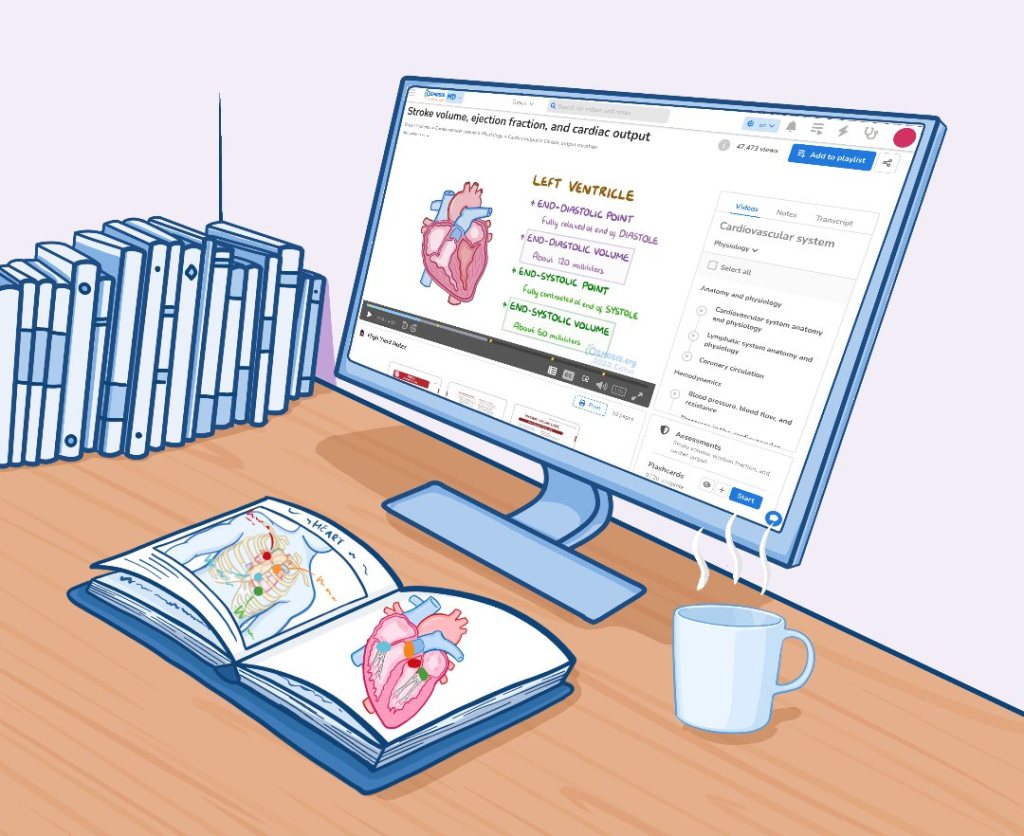
Osmosis AI keeps support within the learning workflow. A persistent chat panel sits alongside videos and learning content, allowing students to ask questions and get clarification without leaving the page.
The platform also builds on Osmosis’s visual-first approach to learning. When students need more than a written explanation, Osmosis AI can direct them to relevant videos that make complex concepts easier to understand.
In addition, Osmosis AI is designed to support—not replace—student thinking. It encourages learners to reason through concepts first and then use AI to clarify, organize, and reinforce understanding, helping develop the critical thinking skills needed for future clinical practice.
The result is a more seamless learning experience that supports comprehension without disrupting study flow.
Help Students Prepare More Effectively for Board Exams
Preparing for high-stakes board exams requires more than factual accuracy. Students need explanations that consistently reinforce exam-relevant concepts, clinical reasoning, and long-term retention.
General AI tools are designed to answer an enormous variety of questions across many domains. While they can often generate correct responses, the framing and educational focus may vary significantly from one interaction to the next.
Osmosis AI is purpose-built for healthcare education and board preparation. By grounding responses in trusted educational resources, it provides explanations that align with how concepts are taught, assessed, and applied in practice.
For educators, this means students can receive support that reinforces curricular goals rather than introducing competing frameworks or interpretations.
Encourage Critical Thinking Without Creating Dependence
As educators adopt AI-powered tools, a common concern is whether students will become overly dependent on them.
Research and experience suggest that the way AI is used matters just as much as the technology itself. When students rely on AI to do their thinking for them, they risk weakening the very skills they need to develop.
A more effective model positions AI as a coach rather than a substitute for thinking.
Students should first attempt to solve problems independently, commit to an answer, or work through their reasoning. AI can then be used to clarify concepts, organize information, identify knowledge gaps, and provide feedback. Finally, students should reinforce learning through active recall strategies such as practice questions, flashcards, and clinical cases.
This approach keeps learners engaged in the reasoning process while benefiting from AI-supported guidance.
Establish Trust with Purpose-Built, Responsible AI
The way AI is designed and implemented for education matters. Unlike general-purpose AI platforms, Osmosis AI was built specifically for medical education, combining advanced AI capabilities with trusted Elsevier educational content and integration directly within the Osmosis learning platform.
This educational focus extends beyond content delivery. Osmosis AI is continuously evaluated through a quality improvement process involving medical educators serving as Subject Matter Experts (SMEs). Responses are assessed for accuracy, groundedness, and reliability to help ensure students receive information aligned with current educational standards and best practices.
Equally important, Osmosis AI is designed as a learning support tool—not a clinical decision-making system. Human oversight, transparency, ongoing evaluation, and responsible AI principles remain central to its development. Students should be encouraged to verify information, engage with course materials, and consult primary sources to reinforce the habits that build strong clinical judgment.
For educators, this human-centered approach provides confidence that AI is being used to support evidence-based learning and critical thinking rather than simply automating answers.
Helping Students Learn Smarter, Not Just Faster
The promise of AI in medical education is not simply speed. The greater opportunity is helping students learn more effectively.
By connecting learners to trusted content, encouraging active learning, providing transparent sources, and supporting clinical reasoning, Osmosis AI helps students move from confusion to understanding without sacrificing educational quality.
For medical educators, this creates an opportunity to integrate AI into learning in a way that reinforces evidence-based study practices and supports long-term knowledge retention.
In a world where students are constantly navigating information overload, purpose-built educational AI can help keep learning focused, grounded, and meaningful.
Key Takeaways
- Osmosis AI supports deeper learning by connecting explanations to trusted healthcare education resources.
- Keeping AI assistance within the learning workflow helps reduce distractions and improve conceptual understanding.
- Purpose-built AI reinforces board-relevant concepts while supporting long-term knowledge retention.
- Students benefit most when AI is used to strengthen reasoning and active learning rather than replace critical thinking.
- Human oversight, trusted content, and responsible AI principles help ensure reliable, evidence-based educational support.
Discover how thoughtfully designed learning experiences—supported by tools like Osmosis AI—can transform classroom time into meaningful, clinically-relevant engagement that strengthens both student learning and confidence. Schedule a call today!
Leave a Reply