Appendicitis: Nursing process (ADPIE)

2,024views

Appendicitis: Nursing process (ADPIE)

Medical Surgical

Medical Surgical

Arrhythmias - Asystole: Nursing
Arrhythmias - Atrial fibrillation (Afib): Nursing
Arrhythmias - Atrial flutter (Aflutter): Nursing
Arrhythmias - Heart blocks: Nursing
Arrhythmias - Premature atrial contractions (PACs): Nursing
Arrhythmias - Premature ventricular contractions (PVCs): Nursing
Arrhythmias - Sinus tachycardia and sinus bradycardia: Nursing
Arrhythmias - Supraventricular tachycardia (SVT): Nursing
Arrhythmias - Ventricular fibrillation (Vfib): Nursing
Arrhythmias - Ventricular tachycardia (Vtach): Nursing
Arterial embolism: Nursing
Electrocardiogram (ECG) - Normal sinus rhythm (NSR): Nursing
Cardiomyopathy: Nursing
Congenital heart defects - Acyanotic: Nursing
Congenital heart defects - Cyanotic: Nursing
Endocarditis: Nursing
Heart defects that decrease pulmonary blood flow - Nursing considerations & client education: Nursing
Kawasaki disease: Nursing
Myocarditis: Nursing
Pericarditis: Nursing
Shock - Anaphylactic: Nursing
Shock - Cardiogenic: Nursing
Shock - Hypovolemic: Nursing
Shock - Neurogenic: Nursing
Shock - Obstructive: Nursing
Shock - Septic: Nursing
Valvular heart disease: Nursing
Geriatric considerations - Cardiac: Nursing
Aortic aneurysm: Nursing process (ADPIE)
Coronary artery disease (CAD) and angina pectoris: Nursing process (ADPIE)
Hypertension: Nursing process (ADPIE)
Left-sided heart failure: Nursing process (ADPIE)
Myocardial infarction (MI): Nursing process (ADPIE)
Pericardial effusion and cardiac tamponade: Nursing process (ADPIE)
Rheumatic heart disease: Nursing process (ADPIE)
Alpha-1 adrenergic blockers: Nursing pharmacology
Alpha-2 adrenergic agonists: Nursing pharmacology
Angiotensin II receptor blockers (ARBs): Nursing pharmacology
Angiotensin-converting enzyme (ACE) inhibitors: Nursing pharmacology
Antiarrhythmics: Nursing pharmacology
Antihyperlipidemics - Fibrates: Nursing pharmacology
Antihyperlipidemics - Miscellaneous: Nursing pharmacology
Antihyperlipidemics - Statins: Nursing pharmacology
Beta-adrenergic blockers: Nursing pharmacology
Calcium-channel blockers: Nursing pharmacology
Cardiac glycosides: Nursing pharmacology
Direct-acting vasodilators: Nursing pharmacology
Nitrates: Nursing pharmacology
Sympathomimetic medications: Nursing pharmacology
Adrenal insufficiency (Addison disease): Nursing
Cushing syndrome and Cushing disease: Nursing
Hyperparathyroidism: Nursing
Hypoparathyroidism: Nursing
Hypopituitarism: Nursing
Infant of a diabetic mother (IDM): Nursing
Phenylketonuria (PKU): Nursing
Diabetes insipidus: Nursing process (ADPIE)
Diabetes mellitus (DM): Nursing process (ADPIE)
Diabetic ketoacidosis (DKA): Nursing process (ADPIE)
Hyperosmolar hyperglycemic state (HHS): Nursing process (ADPIE)
Hyperthyroidism: Nursing process (ADPIE)
Hypothyroidism: Nursing process (ADPIE)
Syndrome of inappropriate antidiuretic hormone (SIADH): Nursing process (ADPIE)
Glucocorticoids and mineralocorticoids: Nursing pharmacology
Insulin: Nursing pharmacology
Medications affecting the parathyroid glands: Nursing pharmacology
Medications for antidiuretic hormone (ADH) disorders: Nursing pharmacology
Medications for thyroid disorders: Nursing pharmacology
Medications for growth hormone disorders: Nursing pharmacology
Oral antidiabetic medications - Alpha-glucosidase inhibitors: Nursing pharmacology
Oral antidiabetic medications - Biguanides and thiazolidinediones: Nursing pharmacology
Oral antidiabetic medications - DPP-4 inhibitors: Nursing pharmacology
Oral antidiabetic medications - Sodium-glucose co-transporter-2 (SGLT-2) inhibitors: Nursing pharmacology
Oral antidiabetic medications - Sulfonylureas and meglitinides: Nursing pharmacology
Amblyopia: Nursing
Cataracts: Nursing
Detached retina: Nursing
Hearing impairment and otosclerosis: Nursing
Legal blindness: Nursing
Macular degeneration: Nursing
Meniere disease: Nursing
Pharyngitis: Nursing
Strabismus: Nursing
Geriatric considerations - Sensory: Nursing
Otitis media: Nursing
Epistaxis: Nursing process (ADPIE)
Eye injury: Nursing process (ADPIE)
Glaucoma: Nursing process (ADPIE)
Tonsillitis: Nursing process (ADPIE)
Antiglaucoma medications: Nursing pharmacology
Eye anesthetics: Nursing pharmacology
Mydriatics and cycloplegics: Nursing pharmacology
Ophthalmic anti-inflammatories and anti-infectives: Nursing pharmacology
Biliary atresia: Nursing
Cholecystitis: Nursing
Cholelithiasis: Nursing
Diarrhea: Nursing
Diverticular disease: Nursing
Hepatitis: Nursing
Inflammatory bowel disease - Crohn disease and ulcerative colitis: Nursing
Intestinal obstruction: Nursing
Irritable bowel syndrome (IBS): Nursing
Jaundice: Nursing
Esophageal atresia and tracheoesophageal fistula: Nursing
Geriatric considerations - Gastrointestinal: Nursing
Hirschsprung disease: Nursing
Hyperemesis gravidarum: Nursing
Necrotizing enterocolitis: Nursing
Omphalocele and gastroschisis: Nursing
Appendicitis: Nursing process (ADPIE)
Celiac disease: Nursing process (ADPIE)
Cirrhosis: Nursing process (ADPIE)
Gastroesophageal reflux disease (GERD): Nursing process (ADPIE)
Hiatal hernia: Nursing process (ADPIE)
Pancreatitis: Nursing process (ADPIE)
Peptic ulcer disease (PUD): Nursing process (ADPIE)
Antacids: Nursing pharmacology
Antidiarrheals: Nursing pharmacology
Antiemetics: Nursing pharmacology
Antispasmodics (GI): Nursing pharmacology
Gallstone-dissolving agents: Nursing pharmacology
Gastric mucosal protective agents: Nursing pharmacology
Histamine H2 antagonists: Nursing pharmacology
Laxatives: Nursing pharmacology
Medications for hepatic encephalopathy: Nursing pharmacology
Pancreatic enzyme replacements: Nursing pharmacology
Proton pump inhibitors (PPIs): Nursing pharmacology
Treatment for Helicobacter pylori: Nursing pharmacology
Weight loss medications: Nursing pharmacology
Chronic kidney disease (CKD): Nursing
Dialysis care: Nursing
Epididymitis: Nursing
Glomerulonephritis: Nursing
Nephrotic syndrome: Nursing
Polycystic kidney disease (PKD): Nursing
Pyelonephritis: Nursing
Renal and urinary calculi: Nursing
Urinary retention: Nursing
Bladder exstrophy: Nursing
Circumcision: Nursing
Cryptorchidism: Nursing
Enuresis: Nursing
Geriatric considerations - Urinary: Nursing
Hypospadias and epispadias: Nursing
Acute kidney injury (AKI): Nursing process (ADPIE)
Benign prostatic hyperplasia (BPH): Nursing process (ADPIE)
Urinary incontinence - Stress: Nursing process (ADPIE)
Urinary tract infections (UTIs): Nursing process (ADPIE)
Diuretics - Osmotic and carbonic anhydrase inhibitors: Nursing pharmacology
Diuretics - Thiazide, thiazide-like, loop, and potassium-sparing diuretics: Nursing pharmacology
Antispasmodics (GU): Nursing pharmacology
Cholinergic therapy (GU): Nursing pharmacology
Anemia - Aplastic: Nursing
Anemia - Iron-deficiency: Nursing
Anemia - Macrocytic: Nursing
Disseminated intravascular coagulation (DIC): Nursing
Neutropenia: Nursing
Polycythemia: Nursing
Thalassemia: Nursing
Thrombocytopenia: Nursing
Arterial blood gas (ABG) - Overview: Nursing
Arterial blood gas (ABG) - Metabolic acidosis: Nursing
Arterial blood gas (ABG) - Respiratory alkalosis: Nursing
Blood cultures: Nursing
Cardiac biomarkers - Creatine kinase (CK): Nursing
Cardiac biomarkers - Troponin: Nursing
Coagulation studies - Partial thromboplastin time (PTT): Nursing
Complete blood count (CBC) - Hemoglobin and hematocrit: Nursing
Complete blood count (CBC) - Platelets: Nursing
Complete blood count (CBC) - Red blood cells (RBC): Nursing
Complete blood count (CBC) - White blood cells (WBC) and differential: Nursing
Complete metabolic panel (CMP) - Blood urea nitrogen (BUN) and creatinine (Cr): Nursing
Complete metabolic panel (CMP) - Chloride: Nursing
Complete metabolic panel (CMP) - Estimated glomerular filtration rate (eGFR): Nursing
Complete metabolic panel (CMP) - Glucose: Nursing
Complete metabolic panel (CMP) - Liver function tests (LFT): Nursing
Complete metabolic panel (CMP) - Potassium: Nursing
Complete metabolic panel (CMP) - Sodium: Nursing
Hemolytic disease of the fetus and newborn: Nursing
Hemolytic uremic syndrome: Nursing
Hemophilia: Nursing process (ADPIE)
Leukemia: Nursing process (ADPIE)
Sickle cell disease: Nursing process (ADPIE)
Anticoagulants - Direct thrombin and factor Xa inhibitors: Nursing pharmacology
Anticoagulants - Heparin: Nursing pharmacology
Anticoagulants - Warfarin: Nursing pharmacology
Antihyperlipidemics - Bile acid sequestrants and cholesterol absorption inhibitors: Nursing pharmacology
Antiplatelet agents: Nursing pharmacology
Blood products: Nursing pharmacology
Hematopoietic growth factors: Nursing pharmacology
Hemostatics: Nursing pharmacology
Iron preparations: Nursing pharmacology
Thrombolytics: Nursing pharmacology
Immune response - Adaptive: Nursing
Autoimmunity: Nursing
Human immunodeficiency virus (HIV) and acquired immunodeficiency syndrome (AIDS): Nursing
Hypersensitivity reactions - Type I: Nursing
Hypersensitivity reactions - Type II: Nursing
Hypersensitivity reactions - Type III: Nursing
Hypersensitivity reactions - Type IV: Nursing
Inflammatory process: Nursing
Immune response - Innate: Nursing
Immunodeficiency disorders - Primary: Nursing
Scleroderma: Nursing
Immunodeficiency disorders - Secondary: Nursing
Sjögren syndrome: Nursing
Systemic lupus erythematosus (SLE): Nursing
Toxic shock syndrome (TSS): Nursing
Erythema infectiosum (Fifth disease): Nursing
Fever: Nursing
Infectious mononucleosis: Nursing
Mumps (Parotitis): Nursing
Neonatal sepsis: Nursing
Pertussis: Nursing
Poliomyelitis: Nursing
Postpartum infections: Nursing
Roseola (Exanthem subitum): Nursing
Rubella (German measles): Nursing
Rubeola (Measles): Nursing
Smallpox: Nursing
Zika virus: Nursing
Anaphylaxis: Nursing process (ADPIE)
Lyme disease: Nursing process (ADPIE)
Rheumatoid arthritis (RA): Nursing process (ADPIE)
Antirejection immunosuppressants: Nursing pharmacology
Biologic agents: Nursing pharmacology
Vaccines: Nursing pharmacology
Immunoglobulins: Nursing pharmacology
Immunosuppressants for autoimmune diseases: Nursing pharmacology
Immunomodulators: Nursing pharmacology
Disease-modifying therapy for multiple sclerosis: Nursing pharmacology
Acne: Nursing
Animal and snake bites: Nursing
Burn injury: Nursing
Cutaneous fungal infections: Nursing
Erysipelas and cellulitis: Nursing
Herpes simplex virus (HSV): Nursing
Herpes zoster: Nursing
Impetigo: Nursing
Insect stings and bites: Nursing
Pediculosis and scabies: Nursing
Psoriasis: Nursing
Rocky Mountain spotted fever (RMSF): Nursing
Skin cancer - Basal cell carcinoma, squamous cell carcinoma, and melanoma: Nursing
Urticaria: Nursing
Geriatric considerations - Integumentary: Nursing
Atopic dermatitis: Nursing process (ADPIE)
Frostbite: Nursing process (ADPIE)
Methicillin-resistant Staphylococcus aureus (MRSA): Nursing process (ADPIE)
Pressure injury: Nursing process (ADPIE)
Debridement agents: Nursing pharmacology
Keratolytics: Nursing pharmacology
Antibiotics - Topical: Nursing pharmacology
Antifungals - Topical: Nursing pharmacology
Corticosteroids - Topical: Nursing pharmacology
Medications for acne vulgaris: Nursing pharmacology
Amputation: Nursing
Carpal tunnel syndrome: Nursing
Herniated intervertebral disc: Nursing
Hip fractures: Nursing
Muscular dystrophies - Duchenne and Becker: Nursing
Myasthenia gravis: Nursing
Osteoarthritis: Nursing
Osteomyelitis: Nursing
Osteoporosis: Nursing
Paget disease of bone: Nursing
Craniosynostosis: Nursing
Developmental dysplasia of the hip: Nursing
Juvenile idiopathic arthritis: Nursing
Scoliosis: Nursing
Acute compartment syndrome: Nursing process (ADPIE)
Fractures: Nursing process (ADPIE)
Gout: Nursing process (ADPIE)
Musculoskeletal injuries: Nursing process (ADPIE)
Acetylcholinesterase inhibitors for myasthenia gravis: Nursing pharmacology
Analgesics: Nursing pharmacology
Skeletal muscle relaxants: Nursing pharmacology
Altered level of consciousness (LOC): Nursing
Amyotrophic lateral sclerosis (ALS): Nursing
Bell palsy: Nursing
Cerebral palsy: Nursing
Encephalitis: Nursing
Guillain-Barré syndrome: Nursing
Head injury: Nursing
Hemorrhagic stroke - Intracranial hemorrhage (ICH) and subarachnoid hemorrhage (SAH): Nursing
Epidural and subdural hematoma: Nursing
Huntington disease: Nursing
Increased intracranial pressure (ICP): Nursing
Intracranial aneurysm: Nursing
Migraines: Nursing
Multiple sclerosis (MS): Nursing
Physiology of pain: Nursing
Spinal cord injury (SCI): Nursing
Delirium: Nursing
Dementia: Nursing
Brachial plexus injury: Nursing
Neurological assessment - Neonate: Nursing
Neural tube defects: Nursing
Meningitis: Nursing process (ADPIE)
Parkinson disease: Nursing process (ADPIE)
Seizure disorder: Nursing process (ADPIE)
Stroke: Nursing process (ADPIE)
Trigeminal neuralgia: Nursing process (ADPIE)
Antiepileptics: Nursing pharmacology
Medications for Alzheimer disease: Nursing pharmacology
Medications for migraines: Nursing pharmacology
Biology of cancer: Nursing
Bladder tumors: Nursing
Bone tumors: Nursing
Brain tumors: Nursing
Cervical cancer: Nursing
Colorectal cancer: Nursing
Esophageal cancer: Nursing
Gastric cancer: Nursing
Laryngeal cancer: Nursing
Liver cancer: Nursing
Lung cancer: Nursing
Lymphoma - Hodgkin and non-Hodgkin: Nursing
Multiple myeloma: Nursing
Neuroblastoma: Nursing
Ovarian cancer: Nursing
Pancreatic cancer: Nursing
Prostate cancer: Nursing
Renal cancer: Nursing
Retinoblastoma: Nursing
Testicular cancer: Nursing
Breast cancer: Nursing process (ADPIE)
Tumor lysis syndrome (TLS): Nursing Process (ADPIE)
Alkylating agents: Nursing pharmacology
Angiogenesis inhibitors: Nursing pharmacology
Antimetabolites: Nursing pharmacology
Antitumor antibiotics: Nursing pharmacology
Hormones and hormone modulators for cancer: Nursing pharmacology
Other antineoplastics: Nursing pharmacology
Plant extracts for chemotherapy: Nursing pharmacology
Platinum-based agents: Nursing pharmacology
Buerger disease: Nursing
Raynaud phenomenon: Nursing
Peripheral arterial disease (PAD): Nursing process (ADPIE)
Peripheral venous disease (PVD): Nursing process (ADPIE)
Contraception - Barrier methods: Nursing
Contraception - Hormonal methods: Nursing
Contraception - Natural methods: Nursing
Contraception - Permanent methods: Nursing
Endometriosis: Nursing
Genital warts: Nursing
Infertility: Nursing
Syphilis: Nursing
Gestational trophoblastic disease: Nursing
Precocious puberty: Nursing
Candidiasis: Nursing process (ADPIE)
Gonorrhea and chlamydia: Nursing process (ADPIE)
Pelvic inflammatory disease (PID): Nursing process (ADPIE)
Acute respiratory distress syndrome (ARDS): Nursing
Anthrax: Nursing
Aspergillosis: Nursing
Atelectasis: Nursing
Chest tube care: Nursing
COVID-19: Nursing
Cystic fibrosis: Nursing
Flail chest: Nursing
Influenza: Nursing
Pleural effusion: Nursing
Pleurisy: Nursing
Pneumothorax and hemothorax: Nursing
Pulmonary contusion: Nursing
Pulmonary edema: Nursing
Rib fracture: Nursing
Rupture of diaphragm: Nursing
Sarcoidosis: Nursing
Tuberculosis (TB): Nursing
Bronchopulmonary dysplasia (BPD): Nursing
Congenital diaphragmatic hernia: Nursing
Geriatric considerations - Respiratory: Nursing
Neonatal respiratory distress syndrome (NRDS): Nursing
Asthma: Nursing process (ADPIE)
Bacterial pneumonia: Nursing process (ADPIE)
Bronchiolitis and respiratory syncytial virus (RSV): Nursing process (ADPIE)
Carbon monoxide poisoning: Nursing process (ADPIE)
Chronic obstructive pulmonary disease (COPD): Nursing process (ADPIE)
Epiglottitis: Nursing process (ADPIE)
Foreign body aspiration and upper airway obstruction: Nursing process (ADPIE)
Laryngotracheobronchitis (LTB) and croup: Nursing process (ADPIE)
Smoke inhalation injury: Nursing process (ADPIE)
Venous thromboembolism (VTE): Nursing process (ADPIE)
Antihistamines: Nursing pharmacology
Bronchodilators: Nursing pharmacology
Corticosteroids - Inhaled: Nursing pharmacology
Mast cell stabilizers - Inhaled: Nursing pharmacology
Leukotriene modifiers: Nursing pharmacology
Medications to control airway secretions: Nursing pharmacology
Oxygen therapy: Nursing pharmacology
Respiratory stimulants: Nursing pharmacology
Preoperative care: Nursing
Postoperative care: Nursing
Palliative and hospice care: Nursing
Postmortem care and considerations: Nursing

Notes

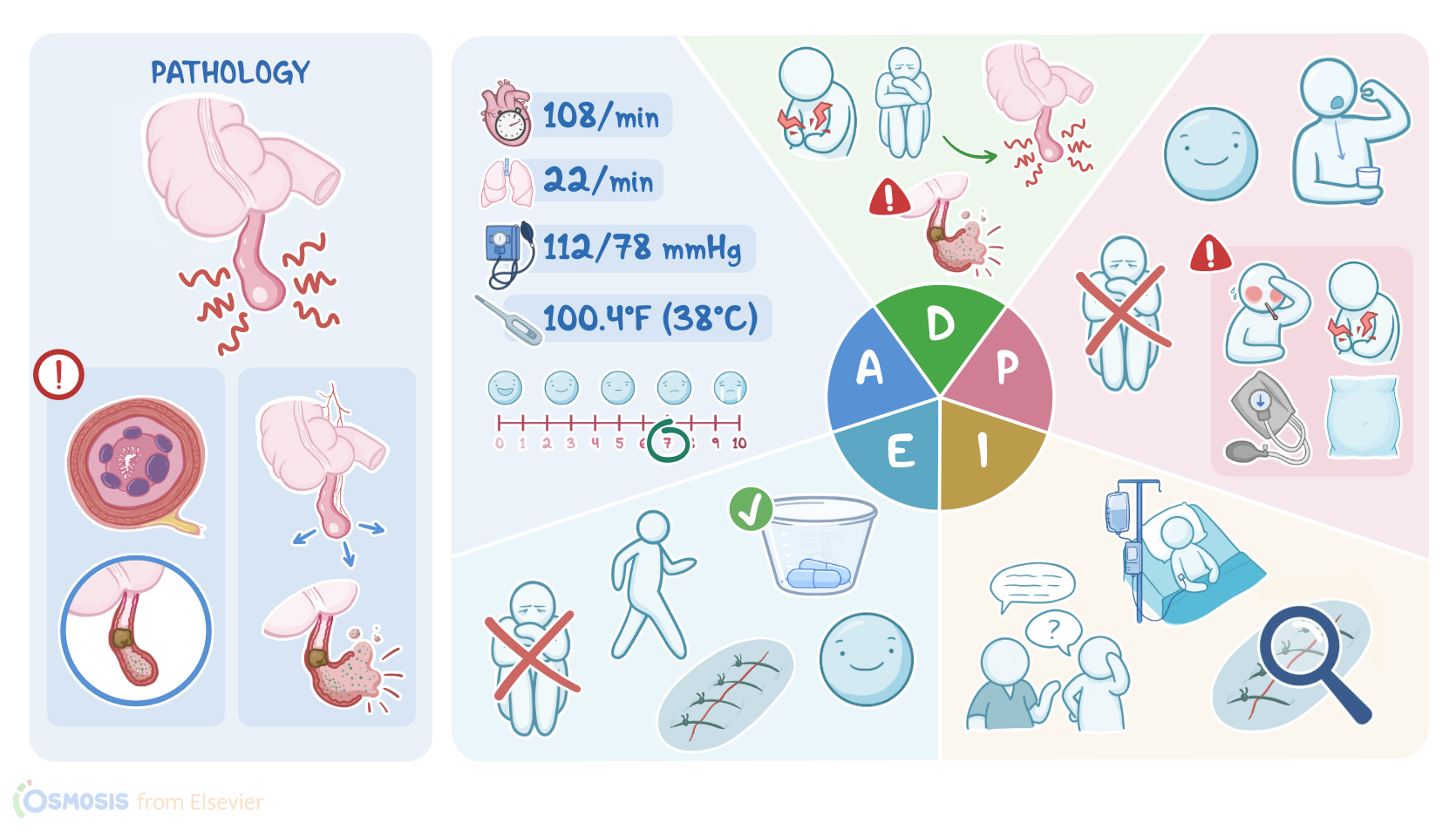
APPENDICITIS

KEY POINTS
NOTES
PATIENT REPORT
  • 16-year-old boy
  • Diagnosis: appendicitis
  • Scheduled for appendectomy

PATHOPHYSIOLOGY
  • Appendectomy
    • Inflammation and obstruction of appendix
    • Mucosal secretions and bacteria build up
    • Parietal membrane becomes irritated
    • Causes
      • Lymphoid hyperplaisa
      • Fecalith
      • Tumor
      • Parasites
    • Signs and symptoms
      • Abdominal pain
      • Fever
      • Anorexia
      • Nausea
      • Vomiting
  • Complications
    • Necrosis
    • Abscess 
    • Peritonitis
  • Diagnosis
    • History
    • Physical assessment
    • Ultrasound
    • CT
    • MRI
    • Laboratory tests
  • Treatment
    • Surgery

ASSESSMENT
  • Lying on side with knees drawn up
  • Blood pressure: 112/78 mmHg
  • Heart rate: 108
  • Respiratory rate: 22
  • Oxygen saturation: 99% room air
  • Temperature: 100.4 F (38.0 C)
  • 5'9'' (175 cm)
  • 148 lbs (67 kg) 
  • Right-sided abdominal pain
  • Pain: 7/10
  • Nauseated
  • White blood count: 13,500 cells/mm(13.5 x 109 cells/L)

NURSING DIAGNOSES
  • Acute pain related to inflammation of the appendix
  • Nausea related to inflammation of appendix
  • Risk for infection related to possible rupture
  • Risk for delayed surgical recovery

PLANNING
  • Manageable pain
  • Absence of nausea
  • Tolerate oral intake
  • No infection
  • No postoperative complications

IMPLEMENTATION
  • Administer medications as prescribed
  • Maintain NPO status
  • Assist to semi-Fowler's position
  • Place ice pack on abdomen
  • Explain surgery
  • Provide teaching on preventing postoperative complications

EVALUATION
  • Blood pressure: 110/80 mmHg
  • Heart rate: 88
  • Respiratory rate: 16
  • Clear lungs
  • Oxygen saturation: 98% 2L nasal cannula
  • Pain: 2/10
  • Temperature: 98.8 F (37.1 C)
  • Active bowel sounds
  • No nausea
  • Incisions clean, dry, and intact

Transcript

Watch video only

16-year-old Manny Correa is admitted to the pediatric inpatient unit from the urgent care clinic.

Manny’s father George brought him to the clinic after Manny experienced pain around his belly button for the past 24 hours.

An abdominal ultrasound confirmed an inflamed appendix. Manny is scheduled for an appendectomy today.

Appendicitis is a condition where the appendix, a finger-like projection that hangs off of the cecum of the large intestine, becomes obstructed and inflamed.

Appendicitis can be caused by lymphoid hyperplasia, where overgrown lymphoid follicles obstruct the appendix, or when a hard lump of stool called a fecalith, a tumor, or even parasites like pinworms cause an obstruction, resulting in appendicitis.

Appendicitis is more common in the second and third decades of life, with the highest incidence between the ages of 10 and 19.

It is more common in men than in women.

Now, when the appendix becomes obstructed, mucosal secretions and the bacteria that normally live in the appendix build up inside, causing the appendix to expand and press against the visceral nerve fibers, resulting in pain that is often felt in the periumbilical area.

Multiplication of bacteria inside the appendix leads to inflammation, which is accompanied by fever, anorexia, nausea, and sometimes vomiting.

Eventually, the appendix starts to irritate the nearby parietal membrane lining the walls of the abdominal cavity, causing the pain to intensify and migrate to the right lower quadrant, an area known as McBurney’s point, which is located 1.5 to 2 inches from the navel to the anterior superior iliac spine.

Palpating McBurney’s point and quickly releasing pressure will demonstrate rebound tenderness, and the person may show guarding, where their abdominal muscles tense up when pressed in an attempt to avoid pain.

Rovsing's sign is elicited if pressure over the person’s left lower abdominal quadrant causes pain in the right lower abdominal quadrant.

The psoas sign is when pain occurs with passive extension of the right hip.

Lastly, the obturator sign is elicited by flexing the right knee to a 90 degree angle while internally rotating the hip.

Complications can develop as the appendix continues to swell, compress the venous and arterial blood flow.

This leads to edema, ischemia and eventual necrosis of the appendiceal wall.

As cells die, the wall becomes weaker and weaker, until it eventually ruptures, allowing bacteria, pus, and fluid to escape into the peritoneum.

The result is the formation of abscesses around the appendix, or peritoneal inflammation, referred to as peritonitis.

At first, the person may notice a sudden decrease in pain as the pressure inside the appendix is relieved.

However, as infection and inflammation continues to develop inside the peritoneal cavity, the person can develop severe abdominal pain and rigidity, vomiting, tachycardia, and hypotension.

If untreated, peritonitis can progress to shock or septicemia.

After a client history and physical examination is complete, laboratory and other diagnostic tests can help confirm a diagnosis of appendicitis.

Abdominal ultrasound can be used to visualize inflammatory changes.

Abdominal CT scans are more sensitive, and can show a more precise view of these findings.

An MRI is useful in diagnosing appendicitis in pregnancy or when contrast must be avoided.

A CBC will often show leukocytosis with a left shift, or an increased number of immature neutrophils.

A C-reactive protein, which is an indication of inflammation, is often elevated.

Sometimes, uncomplicated appendicitis is treated with a course of antibiotics, but the definitive treatment for appendicitis is the surgical removal of the appendix, referred to as an appendectomy.

If an abscess has formed and there is no evidence of peritonitis, treatment may involve draining the abscess with a needle.

Sometimes a tube may be left in place to allow ongoing drainage.

Manny and George have arrived on the pediatric inpatient unit, and it’s time for you to begin your assessment.

After introducing yourself, confirming Manny’s identity, and performing hand hygiene, you note that Manny is laying on his right side with his knees drawn up towards his chest.

Sources

  1. "Ackley and Ladwig’s Nursing Diagnosis Handbook: An Evidence-Based Guide to Planning Care, 13th edition" Mosby (2022)
  2. "Post operative pediatric appendicitis nurse-driven discharge: Patient outcomes and nursing perspectives" Am J Surg (2021)
  3. "Appendicitis in a ventral hernia" Visual Journal of Emergency Medicine (2023)
  4. "Medical-Surgical Nursing: Concepts for Interprofessional Collaborative Care, 10th Edition" Elsevier (2020)
  5. "Harrison’s Principles of Internal Medicine, 21st edition" McGraw Hill / Medical (2022)
  6. "Simultaneous occurrence of acute appendicitis and appendicular band syndrome in a patient with intestinal obstruction" Visual Journal of Emergency Medicine (2023)
  7. "Routine post-operative labs and healthcare system burden in acute appendicitis" Am J Surg (2023)
  8. "Health Assessment for Nursing Practice, 7th edition" Elsevier (2021)