Autism spectrum disorder (ASD): Nursing

Last updated: May 25, 2022

Autism spectrum disorder (ASD): Nursing

Watch later

Watch later

Nutrition - Parenteral: Nursing skills
Mobility - Ambulation: Nursing skills
Atopic dermatitis: Nursing process (ADPIE)
Epistaxis: Nursing process (ADPIE)
Frostbite: Nursing process (ADPIE)
Peptic ulcer disease (PUD): Nursing process (ADPIE)
Pressure injury: Nursing process (ADPIE)
Debridement agents: Nursing pharmacology
Keratolytics: Nursing pharmacology
Medications for acne vulgaris: Nursing pharmacology
Hygiene - Bathing: Nursing skills
Hygiene - Gastric and intestinal tube care: Nursing skills
Hygiene - Oral care: Nursing skills
Hygiene - Ostomy care: Nursing skills
Hygiene - Perineal care: Nursing skills
Hygiene - Urinary catheter care: Nursing skills
Acne: Nursing
Animal and snake bites: Nursing
Burn injury: Nursing
Herpes simplex virus (HSV): Nursing
Herpes zoster: Nursing
Impetigo: Nursing
Insect stings and bites: Nursing
Pediculosis and scabies: Nursing
Preoperative care: Nursing
Postoperative care: Nursing
Psoriasis: Nursing
Skin cancer - Basal cell carcinoma, squamous cell carcinoma, and melanoma: Nursing
Urticaria: Nursing
Eye injury: Nursing process (ADPIE)
Glaucoma: Nursing process (ADPIE)
Trigeminal neuralgia: Nursing process (ADPIE)
Antiglaucoma medications: Nursing pharmacology
Ophthalmic anti-inflammatories and anti-infectives: Nursing pharmacology
Mydriatics and cycloplegics: Nursing pharmacology
Amblyopia: Nursing
Cataracts: Nursing
Detached retina: Nursing
Hearing impairment and otosclerosis: Nursing
Legal blindness: Nursing
Macular degeneration: Nursing
Meniere disease: Nursing
Strabismus: Nursing
Analgesics for obstetrics: Nursing pharmacology
Analgesics: Nursing pharmacology
Eye anesthetics: Nursing pharmacology
Pain management during labor: Nursing
Physiology of pain: Nursing
Fractures: Nursing process (ADPIE)
Musculoskeletal injuries: Nursing process (ADPIE)
Skeletal muscle relaxants: Nursing pharmacology
Acetylcholinesterase inhibitors for myasthenia gravis: Nursing pharmacology
Clubfoot: Nursing
Brachial plexus injury: Nursing
Scoliosis: Nursing
Immobility - Positioning and alignment: Nursing skills
Mobility - Assistive devices: Nursing skills
Amputation: Nursing
Amyotrophic lateral sclerosis (ALS): Nursing
Bell palsy: Nursing
Cerebral palsy: Nursing
Guillain-Barré syndrome: Nursing
Herniated intervertebral disc: Nursing
Hip fractures: Nursing
Muscular dystrophies - Duchenne and Becker: Nursing
Myasthenia gravis: Nursing
Osteoarthritis: Nursing
Osteoporosis: Nursing
Paget disease of bone: Nursing
Spinal cord injury (SCI): Nursing
Appendicitis: Nursing process (ADPIE)
Cirrhosis: Nursing process (ADPIE)
Gout: Nursing process (ADPIE)
Pancreatitis: Nursing process (ADPIE)
Rheumatoid arthritis (RA): Nursing process (ADPIE)
Juvenile idiopathic arthritis: Nursing
Glucocorticoids and mineralocorticoids: Nursing pharmacology
Biologic agents: Nursing pharmacology
Corticosteroids - Topical: Nursing pharmacology
Buerger disease: Nursing
Carpal tunnel syndrome: Nursing
Complete metabolic panel (CMP) - Liver function tests (LFT): Nursing
Encephalitis: Nursing
Endocarditis: Nursing
Epididymitis: Nursing
Folliculitis, carbuncles, and furuncles: Nursing
Glomerulonephritis: Nursing
Hepatitis: Nursing
Inflammatory process: Nursing
Kawasaki disease: Nursing
Myocarditis: Nursing
Pericarditis: Nursing
Pharyngitis: Nursing
Raynaud phenomenon: Nursing
Candidiasis: Nursing process (ADPIE)
Chickenpox (Varicella): Nursing process (ADPIE)
Conjunctivitis: Nursing process (ADPIE)
Gonorrhea and chlamydia: Nursing process (ADPIE)
Lyme disease: Nursing process (ADPIE)
Meningitis: Nursing process (ADPIE)
Methicillin-resistant Staphylococcus aureus (MRSA): Nursing process (ADPIE)
Pelvic inflammatory disease (PID): Nursing process (ADPIE)
Tonsillitis: Nursing process (ADPIE)
Urinary tract infections (UTIs): Nursing process (ADPIE)
Anthelmintics: Nursing pharmacology
Antibiotics - Aminoglycosides: Nursing pharmacology
Antibiotics - Antimycobacterials: Nursing pharmacology
Antibiotics - Beta lactam and beta lactamase inhibitor combinations: Nursing pharmacology
Antibiotics - Carbapenems and monobactams: Nursing pharmacology
Antibiotics - Cephalosporins: Nursing pharmacology
Antibiotics - Cyclic lipopeptides: Nursing pharmacology
Antibiotics - Fluoroquinolones: Nursing pharmacology
Antibiotics - Glycopeptides: Nursing pharmacology
Antibiotics - Lincosamides: Nursing pharmacology
Antibiotics - Macrolides: Nursing pharmacology
Antibiotics - Metronidazole: Nursing pharmacology
Antibiotics - Oxazolidinones: Nursing pharmacology
Antibiotics - Penicillins: Nursing pharmacology
Antibiotics - Polymyxins: Nursing pharmacology
Antibiotics - Tetracyclines and glycylcyclines: Nursing pharmacology
Antibiotics - Trimethoprim and sulfonamides: Nursing pharmacology
Antimalarials: Nursing pharmacology
Antiprotozoals: Nursing pharmacology
Antiretrovirals for HIV/AIDS - CCR5 antagonists, fusion inhibitors, and attachment inhibitors: Nursing pharmacology
Antiretrovirals for HIV/AIDS - Integrase strand transfer inhibitors: Nursing pharmacology
Antiretrovirals for HIV/AIDS - NRTIs and NNRTIs: Nursing pharmacology
Antiretrovirals for HIV/AIDS - Protease inhibitors: Nursing pharmacology
Antivirals for hepatitis B and C: Nursing pharmacology
Antivirals for herpesviruses: Nursing pharmacology
Antivirals for influenza: Nursing pharmacology
Chloramphenicol: Nursing pharmacology
Medications for respiratory syncytial virus (RSV): Nursing pharmacology
Neonatal eye prophylaxis: Nursing pharmacology
Antibiotics - Topical: Nursing pharmacology
Antifungals - Topical: Nursing pharmacology
Treatment for Helicobacter pylori: Nursing pharmacology
Diphtheria: Nursing
Erythema infectiosum (Fifth disease): Nursing
Hepatitis B virus (HBV) infection in pregnancy: Nursing
Infectious mononucleosis: Nursing
Mumps (Parotitis): Nursing
Necrotizing enterocolitis: Nursing
Neonatal sepsis: Nursing
Otitis media: Nursing
Pertussis: Nursing
Poliomyelitis: Nursing
Postpartum infections: Nursing
Roseola (Exanthem subitum): Nursing
Rubella (German measles): Nursing
Rubeola (Measles): Nursing
Smallpox: Nursing
Zika virus: Nursing
Infection prevention and control - Precautions and personal protective equipment (PPE): Nursing skills
Medical asepsis: Nursing skills
Surgical asepsis and sterile technique: Nursing skills
Anthrax: Nursing
Aspergillosis: Nursing
Blood cultures: Nursing
COVID-19: Nursing
Cutaneous fungal infections: Nursing
Erysipelas and cellulitis: Nursing
Genital warts: Nursing
Influenza: Nursing
Osteomyelitis: Nursing
Pyelonephritis: Nursing
Rocky Mountain spotted fever (RMSF): Nursing
Syphilis: Nursing
Toxic shock syndrome (TSS): Nursing
Tuberculosis (TB): Nursing
Anaphylaxis: Nursing process (ADPIE)
Antirejection immunosuppressants: Nursing pharmacology
Antihistamines: Nursing pharmacology
Immunoglobulins: Nursing pharmacology
Immunosuppressants for autoimmune diseases: Nursing pharmacology
Rho(D) immune globulin: Nursing pharmacology
Vaccines: Nursing pharmacology
Hemolytic disease of the fetus and newborn: Nursing
Autoimmunity: Nursing
Immune response - Adaptive: Nursing
Human immunodeficiency virus (HIV) and acquired immunodeficiency syndrome (AIDS): Nursing
Immune response - Innate: Nursing
Immunodeficiency disorders - Primary: Nursing
Scleroderma: Nursing
Immunodeficiency disorders - Secondary: Nursing
Sjögren syndrome: Nursing
Systemic lupus erythematosus (SLE): Nursing
Hypersensitivity reactions - Type I: Nursing
Hypersensitivity reactions - Type II: Nursing
Hypersensitivity reactions - Type III: Nursing
Hypersensitivity reactions - Type IV: Nursing
Neutropenia: Nursing
Shock - Anaphylactic: Nursing
Palliative and hospice care: Nursing
Anxiety disorders: Nursing process (ADPIE)
Anxiolytics and sedative-hypnotics: Nursing pharmacology
Postmortem care and considerations: Nursing
Grief and loss: Nursing
Suicide: Nursing
Sudden infant death syndrome (SIDS): Nursing
Antidepressants - Tricyclic antidepressants (TCAs) and monoamine oxidase inhibitors (MAOIs): Nursing pharmacology
Mood stabilizers: Nursing pharmacology
Child maltreatment: Nursing
Pediatric psychosocial needs during illness and hospitalization: Nursing
Evidence-based practice (EBP): Nursing
Informatics: Nursing
Crisis intervention: Nursing
Defense mechanisms: Nursing
Delirium: Nursing
Dementia: Nursing
Dependent adult abuse: Nursing
Obsessive-compulsive disorder (OCD): Nursing
Posttraumatic stress disorder (PTSD): Nursing
Schizophrenia: Nursing
Substance use disorder - Alcohol and tobacco: Nursing
Substance use disorder - Medications and illicit drugs: Nursing
Therapeutic communication: Nursing
Workplace violence: Nursing
Autism spectrum disorder (ASD): Nursing
Perinatal depression: Nursing
Psychosocial changes - Pregnancy: Nursing
Psychosocial changes - Postpartum: Nursing
Eating disorders: Nursing process (ADPIE)
Incident reports: Nursing
Quality and safety: Nursing
The research process: Nursing
Developing a research problem and hypothesis: Nursing
Research designs: Nursing
Research - Conducting a literature review: Nursing
Research - Sampling: Nursing
Research - Levels of measurement: Nursing
Research - Critical appraisal: Nursing
Research - Data analysis: Nursing
Research - Data collection: Nursing
Research - Dissemination: Nursing
Research - Ethics: Nursing
Quality management: Nursing
Core measures: Nursing
Healthcare costs: Nursing
Legal issues: Nursing
Delegation and supervision: Nursing
Disaster management: Nursing
Interprofessional teamwork: Nursing
Managing change: Nursing
Managing conflict: Nursing
Arrhythmias - Asystole: Nursing
Arrhythmias - Atrial fibrillation (Afib): Nursing
Arrhythmias - Atrial flutter (Aflutter): Nursing
Arrhythmias - Heart blocks: Nursing
Arrhythmias - Premature atrial contractions (PACs): Nursing
Arrhythmias - Premature ventricular contractions (PVCs): Nursing
Arrhythmias - Sinus tachycardia and sinus bradycardia: Nursing
Arrhythmias - Supraventricular tachycardia (SVT): Nursing
Arrhythmias - Ventricular fibrillation (Vfib): Nursing
Arrhythmias - Ventricular tachycardia (Vtach): Nursing
Arterial embolism: Nursing
Electrocardiogram (ECG) - Normal sinus rhythm (NSR): Nursing
Cardiac biomarkers - Creatine kinase (CK): Nursing
Cardiac biomarkers - Troponin: Nursing
Coagulation studies - Partial thromboplastin time (PTT): Nursing
Cardiomyopathy: Nursing
Congenital heart defects - Acyanotic: Nursing
Congenital heart defects - Cyanotic: Nursing
Heart defects that decrease pulmonary blood flow - Nursing considerations & client education: Nursing
Shock - Cardiogenic: Nursing
Shock - Hypovolemic: Nursing
Shock - Neurogenic: Nursing
Shock - Obstructive: Nursing
Shock - Septic: Nursing
Valvular heart disease: Nursing
Alpha-1 adrenergic blockers: Nursing pharmacology
Alpha-2 adrenergic agonists: Nursing pharmacology
Angiotensin II receptor blockers (ARBs): Nursing pharmacology
Angiotensin-converting enzyme (ACE) inhibitors: Nursing pharmacology
Antiarrhythmics: Nursing pharmacology
Anticoagulants - Direct thrombin and factor Xa inhibitors: Nursing pharmacology
Anticoagulants - Heparin: Nursing pharmacology
Anticoagulants - Warfarin: Nursing pharmacology
Antihyperlipidemics - Bile acid sequestrants and cholesterol absorption inhibitors: Nursing pharmacology
Antihyperlipidemics - Fibrates: Nursing pharmacology
Antihyperlipidemics - Miscellaneous: Nursing pharmacology
Antihyperlipidemics - Statins: Nursing pharmacology
Antiplatelet agents: Nursing pharmacology
Beta-adrenergic blockers: Nursing pharmacology
Blood products: Nursing pharmacology
Calcium-channel blockers: Nursing pharmacology
Cardiac glycosides: Nursing pharmacology
Direct-acting vasodilators: Nursing pharmacology
Diuretics - Osmotic and carbonic anhydrase inhibitors: Nursing pharmacology
Diuretics - Thiazide, thiazide-like, loop, and potassium-sparing diuretics: Nursing pharmacology
Hematopoietic growth factors: Nursing pharmacology
Iron preparations: Nursing pharmacology
Nitrates: Nursing pharmacology
Sympathomimetic medications: Nursing pharmacology
Thrombolytics: Nursing pharmacology
Aortic aneurysm: Nursing process (ADPIE)
Coronary artery disease (CAD) and angina pectoris: Nursing process (ADPIE)
Hypertension: Nursing process (ADPIE)
Left-sided heart failure: Nursing process (ADPIE)
Myocardial infarction (MI): Nursing process (ADPIE)
Pericardial effusion and cardiac tamponade: Nursing process (ADPIE)
Peripheral arterial disease (PAD): Nursing process (ADPIE)
Peripheral venous disease (PVD): Nursing process (ADPIE)
Rheumatic heart disease: Nursing process (ADPIE)
Venous thromboembolism (VTE): Nursing process (ADPIE)
Administering an enema: Clinical skills notes
Bladder and bowel training: Clinical skills notes
Collecting a stool specimen: Clinical skills notes
Monitoring fluid intake and output: Clinical skills notes
Nutrition - Enteral: Nursing skills
Nutrition - Oral: Nursing skills
Oropharyngeal suctioning: Clinical skills notes
Routine ostomy care: Clinical skills notes
Biliary atresia: Nursing
Cholecystitis: Nursing
Cholelithiasis: Nursing
Colorectal cancer: Nursing
Diarrhea: Nursing
Diverticular disease: Nursing
Esophageal cancer: Nursing
Gastric cancer: Nursing
Inflammatory bowel disease - Crohn disease and ulcerative colitis: Nursing
Intestinal obstruction: Nursing
Irritable bowel syndrome (IBS): Nursing
Jaundice: Nursing
Laryngeal cancer: Nursing
Liver cancer: Nursing
Pancreatic cancer: Nursing
Prostate cancer: Nursing
Testicular cancer: Nursing
Esophageal atresia and tracheoesophageal fistula: Nursing
Geriatric considerations - Gastrointestinal: Nursing
Hirschsprung disease: Nursing
Hyperemesis gravidarum: Nursing
Nutrition - Newborn: Nursing
Omphalocele and gastroschisis: Nursing
Antacids: Nursing pharmacology
Antidiarrheals: Nursing pharmacology
Antiemetics: Nursing pharmacology
Antispasmodics (GI): Nursing pharmacology
Gallstone-dissolving agents: Nursing pharmacology
Gastric mucosal protective agents: Nursing pharmacology
Histamine H2 antagonists: Nursing pharmacology
Laxatives: Nursing pharmacology
Medications for hepatic encephalopathy: Nursing pharmacology
Pancreatic enzyme replacements: Nursing pharmacology
Proton pump inhibitors (PPIs): Nursing pharmacology
Weight loss medications: Nursing pharmacology
Celiac disease: Nursing process (ADPIE)
Gastroesophageal reflux disease (GERD): Nursing process (ADPIE)
Hiatal hernia: Nursing process (ADPIE)
Hyperbilirubinemia: Nursing process (ADPIE)
Pyloric stenosis: Nursing process (ADPIE)
Acute respiratory distress syndrome (ARDS): Nursing
Atelectasis: Nursing
Chest tube care: Nursing
Cystic fibrosis: Nursing
Flail chest: Nursing
Lung cancer: Nursing
Pleural effusion: Nursing
Pleurisy: Nursing
Pneumothorax and hemothorax: Nursing
Pulmonary contusion: Nursing
Pulmonary edema: Nursing
Rib fracture: Nursing
Rupture of diaphragm: Nursing
Sarcoidosis: Nursing
Care of an intubated client: Nursing skills
Chest physiotherapy: Clinical skills notes
Incentive spirometry: Clinical skills notes
Measuring peak expiratory flow rate: Clinical skills notes
Measuring respiration: Clinical skills notes
Oxygenation - Oxygen therapy: Nursing skills
Pulse oximetry: Clinical skills notes
Tracheostomy suctioning: Clinical skills notes
Physical assessment - Thorax and lungs: Nursing
Vital signs - Oxygen saturation (SpO2): Nursing skills
Vital signs - Respirations: Nursing skills
Congenital diaphragmatic hernia: Nursing
Geriatric considerations - Respiratory: Nursing
Meconium aspiration syndrome: Nursing
Neonatal respiratory distress syndrome (NRDS): Nursing
Bronchodilators: Nursing pharmacology
Corticosteroids - Inhaled: Nursing pharmacology
Mast cell stabilizers - Inhaled: Nursing pharmacology
Leukotriene modifiers: Nursing pharmacology
Medications to control airway secretions: Nursing pharmacology
Oxygen therapy: Nursing pharmacology
Respiratory stimulants: Nursing pharmacology
Asthma: Nursing process (ADPIE)
Bacterial pneumonia: Nursing process (ADPIE)
Bronchiolitis and respiratory syncytial virus (RSV): Nursing process (ADPIE)
Carbon monoxide poisoning: Nursing process (ADPIE)
Chronic obstructive pulmonary disease (COPD): Nursing process (ADPIE)
Epiglottitis: Nursing process (ADPIE)
Foreign body aspiration and upper airway obstruction: Nursing process (ADPIE)
Laryngotracheobronchitis (LTB) and croup: Nursing process (ADPIE)
Smoke inhalation injury: Nursing process (ADPIE)
Contraception - Barrier methods: Nursing
Contraception - Hormonal methods: Nursing
Contraception - Natural methods: Nursing
Contraception - Permanent methods: Nursing
Endometriosis: Nursing
Infertility: Nursing
Antepartum assessment - Fetus: Nursing
Assessment of gestational age: Nursing
Common discomforts of pregnancy: Nursing
Ectopic pregnancy: Nursing
Fetal circulation: Nursing
Fetal development: Nursing
Gestational trophoblastic disease: Nursing
Group B streptococcus (GBS) infection in pregnancy: Nursing
Large for gestational age (LGA) infant: Nursing
Multiple gestation: Nursing
Physiologic changes - Pregnancy: Nursing
Preeclampsia and eclampsia: Nursing
Prenatal care: Nursing
Spontaneous abortion: Nursing
Placenta previa: Nursing process (ADPIE)
Placental abruption: Nursing process (ADPIE)
Birth-related procedures: Nursing
Cesarean birth: Nursing
Components of the birth process: Nursing
Intrapartum assessment - Fetal heart rate patterns: Nursing
Intrapartum assessment - Uterine activity: Nursing
Premature rupture of membranes (PROM): Nursing
Preterm labor: Nursing
Shoulder dystocia: Nursing
Stages of labor: Nursing
Ergot alkaloids: Nursing pharmacology
Oxytocin: Nursing pharmacology
Prostaglandins: Nursing pharmacology
Tocolytics: Nursing pharmacology
Prolapsed umbilical cord: Nursing process (ADPIE)
Assessment - Postpartum: Nursing
Physiologic changes - Postpartum: Nursing
Physiology of lactation: Nursing
Postpartum hemorrhage: Nursing
Bronchopulmonary dysplasia (BPD): Nursing
Circumcision: Nursing
Craniosynostosis: Nursing
Neonatal abstinence syndrome: Nursing
Neural tube defects: Nursing
Neurological assessment - Neonate: Nursing
Newborn adaptation to extrauterine life: Nursing
Persistent pulmonary hypertension of the newborn (PPHN): Nursing
Physical assessment - Neonate: Nursing
Phenylketonuria (PKU): Nursing
Postterm infant: Nursing
Preterm infant: Nursing
Small for gestational age (SGA) infant: Nursing
Thermoregulation - Neonate: Nursing
Lung surfactants and antenatal corticosteroids: Nursing pharmacology
Phytonadione (Vitamin K1): Nursing pharmacology
Cleft lip and palate: Nursing
Poisoning: Nursing process (ADPIE)
Bladder exstrophy: Nursing
Cryptorchidism: Nursing
Enuresis: Nursing
Hypospadias and epispadias: Nursing
Hemolytic uremic syndrome: Nursing
Sickle cell disease: Nursing process (ADPIE)
Fever: Nursing
Failure to thrive (FTT): Nursing
Growth and development theories: Nursing
Growth and development - Adolescent: Nursing
Growth and development - Early and middle adulthood: Nursing
Growth and development - Infant: Nursing
Growth and development - Preschool-age: Nursing
Growth and development - School-age: Nursing
Growth and development - Toddler: Nursing
Developmental dysplasia of the hip: Nursing
Head injury: Nursing
Hydrocephalus: Nursing process (ADPIE)
Reye syndrome: Nursing process (ADPIE)
Pharmacodynamics: Nursing pharmacology
Pharmacokinetics - Absorption: Nursing pharmacology
Pharmacokinetics - Distribution: Nursing pharmacology
Pharmacokinetics - Metabolism: Nursing pharmacology
Pharmacokinetics - Elimination: Nursing pharmacology
Insulin: Nursing pharmacology
Medications affecting the parathyroid glands: Nursing pharmacology
Medications for antidiuretic hormone (ADH) disorders: Nursing pharmacology
Medications for thyroid disorders: Nursing pharmacology
Medications for growth hormone disorders: Nursing pharmacology
Oral antidiabetic medications - Alpha-glucosidase inhibitors: Nursing pharmacology
Oral antidiabetic medications - Biguanides and thiazolidinediones: Nursing pharmacology
Oral antidiabetic medications - DPP-4 inhibitors: Nursing pharmacology
Oral antidiabetic medications - Sulfonylureas and meglitinides: Nursing pharmacology
Oral antidiabetic medications - Sodium-glucose co-transporter-2 (SGLT-2) inhibitors: Nursing pharmacology
Antispasmodics (GU): Nursing pharmacology
Cholinergic therapy (GU): Nursing pharmacology
Disease-modifying therapy for multiple sclerosis: Nursing pharmacology
Immunomodulators: Nursing pharmacology
Antiepileptics: Nursing pharmacology
Medications for Alzheimer disease: Nursing pharmacology
Medications for migraines: Nursing pharmacology
Alkylating agents: Nursing pharmacology
Angiogenesis inhibitors: Nursing pharmacology
Antimetabolites: Nursing pharmacology
Antitumor antibiotics: Nursing pharmacology
Hormones and hormone modulators for cancer: Nursing pharmacology
Other antineoplastics: Nursing pharmacology
Plant extracts for chemotherapy: Nursing pharmacology
Platinum-based agents: Nursing pharmacology
Antidepressants - SSRIs and SNRIs: Nursing pharmacology
Antipsychotics: Nursing pharmacology
Stimulant medications for attention-deficit hyperactivity disorder (ADHD): Nursing pharmacology
ECG basics
ECG rate and rhythm
ECG intervals
ECG axis
Stroke volume, ejection fraction, and cardiac output
Cardiac contractility
Cardiac preload
Cardiac afterload
Baroreceptors
Chemoreceptors
Renin-angiotensin-aldosterone system
Normal heart sounds
Abnormal heart sounds
Ventilation
Hydration
Body fluid compartments
Movement of water between body compartments
Sodium homeostasis
Potassium homeostasis
Phosphate, calcium and magnesium homeostasis
Osmoregulation
Antidiuretic hormone
Adrenal insufficiency (Addison disease): Nursing
Cushing syndrome and Cushing disease: Nursing
Hyperparathyroidism: Nursing
Hyperpituitarism: Nursing
Hypoparathyroidism: Nursing
Hypopituitarism: Nursing
Infant of a diabetic mother (IDM): Nursing
Pregestational conditions: Nursing
Diabetes insipidus: Nursing process (ADPIE)
Diabetes mellitus (DM): Nursing process (ADPIE)
Diabetic ketoacidosis (DKA): Nursing process (ADPIE)
Hyperosmolar hyperglycemic state (HHS): Nursing process (ADPIE)
Hyperthyroidism: Nursing process (ADPIE)
Hypothyroidism: Nursing process (ADPIE)
Syndrome of inappropriate antidiuretic hormone (SIADH): Nursing process (ADPIE)
Complete blood count (CBC) - White blood cells (WBC) and differential: Nursing
Multiple sclerosis (MS): Nursing
Bladder tumors: Nursing
Chronic kidney disease (CKD): Nursing
Complete metabolic panel (CMP) - Blood urea nitrogen (BUN) and creatinine (Cr): Nursing
Complete metabolic panel (CMP) - Estimated glomerular filtration rate (eGFR): Nursing
Dialysis care: Nursing
Nephrotic syndrome: Nursing
Polycystic kidney disease (PKD): Nursing
Renal and urinary calculi: Nursing
Renal cancer: Nursing
Urinary retention: Nursing
Benign prostatic hyperplasia (BPH): Nursing process (ADPIE)
Acute kidney injury (AKI): Nursing process (ADPIE)
Urinary incontinence - Stress: Nursing process (ADPIE)
Acute compartment syndrome: Nursing process (ADPIE)
Retinoblastoma: Nursing
Hemostatics: Nursing pharmacology

Notes

AUSTISM SPECTRUM DISORDER (ASD)

KEY POINTS
NOTES
DEFINITION
  • Neurodevelopmental disorder manifesting during infancy or childhood
  • Associated with 
    • Social communication and interaction deficits
    • Restrictive or repetitive behavior, interests, and activities
    • Interference with independent function in society

DEVELOPMENTAL MILESTONES
  • Social
    • 2 months - smile
    • 4 months - copy facial expressions
    • 6 months - recognize faces and play w/ others
    • 1 year - play games, show fear w/ strangers
    • 2 years - enjoy play w/ other kids, more independent
  • Communication
    • 2 months - coo and say "ga"
    • 4 months - babble and copy sounds 
    • 6 months - string together vowels, respond to name
    • 1 year - respond to requests, say simple words, use gestures
    • 2 years - point to correctly named object, 2-4 word sentences
  • Cognitive 
    • 2 months - follow moving objects
    • 4 months - watch moving toys and reach
    • 6 months - curious about objects
    • 1 year - use simple objects
    • 2 years - follow 2-step instructions, sort objects
  • Motor
    • 2 months - hold up head
    • 4 months - hold head steady w/o support, roll from tummy to back, hold toys
    • 6 months - roll front to back, sit w/o support
    • 1 year - stand on own, walk while holding object
    • 2 years - kick ball, run, use stairs 

CAUSES AND RISK FACTORS
  • Causes
    • Linked w/ mutations in genes that regulate normal brain development
  • Risk factors
    • Non-modifiable
      • Biological male sex
      • Family history of ASD
      • Increased parental age
      • Prematurity
      • Certain genetic syndromes
    • Modifiable
      • Maternal infection during pregnancy
      • Prenatal exposure to toxins

PATHOPHYSIOLOGY
  • Abnormal development in regions of brain
    • Frontal lobe
    • Temporal lobe

SIGNS AND SYMPTOMS
  • Children 
    • Several delayed developmental milestones
  • Social and communication deficits 
    • Social-emotional reciprocity
    • Nonverbal communication
    • Developing, maintaining, and understanding social relationships
  • Restrictive and repetitive behaviors, interests, and activities
  • Inflexible to change
  • Ritualized behavior or patterns
  • Hyper- or hyporeactivity to sensory stimulation
  • Grouped into 3 functional levels
    • Level 1
      • Functional and verbal 
      • Hard time establishing relationships
      • Perceived as weird or eccentric 
      • Late to meet developmental milestones
    • Level 2
      • More prominent social difficulties
      • Use simple sentences
      • Obvious repetitive and odd behaviors
    • Level 3
      • Severe functional limitations
      • Non-verbal or use only a few words 
      • Require constant care/support
  • Complications
    • Dependency on others 
    • Social isolation
    • Learning difficulties
    • Problems with school and finding jobs
    • Bullying by peers
    • Higher risk for developing 
      • Depression
      • Anxiety
      • Psychotic disorders

DIAGNOSIS
  • History
  • Physical assessment
  • Screenings 
    • M-CHAT-R
    • Genetic testing
  • Referral to specialist 
  • Must have persistent defects 
    • Social and emotional reciprocity
    • Non-verbal communication
    • Relationship development
    • At least 2/4 types of restrictive and repetitive behaviors

TREATMENT
  • Non-pharmacological therapy
    • Behavioral and communication therapy
    • Intensive educational therapy 
    • Family training
    • Speech therapy
    • Physical therapy
    • Occupational therapy
    • Alternative therapies
    • Hearing services
  • Pharmacological therapy
    • Antidepressants
    • Antipsychotics

MANAGEMENT OF CARE
  • Goals of care
    • Provide therapeutic care environment
    • Promote effective communication
    • Maintain safety
    • Support caregivers
  • Assess individual needs and triggers
  • Decrease external stimuli
  • Avoid fast movements 
  • Use simple verbal and non verbal communication techniques
  • Complete safety assessment
  • Provide caregiver support and resources
  • Report to HCP
    • New or worsening symptoms 
    • Attempts to harm themselves/others.

PATIENT AND FAMILY TEACHING
  • Explain condition, plan of care, and safe medication administration
  • Encourage safe, structured environment
  • Contact HCP
    • Child develops new or worsening symptoms
      • Unusual sadness
      • Decreased appetite
      • Difficulty sleeping
      • Irritability
      • Unusual aggressiveness

Transcript

Watch video only

Autism spectrum disorder, or ASD, is a neurodevelopmental disorder that manifests during infancy or early childhood and is associated with social communication and interaction deficits, as well as restrictive or repetitive behavior, interests, and activities, which can interfere with how a client functions independently in society. Many previously separate disorders like Autistic disorder and Asperger disorder now fall under ASD.

First, let’s look at childhood developmental milestones, which are skills or behaviors that most infants are able to perform at a specific age. These milestones can be divided into social, communication, cognitive, and movement.

Social milestones include starting to smile at 2 months of age. By 4 months, they can copy facial expressions. At 6 months they can recognize familiar faces and enjoy playing with others. At 1 year, they enjoy playing games like peekaboo and show fear with strangers. By 2 years of age, they enjoy playing with other children, show more independence, and start being more defiant, the so-called terrible 2s.

Communication-wise, at 2 months, infants can coo and say “ga” and will respond to sounds. By 4 months, they can babble and try to copy sounds they hear. By 6 months, they start stringing together vowels like ooh-ahh-ehh and respond to their own name. At 1 year, they can respond to simple requests like “come”, say simple words like mama and dada, and use simple gestures like waving bye bye. By 2 years of age, they can point to the correct object when named, and say sentences with 2 to 4 words.

Next, regarding cognitive development, at 2 months they start following moving objects with their eyes, and pay more attention to faces. By 4 months they’ll watch moving toys and reach for them, and by 6 months they’ll start showing curiosity about objects they can see. By 1 year, they can use simple objects correctly like brushing their hair with a comb, and they will experiment with different objects by banging, shaking, or throwing them. By 2 years, they can follow 2 step instructions like pick up the ball and throw it in the basket, they can sort objects by categories such as color, shape, and size, and name familiar items like bird, cat, house.

Finally, when it comes to motor development, at 2 months infants should be able to hold their head up. At 4 months they should be able to hold their head steady without support, roll over from their tummy to their back, hold a toy in their hand, and press down with their leg when standing on a hard surface. By 6 months, they can roll front to back and back to front, and sit without support. By 1 year, they can stand on their own, and walk while holding onto objects. By 2 years, they can kick a ball, run, stand on their tiptoes, and walk up and down stairs.

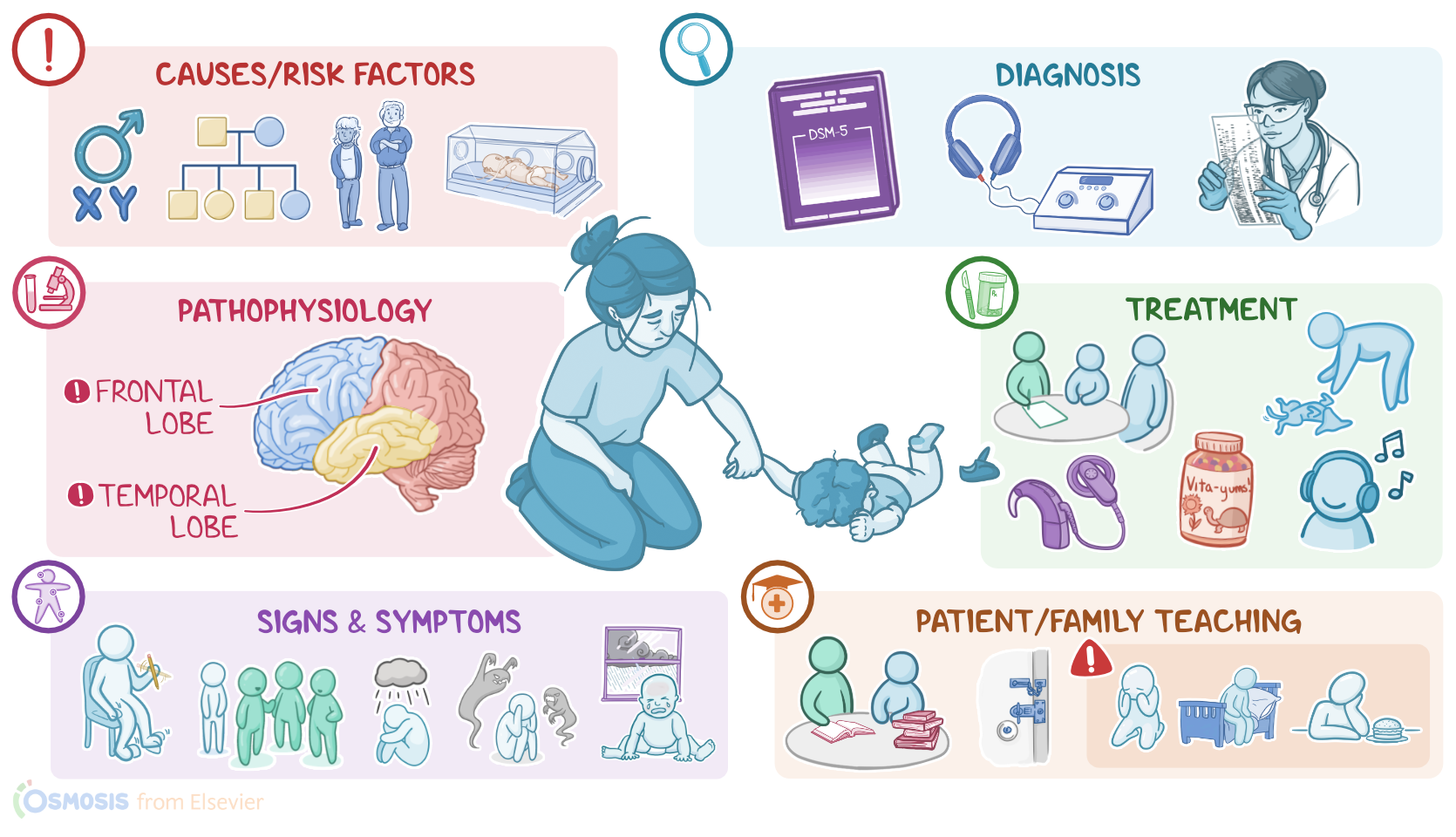
Now, the exact cause of autism spectrum disorder is still unknown, but it’s believed to be linked with mutations in certain genes that regulate normal brain development.

Important risk factors that have been associated with the development of autism spectrum disorder are mostly non-modifiable, and include being assigned male at birth, family history of autism spectrum disorder, older parental age, and prematurity. Clients with certain genetic syndromes, such as fragile X syndrome, tuberous sclerosis, Rett syndrome, and Down syndrome, are also at an increased risk for developing autism spectrum disorder. Modifiable risk factors include maternal infections during pregnancy, as well as prenatal exposure to toxic agents, such as certain antiepileptic medications. However, no link has been found between ASD and MMR vaccination.

Okay, the exact pathophysiology of autism spectrum disorder is still not fully understood, but it looks like there’s abnormal development in certain regions of the brain like the frontal and temporal lobes, which are responsible for regulating social and communication behaviors.

Clinical manifestations of autism spectrum disorder usually appear before 2 years of age, but they might also appear later in life. Children with ASD often have several delayed developmental milestones, especially social and communication milestones. However, there’s a lot of variability. Some children develop early milestones normally but fail to progress to later milestones. For example, they might start babbling at month 4, but they can’t say simple words like mama and dada by age one. Others might develop some milestones normally, but miss others. So at the age of 2, they might show more independence, but refuse to play with others.

In addition to missing milestones, clients with ASD develop social and communication deficits. There are three main types of social and communication deficits. First is deficits in social-emotional reciprocity, ranging from a difficulty with normal back-and-forth conversation to completely failing to initiate and respond to social interactions. This is often made worse by the fact that many clients with autism spectrum disorder also experience hearing impairment. Second is deficits in nonverbal communication like difficulty coordinating speech with eye contact. And third is deficits in developing, maintaining, and understanding social relationships, which includes adjusting behavior to suit a specific context, to difficulties with making and keeping friends.

In addition to these deficits, clients have restrictive and repetitive behaviors, interests, and activities. These include stereotyped or repetitive motor movements like eye twitches, use of objects, or speech. Additionally, clients can be inflexible when it comes to change, or might show ritualized patterns of verbal or nonverbal behavior, like always facing one direction when they play. They might also have highly restricted, fixated interests like a strong attachment to candles. And finally, they show hyper- or hypo reactivity to specific sensory stimulation, like being indifferent to pain or getting extremely upset by the sound of rain.

Clients with autism spectrum disorder might exhibit one or more of these deficits, and vary in how severe the deficit is. Based on this, they can be grouped into three functional levels. Level one clients are functional and verbal but have a hard time establishing relationships. They are often perceived as weird or eccentric due to their behavior, or lazy and insecure because they might be late to meet their developmental milestones. Level two clients have more prominent social difficulties, may only use simple sentences to express their needs and have obvious repetitive and odd behaviors. Level three clients have severe functional limitations, are usually non verbal or may only use a few words and require constant care and support.

In any case, a common comorbid condition for ASD is epilepsy, which develops typically during early childhood or adolescence. Complications of ASD include dependency on others to function normally, which puts additional pressure and stress on the whole family. Clients with problems establishing social relationships with others, might experience social isolation, learning difficulties, and problems with school and finding jobs. Children with ASD can also be commonly bullied and victimized by their peers. Finally, it's important to remember clients with ASD are at a higher risk for developing depression, anxiety and psychotic disorders.

Okay, diagnosis of autism spectrum disorder is based on the client’s history and physical assessment. Primary care providers, or PCPs, usually perform screening of children using Modified Checklist for Autism in Toddlers-Revised which is a questionnaire for parents about their child’s behavior. It is performed at 18 months of age with a follow up at 24 and 30 months of age. If autism spectrum disorder is suspected, the client is then referred to a specialist, such as a child's psychiatrist, that can establish the diagnosis based on the Diagnostic and Statistical Manual for Mental Disorders fifth edition or DSM-5 criteria. This is a set of diagnostic criteria indicating the symptoms that must be present, and for how long, to diagnose a condition.

Now, based on the DSM-5 criteria, to diagnose autism spectrum disorder the client must have persistent defects in social and emotional reciprocity, non-verbal communication and relationship development. Additionally, they must have at least two out of four types of restrictive and repetitive behaviors, including stereotyped or repetitive motor movements; rigid adherence to routines; restricted interests with abnormally high focus; or abnormal reactivity to sensory stimuli.