Case study - Child maltreatment: Nursing

Last updated: June 03, 2024

Case study - Child maltreatment: Nursing

N120-Peds

N120-Peds

Cystic fibrosis: Nursing
Acid-base map and compensatory mechanisms
Sickle cell disease (NORD)
Crisis intervention: Nursing
Hydrocephalus: Nursing process (ADPIE)
Autism spectrum disorder (ASD): Nursing
Heart defects that decrease pulmonary blood flow - Nursing considerations & client education: Nursing
Neural tube defects: Nursing
Congenital heart defects - Acyanotic: Nursing
Case study - Ventricular septal defect (VSD): Nursing
Hypoplastic left heart syndrome: Year of the Zebra 2024
Juvenile idiopathic arthritis: Nursing
Case study - Autism spectrum disorder: Nursing
Hemophilia: Nursing process (ADPIE)
Sickle cell disease: Nursing process (ADPIE)
Case study - Sickle cell anemia: Nursing
Otitis media: Nursing
Conjunctivitis: Nursing process (ADPIE)
Appendicitis: Nursing process (ADPIE)
Case study - Pediatric appendicitis: Nursing
Hirschsprung disease: Nursing
Intussusception
Pyloric stenosis: Nursing process (ADPIE)
Cleft lip and palate: Nursing
Down syndrome (Trisomy 21)
Physical assessment - Pediatric: Nursing
Vital signs - Pediatric pain: Nursing skills
Case study - Pediatric asthma: Nursing
Case study - Pediatric diabetes mellitus type 1: Nursing
Using an inhaler: Information for patients and families
Corticosteroids - Inhaled: Nursing pharmacology
Mast cell stabilizers - Inhaled: Nursing pharmacology
Bronchiolitis and respiratory syncytial virus (RSV): Nursing process (ADPIE)
Medications for respiratory syncytial virus (RSV): Nursing pharmacology
Medication administration - Insulin: Nursing pharmacology
Asthma: Information for patients and families (The Primary School)
Pancreatic enzyme replacements: Nursing pharmacology
Hirschsprung disease: Year of the Zebra
Movement of water between body compartments
Diarrhea: Nursing
Hemophilia: Year of the Zebra
Case study - Child maltreatment: Nursing
Case study - Accidental ingestion: Nursing
Growth and development theories: Nursing
Growth and development - Infant: Nursing
Growth and development - Preschool-age: Nursing
Growth and development - Toddler: Nursing
Growth and development - Adolescent: Nursing
Failure to thrive (FTT): Nursing
Childhood nutrition and obesity: Information for patients and families (The Primary School)
Childhood oral health: Information for patients and families (The Primary School)
Medication administration - Pediatric: Nursing pharmacology
Pediatric psychosocial needs during illness and hospitalization: Nursing
Epiglottitis: Nursing process (ADPIE)
Nephrotic syndrome: Nursing
Glomerulonephritis: Nursing
Poststreptococcal glomerulonephritis
Intestinal obstruction: Nursing
Immunodeficiency disorders - Primary: Nursing

Notes

CASE STUDY - CHILD MALTREATMENT

KEY POINTS
NOTES
INTRODUCTION
  • Family practice clinic
  • 2.5-year-old
  • Wellness check for preschool

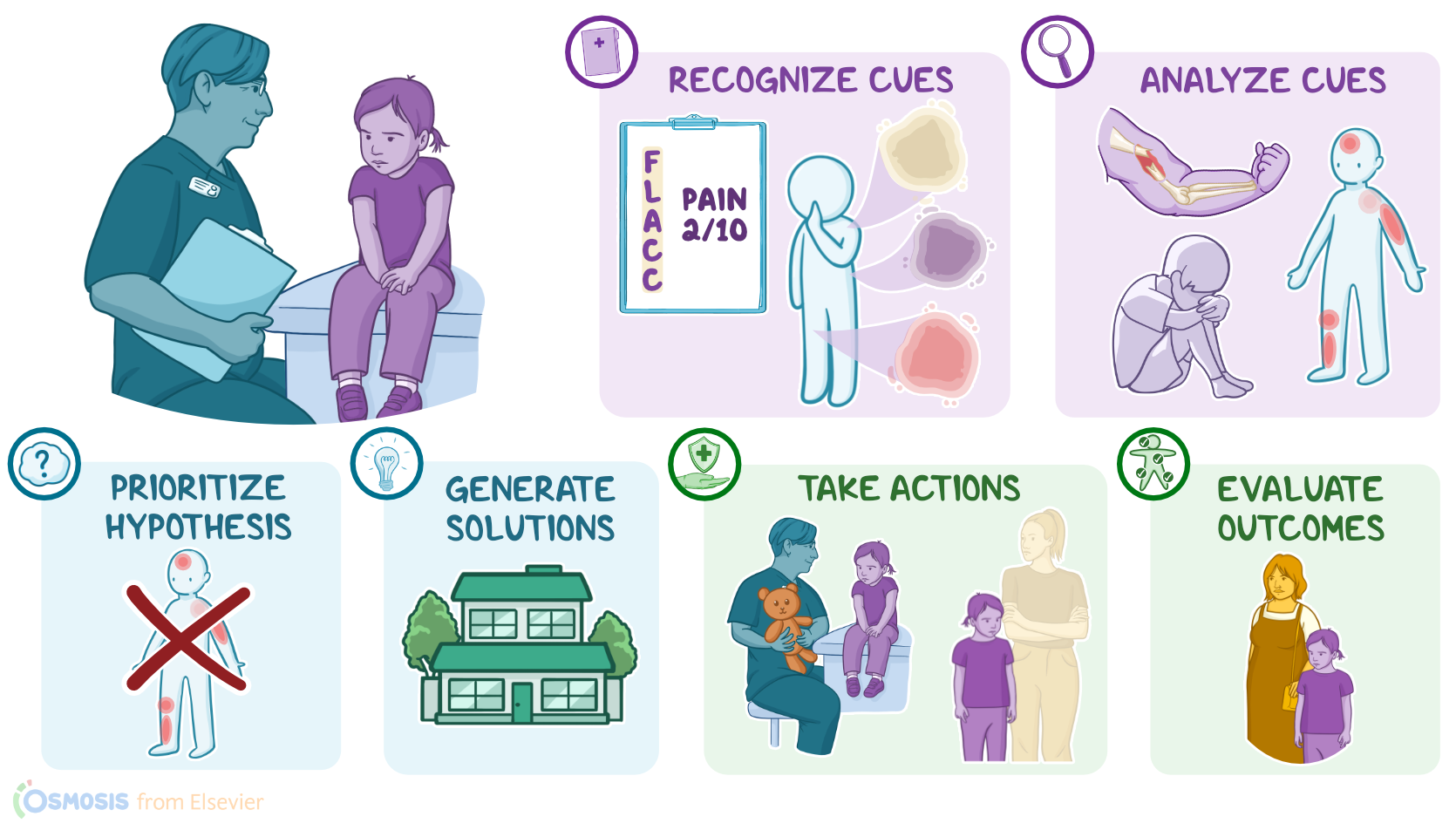
RECOGNIZING AND ANALYZING CUES
  • Recognize cues
    • Temperature: 98.6 F (37 C)
    • Heart rate: 105
    • Respiratory rate: 23
    • Multiple circular bruises ranging in color on upper arms
    • Rounded, punctate burn on back of shoulder
    • Appears tense
    • Pain: 2/10
    • Doesn't respond to questions or make eye contact
    • Caregiver unsure how injuries occurred
  • Analyze cues
    • History humerus fracture 
    • Children experiencing physical abuse present with injuries with inconsistent explanation
    • Bruises with various stages of healing can be from repeated injury
    • Location of injuries are uncommon for normal childhood injuries
    • Withdrawn behavior can be a symptom of physical abuse

PRIORITIZING HYPOTHESES, GENERATING SOLUTIONS, AND TAKING ACTIONS
  • Priority hypothesis
    • Risk for injury
  • Generate solutions
    • Discharge to safe environment
  • Take action
    • Notify health care provider
    • Contact child protection services and social worker
    • Separate patient from caregiver
    • Apply dressings to wounds

EVALUATING OUTCOMES
  • Temperature: 98.6 F (37 C)
  • Heart rate: 101
  • Respiratory rate: 21
  • Pain: 1/10
  • Discharges home with aunt
  • Outcome met

Transcript

Watch video only

Nurse Angelo works in a family practice clinic and is caring for Maya, a 2-and-a-half-year-old who's brought in for a required wellness check before entering preschool. After settling Maya in the room, Nurse Angelo goes through the steps of the Clinical Judgment Measurement Model to make clinical decisions about Maya’s care by recognizing and analyzing cues, prioritizing hypotheses, generating solutions, taking action, and evaluating outcomes.  

First, Nurse Angelo recognizes cues, including Maya’s vital signs which are temperature 98.6 F or 37 C, heart rate 105 beats per minute, and respiratory rate 23 breaths per minute. Nurse Angelo notes that Maya has multiple circular bruises ranging in color from pale yellow to deep purple on her upper arms, as well as a rounded, punctate burn to the back of her left shoulder about one centimeter in diameter.  

Nurse Angelo also notes Maya grimaces occasionally and appears tense, so he determines Maya’s pain rating is two out of 10 according to the Face, Legs, Activity, Cry, and Consolability, or FLACC scale. Nurse Angelo also notes that when he asks Maya questions, she doesn’t respond or make eye contact with him.  

He gathers additional information from Maya’s mother, Josie, about her injuries. 

Nurse Angelo: I see that Maya has some bruising on her arms. Can you tell me what happened? 

Josie: Oh, those? She’s just clumsy. She’s always bruised easily. She probably fell down while she was playing or something. 

Nurse Angelo: I also noticed an injury to her left shoulder that looks like a burn. Do you know what happened there?   
Josie: That doesn’t look like a burn to me. Like I said, I think she probably scraped herself when she was playing. 

Nurse Angelo then analyzes these cues. He reviews Maya’s electronic health record, or EHR, and notes that she has a history of a humerus fracture at age one year. When asked about the fracture, Josie says it was caused by a fall when Maya was learning to walk.  

Nurse Angelo recalls that children experiencing physical abuse often present with injuries that have implausible or inconsistent explanations, and caregivers may downplay the seriousness of injuries. Then, he recognizes that, while the age of a bruise cannot be exactly determined, the varying colors of Maya’s bruises likely reflect different stages of healing from repeated injury. Additionally, the location of her injuries on her upper arms and posterior shoulder aren’t typical locations for childhood injuries, which are commonly found on the knees, shins, or forehead. Finally, Nurse Angelo understands that withdrawn behavior, like avoiding eye contact, can also be a symptom of physical abuse in young children. He determines that Maya requires interventions for possible child maltreatment

Now, using the information he’s gathered, Nurse Angelo develops a priority hypothesis of risk for injury.  

Then, Nurse Angelo generates solutions to address Maya’s risk for injury, and he establishes the expected outcome that after intervening, Maya will be discharged to a safe environment.  

Nurse Angelo then takes action to implement these solutions. He reports his assessment findings to the health care provider, who determines that Maya’s injuries are likely consistent with physical abuse. The health care provider works together with Nurse Angelo to contact the designated child protection services and the clinical social worker.  

Sources

  1. "Varcarolis’s Canadian psychiatric mental health nursing. (3rd ed.)." Elsevier (2023)
  2. "Keltner’s psychiatric nursing. (9th ed.). " Elsevier (2023)