Congenital diaphragmatic hernia: Nursing
Content Reviewers
Congenital diaphragmatic hernia is a development defect of the diaphragm in which an opening in the diaphragm allows the abdominal organs to herniate into the thorax. Herniation can develop on any or both sides of the diaphragm but it typically occurs at the left side of the diaphragm.
Alright, let’s start by reviewing the anatomy and physiology of the diaphragm. During intrauterine life, the diaphragm develops by the midline fusion of the paired retroperitoneal folds.
This results in the formation of a dome-shaped sheet of skeletal muscle that divides the thoracic cavity from the abdominal cavity.
Now, the diaphragm is the chief muscle for inspiration. When it contracts, the diaphragm moves downwards, which increases the volume of the thoracic cavity, and with it,the volume in the lungs. This makes the intrapulmonary pressure fall below the atmospheric pressure, creating a partial vacuum that allows fresh air to be sucked in.
Now, the exact cause of congenital diaphragmatic hernia is unknown, but it's believed to be associated with certain genetic risk factors that can interfere with the development of the diaphragm, including chromosomal abnormalities like the trisomy 13, 18, or 21.
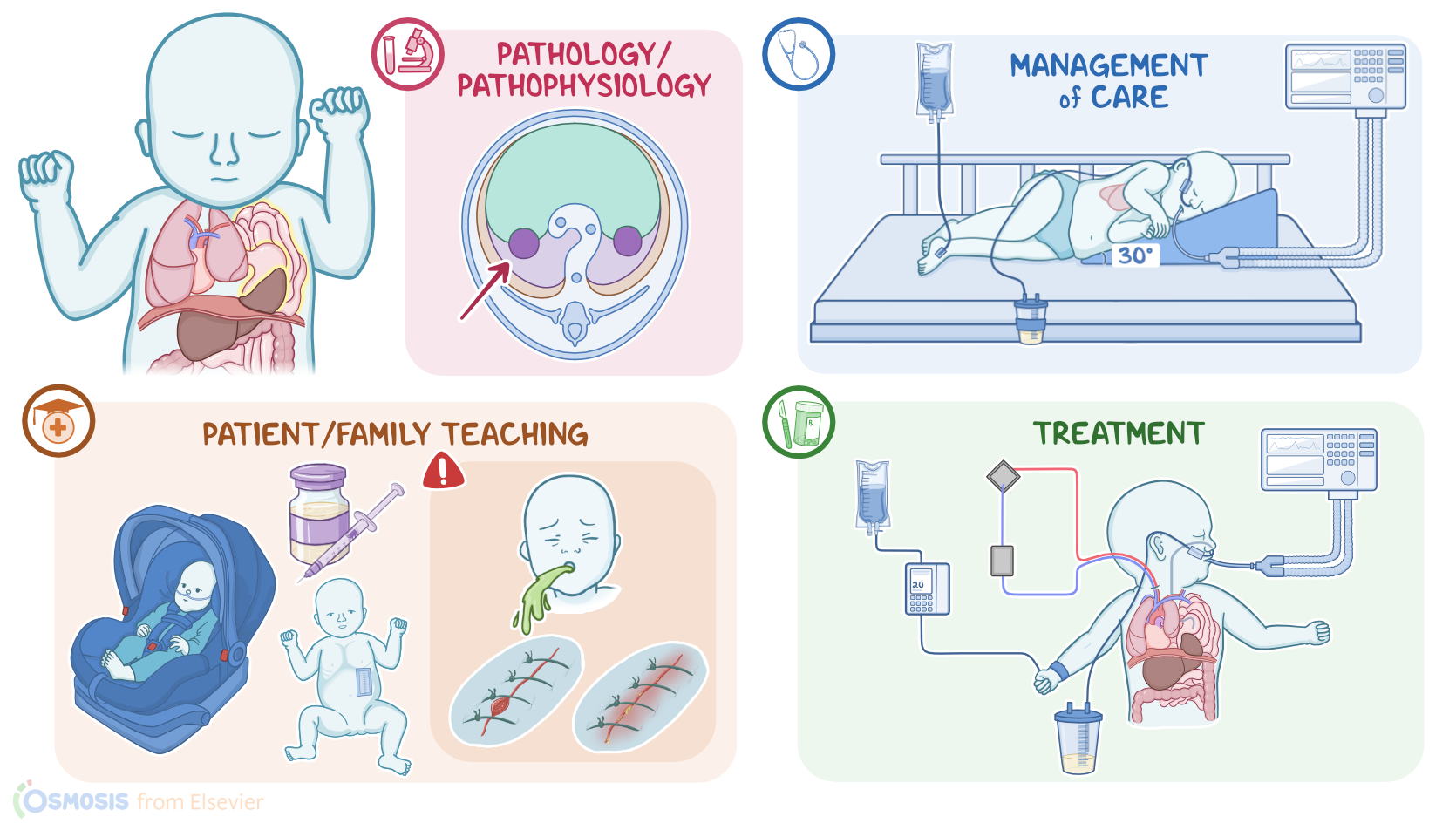
Alright, the pathology of congenital diaphragmatic hernia starts during the fetal period. If during development, retroperitoneal folds don’t fuse properly, the newly formed diaphragm will have a hole in it. This allows abdominal organs, like the stomach and intestines, to herniate into the thoracic cavity.
The herniated organs push against the lung on the affected side, preventing the lungs from growing to normal size, a condition called pulmonary hypoplasia.
Pulmonary hypertension develops along with a right-to-left shunting through the ductus arteriosus and foramen ovale, resulting in deoxygenated blood being pumped to the body, resulting in systemic hypoxemia.
Long-term complications of congenital diaphragmatic hernia include chronic lung disease, gastroesophageal reflux disease, or GERD for short, and developmental delay, as well as a recurrence of the diaphragmatic hernia.
| CONGENITAL DIAPHRAGMATIC HERNIA | ||
| KEY POINTS | NOTES | |
| DEFINITION |
| |
| PHYSIOLOGY |
| |
| CAUSES AND RISK FACTORS |
| |
| PATHOPHYSIOLOGY |
| |
| SIGNS AND SYMPTOMS |
| |
| DIAGNOSIS |
| |
| TREATMENT |
| |
| MANAGEMENT OF CARE |
| |
| PATIENT AND FAMILY TEACHING |
| |
No notes for this video yet
Try adding a note below