Geriatric considerations - Cardiac: Nursing
Introduction0:00–0:19
Geriatrics is the branch of medicine that deals with the physiology and psychology of aging as well as the diagnosis and treatment of diseases affecting older clients.
Now, aging affects various organ systems, one of which is the cardiovascular system. All right.
Physiology0:19–2:42
Now, let's start by reviewing the physiology of the cardiovascular system which consists of the heart and blood vessels.
The heart is a muscular pump that sits in the middle of the chest cavity between the two lungs and on top of the diaphragm, let's take a closer look at the inside of the heart, which consists of four chambers and four valves, deoxygenated blood coming through the superior vena cava and inferior vena cava enters the right atrium and then passes through the tricuspid valve into the right ventricle.
The right ventricle pumps the blood out of the pulmonary valve and into the pulmonary arteries which carry the blood to the lungs.
Here, the blood gets oxygenated and is then sent back to the left atrium which moves the blood through the mitral valve and into the left ventricle.
Finally, blood in the left ventricle gets pumped out through the aortic valve out to the aorta which branches into smaller arteries to supply tissues around the body.
Ok. So blood moves around the heart as it alternates between systole, a period of contraction and emptying of the heart chambers and diastole, a period of relaxation and filling the heart's contractions also create pressure in the arteries.
So, systolic BP is the pressure in the arteries. When the heart is contracting and squeezing out blood and diastolic BP is when the heart is filling up with more blood.
Now, the heart's contractions are regulated by its conductive system, which consists of a group of specialized cells that are capable of transmitting electrical signals.
The main component of this system is the sinoatrial or sa node, also known as the pacemaker of the heart. This node initiates electrical impulses that stimulate the contraction of the heart.
Additionally, the physiology of the heart is related to three parameters, heart rate, stroke volume and cardiac output. Heart rate is the number of BPM.
Whereas stroke volume is the amount of blood pumped from the left ventricle with each beat. On the other hand, cardiac output is the amount of blood pumped from the left ventricle per minute.
And it's calculated by multiplying the heart rate by the stroke volume. Finally, the other part of the cardiovascular system is the blood vessels which include both arteries and veins.
Risk factors2:42–2:57
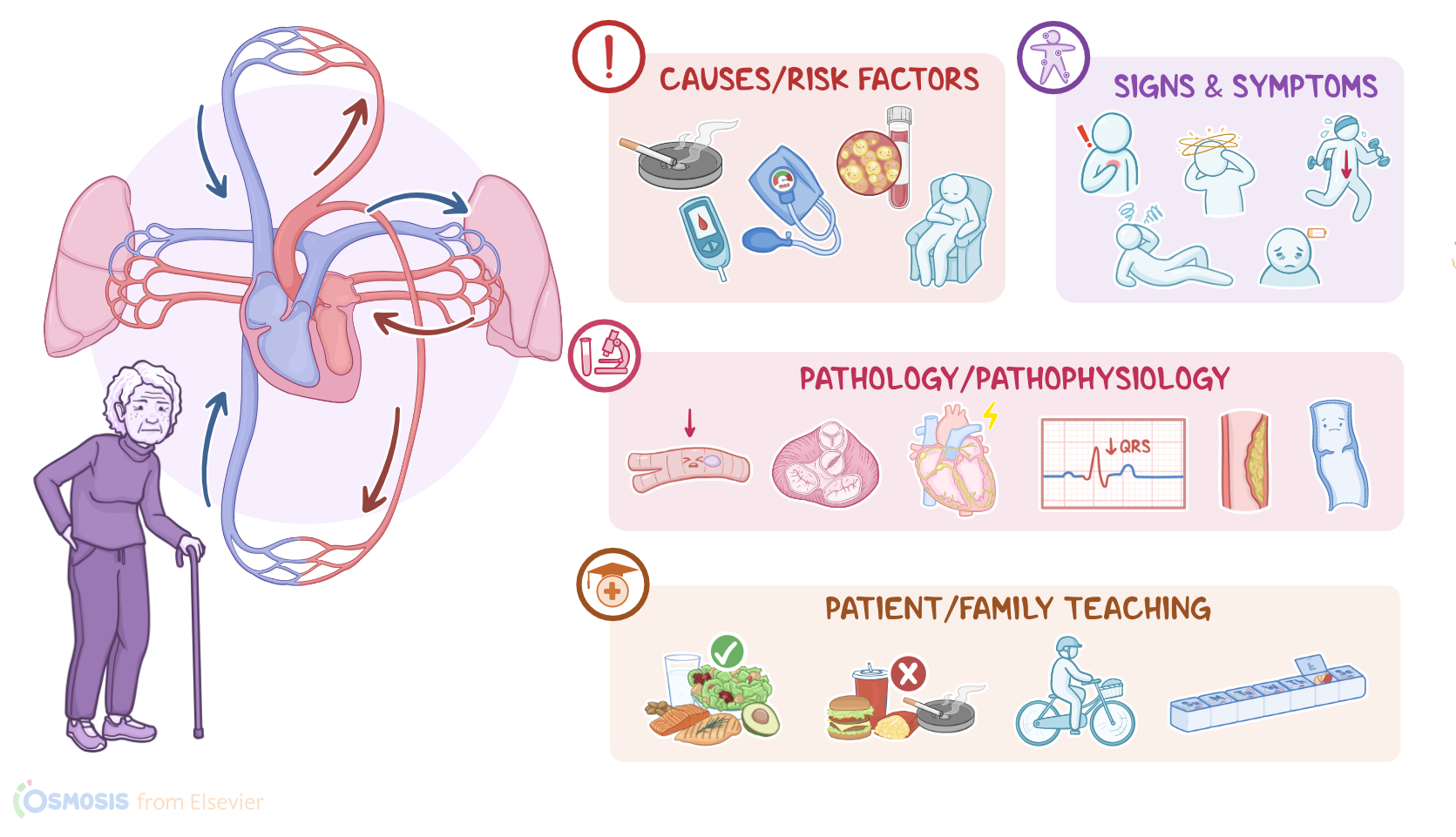
Now, various risk factors worsen the effects of aging on the cardiovascular system. These include smoking a sedentary lifestyle, poorly controlled hypertension, as well as diabetes, obesity and hyperlipidemia effects of aging on the cardiovascular system can involve both structure and function changes in the structure include loss of myocardial elasticity, which can lead to decreased cardiac compliance, which is when the ability of the ventricles to expand as they fill up with blood is impaired.
Pathology2:57–4:36
This can ultimately decrease cardiac reserve, meaning there's a decreased ability to produce the cardiac output needed to meet the demands of physical activity or stress.
These changes also increase the risk for heart failure where the heart becomes unable to pump enough blood to meet the body's requirements.
Valvular rigidity can also be present which can lead to fatigue palpitations, dizziness and even syncope, fibrosis of the conductive system as well as a decrease in the number of essay node, pacemaker cells results in a diminished response to adrenergic stimulation.
This can be reflected in an electrocardiogram or ECG including a prolonged pr interval, decreased amplitude of the QRS complex along with bradycardia or arrhythmias.
Regarding the blood vessels, decreased elastin in the vessel walls causes stiffening of large arteries resulting in increased systolic BP.
There can also be a narrowing of the systemic arteries due to build up of atheromatous plaque which can impair tissue perfusion, increased venous tortuosity may present with enlarged twisted superficial veins, particularly in the lower limbs.
Lower limb veins may also have less functional valves resulting in the pooling of blood in those veins. Now, let's move on to client and family teaching.
General client & family teaching4:36–5:59
Begin by teaching your client how to modify risk factors of cardiovascular disease. Encourage them to eat a healthy diet that includes a wide variety of fruits, vegetables, proteins and whole grains.
While limiting trans and saturated fats, sugars and added salt. Also talk to them about the importance of maintaining regular activity as tolerated with a goal of 100 and 50 minutes weekly.
If they need help to quit smoking, provide them with counseling and refer them to resources for support. Now, if your client has a chronic disease like diabetes, remind them how hyperglycemia can contribute to problems like dyslipidemia, heart disease and peripheral vascular disease, then ensure they are adhering with their diabetic treatment regimen by reviewing their medications and reinforcing their prescribed diabetic diet.
Likewise, if they have hypertension stress, the importance of taking their prescribed medications as directed finally, encourage your client to maintain regular visits with their healthcare provider for continued monitoring and care.
Review5:59–6:56
All right, it's a quick recap. Geriatrics deals with the physiology and psychology of aging as well as the diagnosis and treatment of diseases affecting older clients.
This includes the cardiovascular system which consists of the heart and blood vessels. The heart is a muscular pump that moves deoxygenated blood from the body into the lungs and oxygenated blood from the lungs to the rest of the body.
With aging, there are certain changes to the structure and function of the cardiovascular system that can affect its efficiency.
These changes include decreased myocardial elasticity, valvular rigidity, and fibrosis of the conductive system manifestations of these changes include decreased cardiac reserve, decreased heart rate, stroke volume and cardiac output, as well as changes in the ECG client and family teaching is focused on adopting a lifestyle to maintain cardiovascular
| GERIATRIC CONSIDERATIONS - CARDIAC | ||
| KEY POINTS | NOTES | |
| DEFINITION |
| |
| PHYSIOLOGY |
| |
| CAUSES AND RISK FACTORS |
| |
| PATHOPHYSIOLOGY |
| |
| PATIENT AND FAMILY TEACHING |
| |
No notes for this video yet
Try adding a note below