Hygiene - Perineal care: Nursing skills
Introduction0:00–0:40
Furthermore, it’s the ideal dim, damp, and warm sanctuary for germs to flourish, so keeping this region clean is essential for preventing infections, skin irritation, and getting rid of unpleasant body odors.
As a nurse, perineal care is one of the tasks you will need to perform on a regular basis. It’s also a chance to closely observe the condition of their skin in the area.
Now, before we talk about how to complete perineal care, here are some general considerations. Perineal care is typically done at least once every day during a bath.
Common Care Tips0:40–1:44
However, for specific clients, like those with diarrhea, fecal or urinary incontinence, or vaginal bleeding or discharge, perineal care might be needed more regularly.
If they are able, let them perform perineal care on their own but stay close by in case they need help. Otherwise, encourage the client to participate as much as possible and don’t rush the procedure.
Some clients may also find it comforting to have someone of their own gender present in the room. At all times, respect the client’s privacy and modesty by remembering to close the room’s door and bed curtains.
Make sure the client is properly covered. Because bathing tends to trigger urination, remember to ask them if they need to use the bathroom, a bedpan, or urinal beforehand.
At the same time, make sure to take the proper safety measures to protect yourself from possible exposure to the client’s body fluids or blood.
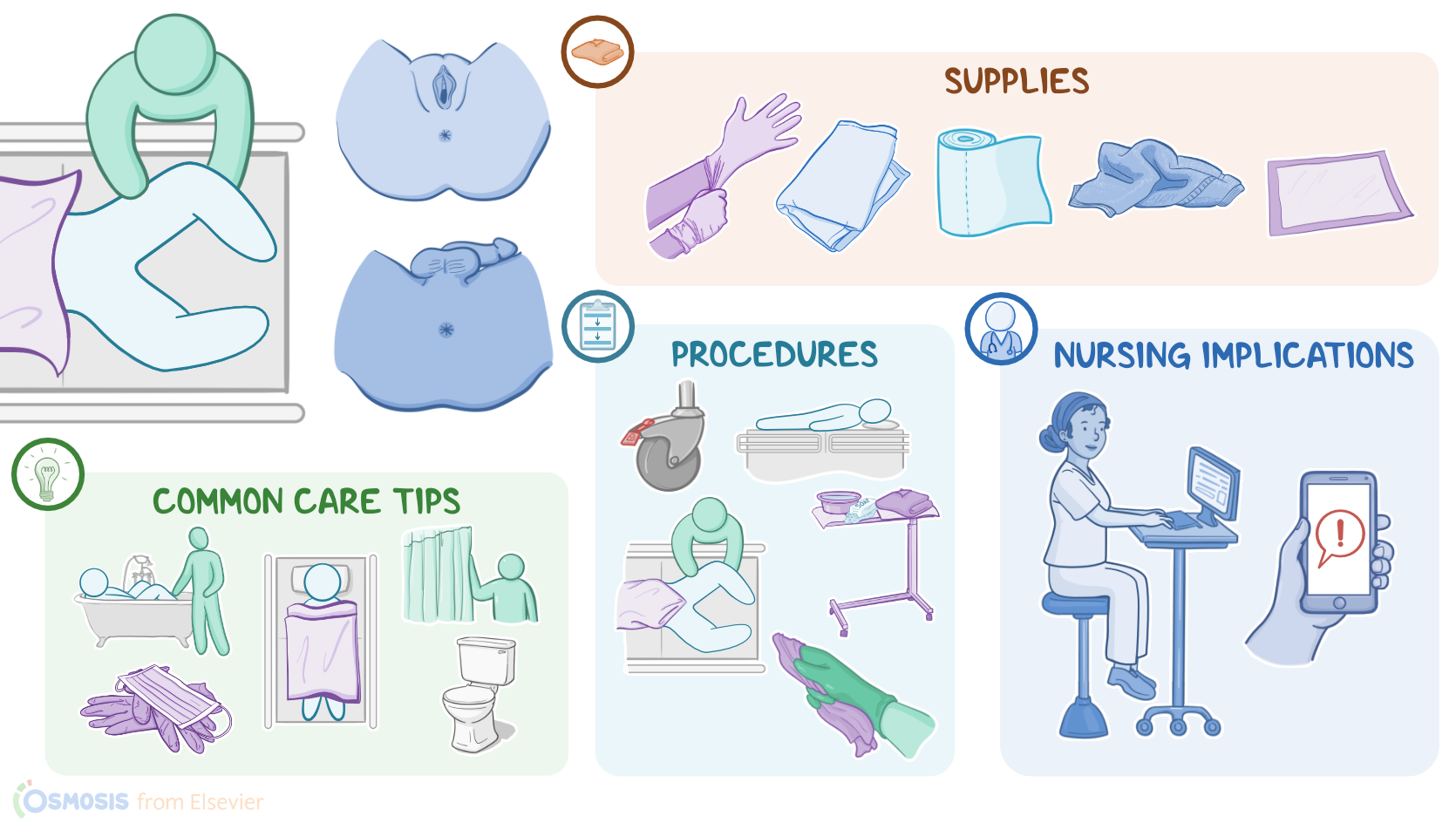
Okay, so, when assisting with perineal care, first gather the supplies you’ll need including gloves, a bath blanket, paper towels, pre-moistened bath wipes or washcloths, a bed protector, towels, soap, a washbasin, clean clothing, and clean linens.
Procedure1:44–5:12
Inform the client about the procedure before beginning and answer any questions related to the procedure. Make sure that the wheels on the bed are locked and lower the side railings on the side you’ll be working on.
Lower the head of the bed so that it is flat and raise the height of the bed to a comfortable working height. Start by filling the wash basin with warm water and check to make sure it's at a comfortable temperature.
Cover the over-bed table with paper towels and place the basin together with soap, towels and washcloths. Next, put your gloves on and help the person lie on their back.
Position a waterproof bed pad under the client’s buttocks to protect the bed linens and cover the client with a bath blanket.
The top corner is placed at their neck, one corner is placed at each side with the corner tucked under the hips, and the bottom corner lies between the client's legs.
Next, help the client undress, exposing only the genital area. Ask them to open their legs and bend their knees if they can.
If not, help them to do so. Wrap a washcloth around one hand and wet it with warm water, then apply soap.
Now, if the client has a circumcised penis, start by placing your washcloth on the tip of the penis, while for a person with an uncircumcised penis, first retract the foreskin by gently pushing the skin downwards towards the base of the penis.
Wash downwards towards the base of the penis in a circular motion. Repeat this process using different parts of the washcloth until the area is clean.
Once again, make sure to rinse and dry the tip and shaft of the penis.For clients with an uncircumcised penis, remember to reposition the foreskin.
If the client has an indwelling urinary catheter, like a Foley catheter, be cautious not to tug or pull on it. It is appropriate to gently cleanse around the catheter without displacing or removing it since regular periurethral care reduces the risk of catheter-associated infections.
Next, to wash the buttocks of your client, help them turn on their side, facing away from you. With one hand, separate the buttocks.
Take another washcloth and place it over your hand. Wet it with water and soap and start washing each side from front to back, finishing with the middle.
Make sure to use a different, clean part of the washcloth every swipe and repeat till the anal area is clean. Rinse and dry thoroughly.
Now you can remove the bed protector, take your gloves off, and help the client back into the supine position. Check to make sure their clothing and the bedding are clean.
Finally, return the side rails to the raised position and adjust the bed height. After the process of perineal care, you should document if you noticed any new skin rashes, redness, swelling or tenderness, peculiar odors, discharge, or bleeding from the vagina, penis, or the anus.
Nursing Implications5:12–5:55
If this is a change from the client’s baseline, notify the provider. Make sure to document these alongside the date and time; if urine or feces were present; the amount of assistance required; and the condition of the skin, particularly at bony regions where pressure ulcers can develop.
For client’s who are incontinent, it may be appropriate to apply products, like barrier cream, to the external genitalia and surrounding perineal area to prevent skin breakdown All right, as a quick recap… Providing perineal care is essential to reduce odors and to prevent infections and skin irritations.
Review5:55–6:10
It’s typically performed daily with bathing but will be required more frequently when the client has certain conditions like
| HYGIENE - PERINEAL CARE | ||
| KEY POINTS | NOTES | |
| DEFINITION |
| |
| COMMON CARE TIPS |
| |
| PROCEDURE |
| |
| NURSING IMPLICATIONS |
| |
No notes for this video yet
Try adding a note below