Myocarditis: Nursing
Introduction0:00–0:07
Myocarditis refers to the inflammation of the heart muscle, called the myocardium.Okay, but first, a bit of anatomy and physiology.
Physiology0:07–0:42
The heart wall is made of three layers: the outer layer is the epicardium, the middle layer is the myocardium, and the inner layer is the endocardium.
So, the myocardium is a muscular layer that consists of cells called cardiomyocytes, which relax so that the heart can be filled with blood during diastole, and then contract to pump the blood out of the heart during systole.
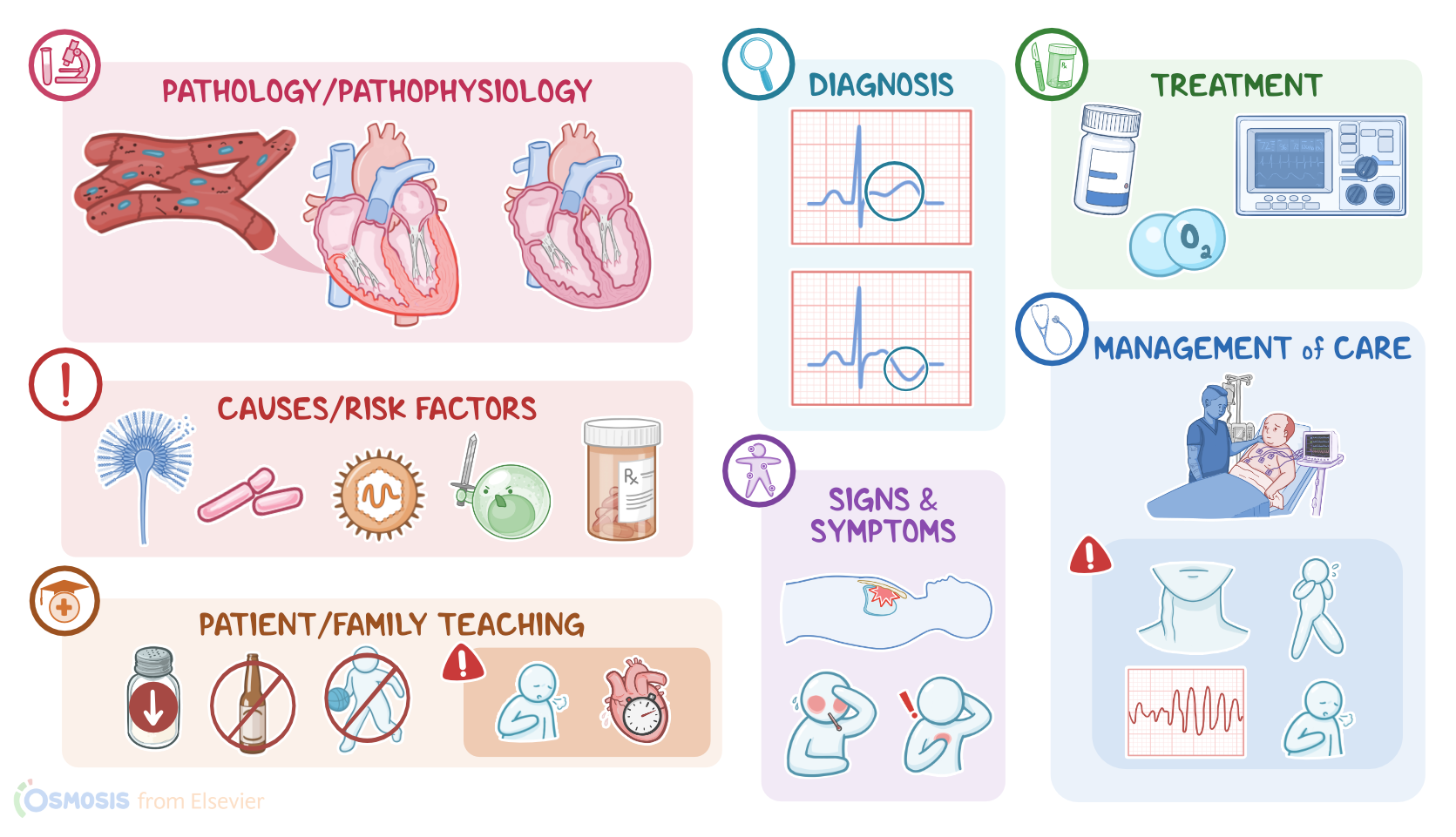
Contraction of the cardiomyocytes is controlled by the pacemaker cells in the sinoatrial or SA node, which generates electrical signals that get sent out through the conduction system in the heart.Now, most cases of myocarditis are caused by a viral infection, such as Coxsackie A or B virus and parvovirus B19; but can also be caused by a bacterial infection, like Streptococcus pyogenes or Borrelia burgdorferi, which causes Lyme disease; a fungal infection, such as Candida or Aspergillus; or a parasitic infection, like Trypanosoma cruzi, which causes Chagas disease.
Causes & risk factors0:42–1:34
Myocarditis can also be caused by autoimmune disease, such as systemic lupus erythematosus or polymyositis, where the immune system attacks its own tissues, including the myocardium.
Other causes of myocarditis include toxins like carbon monoxide poisoning, radiation therapy in the chest, and certain medications like sulfonamides, or chemotherapeutic medications, such as anthracycline and doxorubicin.
Finally, some cases of myocarditis are idiopathic, meaning the cause is unknown.Okay, regardless of the cause, the pathological outcome is acute damage to the cardiomyocytes.
Pathology1:34–2:41
This in turn activates the immune system, causing the release of cytokines and oxygen free radicals. This results in severe inflammation, and even cardiomyocyte death, which impairs the heart’s ability to contract.
Once the causative agent gets cleared out, the inflammation typically resolves, and myocardial contraction returns to normal.
As far as complications go, if myocarditis is severe enough, the inflammation may result in myocardial fibrosis, which can lead to long term problems with contraction and arrhythmias, and even sudden cardiac death Another complication occurs if the body’s immune response remains active, and actually starts attacking the cardiomyocytes.
Over time, this can lead to heart dysfunction, and more specifically, to the development of dilated cardiomyopathy, where all four chambers of the heart dilate, while the heart walls become thinner, so contraction becomes weaker, potentially leading to heart failure.
Ultimately, some clients may develop life-threatening complications like cardiogenic shock.Initially, clients with myocarditis may experience flu-like symptoms, such as fever, fatigue, sore throat, malaise, myalgias, and arthralgias.
Clinical manifestations2:41–3:26
Some clients can also develop dyspnea and lymphadenopathy, as well as nausea and vomiting. These clinical manifestations might be followed by arrhythmias.If there’s involvement of the pericardium surrounding the heart, clients can also experience chest pain that’s typically positional, meaning that it can get worse when the client is in supine position and with inspiration; and gets better when the client is sitting upright and leaning forward better.
In severe cases, myocarditis may develop into heart failure, leading to fatigue, dyspnea, and palpitations, as well as jugular venous distention, hepatomegaly, and peripheral edema.Diagnosis of myocarditis starts with history and physical assessment.
Diagnosis3:26–4:15
On electrocardiogram or ECG, clients may have T-wave inversions and “saddle-shaped” ST-segment elevations, as well as sinus tachycardia, or arrhythmias like atrioventricular block.
Laboratory tests might show elevated cardiac enzymes like troponin and brain natriuretic peptide or BNP; as well as leukocytosis; and increased inflammatory markers like CRP and ESR.
In the case of viral infection, viral titers might also be raised. Imaging techniques like echocardiography, nuclear scans, and MRI are sometimes also used to assess the heart function.
If necessary, the diagnosis can be confirmed with a biopsy of the myocardium in the first 6 weeks of the acute illness. In terms of treatment, the main goal is to relieve the symptoms with supportive care In addition, the underlying cause of myocarditis must be addressed, when possible.
Treatment4:15–5:04
This might involve administering antivirals or antibiotics for infectious cases or immunosuppressants for autoimmune diseases.
If there are signs of heart failure, clients are typically managed with oxygen therapy, careful fluid balance, and medications like ACE inhibitors or beta-blockers Clients who develop complications like cardiogenic shock or severe ventricular dysfunction may require extracorporeal membrane oxygenation or ECMO, or ventricular assist devices; while those with complete atrioventricular block may need temporary pacing.
Lastly, if treatment is not successful, a heart transplant might be required.Alright, let’s look at the nursing care you’ll be providing for a client with myocarditis.
Management and care5:04–6:16
Your priority nursing goals are to treat the underlying cause, improve cardiac output, and provide supportive care to manage your client’s symptoms.
First, place your client on bedrest with the head of the bed elevated to a comfortable position. Then, assess their baseline cardiac status by measuring their weight, assessing their heart rate and blood pressure, and auscultating their heart and lung sounds.
Then, administer the ordered IV fluids and medications, such as ACE inhibitors and beta-blockers. If your client is hemodynamically unstable, provide supplemental oxygen, and attach your client to a cardiorespiratory monitor and pulse oximetry, in order to keep a close eye on their heart rhythm and oxygenation status.
Immediately report to the healthcare provider if your client develops an arrhythmia, and be prepared to administer the ordered antiarrhythmics or assist with temporary cardiac pacing.Then, continue to monitor your client for signs of heart failure.
Report to the healthcare provider if your client develops clinical findings like faint or extra heart sounds, jugular vein distension, peripheral edema, or shortness of breath; and administer diuretics as prescribed.
Alright, moving on to client and family teaching. First, review your client’s plan of care, and provide information about myocarditis and their prescribed medications.
General client and family teaching6:16–7:11
Also, encourage them to limit their dietary intake of sodium and avoid alcohol during treatment. As your client recovers, teach them about ways they can decrease their cardiac workload, including maintaining a calm, quiet environment, and spacing periods of activity with periods of rest until their symptoms resolve.
Also, stress the importance of abstaining from competitive sports for at least 3 to 6 months. Then teach your client ways to relieve anxiety and reduce stress, including yoga, meditation, and relaxation techniques, and refer them to psychosocial support as needed.
Finally, instruct your client to contact their healthcare provider if they experience symptoms like a rapid heart rate, fatigue, shortness of breath, or activity intolerance; and remind them to follow up regularly for monitoring.Alright, as a quick recap… Myocarditis refers to the inflammation of the heart muscle or myocardium, and is usually caused by a viral, bacterial, or fungal infection, as well as autoimmune diseases.
Review7:11–8:00
Regardless of the cause, the pathological outcome is inflammation and acute damage to the cardiomyocytes, which impairs the heart’s ability to contract.
Clients may present with a recent history of flu-like symptoms, followed by positional chest pain, palpitations, or signs of heart failure.
Nursing care for clients with myocarditis includes treating the underlying cause, improving cardiac output, and providing supportive care to manage their symptoms.
Client and family education is focused on learning about the disease process and its treatment, lifestyle modifications to decrease cardiac workload, and when to contact their healthcare provider.
| MYOCARDITIS | ||
| KEY POINTS | NOTES | |
| DEFINITION |
| |
| PHYSIOLOGY |
| |
| CAUSES AND RISK FACTORS |
| |
| PATHOPHYSIOLOGY |
| |
| SIGNS AND SYMPTOMS |
| |
| DIAGNOSIS |
| |
| TREATMENT |
| |
| MANAGEMENT OF CARE |
| |
| PATIENT AND FAMILY TEACHING |
| |
No notes for this video yet
Try adding a note below