Neuroblastoma: Nursing
Introduction0:00–0:17
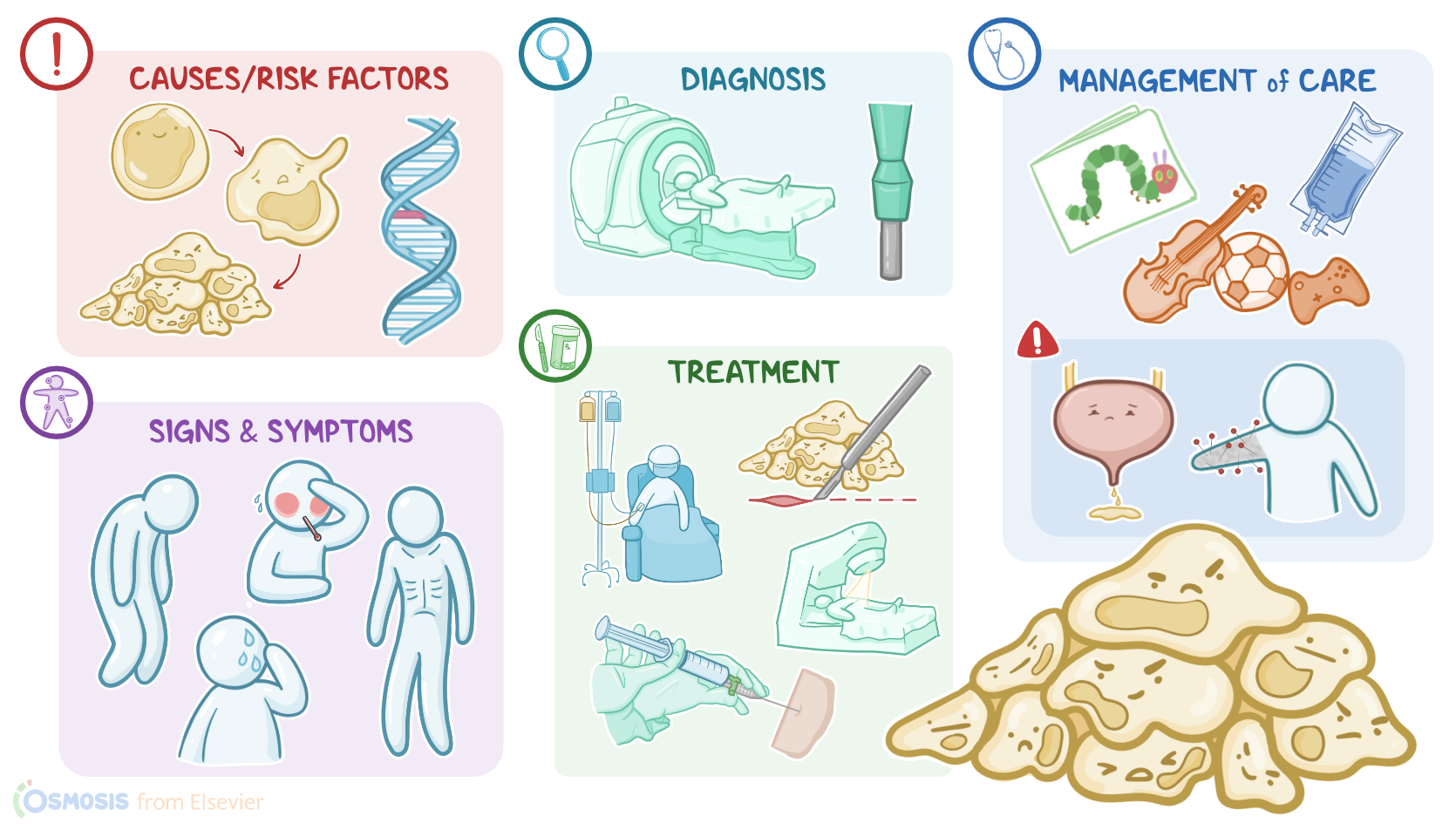
Neuroblastoma is a malignant tumor composed of neural crest cells, which are embryonic nerve cells. In fact, neuroblastoma is the most common extracranial cancer in infants, and it’s only rarely seen in children over five years old.But let’s review some basic physiology first.
Physiology0:17–1:27
During embryonic development, special cells called neural crest cells start migrating along the spine. In the thoracic region of the spine, neural crest cells differentiate into the neurons of the sympathetic chain, lying on either side of the entire spinal cord.
In the lumbar region, neural crest cells differentiate into the cells of the adrenal medulla, the inner part of the adrenal gland that sits atop the kidneys.
Together, the sympathetic chain and adrenal medulla form the sympathetic nervous system, connecting the brain and central nervous system to various organs including the heart and blood vessels.When an individual is under stress, the sympathetic nervous system releases norepinephrine, and the cells of the adrenal medulla release norepinephrine and epinephrine.
These hormones bind to receptors in various tissues like the blood vessels, the heart, and the lungs. After the stress is over, and the hormones are no longer needed, they are broken down into metabolites to be eliminated from the body.Although the exact cause of neuroblastoma remains unknown, several non-modifiable risk factors have been recognized.
These include family history of neuroblastoma and genetic mutations in the MYCN oncogene, the ALK fusion oncogenes, and mutations in tumor suppressor genes, like the PHOX2B gene.Alright, now, regardless of the risk factor, in neuroblastoma, some neural crest cells in the sympathetic chain or adrenal medulla don’t differentiate properly during fetal development.
Causes & risk factors1:27–1:48
Pathology1:48–2:32
And these cells ultimately go on to form a tumor, most commonly in the adrenal medulla, or other areas of the sympathetic chain.
When any type of neuroblastoma forms, cells in the surrounding tissue release chemokines that stimulate nearby immune cells.
As the tumor gets larger it can go on to compress nearby structures, including nerves and blood vessels. Eventually, neuroblastoma cells may get into the circulation and metastasize to distant organs, such as the liver, bones, and bone marrow.Now, signs and symptoms of neuroblastoma result from the chemokine release, and include fever, weight loss, sweating, and fatigue.
Other symptoms of neuroblastoma depend on where the tumor is located, and are usually a result of the tumor pressing up against surrounding organs.Typically neuroblastomas form in the adrenal glands as solid, irregular abdominal masses that cause abdominal swelling and as opposed to nephroblastomas, which is a tumor of the kidney, cross the midline.
Clinical manifestations2:32–4:16
Now, if the tumor is in the thoracic region of the sympathetic chain, it can grow into the lungs, causing breathing difficulties.A thoracic tumor that extends to the neck can press up against nerves originating there and heading towards the face, it can cause Horner syndrome.
Horner syndrome involves miosis or constriction of the pupils, ptosis or the drooping of the eyelid, and anhidrosis which is the inability to sweat in the face.Tumors on the sympathetic chain might also grow into the spine, causing neurologic symptoms, like muscle weakness or bowel and bladder problems.
About half of all neuroblastomas spread to the bones, usually at the base of the skull, causing bone pain and small fractures.
With these fractures, fluid and blood leak into the tissues around the eyes. When that happens it can cause periorbital ecchymosis, also called raccoon eyes, because of the dark rings of blood that can be seen in the soft tissue around the eyes.
Neuroblastoma that invades the bone marrow can also affect the marrow’s ability to make healthy red blood cells, platelets, and white blood cells, leading to fatigue, easy bruising, and frequent infections.Alright, now diagnosis of neuroblastoma starts with the client's history and physical assessment, followed by additional diagnostic tests, which typically show elevated blood and urine levels of catecholamines and their metabolites.
Additionally, a complete blood count can also help determine whether neuroblastoma has spread to the bone marrow.Next, imaging tests like a CT scan or MRI can help stage the disease by showing the location and size of the tumor, as well as how much it has spread to nearby organs, tissues, or important blood vessels.Finally, a biopsy can be performed to confirm the diagnosis, and also determine the histological appearance, while genetic amplification can reveal the presence of genetic mutations.Treatment largely depends on the child's age, as well as the size and stage of the neuroblastoma, its histologic appearance, and the presence of the MYCN oncogene.
Diagnosis4:16–5:02
In early stages, surgery can be used to remove the tumor, but once it has started to spread it might require a combination of chemotherapy and radiotherapy.
Treatment5:02–5:29
In clients where the tumor has spread to the bone marrow, stem-cell or bone marrow transplantation is often required.Alright, let’s look at the nursing care you’ll be providing for a client with neuroblastoma.
The priority goals of care includes managing symptoms based on the location of the tumor, and providing supportive care for the child and family or caregiver during treatment.First, assess your client’s pain using a pain scale like the FLACC scale.
Management and care5:29–7:46
Provide age-appropriate comfort measures, and administer the prescribed analgesic medications. Then, intervene as needed to manage the child’s symptoms, as well as any manifestations related to the tumor’s location.
For tumors located in the abdomen or pelvis, assess your client for problems like urinary retention, insert an indwelling urinary catheter and closely monitor their fluid intake and output.
If the child is experiencing constipation, administer the prescribed stool softener and continue to monitor their bowel sounds and stool output.
Also, be sure to closely monitor for signs of spinal cord involvement, and immediately report signs like incontinence or numbness and tingling of the extremities.If your client’s tumor was removed surgically, provide routine postoperative care.
Be sure to closely monitor your client’s blood pressure for elevation, which can be related to catecholamine release from the tumor, and immediately report if your client presents with a sudden rise in blood pressure, as well as flushing, headache, or palpitations; and be prepared to administer intravenous antihypertensive medications, as ordered.
Lastly, prepare your client and their family for the next steps in treatment, which may include chemotherapy and radiotherapy.Finally, assess the psychosocial status of your client and their family or caregiver; and take time to talk to them about their feelings and provide emotional support.
Also, encourage discussion of treatment risks, benefits, and prognosis. Collaborate with the child-life therapist to create diversional activities, like reading a favorite book, watching a favorite movie, listening to music, or playing a game.
Lastly, provide referrals for continued support, including social work, home health care, and community resources like local support groups.Okay, moving on to client and family teaching.
Begin by explaining where the tumor is and how it is causing the client’s symptoms. Then, review dietary changes, as well as changes in the child’s daily activities if treatment causes fatigue.
In addition, be sure to review each of the child’s prescribed medications, when and how to administer them, and possible side effects.
General client and family teaching7:46–8:57
Lastly, emphasize the importance of keeping all their scheduled treatment and follow-up appointments.Lastly, be sure to emphasize the importance of contacting the healthcare provider right away if the child’s pain, nausea, or vomiting is unrelieved by medications; if they notice signs infection, such as fever and chills; if the child refuses their favorite foods or starts losing weight; or if they develop new symptoms like problems with their vision, elimination, or mobility, as well as signs of bone marrow involvement, such as petechiae or bruising.
Finally, instruct them to seek emergency medical attention immediately if the child is short of breath, or has a blue or dusky color around their mouth or fingertips.Alright, as a quick recap… Neuroblastoma is a malignant tumor that originates from embryonic neural crest cells in the sympathetic chain or adrenal medulla.
Signs and symptoms are usually a result of the tumor pressing up against surrounding organs, and can include muscle weakness, bowel and bladder problems, respiratory problems, periorbital ecchymosis, and pain.
Diagnosis involves physical assessment, and laboratory tests showing high levels of catecholamines and their metabolites in urine and blood, as well as imaging like CT scan or MRI, and biopsy.
Review8:57–9:52
Treatment usually includes surgery, chemotherapy, and radiotherapy. Priority goals of care include managing symptoms and providing supportive care for the child and family or caregiver during treatment.
Client and family teaching focuses on learning about the disease, management of symptoms, and when to seek medical attention.
blood As well as imaging like CT scan or MRI and biopsy treatment usually includes surgery chemotherapy and radiotherapy Priority goals of care include managing symptoms and providing supportive care for the child and family or caregiver during treatment is a client and family Teaching focuses on learning about the disease management of
| NEUROBLASTOMA | ||
| KEY POINTS | NOTES | |
| DEFINITION |
| |
| PHYSIOLOGY |
| |
| CAUSES AND RISK FACTORS |
| |
| PATHOPHYSIOLOGY |
| |
| SIGNS AND SYMPTOMS |
| |
| DIAGNOSIS |
| |
| TREATMENT |
| |
| MANAGEMENT OF CARE |
| |
| PATIENT AND FAMILY TEACHING |
| |
No notes for this video yet
Try adding a note below