Neutropenia: Nursing
Introduction0:00–0:27
Neutropenia refers to an abnormally low number of neutrophils in the blood. Normally, neutrophil count ranges from 2500 to 7500 neutrophils per microliter, but with neutropenia, it’s usually less than.
1500 neutrophils per microliter of blood. Remember that neutrophils are a subtype of white blood cells that fight off bacterial and fungal infections, so with neutropenia, individuals are at higher risk of developing these infections.
Let’s start with some basic physiology of neutrophils. These cells are created in the bone marrow, from hematopoietic stem cells, which give rise to all types of blood cells.
Physiology0:27–0:57
Now, once neutrophils are formed, they leave the bone marrow and enter the bloodstream, where they have an important role in the innate immune response against bacterial and fungal pathogens.
Specifically, they fight foreign pathogens by phagocytosis, which is a process of ”ingesting” them into the cell. And next, they digest them inside the cell!Ok, now, neutropenia can be caused by conditions like infections, when neutrophils are used up faster than they can be produced; as well as autoimmune conditions like systemic lupus erythematosus, which is associated with increased neutrophil destruction.
Causes & risk factors0:57–1:36
Alternatively, neutropenia can occur because of inefficient bone marrow production, which can be seen in hematologic conditions like aplastic anemia or leukemia.
Finally, neutropenia can occur because of an infection that weakens the immune system, such as AIDS; or as a side effect of some medications, including antibiotics like carbapenems and cephalosporins; and chemotherapeutic agents, which are medications used to treat cancer.Now, with fewer neutrophils in the blood, the immune system can’t fight infections effectively, and this results in recurrent infections.
Pathology1:36–2:19
The most common bacterial infections are caused by Staphylococcal, Streptococcal, and E. coli species, while the most common fungal infection is caused by Candida albicans.
Finally, even though the overwhelming majority of infections in neutropenia are caused by bacteria or fungi, some viral infections, like herpes simplex or herpes zoster, also occur more frequently with neutropenia.
Finally, it's important to note that these infections can cause life-threatening complications, such as sepsis, septic shock, or even death.
Clinical manifestations2:19–2:54
In other words, clinical manifestations depend on the site of infection. For example, clients with periodontal infections develop redness, swelling, and bleeding of the gingivae; while individuals with pharyngeal infections typically complain of sore throat.
Pulmonary infections usually cause cough and shortness of breath; while eye and skin infections are most commonly associated with local pain and redness.
Diagnosis of neutropenia starts with the client's medical history and physical assessment. A CBC typically reveals leukopenia, or a low number of all white blood cells, as well as neutropenia, or an absolute neutrophil count (ANC) less than 1500 per microliter of blood.
Diagnosis2:54–4:01
In mild neutropenia, absolute neutrophil count ranges from 1000-1500; while in moderate neutropenia, it ranges from 500-1000.
Finally, severe neutropenia is characterized by less than 500 neutrophils per microliter. Other tests include microbiological cultures from the infection site, which can reveal the causative pathogen and its sensitivity to antibiotics.
In severe cases, a blood culture should be obtained to exclude bacteremia and prevent life-threatening complications. Finally, other investigations can be done to identify the cause.
For example, different serum antibodies can be determined to identify an autoimmune condition, like antinuclear antibodies when systemic lupus erythematosus is suspected; or a bone marrow biopsy when leukemia or aplastic anemia are suspected.
Now, treatment of neutropenia starts with treatment of the current infection with wide-spectrum antibiotics or antifungals.
Treatment4:01–4:25
Additionally, hematopoietic growth factors called G-CSFs or GM-CSFs can be used to stimulate the production of neutrophils.
These can be used in the treatment of autoimmune neutropenia, as well as for prophylaxis during chemotherapeutic treatments.
Management and care4:25–6:35
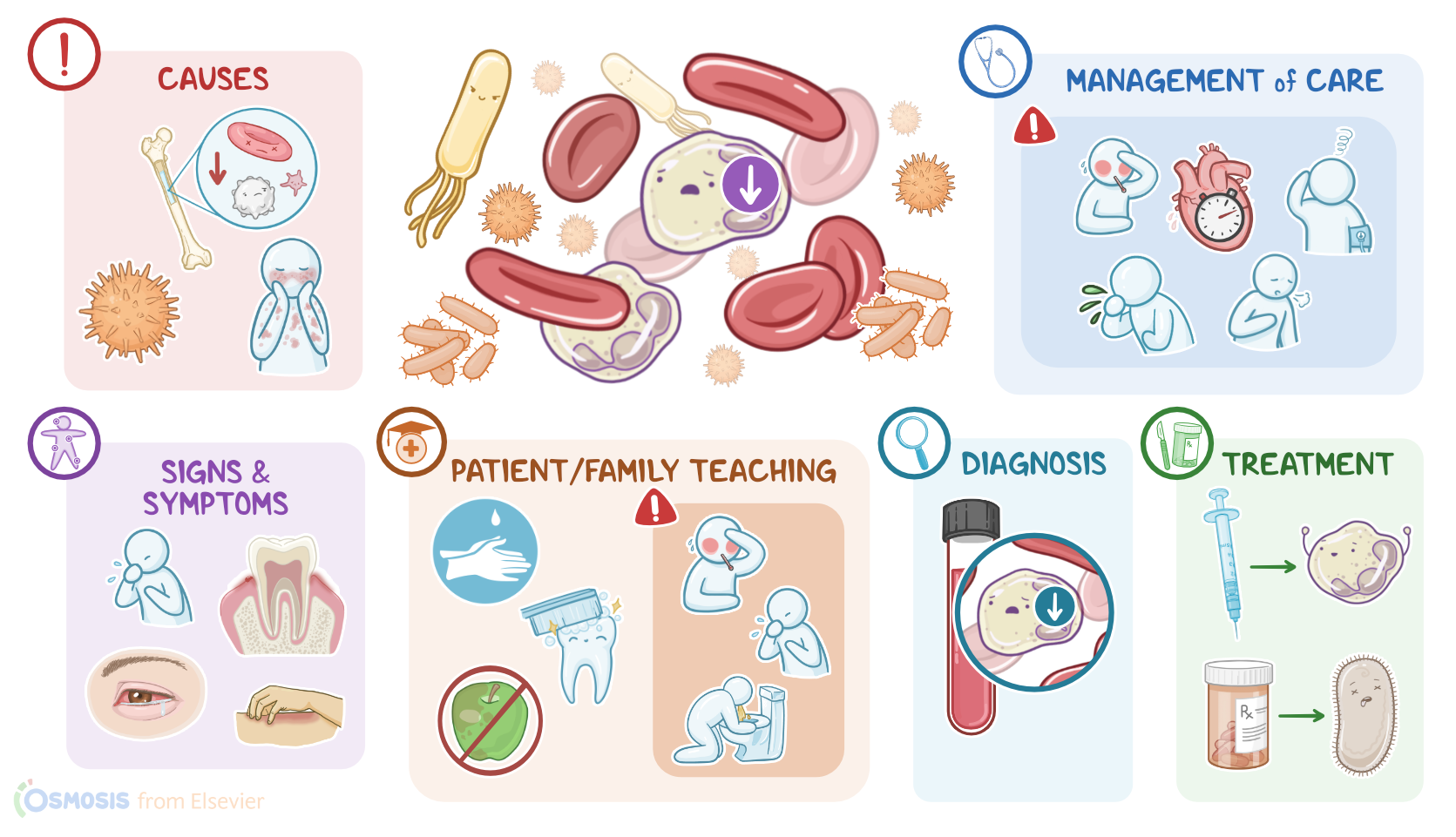
Alright, let’s look at the nursing care you’ll be providing for a client with neutropenia. Your priority nursing goals are to reduce infection risk and monitor the client for the development of new infections.Now, if your client has severe neutropenia, place your client in a private room and institute neutropenic precautions.
Enforce strict hand hygiene protocol and screen all staff members and visitors for signs of infection. Also be sure to assess their IV sites for signs of infection.
To protect your client from exposure to potential sources of pathogens, prohibit live plants or flowers and order a neutropenic diet that’s high in protein and calories, and does not include raw fruits, vegetables, and uncooked meats.
Also change their bed linen daily, keep it dry and wrinkle-free, and cleanse the skin with the appropriate antimicrobial solutions as ordered.
Monitor for septicemia by keeping a close eye on your client’s laboratory tests, noting changes in WBC and ANC. Inform the healthcare provider immediately if you notice a fever of more than 100.4 F or 38 C, tachycardia, hypotension, and mental status changes.
Obtain blood cultures as ordered and administer the prescribed antibiotics. Monitor for respiratory infections by assessing their vitals signs and auscultating their breath sounds.
Report signs of infection, including tachypnea, shortness of breath, cough, abnormal breath sounds such as rhonchi or crackles; or if you observe changes in sputum such as increased production or changes in color or viscosity.
Obtain sputum cultures and chest X-rays as ordered and administer prescribed antibiotics. Finally, regularly check the skin for any erythematous areas, open wounds or any area of non-intact skin.
Also inspect the oral cavity for lesions, bleeding, or swollen gums. Finally, ask your client if they’re experiencing any urinary frequency, urgency, or burning during urination.
If they have any of these symptoms check for cloudy, foul-smelling urine and collect a urine sample. Now, let’s move on to client and family teaching.
General client and family teaching6:35–8:18
Explain that neutropenia occurs when there are low numbers of neutrophils in the body; and because neutrophils are their main defense against bacterial and fungal infections, they are at greater risk of getting a severe infection.Then, teach your client about preventative measures to reduce the risk of infection.
Emphasize the importance of frequent hand hygiene, and remind them that this is important for friends and family as well.
Remind them to keep hand sanitizer available at all times if soap and water are not available. Instruct them to shower or bathe daily and to brush their teeth with a soft toothbrush before and after meals.
Lastly, encourage your client to stay current on all vaccinations and to take their anti-infective medication as prescribed by their health care provider.Next, teach them to avoid exposure to infectious agents by avoiding large groups of people; to avoid being around dirt or dust in construction areas or gardens; and not provide direct care for pets, such as cleaning litter boxes and birdcages.
Teach them to avoid eating uncooked or undercooked meats or eggs; unpasteurized dairy products; and unwashed fruits and vegetables before eating.
Also remind them not to share food utensils with others. Provide them a list of foods they can and cannot eat, and assist them to develop an individualized diet plan that includes their food preferences.
Finally, instruct your client to immediately contact their healthcare provider if they have any symptoms of infection, such as temperature above 100.4 or 38 C, chills, nausea or vomiting, redness or swelling on the skin, cough or sore throat, nasal congestion, or painful or frequent urination.
Alright, as a quick recap…. Neutropenia refers to when there are less than 1500 neutrophils per microliter of blood.
Review8:18–9:29
Normally, neutrophils fight off bacterial and fungal infections, so with neutropenia, individuals are at higher risk of developing these infections.
Clients with periodontal infections develop redness, swelling, and bleeding of the gingiva; pharyngeal infections typically present as sore throat and pulmonary infections usually cause cough and shortness of breath, while eye and skin infections are most associated with local pain and redness.Treatment includes managing the current condition with wide-spectrum antibiotics or antifungals.
Additionally, hematopoietic growth factors called G-CSFs or GM-CSFs can be used to stimulate the production of neutrophils.
Priority nursing goals reduce infection risk and monitor the client for the development of new infections. Client and family teaching includes how to decrease the risk of infection and when to contact their healthcare provider.
and went to contact their health-care provider.
| NEUTROPENIA | ||
| KEY POINTS | NOTES | |
| DEFINITION |
| |
| PHYSIOLOGY |
| |
| CAUSES AND RISK FACTORS |
| |
| PATHOPHYSIOLOGY |
| |
| SIGNS AND SYMPTOMS |
| |
| DIAGNOSIS |
| |
| TREATMENT |
| |
| MANAGEMENT OF CARE |
| |
| PATIENT AND FAMILY TEACHING |
| |
No notes for this video yet
Try adding a note below