Obesity: Nursing
Introduction0:00–0:41
Obesity refers to an increased number and size of fat cells, which are referred to as adipocytes. It is often classified using body mass index, or BMI, and is calculated by dividing weight in kilograms by the square of height in meters.
A person is considered obese if their BMI is 30 kg/m2 or higher, and a BMI above 40 kg/m2 signifies extreme obesity, also known as morbid obesity.
Obesity can seriously impact a person’s health, leading to chronic medical conditions, increased mortality, and reduced quality of life.
Causes and Risk Factors0:41–2:11
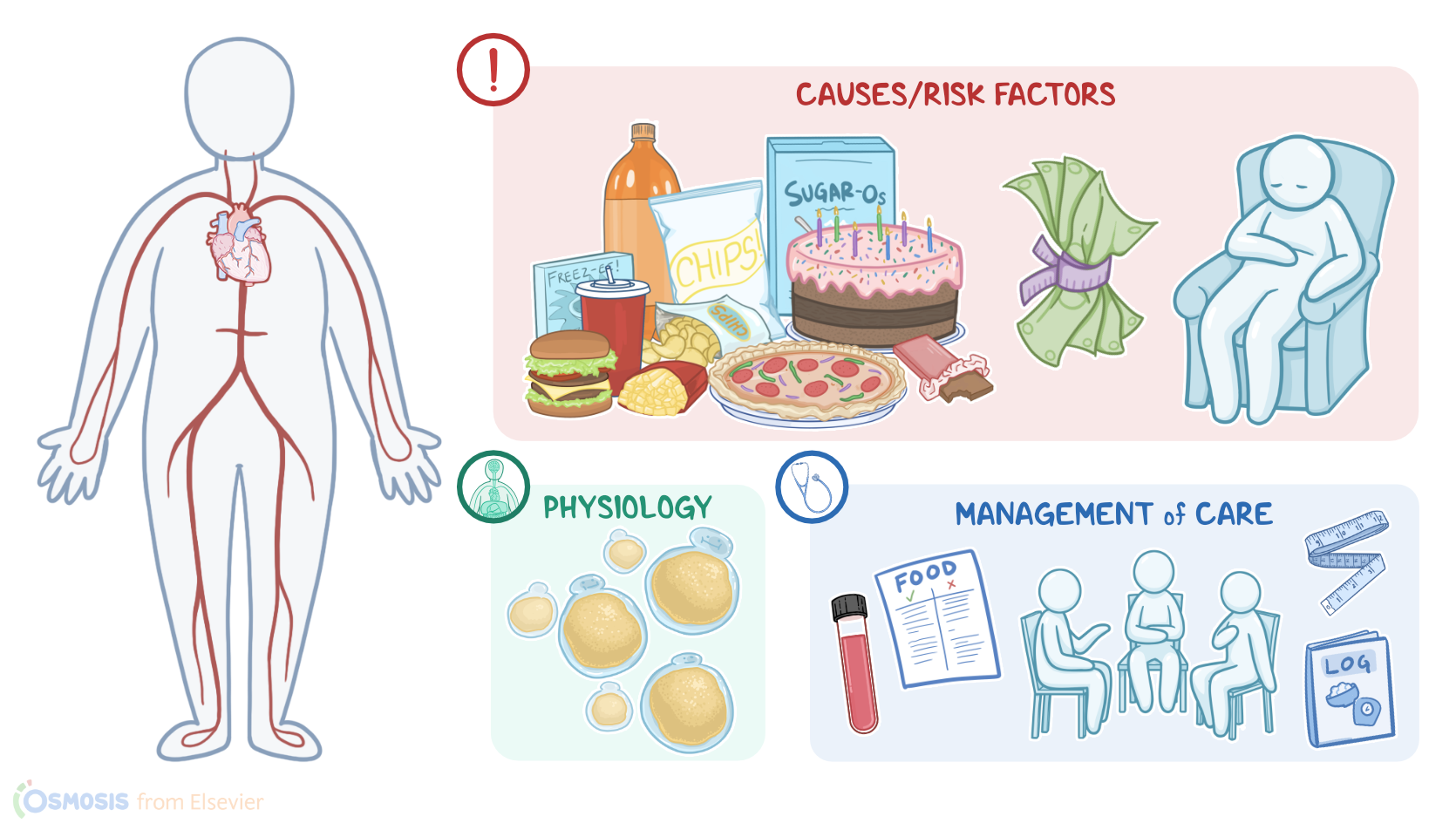
Causes of primary obesity include lifestyle factors such as dietary choices, like eating foods high in calories, drinking sweetened beverages, and consuming large portion sizes; eating outside the home or in front of television or computer; and being sedentary.
Environmental factors also contribute to obesity, for example, patients with low income are at increased risk of obesity since inexpensive foods often have high calories and low nutritional value.
Additionally, psychosocial factors can play a role in obesity, such as using food for comfort, reward, or eating more during times of stress, sadness, and anxiety.
On the other hand, secondary obesity is caused by medical conditions, such as certain congenital, endocrine, or central nervous system disorders.
For instance, hypothyroidism slows metabolism, which can lead to excess weight gain. There are also certain medications that can contribute to obesity, including corticosteroids, estrogens, antipsychotics, antiepileptics, and oral antidiabetics.
Okay, now let’s look at the health risks associated with obesity from head to toe. First, obesity can increase the risk for cardiovascular disease, like coronary artery disease and stroke, by causing inflammation that can damage blood vessels and increasing blood volume, which can cause hypertension.
Health Risks Associated with Obesity2:11–3:43
Also, increased fat in the neck and chest can lead to sleep apnea and interrupted sleep, both of which are associated with obesity; while excess fat around the diaphragm can decrease lung capacity, leading to exercise intolerance.
In the gastrointestinal system, obesity can cause gastroesophageal reflux, gallstones, and nonalcoholic steatohepatitis, also known as fatty liver.
Musculoskeletal complications like osteoarthritis can also occur, due to inflammation and stress placed on joints from excessive weight.
Next, reproductive issues, including infertility and sexual dysfunction, are associated with obesity. In the endocrine system, obesity can increase the risk of metabolic syndrome, which can lead to cardiovascular disease, stroke, and type 2 diabetes.
Additionally, several types of cancers, such as esophageal, colorectal, and breast, are linked to obesity. And lastly, patients with obesity can experience social stigma, leading to psychosocial complications, such as low self-esteem, loneliness, depression.
Now, when caring for your patient with obesity, begin by assessing them with a sensitive, nonjudgmental approach. Ensure you have appropriately sized equipment, such as blood pressure cuff, gown, bed, and transfer devices.
Nursing Considerations3:43–6:13
Start by measuring their height, weight, and waist and hip circumference; note their body shape and calculate their BMI and waist-to-hip ratio.
Next, take their vital signs and assess them for complications of obesity by evaluating their cardiovascular and respiratory status, joint pain and mobility, and skin for signs of breakdown or irritation.
Then, ask about their eating habits, physical activity, and if their weight impacts their daily life, paying special attention to pain, sleep, and feelings about their weight.
Also, inquire about their motivation to lose weight, weight loss strategies they’ve tried in the past, including if they have tried weight-loss procedures, like bariatric surgery, and if they have support systems.
Then, review the results of diagnostic testing, including liver and thyroid function tests, fasting glucose, lipid panel, and ECG.
Next, teach them about lifestyle modifications to lose weight. Encourage them to modify their diet by aiming to eat five or more servings of fruit or vegetables daily; choosing whole-grains, low-fat dairy, and lean meat, like turkey instead of beef; reducing sodium intake; avoiding highly processed foods with refined sugar and saturated fats; measuring portion sizes; and drinking water rather than sugary beverages.
Provide them with a sample meal plan and assist them to incorporate healthy foods that appeal to them. Also advise them to exercise daily, striving for about 150 minutes of moderate-intensity aerobic activity each week, like brisk walking; and encourage them to maintain strength by lifting weights twice a week.
Then instruct them to weigh themselves weekly at the same time while wearing the same type of clothes. Be sure to emphasize the importance of keeping a journal to track their food intake, activity, and weight.
If they’ve been prescribed medication to assist with weight loss, provide them with safe self-administration instructions, and review side effects to report to their healthcare provider.
Finally, refer them to a registered dietician, behavioral therapist, and community resources, as needed. Alright, as a quick recap....
Review6:13–6:43
Obesity refers to an excess of body fat and can be categorized as primary or secondary. The causes of obesity include multiple factors, such as genetics, lifestyle choices, as well as certain medical conditions and medications.
Obesity can lead to complications throughout the body, as well as psychosocial problems. Nursing considerations are focused on establishing a baseline assessment, managing the impacts of obesity, and providing education to promote healthy weight and quality of life.
| OBESITY | ||
| KEY POINTS | NOTES | |
| DEFINITION |
| |
| CAUSES AND RISK FACTORS |
| |
| HEALTH RISKS ASSOCIATED WITH OBESITY |
| |
| MANAGEMENT OF CARE |
| |
- "Lewis's medical-surgical nursing: Assessment and management of clinical problems. (12th ed.). ISBN: 978-0323792325 " Elsevier. (2022)
- " Medical-surgical nursing: Concepts for interprofessional and collaborative care. (10th ed.).. ISBN: 978-0323654050 " Elsevier (2021)
- "Lewis’s medical-surgical nursing in Canada: Assessment and management of clinical problems. (5th ed.). . ISBN 978-0323791588" Elsevier (2023)
No notes for this video yet
Try adding a note below