Oxygenation - Oxygen therapy: Nursing skills
Introduction0:00–0:52
Oxygen therapy is the delivery of extra oxygen to those with conditions that cause hypoxemia when oxygen levels in the blood are low and hypoxia, which is when there is not enough oxygen at the tissue level to meet the needs of the body.
This includes patients with diseases that interfere with the lung's ability to absorb oxygen like pneumonia, chronic bronchitis, emphysema and pulmonary fibrosis, blood problems like anemia where the blood doesn't carry enough oxygen and heart problems like heart failure where the heart has trouble pumping blood around the body.
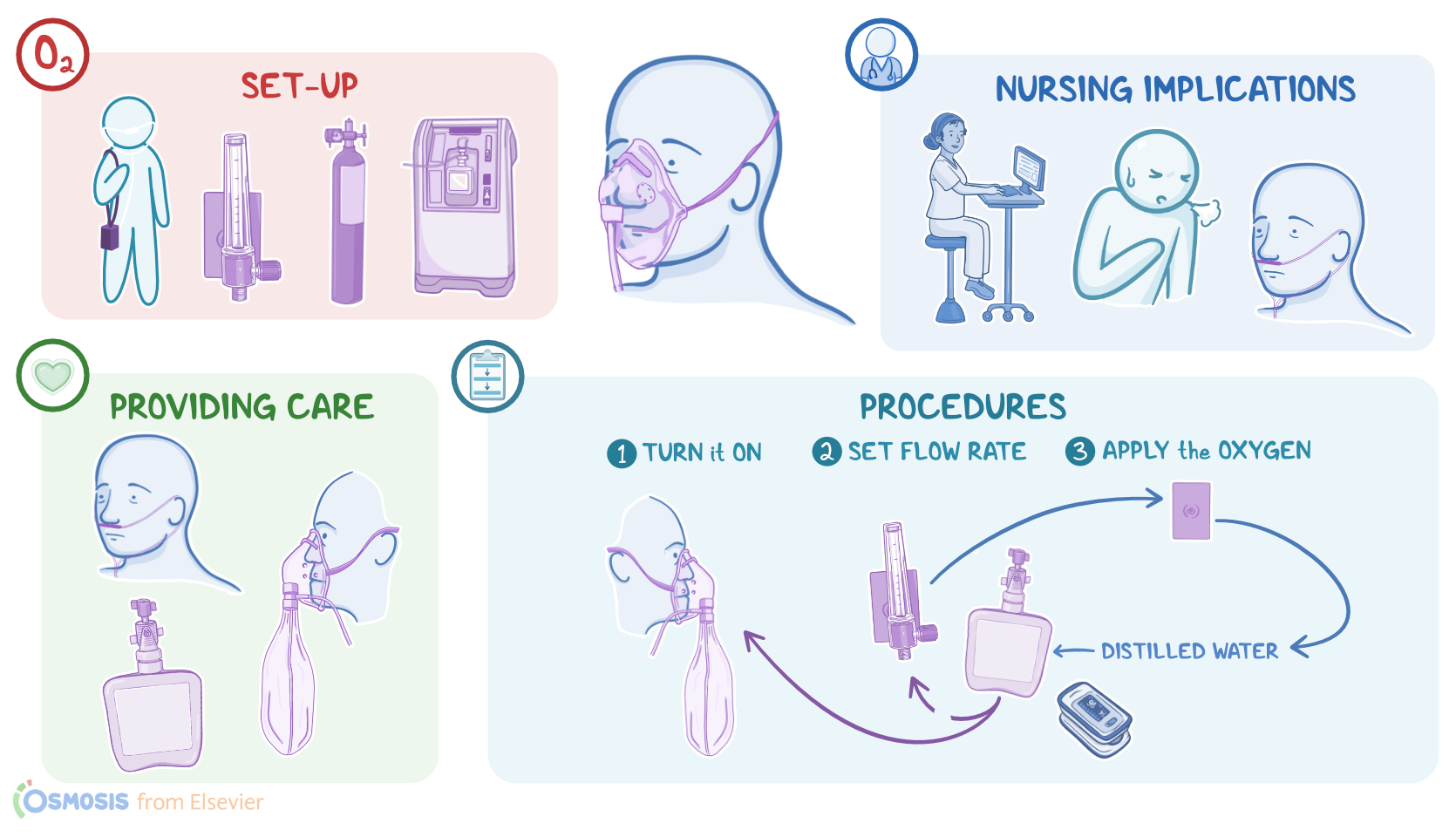
Now, oxygen is considered a medication. So an order is needed, an oxygen set up consists of an oxygen source and a delivery device.
There are several sources for oxygen therapy with a wall outlet. Oxygen is delivered into each patient room from a central supply.
Sources for Oxygen Therapy0:52–2:10
In contrast, an oxygen tank contains oxygen gas under pressure and is typically portable so it can be carried along as the patient moves.
However, this should be moved very carefully if the tank tips over and the valve breaks open, pressurized oxygen can burst out forcefully and result in severe trauma.
Oxygen tanks have a gauge that shows how much oxygen is left. There are also liquid oxygen systems that store oxygen as a liquid at very cold temperatures and then convert it to a gas for use.
They are used either for bulk storage of oxygen for a hospital system or can be portable for home use for patients with high oxygen needs or having a compact way to storage, large amounts of oxygen is helpful.
Finally, oxygen concentrators pull in air from the atmosphere and selectively remove nitrogen to deliver air that is about 90 to 95% oxygen to the patient.
These devices are easy to use and can deliver an unlimited amount of concentrated oxygen as long as they have a power supply.
One caveat is that some units are designed to only deliver up to 5 L of oxygen per minute. And so those aren't a good fit for patients who have high flow oxygen needs.
All oxygen sources are attached to a flow meter that indicates the flow rate or the liters of oxygen leaving the device per minute.
Flow Rate and Flow Meter2:10–2:22
This usually falls somewhere between one and 15 L per minute. Now, the flow rate coming from the oxygen tank must be matched to an appropriate delivery device.
Humidity Bottle2:22–2:53
The delivery device is the part of the equipment that attaches to the patient. The various delivery devices available can administer different flow rates of oxygen.
So it's important to choose one that fits the oxygen needs of the patient. Generally increasing the flow rate of oxygen through an appropriate device will increase something called the fraction of inspired oxygen or F IO two for short, which represents the percentage of oxygen in the air that the patient is breathing in.
For example, a common choice of oxygen delivery device is the nasal cannula, which can deliver oxygen up to 6 L per minute at an F IO two of up to 44%.
Delivery Devices for Oxygen Therapy2:53–4:41
A nasal cannula is simple to apply and is less intrusive. So it lets the patient eat, drink and talk freely.
However, a nasal cannula should not be used with high flow rates as this can cause the nasal passages to dry out and sometimes bleed.
Also, the concentration of oxygen delivered is lower because room air is mixing in with each breath making this option not suitable for patients with high oxygen needs such as those in respiratory distress.
Bear in mind that if the bands are too tight, they might irritate the skin around the nose, cheekbones and ears. This might potentially lead to open sores.
So remember to make sure the skin is intact and free from the signs of irritation before continuing with the device. A nasal cannula is also not the preferred device for patients who breathe through their mouth.
Another commonly used device is a simple face mask which covers the patient's nose and mouth and is secured by an elastic band placed around the back of the patient's head.
It has holes on each side of the mask where carbon dioxide exhaled by the patient can exit. It should be used with a flow rate of 6 to 10 L of oxygen per minute and can deliver an F IO two of up to around 50%.
It's usually used for short periods of time. Like when a patient needs to be transported.
Compared to nasal cannula, face masks are not as comfortable for the patient and they make it harder to eat, drink and talk.
Now, when a patient's need for oxygen is higher. Other types of masks can be used like a non rebreather mask.
Accessory Devices4:41–5:09
This type of mask is attached to a reservoir bag that's filled with oxygen. The mask also has a series of one way valves that help direct the air to the right location.
One way valves on the sides of the mask allow exhaled air containing carbon dioxide to leave the mask during inhalation.
They prevent room air from entering the mask. A one way valve located between the mask and the bag allows the patient to pull the oxygenated air from the bag during inhalation.
Common Care Tips5:09–7:17
But then it clamps shut in exhalation so that the patient's exhaled carbon dioxide doesn't dilute the concentration of oxygen in the bag.
The oxygen flow rate must be at least 10 to 15 L per minute to keep the reservoir bag inflated and it can deliver an F IO two of up to 80% when using a non rebreather mask.
It's essential to always make sure the reservoir bag remains at least partially inflated. Another method of oxygen delivery for patients with significant oxygen needs is a high flow nasal cannula.
This device is larger in diameter than the standard nasal cannula and can deliver a flow rate of 60 L of humidified oxygen per minute and an F IO two of up to 100%.
Now, oxygen delivery, especially at high flow rates can have a drying effect on mucous membranes which may not only cause discomfort to the patient but can cause tissue breakdown leading to ulcerations of the mucous membranes.
Dry mucous membranes also cannot clear away debris and pathogens from the airway as effectively. And when this mucociliary escalator as it's commonly called, cannot function properly.
The patient is at increased risk for infection and airway obstruction to prevent that from happening. The oxygen can pass through a humidifier that contains distilled water to add moisture to the air being delivered to the patient.
As the oxygen enters the humidifier, it creates bubbles that produces water vapor which is then picked up by the oxygen.
So if bubbling occurs, you'll know vapor is being produced and humidified oxygen is being delivered to the patient humidifier should be added.
When any sustained oxygen use is expected when the flow rate of oxygen exceeds 4 L per minute or if the patient is experiencing symptoms related to dryness of the mucous membranes.
In addition, it's essential to add humidification to the air when patients have an artificial airway such as a tracheostomy or endotracheal tube.
Since these systems bypass the upper airway entirely, which is where the air is normally humidified when providing care to a patient receiving oxygen therapy.
Setting up the Oxygen System7:17–8:37
There are some general considerations to keep in mind. First, it's important to use and store oxygen in well ventilated areas rather than behind curtains, in cabinets, closets or other confined spaces.
Keep in mind that oxygen supports combustion so it can lead to a fire. For this reason, it's important to keep oxygen at least 5 ft away from flames or heat sources in home and long term care settings, be sure to hang a no smoking sign and make it clear to both patients and their visitors that smoking lighting matches or using anything flammable like alcohol containing sprays where oxygen is used or stored is extremely dangerous.
Patients should also know that they should not use any heat producing and electrical appliances that have a motor while using oxygen like electric razors or hair dryers, water based products rather than oil based lotions or ointments should be applied in or around the nose.
Anything that causes static electricity should also be avoided, which is why cotton bedding is usually preferred remember to also check the humidifier to see that there's enough water and that bubbles are produced, ensure there are no kinks in the tubing and that the patient is not lying on top of it.
If they are using a nasal cannula, also check to make sure that it's comfortable for the patient that the prongs are facing up and that there isn't any mucus on the prongs that could interfere with oxygen delivery For a face mask with a storage bag.
Nursing Implications8:37–9:18
Be sure to observe the bag to make sure it remains inflated. This is how you'll know enough oxygen is flowing into the bag.
Finally, regular care is important to alleviate some of the dryness of the nasal and oral mucosa. While skin care is essential to protect areas where the delivery devices press against the skin to set up the oxygen system.
First, gather the equipment you'll need including an oxygen delivery device with the appropriate tubing, a flow meter, a humidifier if needed and distilled water for the humidifier, connect the flow meter with the oxygen source, then pour the distilled water in the humidifier and attach it to the flow meter as well as to the delivery device.
Review9:18–11:55
Some humidification systems are sterile containers prefilled with distilled water. When using these systems, attach to the flow meter and connect the tubing.
According to the packaging instructions, there's no need to open the container. There should be a plan for regularly monitoring the amount of distilled water in the device to make sure it does not run out.
If your patient is receiving humidified air, it's possible excessive condensation can accumulate on the end of the nasal cannula or in the face mask, helping the patient manage condensation by wiping it away, can make oxygen therapy a more comfortable experience and help to maintain skin integrity.
Now to start the flow of oxygen, turn the source on then set the flow rate and apply the delivery device to the patient.
Be sure to check their oxygen saturation before and after the application of oxygen to determine the effectiveness of oxygen therapy.
When caring for a patient receiving oxygen therapy, there are a few things you should keep in mind any changes in vital signs or in the level of consciousness, unusual respiratory sounds, irritation, bluish, discoloration of the skin or mucous membranes or breakdown around the nose, cheeks or ears.
Finally remember to document the date time and any observations you made while caring for a patient receiving oxygen therapy.
All right. As a quick recap, oxygen therapy is used for patients with conditions that put them at risk for hypoxemia and hypoxia sources for oxygen therapy include a wall outlet, an oxygen tank, a liquid oxygen system and an oxygen concentrator.
The flow rate of oxygen is measured in liters per minute and is regulated via flow meter. A humidifier can be used to prevent the oxygen from drying out the mucous membranes, various delivery devices can be applied to administer supplemental oxygen.
These include nasal cannulas, simple face masks, non rebreather masks, and high flow nasal cannulas. It's important to be aware of safety considerations like ensuring your patient is wearing their nasal cannula or face mask at all times and keeping sources of oxygen at least 5 ft away from flames or heat sources also check the flow meter to see that the flow rate matches the ordered one, the gauge on the oxygen tank to ensure there's enough oxygen left and the humidifier to see if there's enough water and that bubbles are produced.
| OXYGEN THERAPY | ||
| KEY POINTS | NOTES | |
| INTRODUCTION |
| |
| SOURCES FOR OXYGEN THERAPY |
| |
| FLOW RATE AND FLOW METER |
| |
| DELIVERY DEVICES |
| |
| HUMIDIFIER |
| |
| COMMON CARE TIPS |
| |
| SETTING UP THE OXYGEN SYSTEM |
| |
| CLINICAL IMPLICATIONS |
| |
- "Clinical nursing skills & techniques (11th ed.). ISBN 978-0-443-10718-4 " Elsevier (2025)
- "Nursing Skills [Internet]. Eau Claire (WI): Chippewa Valley Technical College; " NCBI (2021.)
No notes for this video yet
Try adding a note below