Postoperative care: Nursing
Postoperative care is the management of a client’s health during the postoperative period. This begins right after the surgical procedure is complete, and lasts until the client is discharged from the healthcare facility. Postoperative care promotes the client’s recovery after surgery by managing pain, supporting oxygenation and cardiovascular stability, maintaining fluid balance, providing wound care, monitoring bowel function, assisting with mobility, and preventing complications.
Postoperative care typically begins when the client is transferred from the operating suite to the postanesthesia care unit, or PACU for short. How long they’re being cared for in this setting depends on the client’s health status, the type of procedure, and the type of anesthesia, as well as the rate of progression to alertness and hemodynamic stability. The goal of this phase of care is to stabilize the client for transfer to the next level of care, which could be an intensive care unit or another inpatient care unit; as well as being discharged home in the case of ambulatory surgery. In order for clients to transition to a different level of care, they should meet certain criteria such as responding easily to stimuli, having stable vital signs, and adequate pain control.
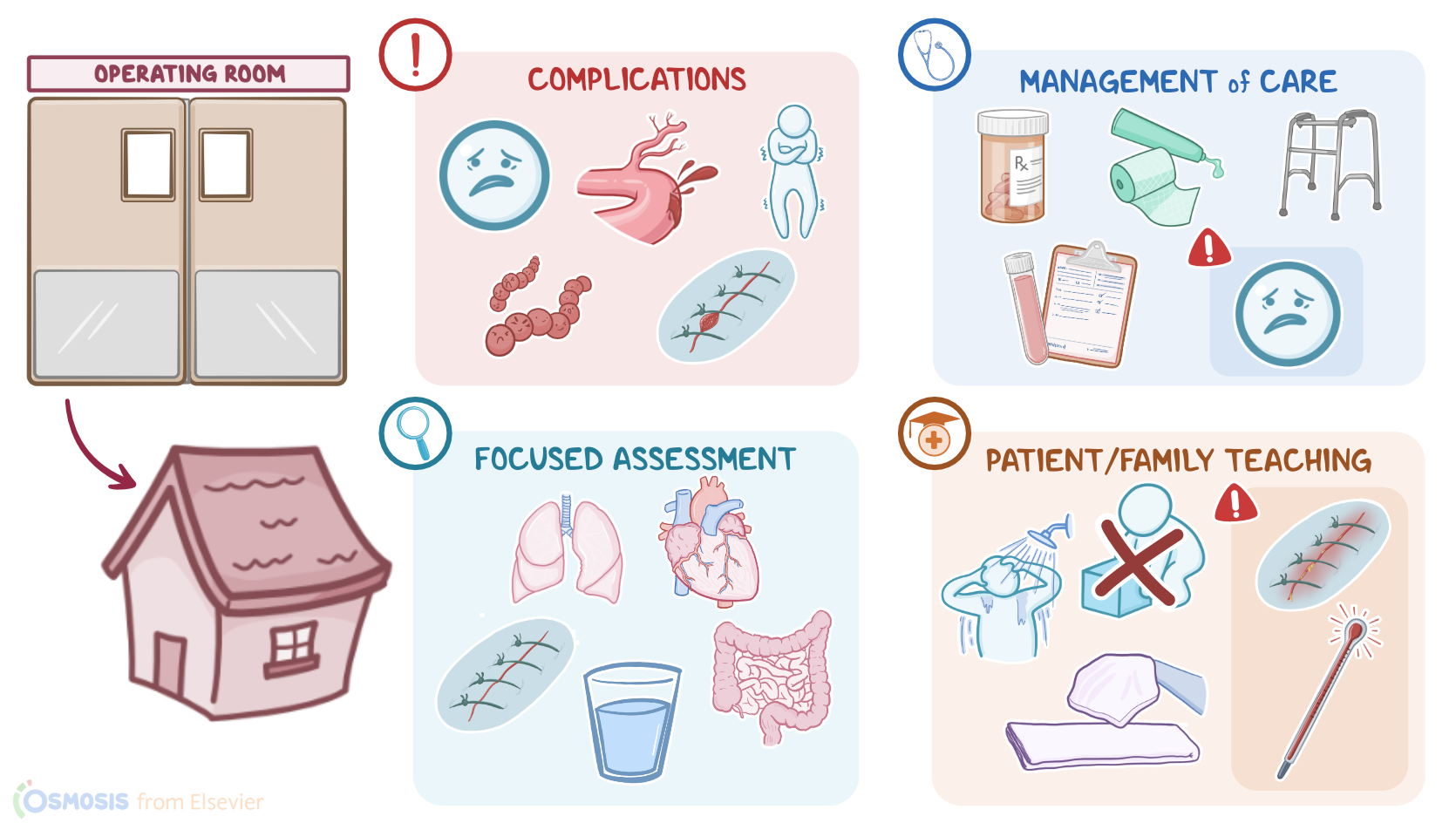
Now, the most common complications during the postoperative period include pain, hemorrhage, hypothermia, and infections at the site of the surgery, called surgical site infection, or SSI for short, as well as wound dehiscence and evisceration. There can also be respiratory complications, like airway obstruction, laryngospasm, pneumonia, atelectasis, and pulmonary embolism.
Cardiovascular complications can also occur, such as hypotension, hypertension, and dysrhythmias. Clients can also develop nervous system complications, including delirium and delayed emergence from anesthesia.
On the other hand, gastrointestinal complications include postoperative nausea and vomiting, constipation, postoperative ileus, and hiccups; while urinary complications can manifest as urinary retention and urinary tract infections. Finally, fluid and electrolyte imbalances can also occur following surgical procedures.
| POSTOPERATIVE CARE | ||
| KEY POINTS | NOTES | |
| DEFINITION |
| |
| MANAGEMENT OF CARE |
| |
| PATIENT AND FAMILY TEACHING |
| |
No notes for this video yet
Try adding a note below